Dampont Castle: A Neo-Renaissance Estate in France
Site at a Glance
- Popularity
- High
- Country
- France
- Primary era
- Modern
- Eras represented
- Modern
- Civilizations
- French
- Site type
- Domestic
- Remains
- Castle
On this page6 sections
History
Construction in the nineteenth century
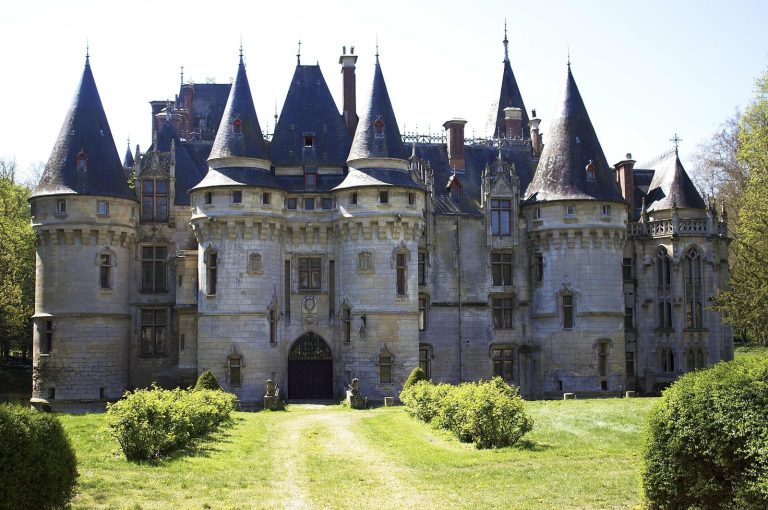
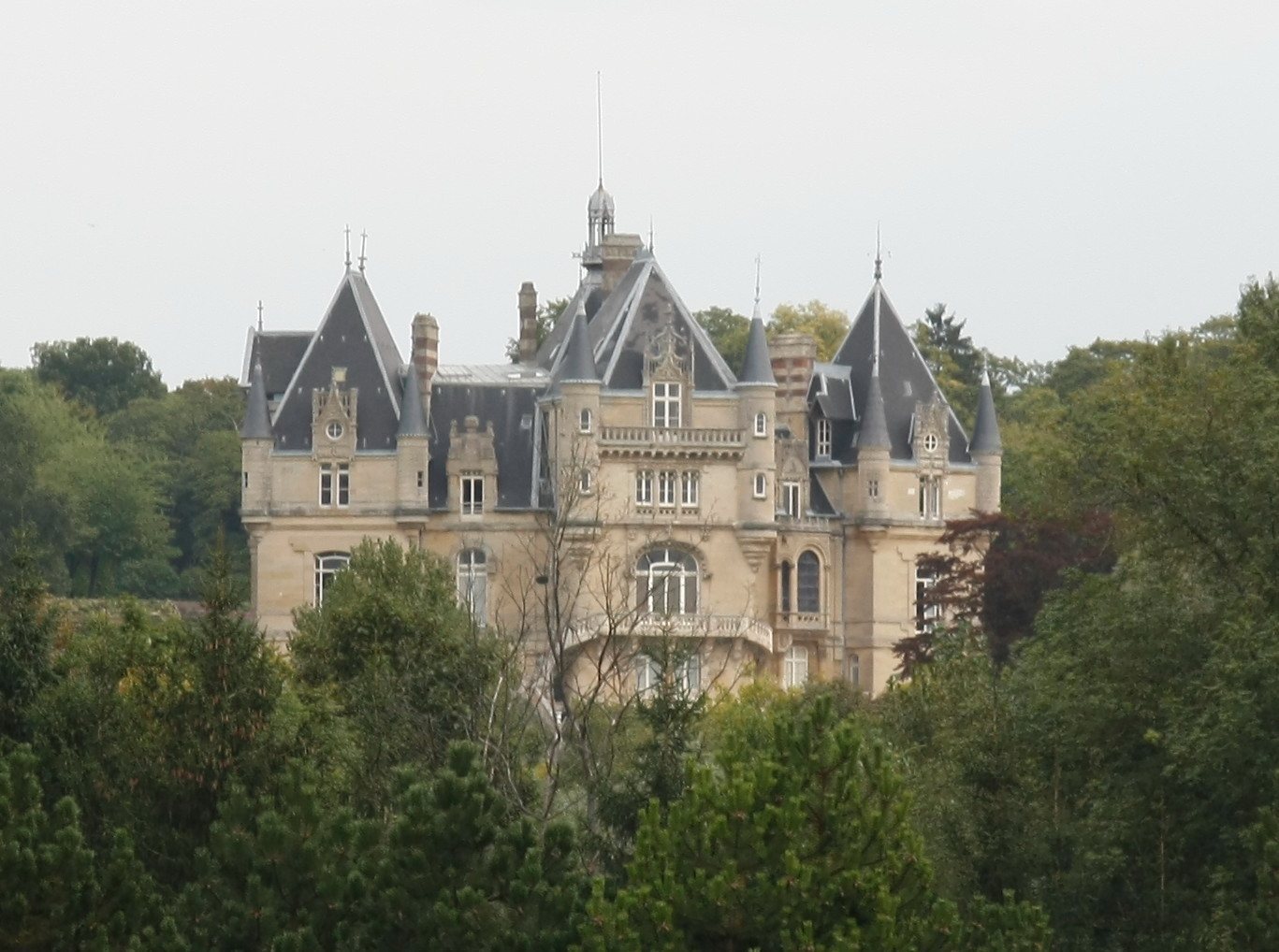
Dampont Castle is a nineteenth-century residence in Us, France. Charles Guy de Kersaint began its construction in 1852, and the work continued until 1872. He had inherited the Dampont lands through his wife, Laure du Tremblay de Saint-Yon. The castle’s eclectic design combines Neo-Renaissance forms drawn from Renaissance architecture with Neo-Gothic elements inspired by medieval Gothic. Its design is attributed to Eugène Viollet-le-Duc, a French architect known for his work on medieval architecture and its restoration.
Later ownership and the park
Jacques Potin bought the property from Raoul de Kersaint in 1908. Three years later, he commissioned French landscape architect Edouard Redont to create the park. Dampont Castle was listed as a historic monument on 24 October 2002 and remains privately owned.
Remains
The castle
Built of dressed stone, the castle is arranged around a large, four-level rectangular tower. Two smaller, three-level square towers stand apart from it at an angle of 20 degrees, joined to the central tower by slightly recessed, single-storey sections. Small watch turrets project from the corners of all three towers, supported by masonry brackets. Those on the main tower extend across two levels, with a balcony before the upper level. Dormer windows with sharply pointed triangular pediments and sculpted decoration rise from the tall roofs. On the garden side, a double staircase leads to a narrow balcony in front of a large first-floor window.
The park
The Viosne runs through the park and feeds a pond. Its features include an imitation chapel ruin and a circular Temple of Love supported by six Corinthian columns, whose capitals have elaborate decoration. A landing stage, bridges, many rare trees, and a rose garden also form part of the grounds.