Fort du Cap-Lévi: A Coastal Defense at Fermanville, France
Site at a Glance
- Popularity
- Medium
- Country
- France
- Primary era
- Modern
- Eras represented
- Modern
- Civilizations
- French
- Site type
- Military
- Remains
- Fort
On this page13 sections
History
Fort du Cap-Lévi is a coastal fort at Fermanville, France, built from 1801 to 1806 at Napoleon Bonaparte’s request during the Consulate, the French government established after the Revolution in 1799 with Napoleon as its leading figure. It was intended to protect coastal shipping and materials being transported for construction at Cherbourg, defend Port Lévi, and cover the eastern side of Cherbourg’s roadstead, an offshore anchorage area. Alongside 11 other gun batteries, it formed part of the defenses against the British navy.
During the First French Empire, when Napoleon ruled as emperor, the fort exchanged fire with British vessels operating offshore.
Modernization and civilian ownership
Alterations began in 1861 to address advances in artillery and increase the fort’s capacity for personnel, provisions, and equipment. The work was completed in 1866, but the fort was already out of date. Rifled cannon, with grooves inside their barrels that improved a projectile’s stability and range, had become widely used by the mid-nineteenth century. The site’s limited space prevented further changes, and it was decommissioned in 1875.
After it was offered for sale, a former customs officer bought the fort in 1881; it later passed to a butter manufacturer from Carentan. In 1905, Charles-Henri Dumas-Vence and his sister acquired it as a second home. Dumas-Vence, a ship’s purser responsible for stores and passenger services, also used the fort for holidays and receptions. His family remained there until 1939.
Wartime damage and later conversion
The fort returned to military service during both world wars. German forces requisitioned and occupied it in 1940. Bombing in 1944 severely damaged the structure. The damage to its right side may have resulted from British airmen returning from an attack on the Maupertus radar station and seeking to reach the United Kingdom without their bombs.
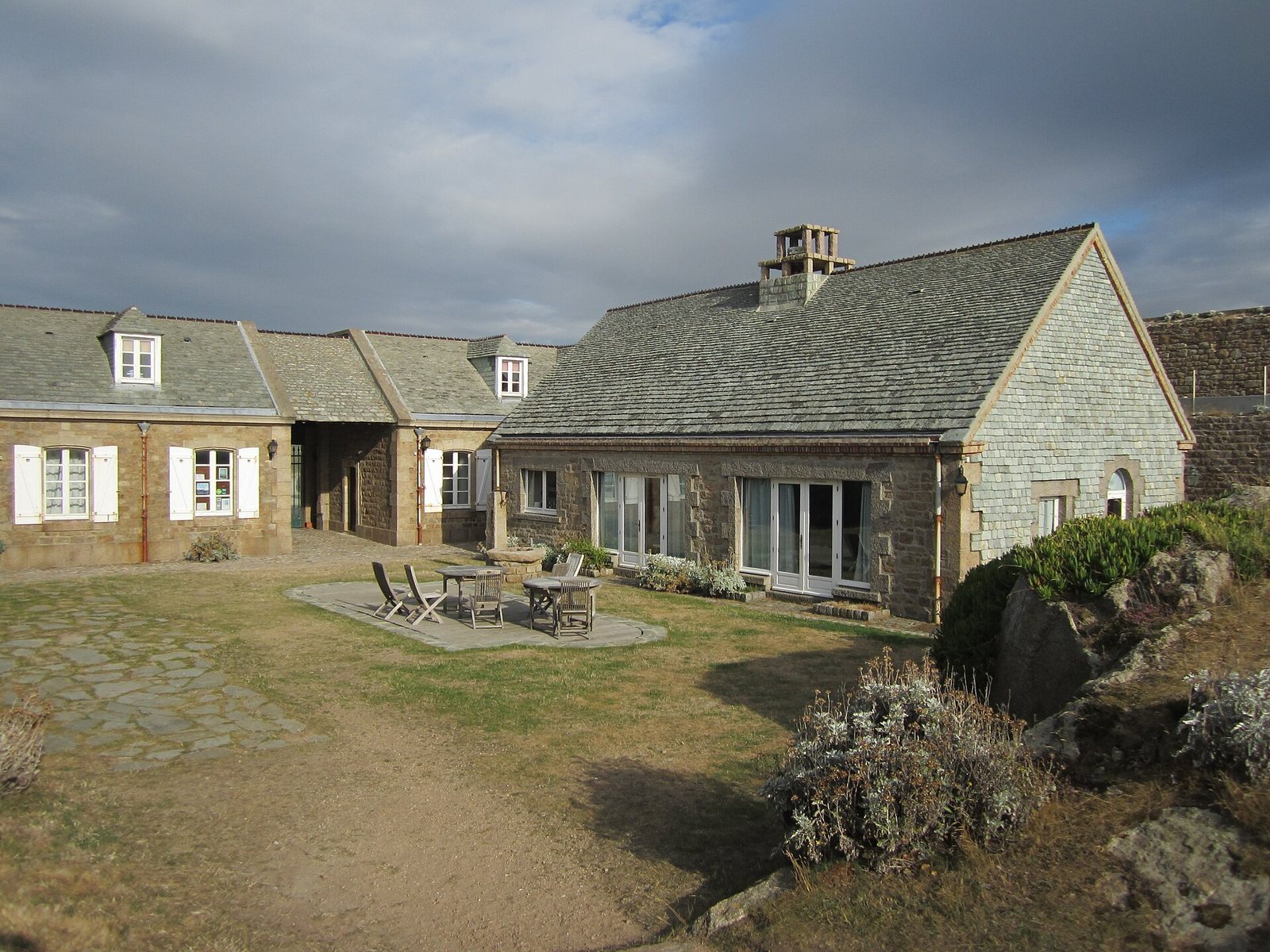
Industrialist Félix Amiot bought the ruined fort in 1953 and converted it into a private residence where he entertained guests. In 1990, it became the property of the Conservatoire du littoral, the French public body that protects coastal land, and was incorporated into the Pointe du Brick protected site.
Remains
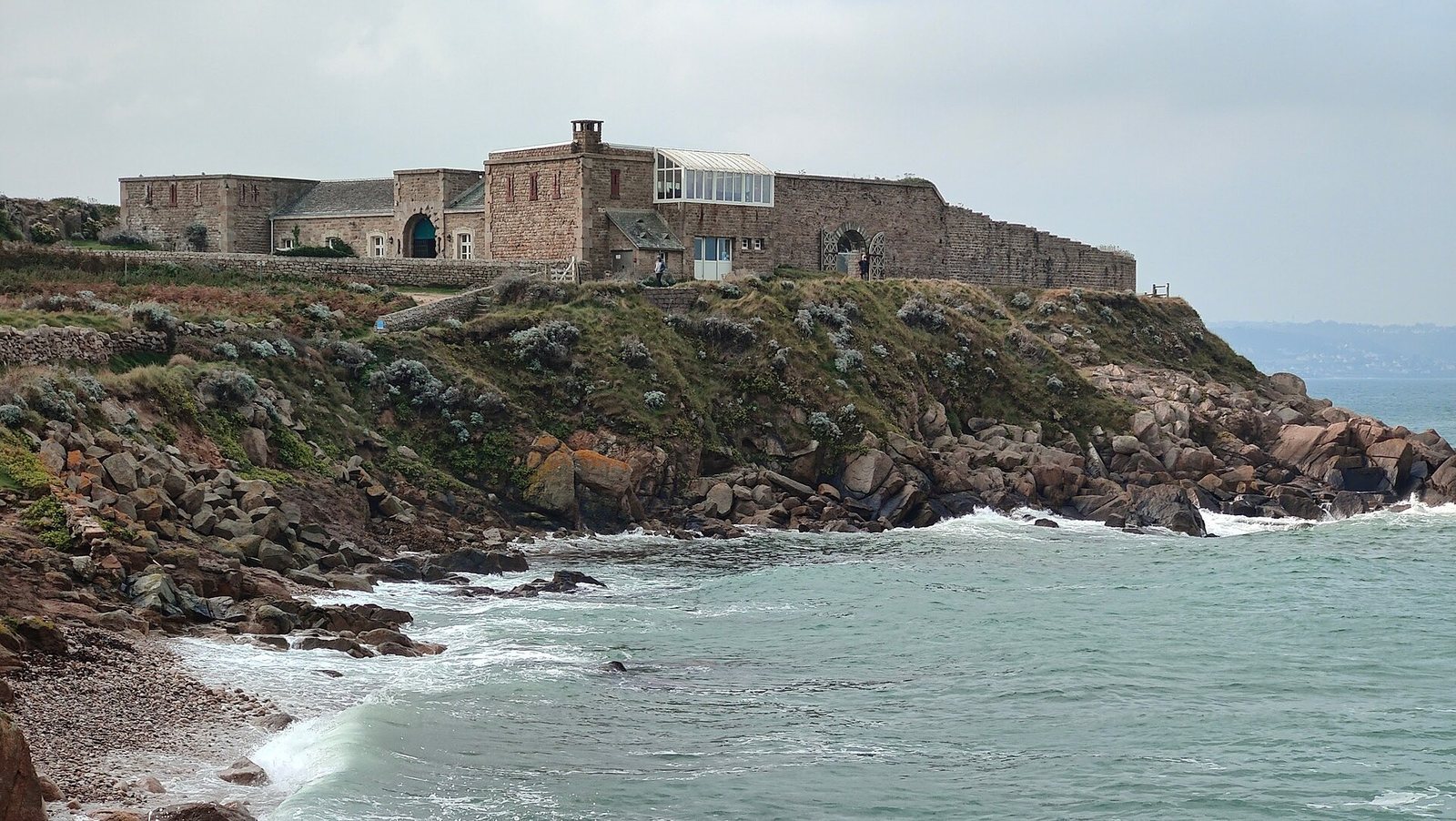
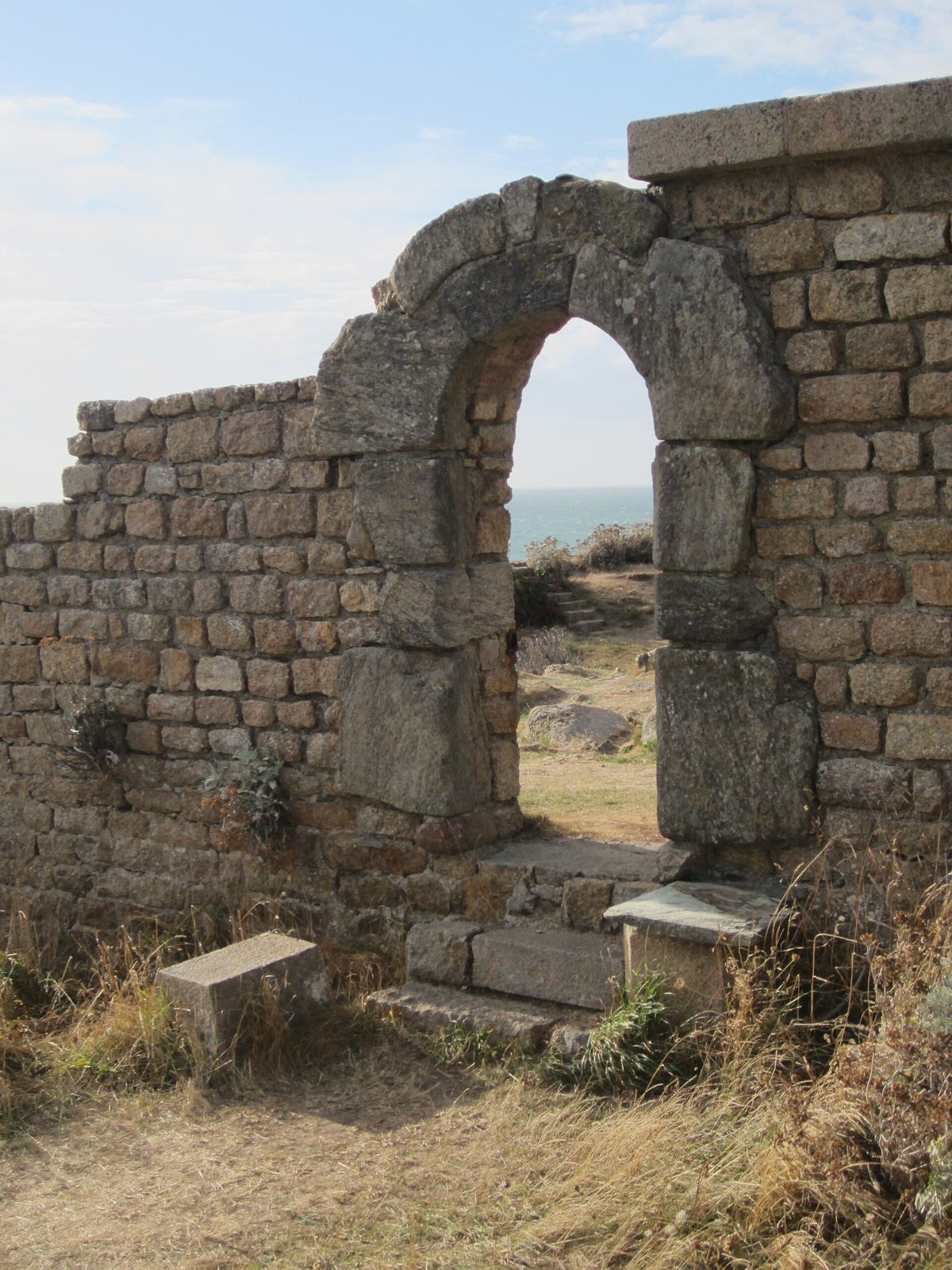
The fort stands on the western side of Cap Lévi, on the coast of the Val de Saire. Its layout combines a semicircular gun position facing the sea with support buildings behind it and defensive works at the landward entrance. The original defenses used a thick earth parapet, while later changes strengthened the rear of the fort.
Coastal battery and support buildings
Gun position
The original semicircular battery measured 35 metres across and stood 19.5 metres above high-water level. Its seven-metre-thick earth parapet protected two 24-pounder guns.
Magazine and accommodation
Behind the battery, a powder magazine held up to 1,500 kilograms of gunpowder. Its semicircular arch was covered with earth to help withstand enemy cannon fire. Nearby stood a guardhouse built in 1806 for 15 men and accommodation for a keeper. An earthwork shielded the guardhouse to lessen the effects of artillery fire.
Landward defenses
Entrance
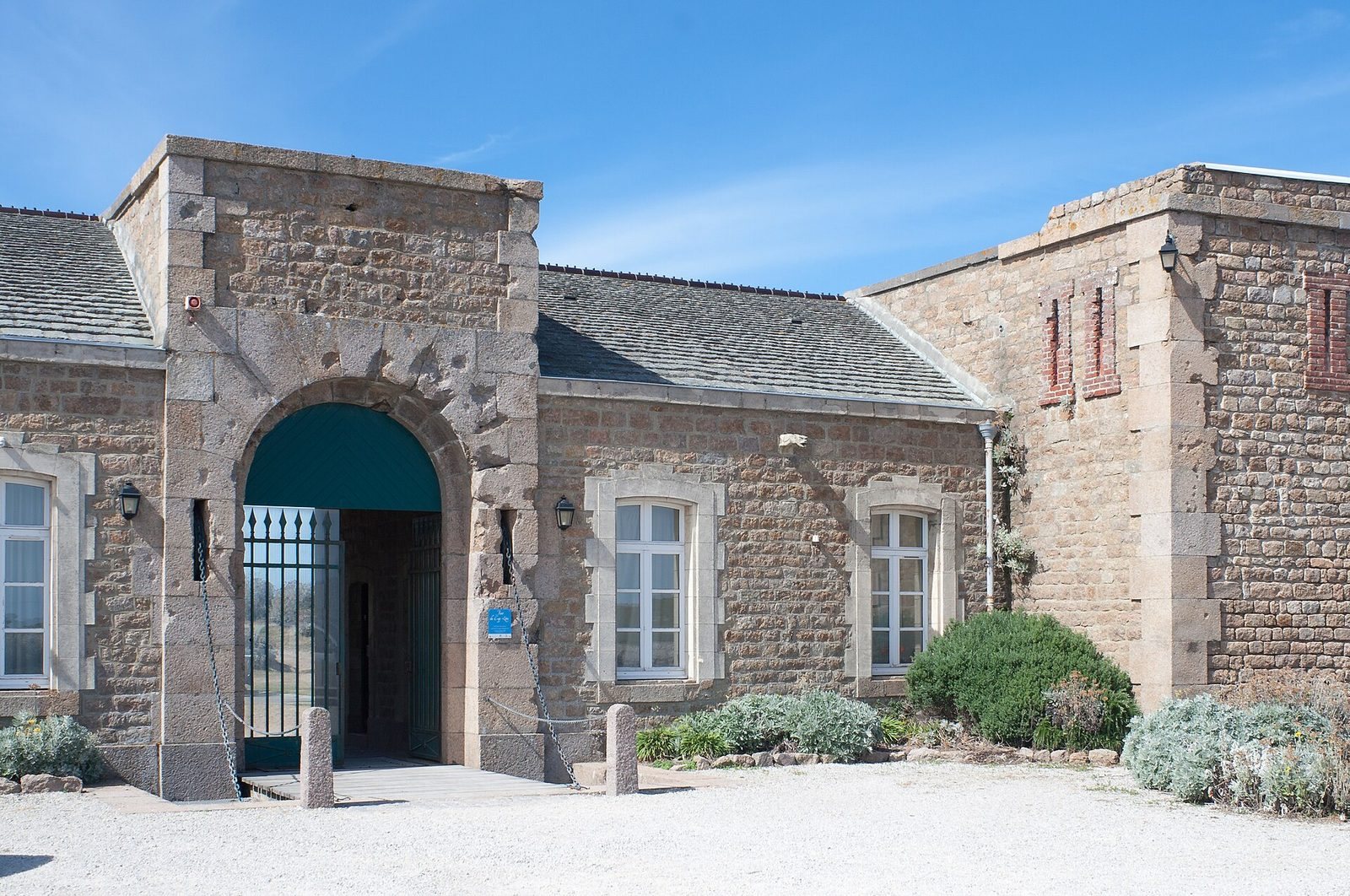
A building with a drawbridge protected the entrance on the landward side of the fort.
Defensive front
Work begun in 1861 added a 41-metre defensive front with projecting bastions across the rear side of the fort. Its buildings included a kitchen, a provisions store, an office for the post commander, and a guardhouse for 20 men. The firing platform was raised and reshaped to carry four guns in open positions, three facing forward and one on a flank.
Residential alterations and coastal setting
Dumas-Vence’s residence
During Dumas-Vence’s ownership, the grounds included an ornamental garden and a kitchen garden. He also installed a Moorish pavilion brought from the 1900 Universal Exposition. His travel furnishings included rugs, shells, ostrich eggs, Far Eastern bronzes, antique weapons, nautical instruments, books, prints, and a taxidermied crocodile.
Amiot’s conversion
Amiot turned the powder magazine into a reception room with a central fireplace, French windows, and flooring laid in a ship-deck style. He added a blue-stone gable and a large glazed opening in the fort’s outer wall, facing the sea, and built a slipway among the rocks below. These changes survive today.
A coastal path once used by customs officers runs at the foot of the fort. The surrounding natural area includes the coves of Brick and Tocqueboeuf, Brûlé heathland, Mondrée beach, Port Pignot, and the Moulins valley.