Jemniště Chateau: A Baroque Aristocratic Residence in Czechia
Site at a Glance
- Popularity
- Medium
- Country
- Czechia
- Primary era
- Early Modern
- Eras represented
- Early Modern
- Civilizations
- Habsburg, Habsburg Austria, Holy Roman Empire, Kingdom of Bohemia
- Site type
- Domestic
- Remains
- Castle
On this page12 sections
History
Jemniště Chateau is an eighteenth-century Baroque residence, a style characterized by elaborate, dramatic forms, at the western end of the village of Jemniště near Postupice in Central Bohemia, Czechia. It replaced a medieval castle on a different site and became the principal residence of the Jemniště estate.
The medieval castle and new residence
A castle at Jemniště is first recorded in 1381 as the property of the Lords of Cimburg, a medieval noble family. Tradition credits its foundation to Beneš of Cimburk, later known as Beneš of Jemniště. After passing between several owners, the older castle served residential and economic purposes from the sixteenth or seventeenth century.
In 1717, the estate passed to Count Franz Adam von Trauttmansdorff. The old castle no longer suited his needs for a residence appropriate to his status, so he commissioned a new chateau nearby. Designed by Prague architect Franz Maximilian Kaňka, the residence was built during the 1720s. Its chapel was consecrated on 14 October 1725 and dedicated to Saint Joseph. The chapel was enlarged in 1735.
Fire and eighteenth-century changes
A major fire in 1754 damaged or destroyed much of the chateau, although the chapel reportedly remained intact. Franz Adam rebuilt the residence, retaining much of its earlier appearance while changing the interiors and redesigning the pediment with sculptural decoration.
By the later eighteenth century, Count Heinrich Franz von Rottenhan owned the estate. Parts of the chateau were restored in the neoclassical style, which drew on forms associated with classical antiquity. The formal French-style garden, arranged in an ordered layout, was changed into an English landscape park with a more naturalistic design.
Later ownership and modern use
The Buquoy and Windisch-Grätz families later owned the estate, before the Sternberg family acquired it in 1868. At the end of the Second World War, Soviet Red Army troops destroyed much of the interior furnishing. After the war, the Sternbergs were dispossessed and the estate passed to state ownership; the Czechoslovak state nationalized it in 1951.
The chateau subsequently housed a clothing museum and, from 1961, the Benešov Regional Museum. The Sternberg family regained the estate in 1995, after which the chateau was converted to hospitality use.
Remains
The Baroque ensemble
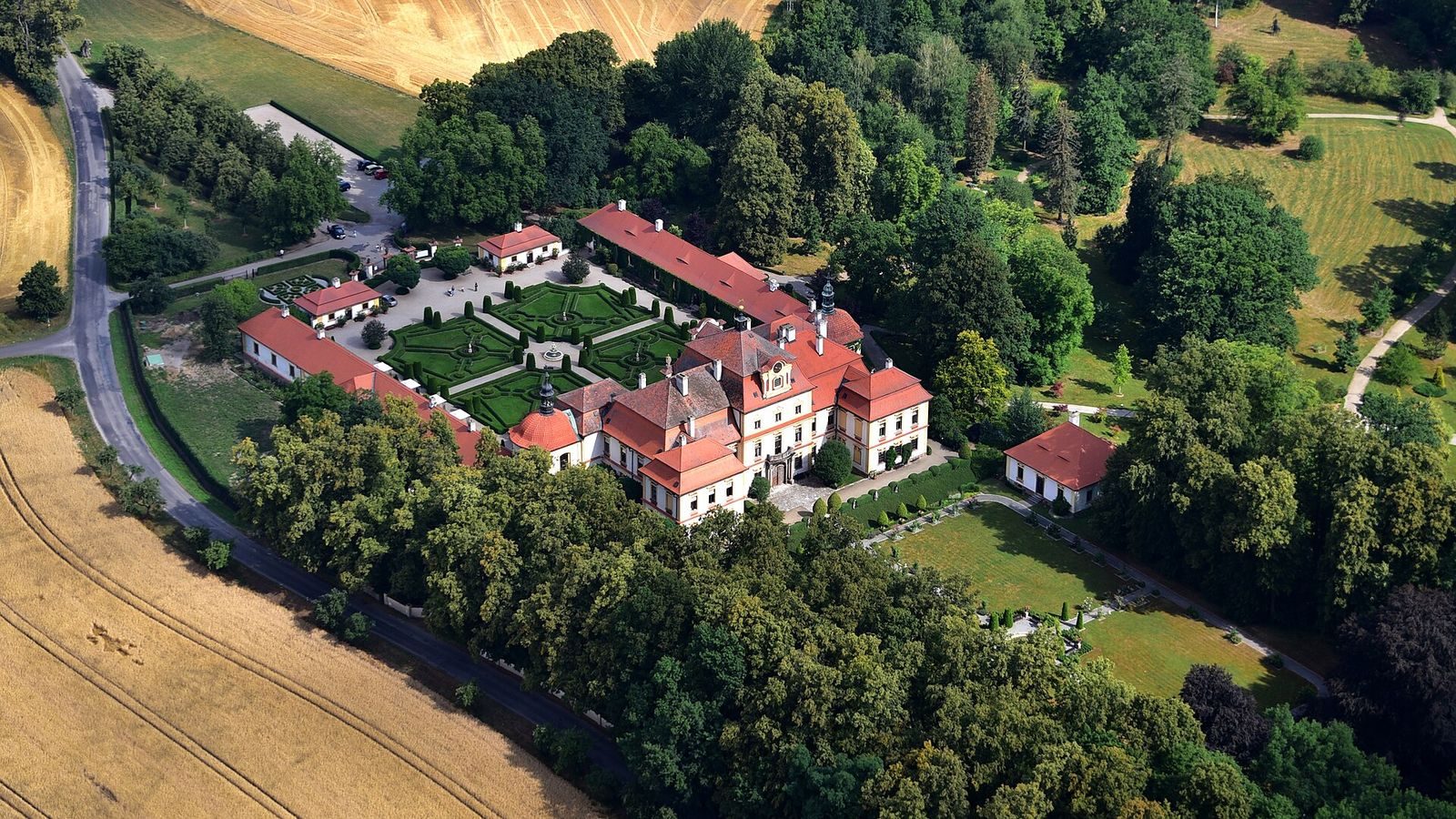
The complex brings together the chateau, chapel, ornamental garden, and park. Its original design arranged seven independent buildings around a broad court, with a large French-style garden. Servants’ houses, an enclosure, and a gate also formed part of the planned ensemble.
Court and approach
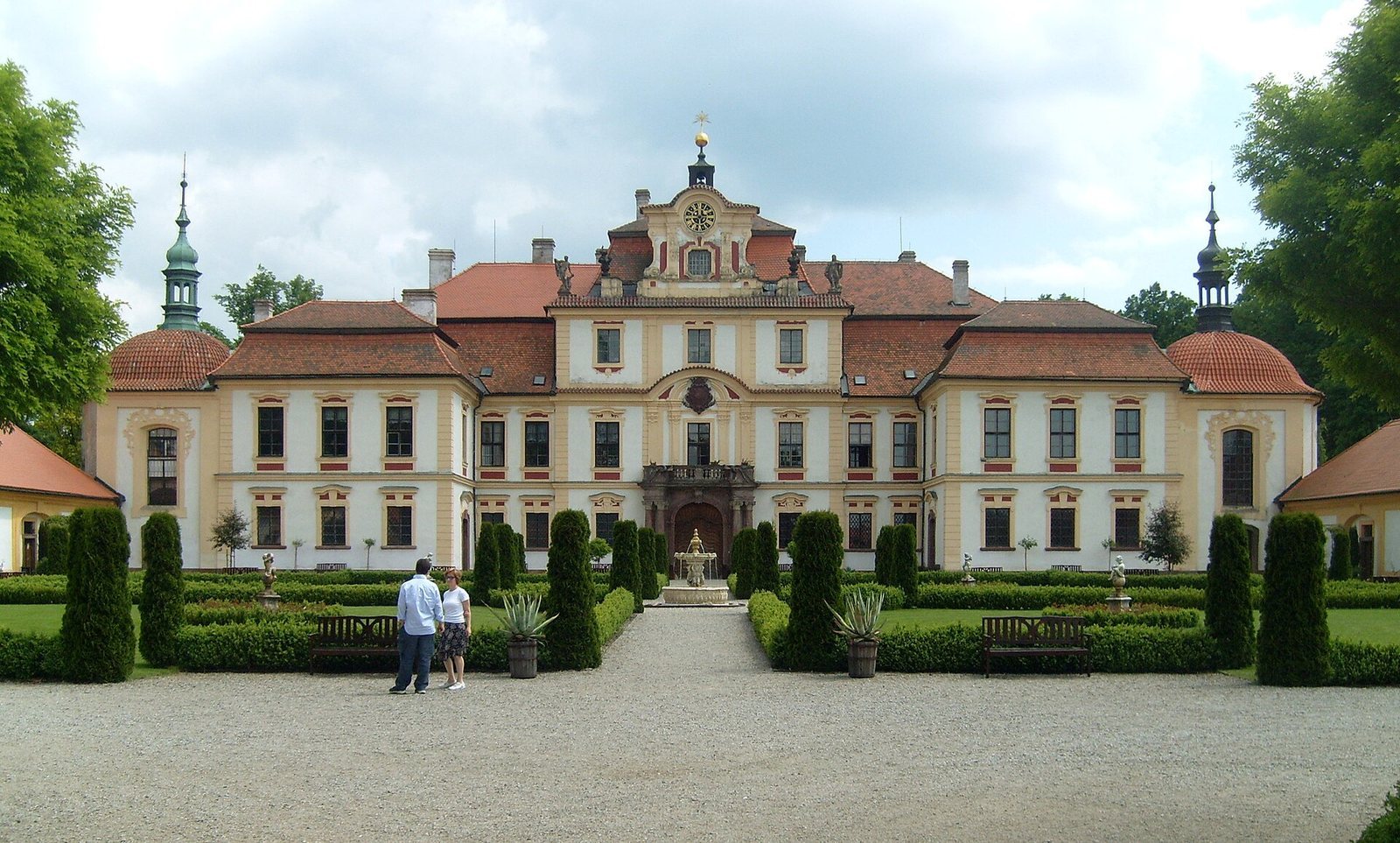
A long lime-tree avenue leads to the large entrance gate and the court. The chateau’s northwest façade faces this space, which is bordered by buildings including stables and a carriage house. A fountain stands at the centre of the court.
Chateau exterior
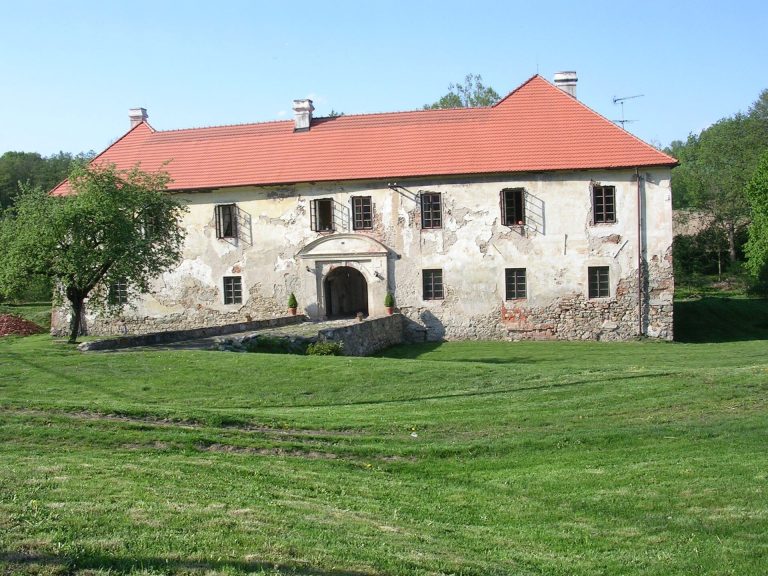
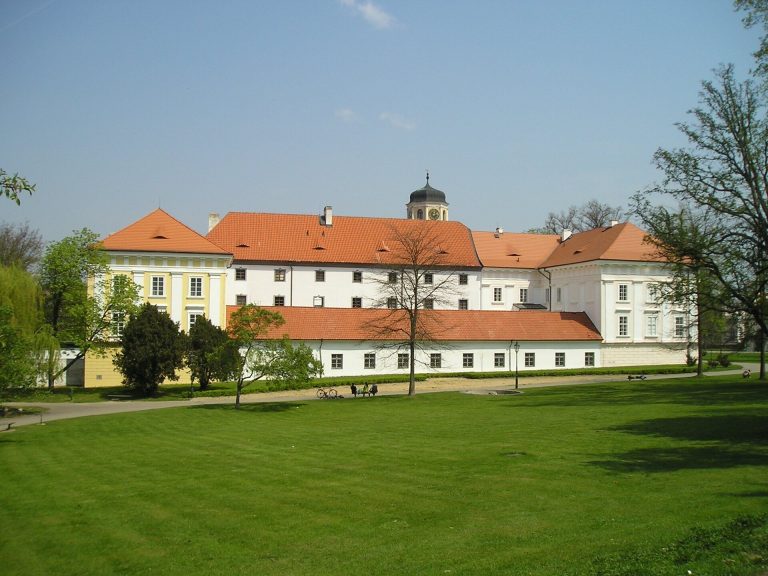
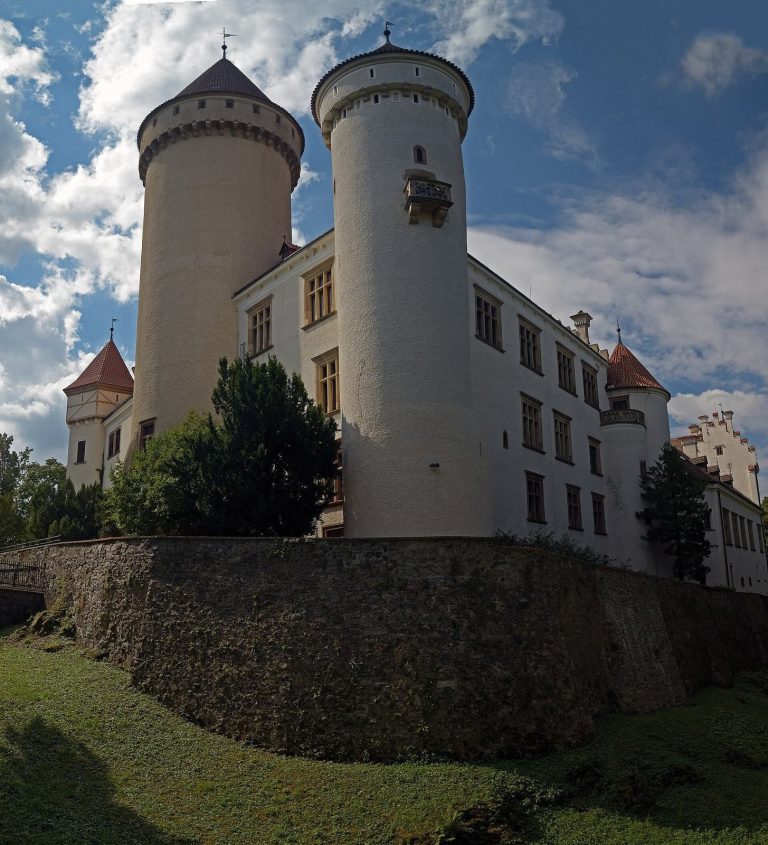
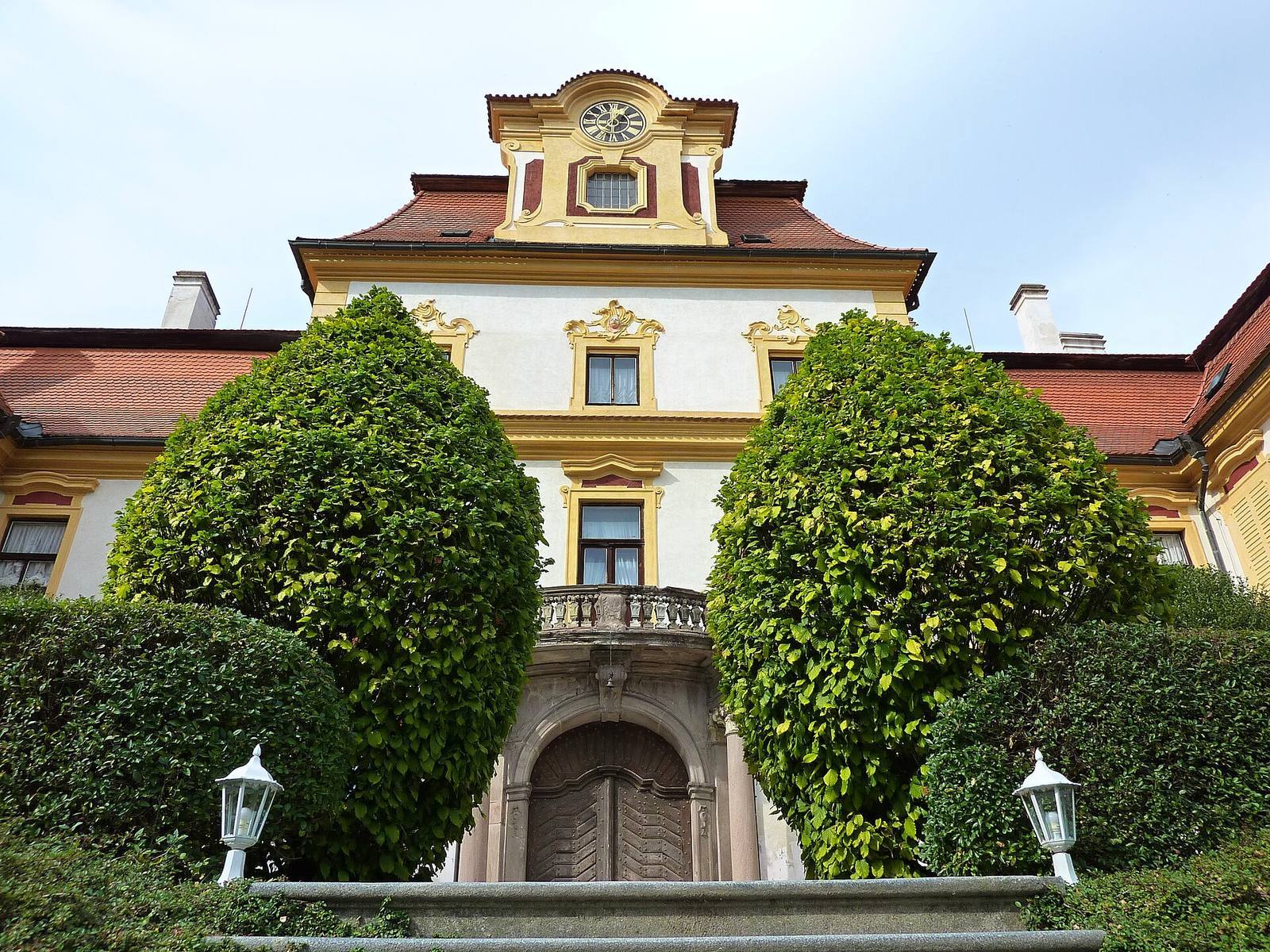
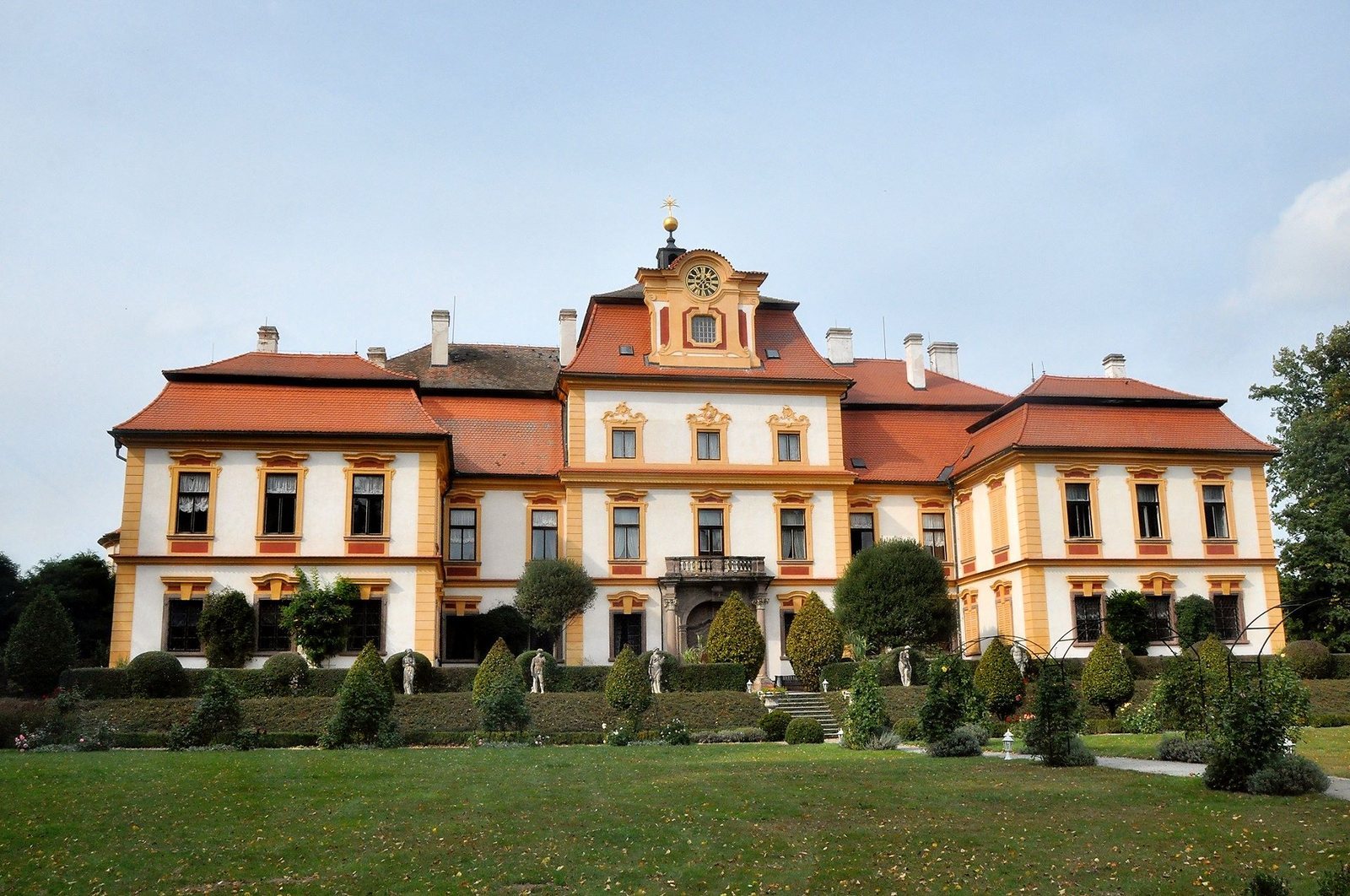
The two-storey residence has a symmetrical façade, a small balcony above the entrance, and a clock. Four statues and a spire topped by a star, the Sternberg family emblem, complete its exterior features. Copies have replaced the Baroque statues on the main façade. Zdeněk Sternberg also brought large statues of ancient Greek deities from Vienna for the estate.
Chapel and decorated rooms
Chapel
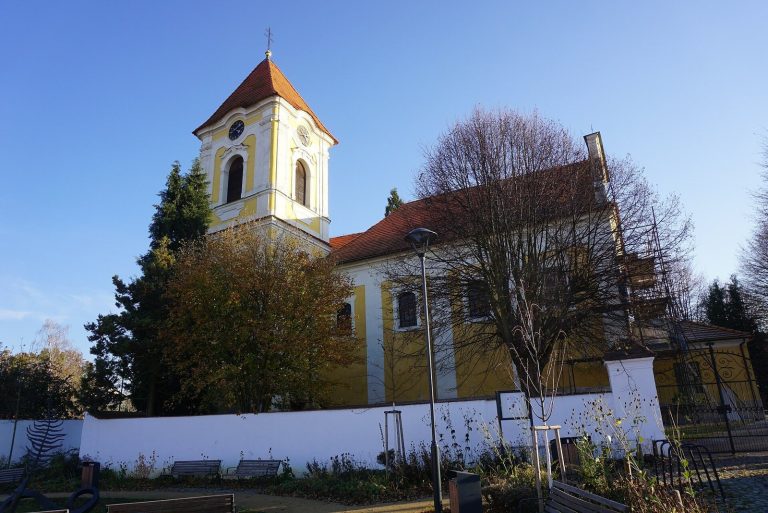
The chapel’s choir, the area reserved for clergy, is decorated with a scene of Christ’s Ascension, figures representing virtues, and other allegorical figures. These works, along with decoration above the sanctuary, are attributed to Baroque painter Václav Vavřinec Reiner. The high altar is attributed to sculptor Matyáš Bernard Braun. In 1754, Felix Anton Scheffler painted a ceiling image of the Holy Trinity in the chapel.
Rococo hall
The Rococo hall reflects a lighter, more ornamental style that developed after Baroque. Its ceiling painting depicts Olympus and was painted by Felix Anton Scheffler in 1754.
Park
The park extends east and north of the chateau and contains three ponds.