Schönbühel Castle: A Medieval Stronghold on the Danube
Site at a Glance
- Popularity
- High
- Country
- Austria
- Primary era
- Medieval
- Eras represented
- Medieval, Early Modern, Modern
- Civilizations
- Austrian Empire, Habsburg, Habsburg Austria, Holy Roman Empire
- Site type
- Domestic
- Remains
- Castle
On this page9 sections
History
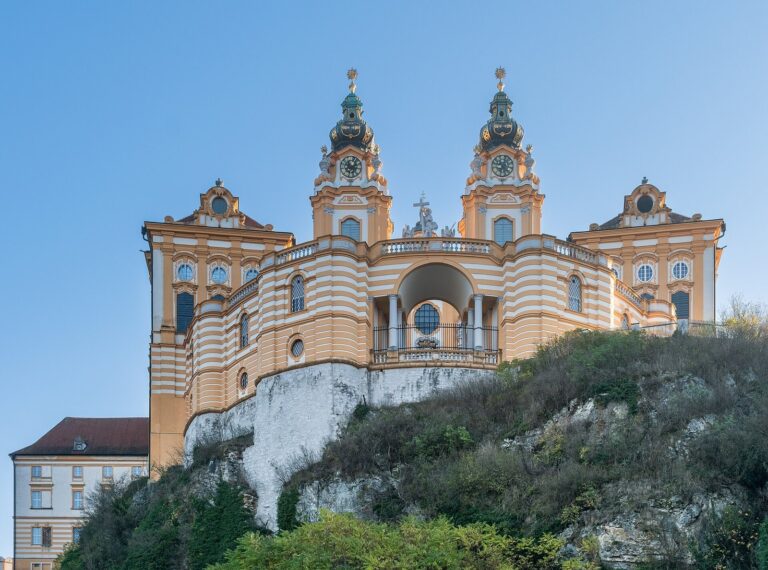
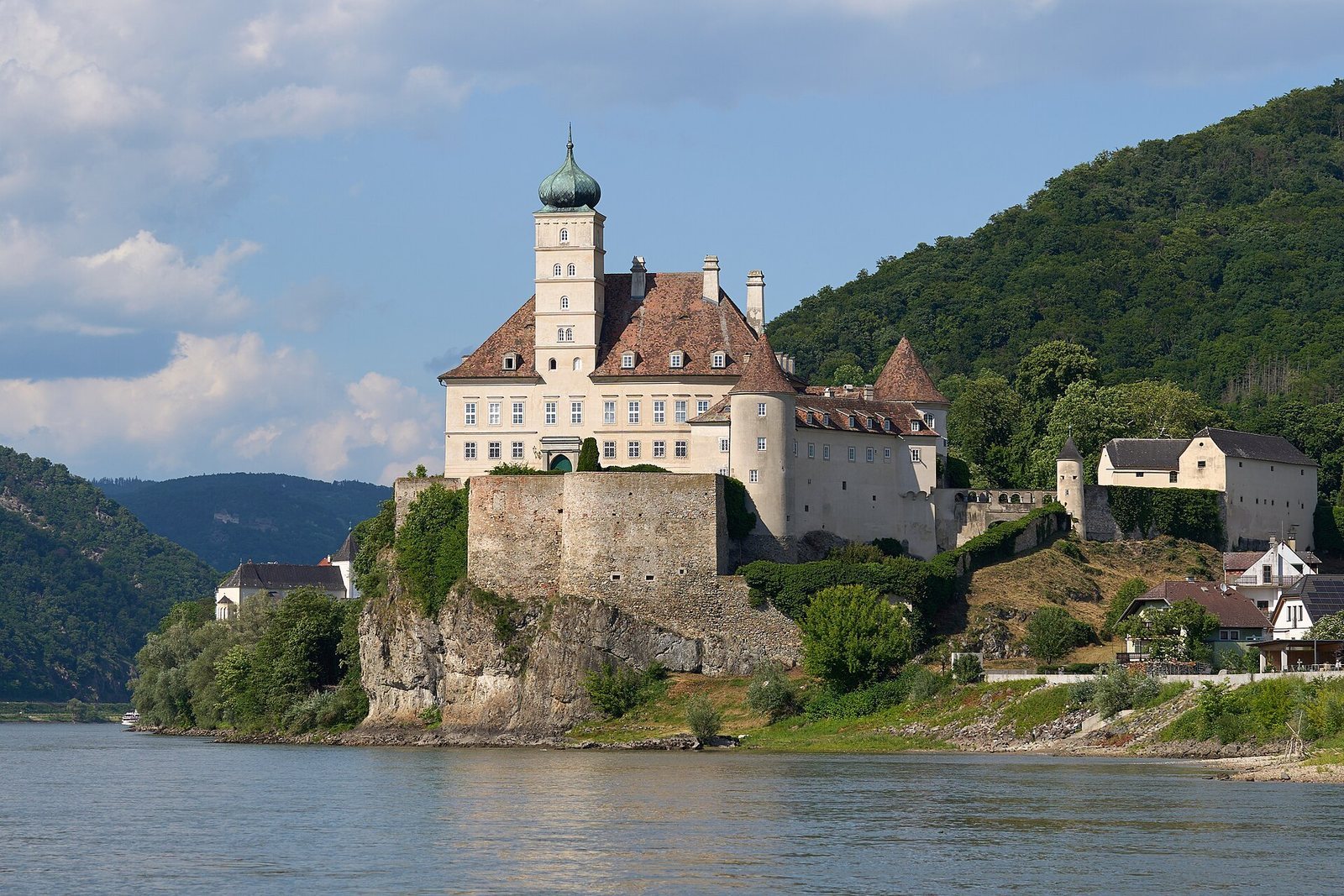
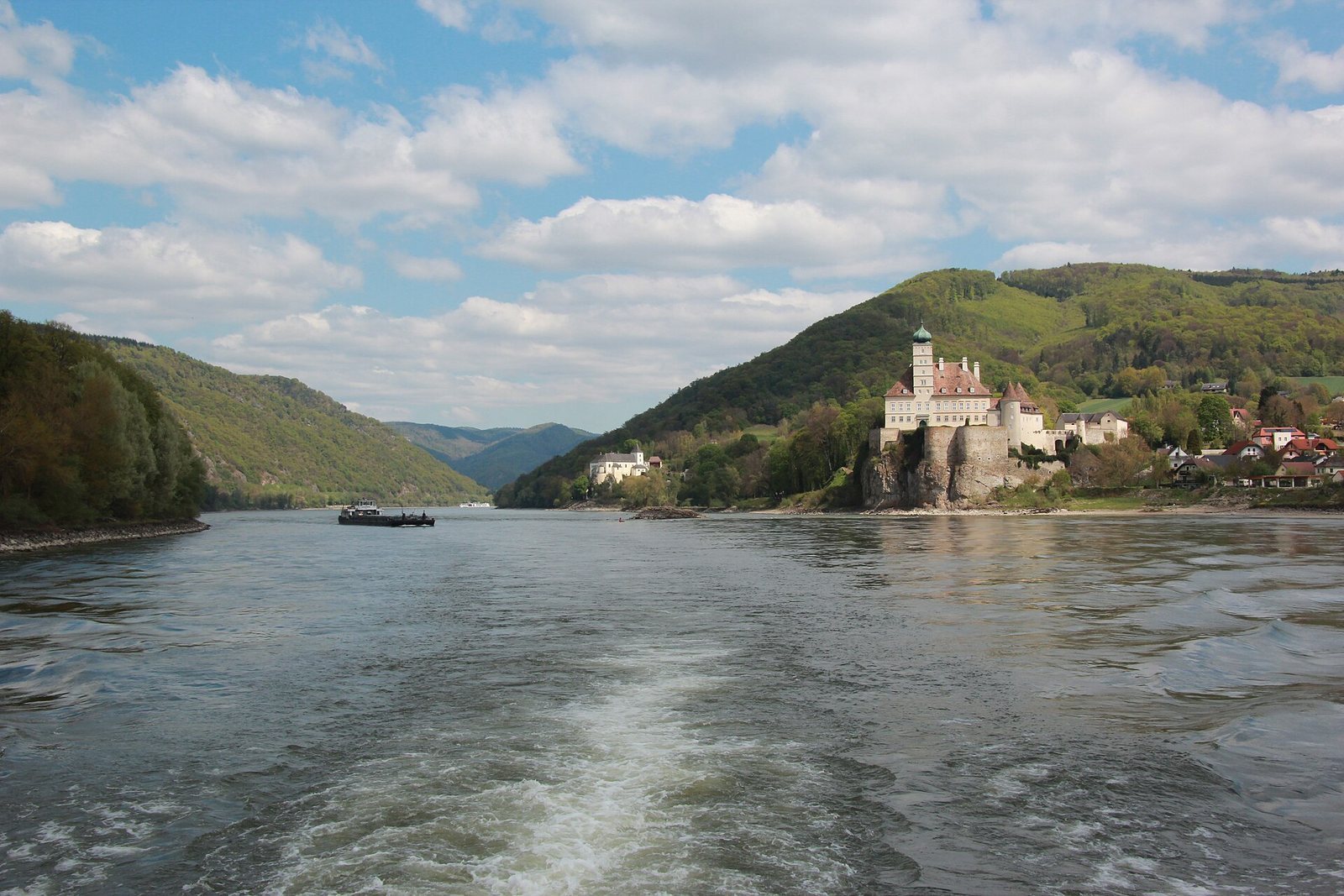
Schönbühel Castle is a castle in Austria, on the Danube’s right bank below Melk. Begun in the early twelfth century by Marchwardus de Schoenbuchele as a defensible stronghold, it took much of its present form through rebuilding in the first half of the nineteenth century. Its rebuilt appearance is closer to the Baroque, an earlier style, than to Neoclassicism, which drew on Greek and Roman forms.
Origins and early use
A Roman fortress may have occupied the rocky site before the castle was built. A church was associated with the site by 1064, and services continued there until 1667. The castle itself also housed a school.
Melk Abbey and Starhemberg ownership
After Marchwardus’s descendant Ulrich von Schonpihel died in the early fourteenth century, the family line ended after nearly two centuries. The castle passed briefly to Conrad von Eisenbeutel and then to Melk Abbey, a Benedictine monastery. In 1396, Abbot Ludwig was compelled to sell it to Caspar and Gundaker von Starhemberg.
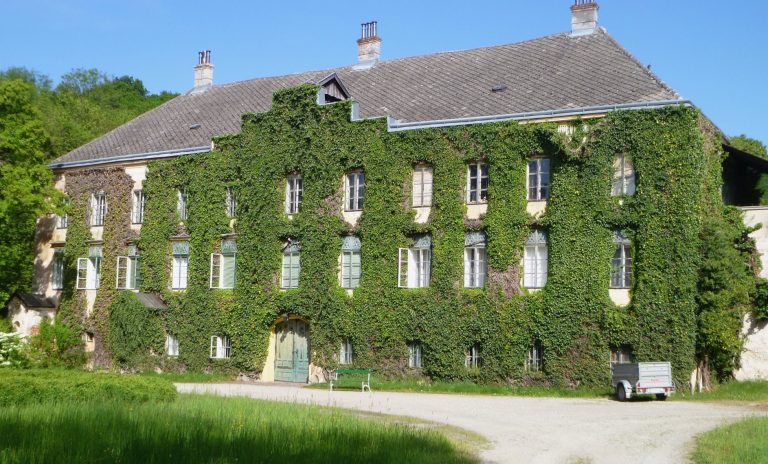
The Starhembergs, an Austrian noble family who later became feudal lords of Gallneukirchen, held Schönbühel for more than 400 years. They expanded and strengthened the castle. The family’s last lords apparently no longer lived there, and the property had fallen into severe disrepair by 1819.
Restoration and later ownership
In 1819, Ludwig Josef Gregor von Starhemberg sold Schönbühel, along with the ruined Aggstein Castle, to Count Franz von Beroldingen. Beroldingen had Schönbühel renovated and partly rebuilt; it was habitable again by 1821.
In 1930, Franz von Beroldingen’s great-nephew sold the estate to Count Oswald von Seilern-Aspang. It was expropriated during the Second World War and occupied by Soviet forces until 1955, when it was returned to the Seilern-Aspang family, which still owns it.
Remains
The castle occupies a rocky outcrop about 40 metres above the Danube. During the nineteenth-century rebuilding, the open ground behind it was levelled to create the present plateau, and a bridge was constructed to connect the castle with the park. These changes helped shape the complex’s present form.
Castle buildings and defenses
Tower, church, and adjoining wing
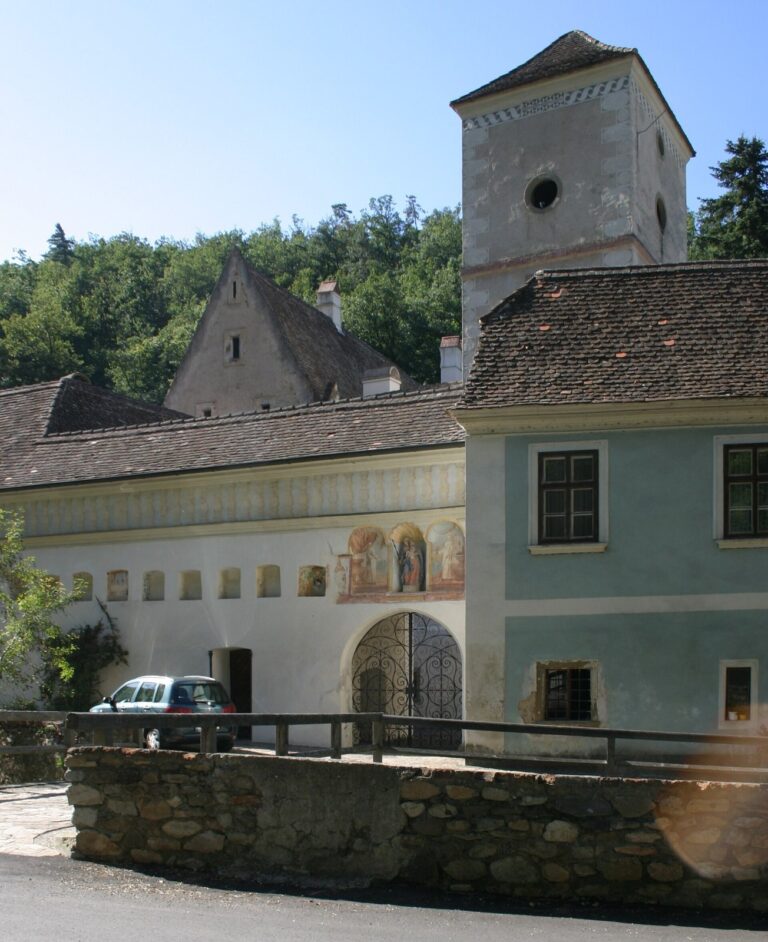
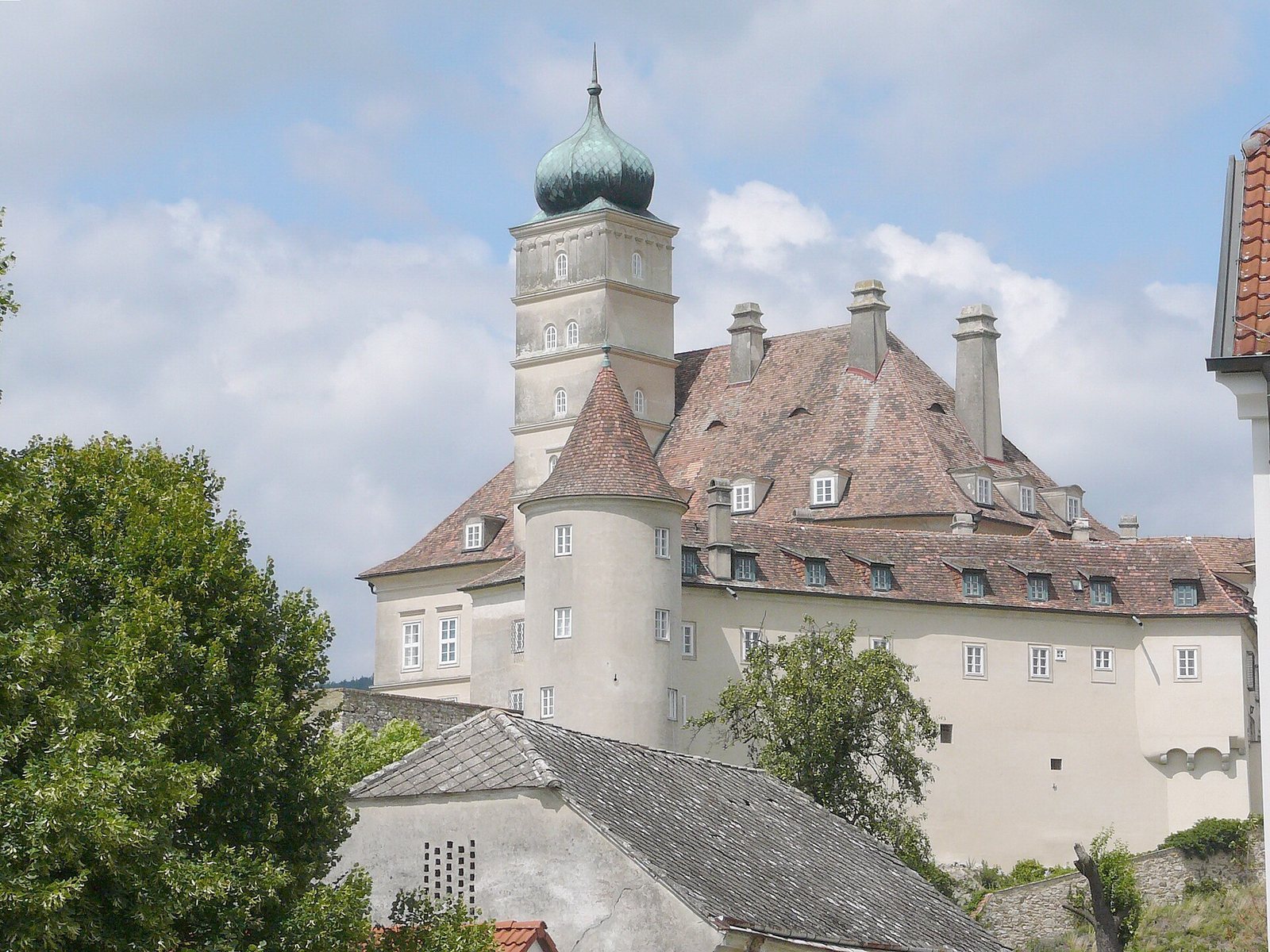
By 1819, the principal visible structures included a high tower, a deconsecrated church, and an adjoining wing with three round towers. Together, these buildings formed the main surviving group within the castle.
Rounded defenses and underground passages
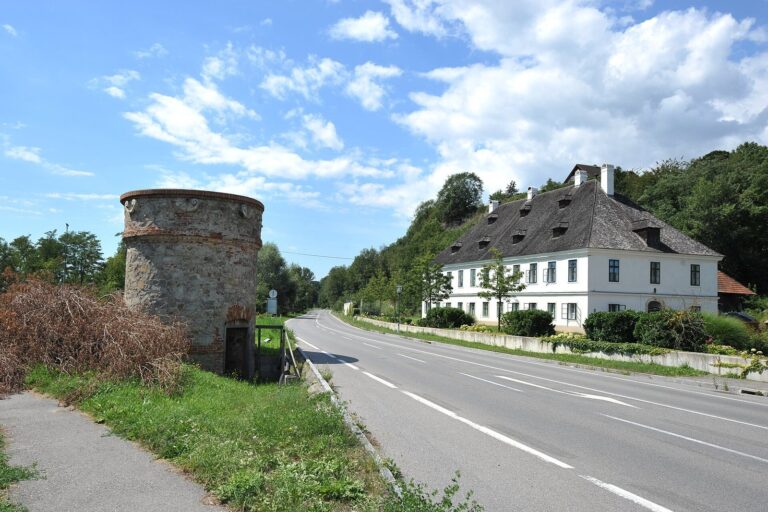
The complex has massive towers and rounded defensive structures, along with underground passages, some of which are partly filled in. These features point to the former presence of dungeons and prison cells.
Main portal
The surviving principal portal is now set into the Hirschgraben and bears the Starhemberg coat of arms. Its imagery commemorates the 1683 Ottoman siege of Vienna, during which Ernst Rüdiger von Starhemberg led the city’s defense. The shield includes a crowned letter L for Emperor Leopold I, a Turkish head, and a laurel-wreathed sword held in a panther’s paws. Above it is an image of St Stephen’s Tower with a victorious cross and a fallen crescent.