Torre Rognosa: A Medieval Civic and Prison Tower in San Gimignano
Site at a Glance
- Popularity
- Medium
- Country
- Italy
- Primary era
- Medieval
- Eras represented
- Medieval
- Civilizations
- Holy Roman Empire
- Site type
- Civic
On this page4 sections
History
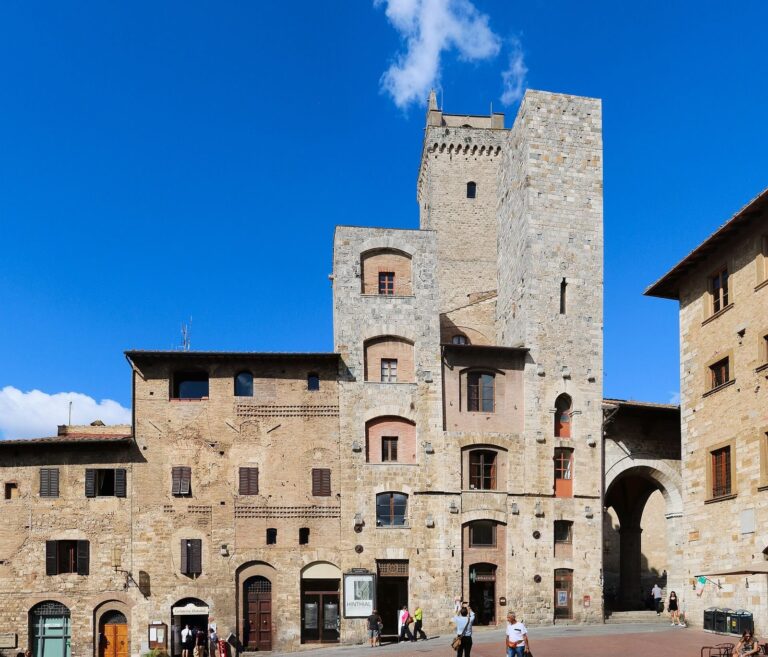
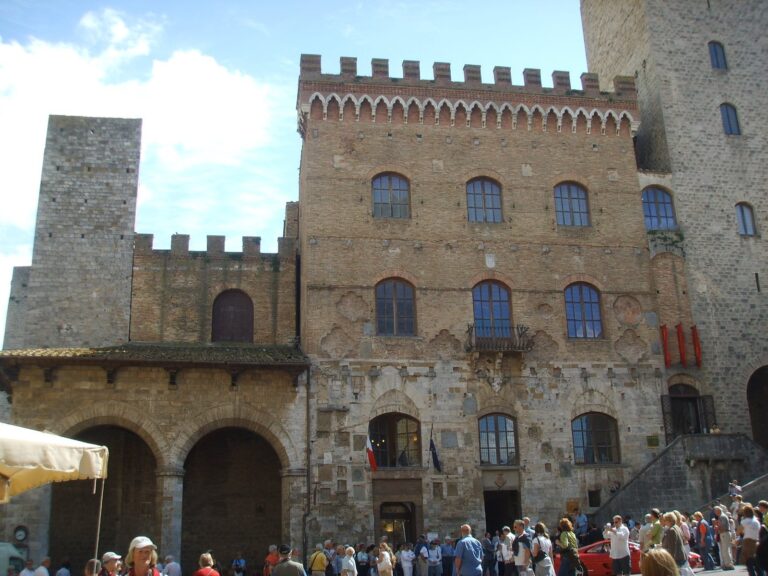
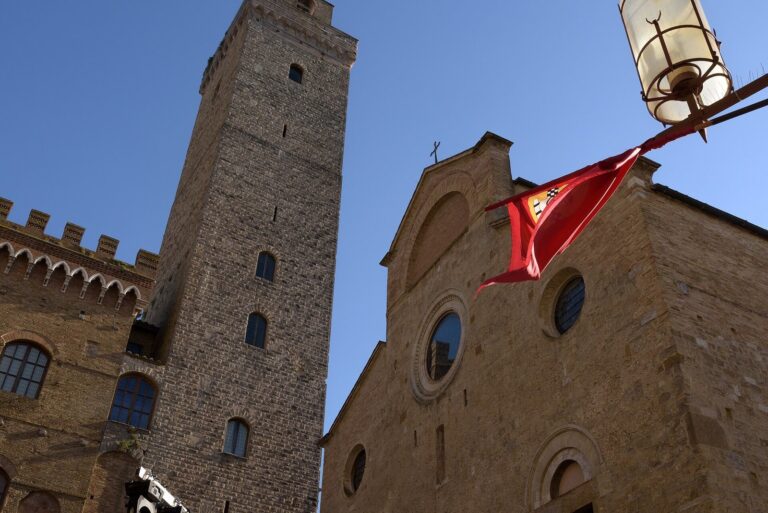
Torre Rognosa is a medieval stone tower on Piazza del Duomo in San Gimignano, Italy, built around 1200. Also known as the Clock Tower and Tower of the Podestà, it was associated with the Old Palace, the residence of a podestà, a civic magistrate who governed many Italian communes.
Civic use
The tower belonged to the Gregori and Oti families. While the podestà lived in the Old Palace, Torre Rognosa was connected with his residence. After he moved to a later town hall, the tower was used as a prison. Its name is linked both to this prison use and to the word for scabies. The bell first warned townspeople of danger and later marked the hours.
Tower height and family rivalry
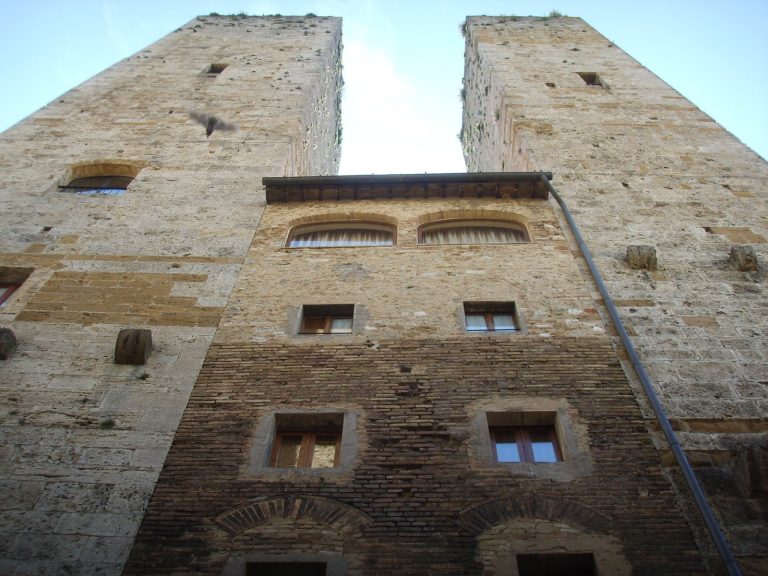
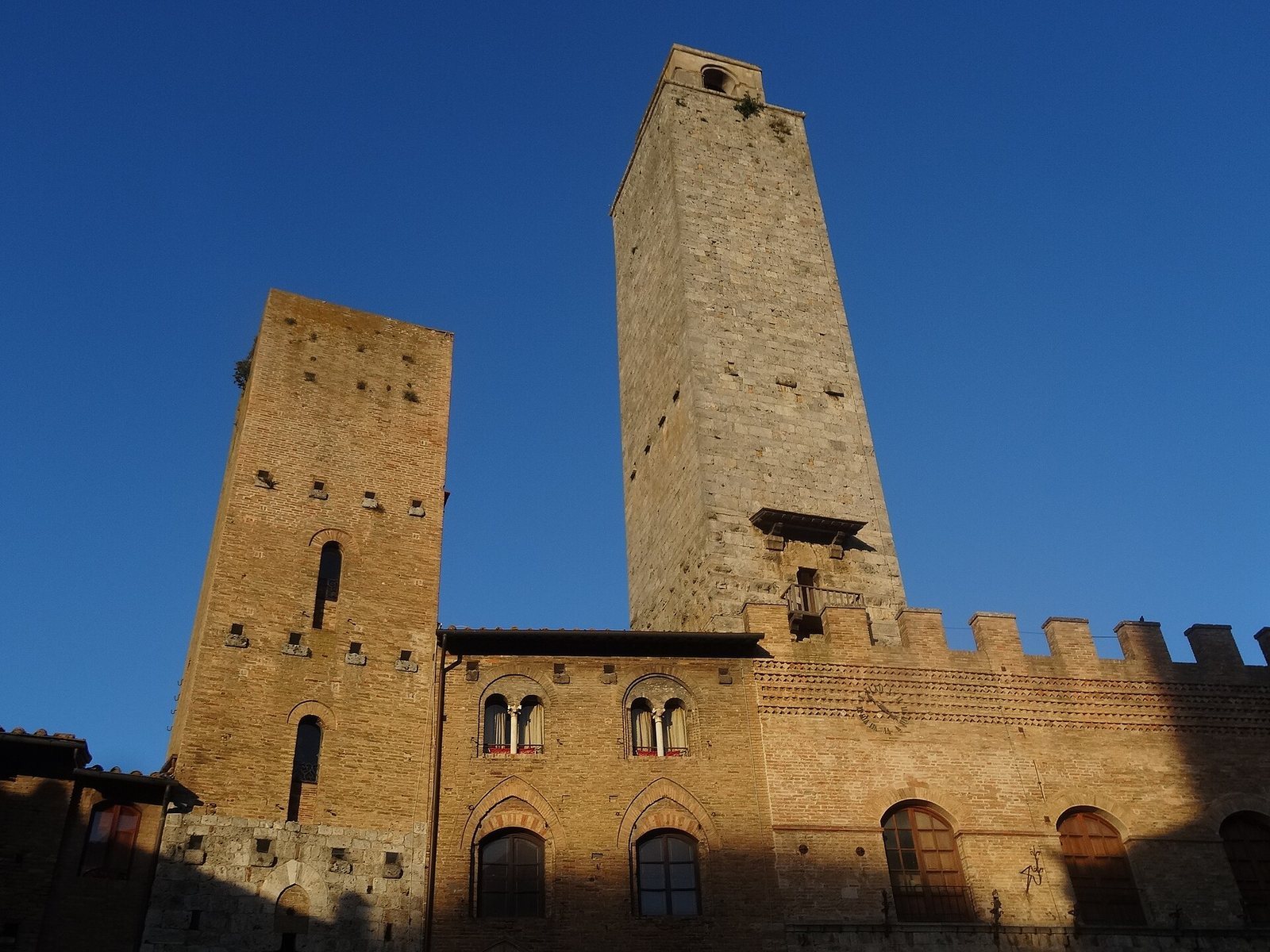
In medieval San Gimignano, the height of a family’s tower reflected its standing. A statute passed in 1255 barred private citizens from building towers taller than Torre Rognosa. The Salvucci family defied the limit with two nearby towers, followed later by two built by their rivals, the Ardinghelli. Both pairs were subsequently lowered, and all four towers now stand below Torre Rognosa.
Remains
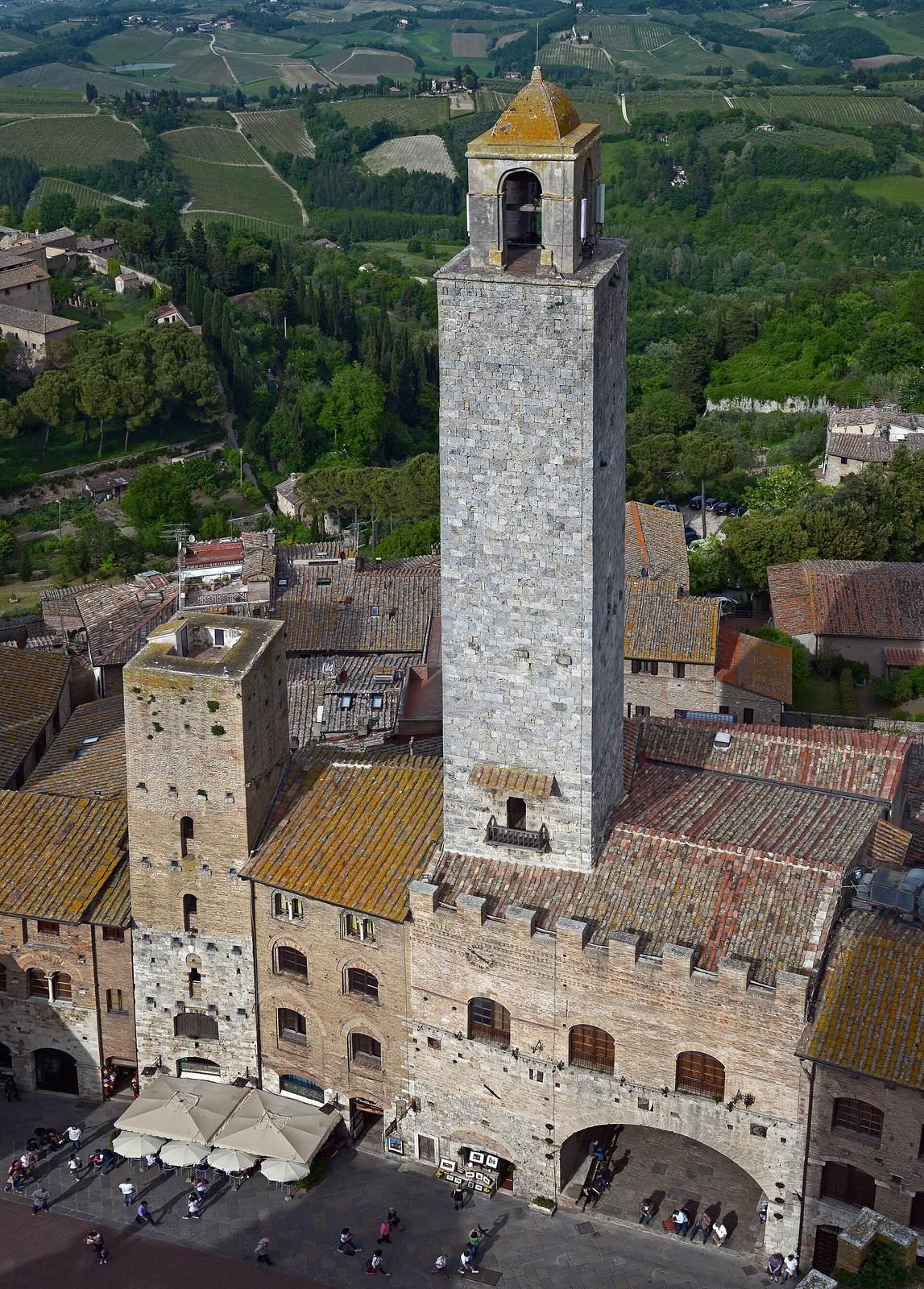
Torre Rognosa rises from the 13th-century Old Palace. Built of stone blocks laid in fairly regular courses, it has an almost square base and stands about 51 metres tall. It is San Gimignano’s second-tallest tower, after Torre Grossa at 54 metres, and is among the town’s best-preserved medieval towers. A small window faces Piazza della Cisterna. Just above the palace battlements, a narrow doorway with a horizontal stone lintel opens onto a small terrace beneath a canopy. At the top, an open terrace contains a bell chamber for secular use, formed by four arches resting on substantial pillars and capped with a small pyramid of red tiles.