Domus Severiana: The Final Extension of Rome’s Imperial Palaces
Site at a Glance
- Popularity
- Medium
- Country
- Italy
- Primary era
- Classical
- Eras represented
- Classical
- Civilizations
- Roman
- Site type
- Domestic
- Remains
- Palace
On this page7 sections
History
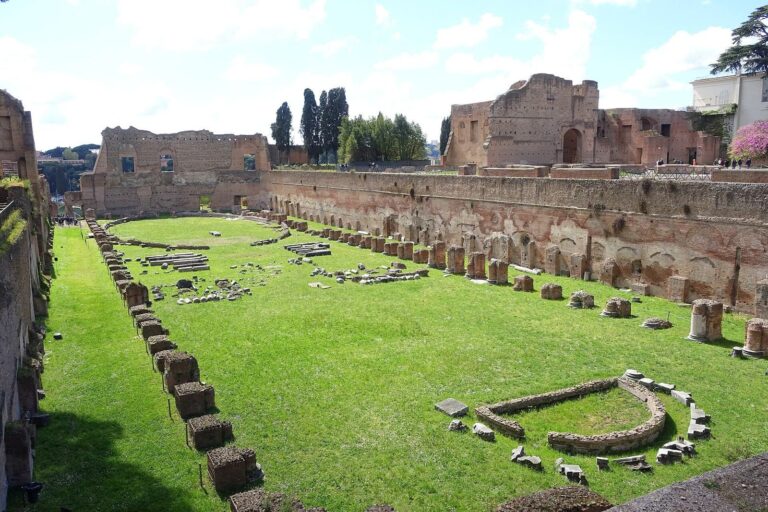
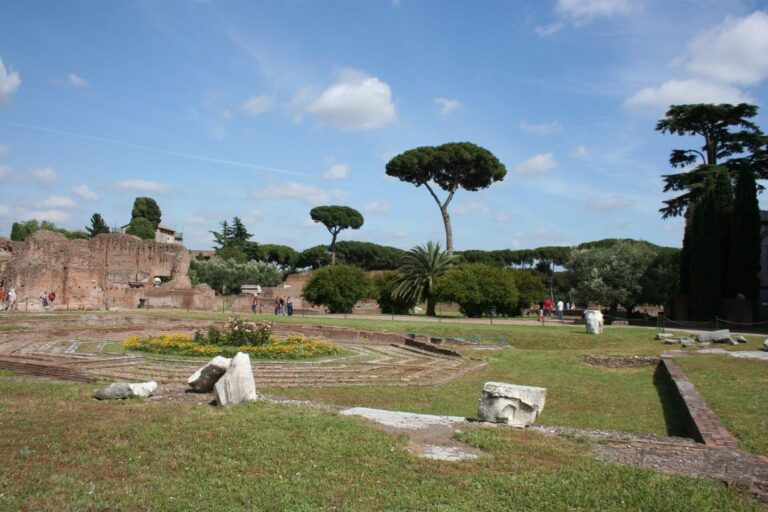
The Domus Severiana is the modern name for the final extension of the imperial palace complex on the Palatine Hill in Rome, Italy. Roman emperor Septimius Severus, who ruled from 193 to 211, built it within the Domus Augustana, an imperial palace, southeast of the Stadium Palatinum, the hill’s stadium. The extension formed part of the residence used by Roman emperors.
Imperial Baths
The extension included imperial baths known as the Balneum Palatii, or Palace Baths. The complex may have originated under Domitian, who ruled from 81 to 96, and was later rebuilt under Maxentius, emperor from 306 to 312.
The Septizodium
Severus also commissioned the monumental Septizodium. It was intended to impress his fellow Africans arriving in Rome. The structure was demolished in the 16th century.
Remains
Palace Platform
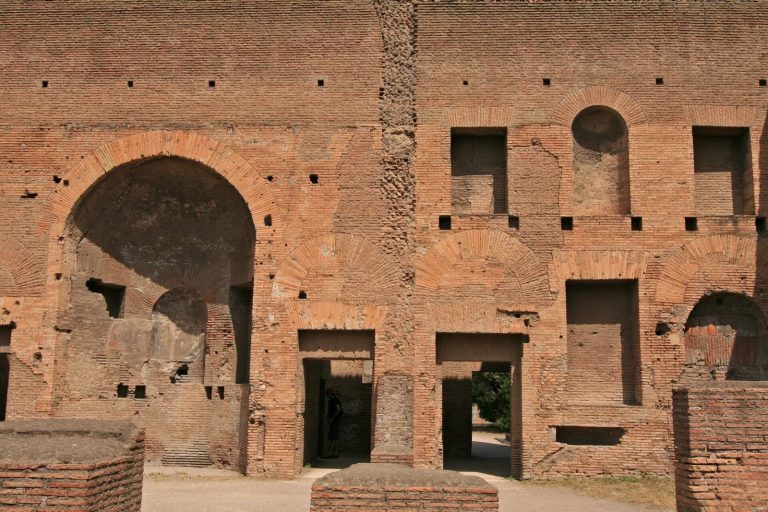
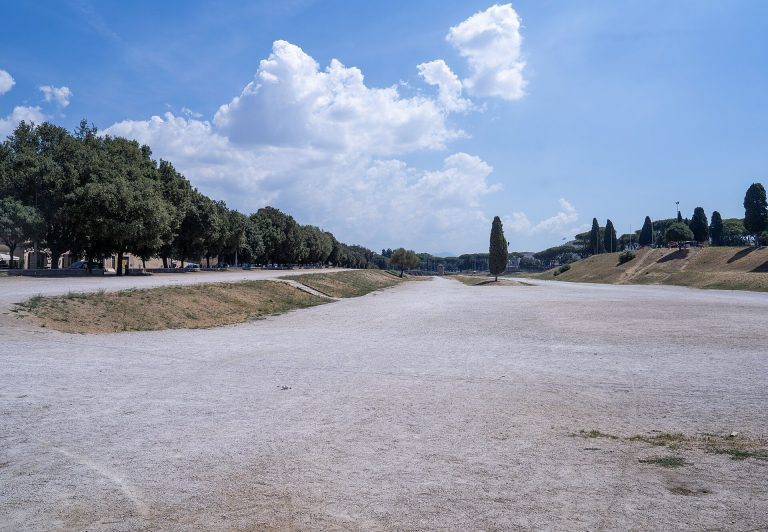
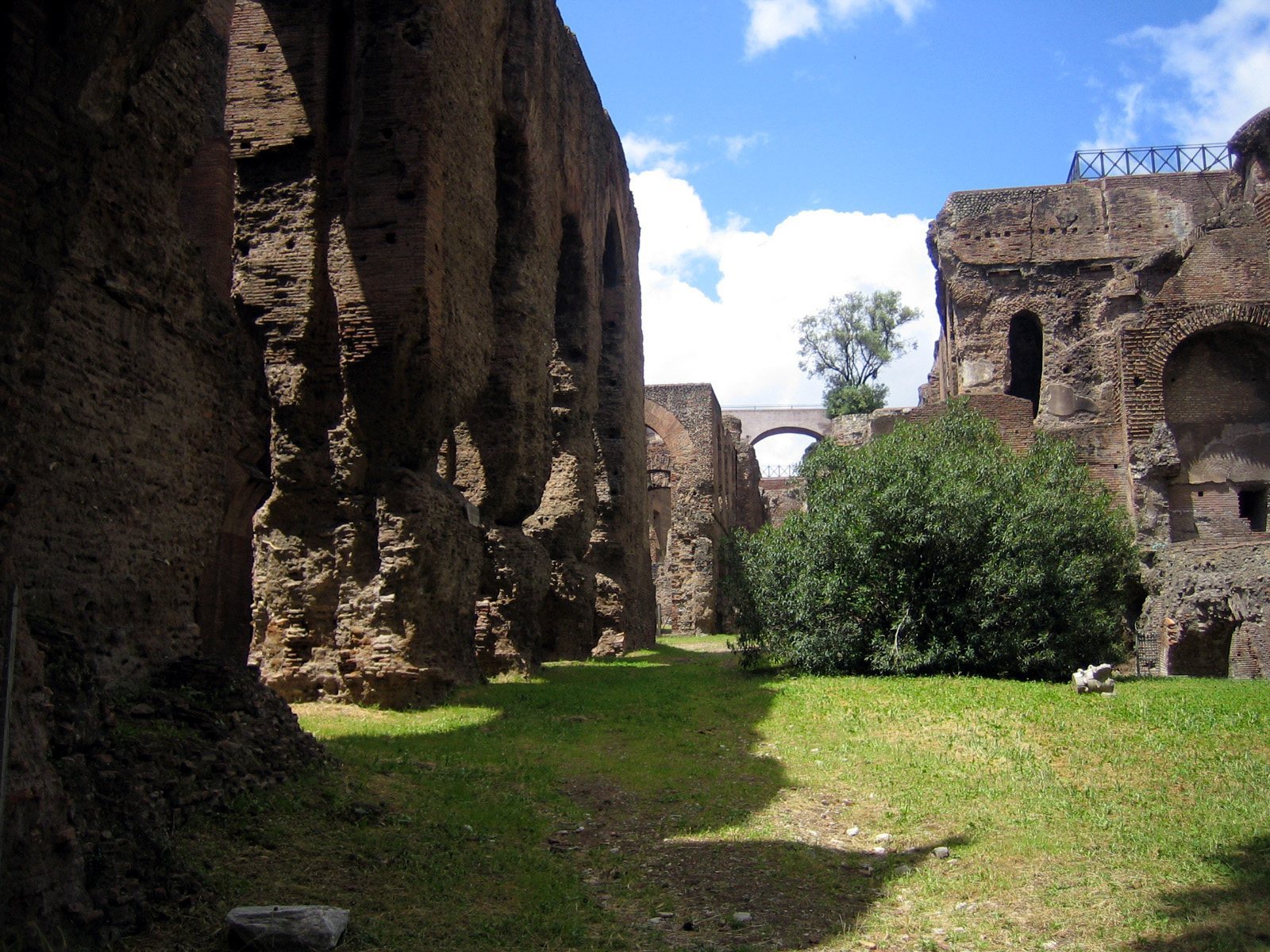
The main surviving structures are brick substructures at the corner of the Palatine Hill. They supported an artificial platform at the level of Domitian’s palace, extending the palace area when space on the hill had run out. The palace building stood on a terrace above the substructures, and scant remains of the building survive. The site’s position offered views across Rome, from the Circus Maximus and Aventine Hill to the Caelian Hill and the Baths of Caracalla.
Baths and Water Supply
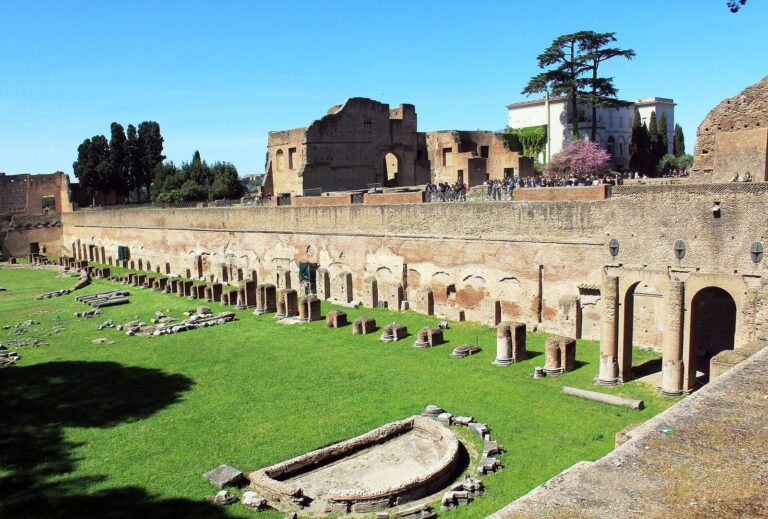
Remains of the imperial baths lie below the Stadium Palatinum’s exedra, a curved or recessed architectural space. A branch of the Aqua Claudia, a Roman aqueduct, supplied the baths and crossed the valley between the Palatine and Caelian hills. Some of the aqueduct’s arches remain visible.
The Septizodium’s Design
Renaissance drawings depict the Septizodium as a three-level façade facing the Appian Way, a major road into Rome. Its design resembled the elaborate backdrop of a Roman theatre stage and included fountains and colonnades.