Son Marroig: A Historic Estate on Mallorca
Site at a Glance
- Popularity
- High
- Country
- Spain
- Primary era
- Modern
- Eras represented
- Modern
- Civilizations
- Spanish
- Site type
- Domestic
- Remains
- Manor House
History
Son Marroig is a historic estate in the municipality of Deià on Mallorca, Spain. Before the seventeenth century, it was called Foradada de los Masroig; from the seventeenth century to the late eighteenth, its name was Son Masroig de la Foradada. Gabriel Masroig de la Foradada owned the estate in 1624, and it was valued at 11,000 pounds in 1685.
In 1863, the estate passed to the Cortei family, which later sold it to Ludwig Salvator, an Austrian archduke from the Tuscan branch of the Habsburg dynasty. A naturalist and writer, he considered Son Marroig essential to his project to reconstruct the Miramar associated with Ramon Llull, the medieval Mallorcan philosopher and writer. He paid substantially more than the estate’s assessed value. Local tradition attributes to him the remark that even all the money he had paid could not buy the “hole” of Foradada.
Ludwig Salvator used the small natural harbor below the estate to moor his steam yacht, Nixe. Empress Elisabeth, wife of Emperor Franz Joseph I of Austria, visited aboard her yacht, Miramar. His Mallorcan properties also included neighboring Son Moragues, covering more than 800 hectares, and Miramar monastery. Together, these lands formed a continuous stretch of coast that he placed under special protection to preserve its natural character. He also laid a scenic riding path through his estates, now called the Camí de s’Arxiduc, or Archduke’s Path.
After Ludwig Salvator’s death, Son Marroig passed to his secretary, Antoni Vives Colom. Vives Colom’s descendants continue to own the estate, and a museum dedicated to the archduke has been housed there since 1928. Son Marroig has hosted the Deià International Classical Music Festival since 1978. A local tradition identifies a woman from the estate, taken by corsairs, maritime raiders often operating as privateers, in the late eighteenth century as the last person captured by them in Mallorca. Jules Verne mentions Son Marroig in his novel The Green Ray. On 30 November 1993, the estate received Spain’s Asset of Cultural Interest designation, a legal protection for cultural property.
Remains
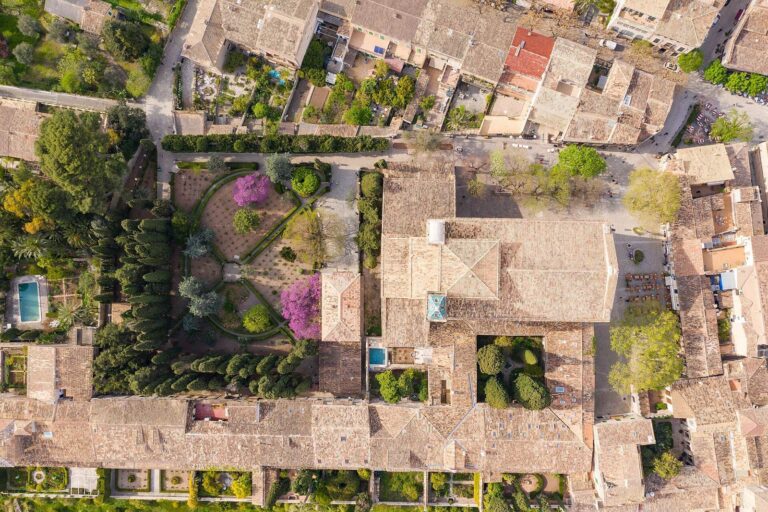
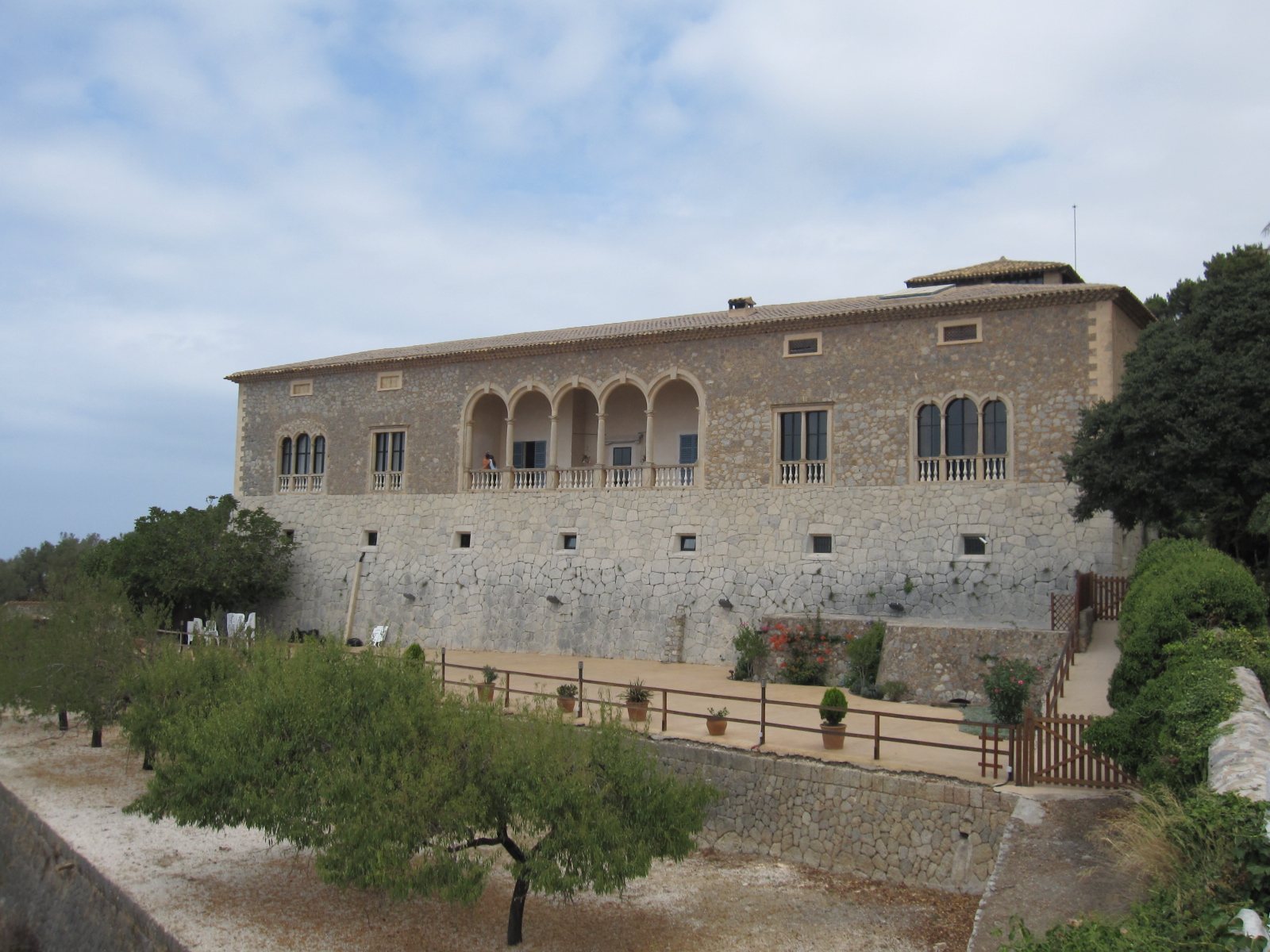
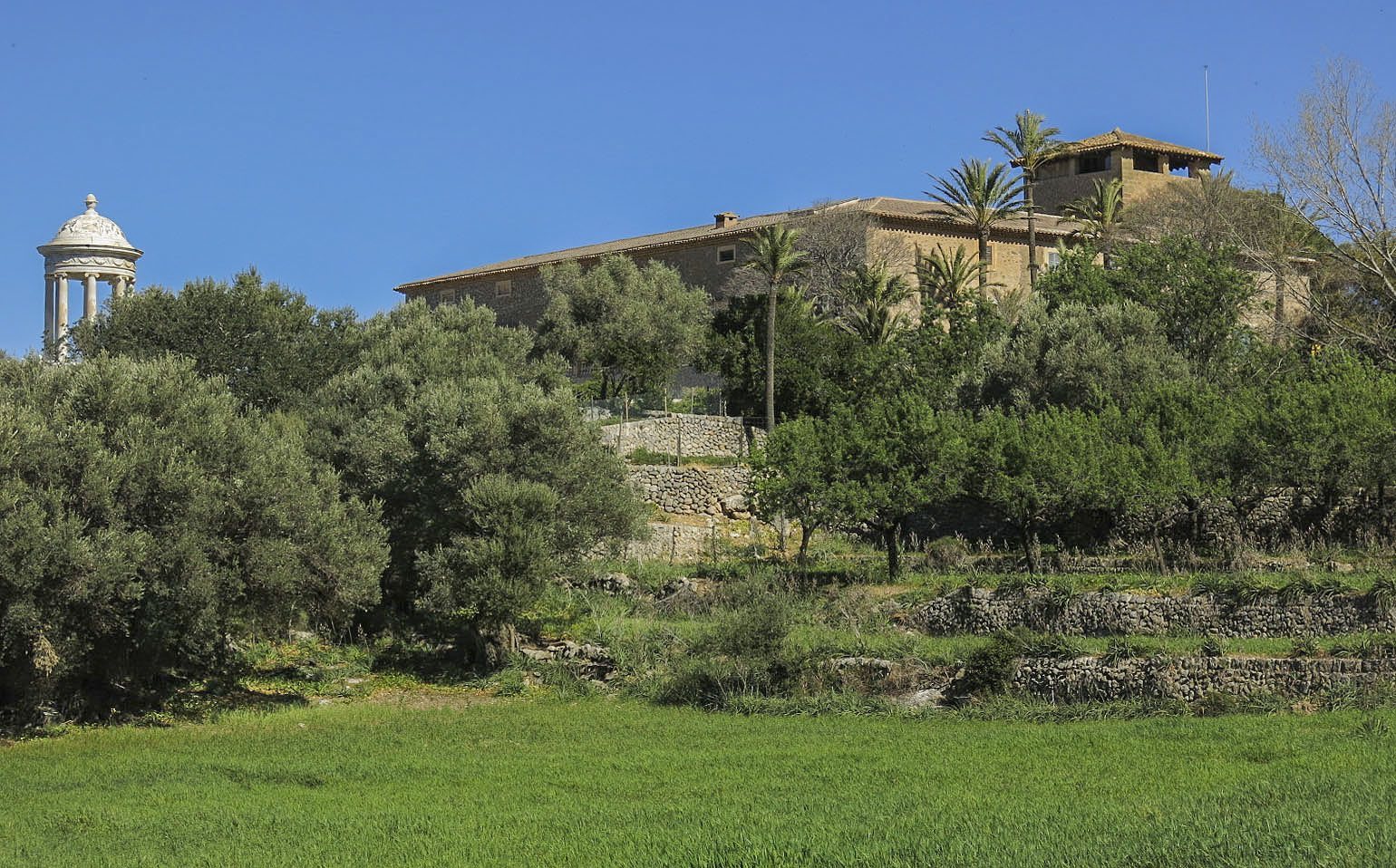
The estate occupies a steep stretch of coast opposite the peninsula of Sa Foradada, also called Na Foradada, and its grounds extend across the peninsula. Olive groves and viewpoints form part of the grounds. Two viewpoints along a path toward the sea look out over Sa Foradada and the opening through its rock wall. A natural harbor lies in the bay below the estate.
In the garden, a small circular temple stands raised on a stone pedestal. Built of Carrara marble, it rests on a circular base of four steps and has eight Ionic columns, whose capitals follow a classical Greek style. Ludwig Salvator had it made after a structure on an islet in the Pallavicini garden at Pegli, near Genoa. That model drew in turn on the ancient Greek tholos, a circular building form.
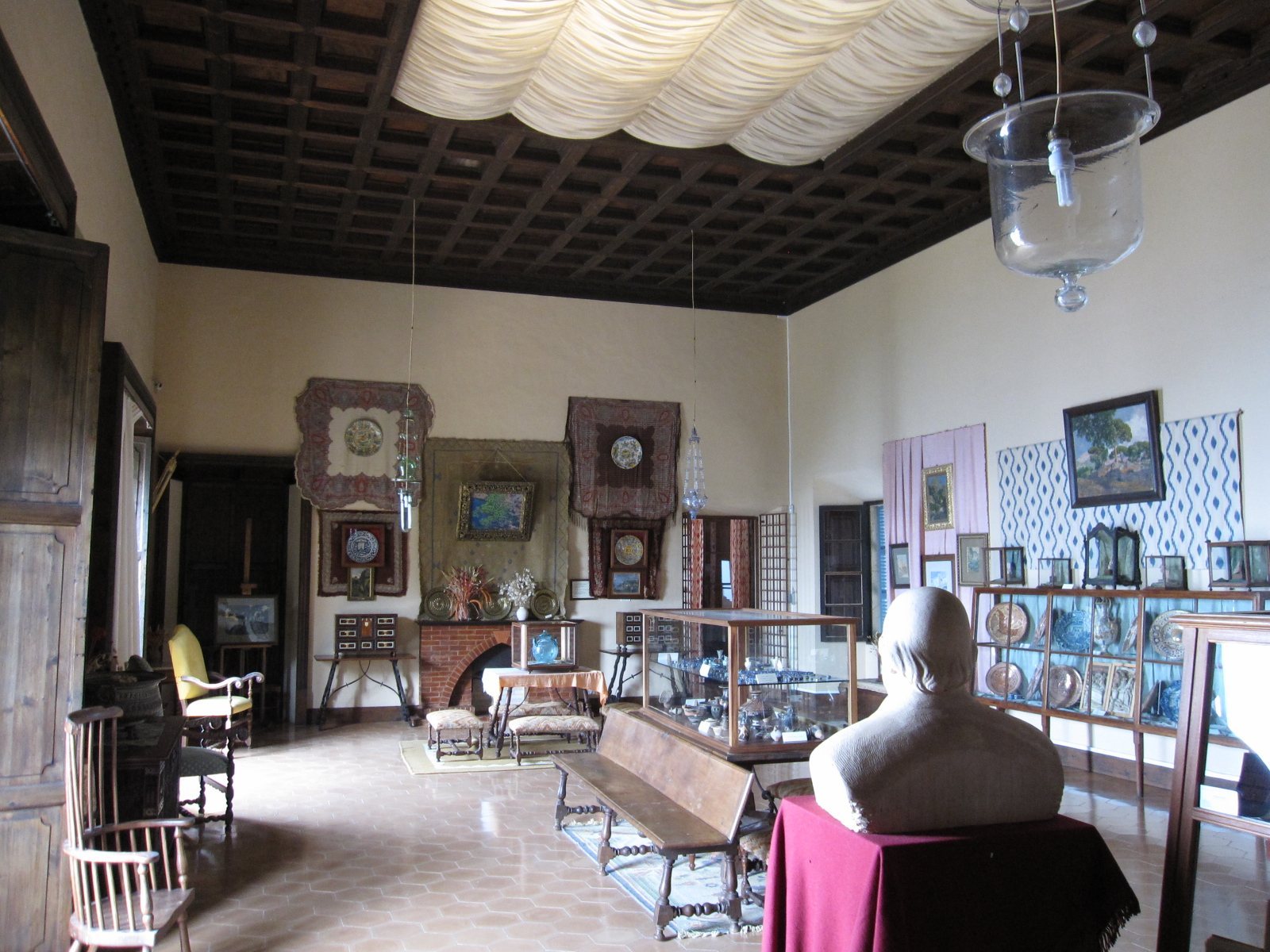
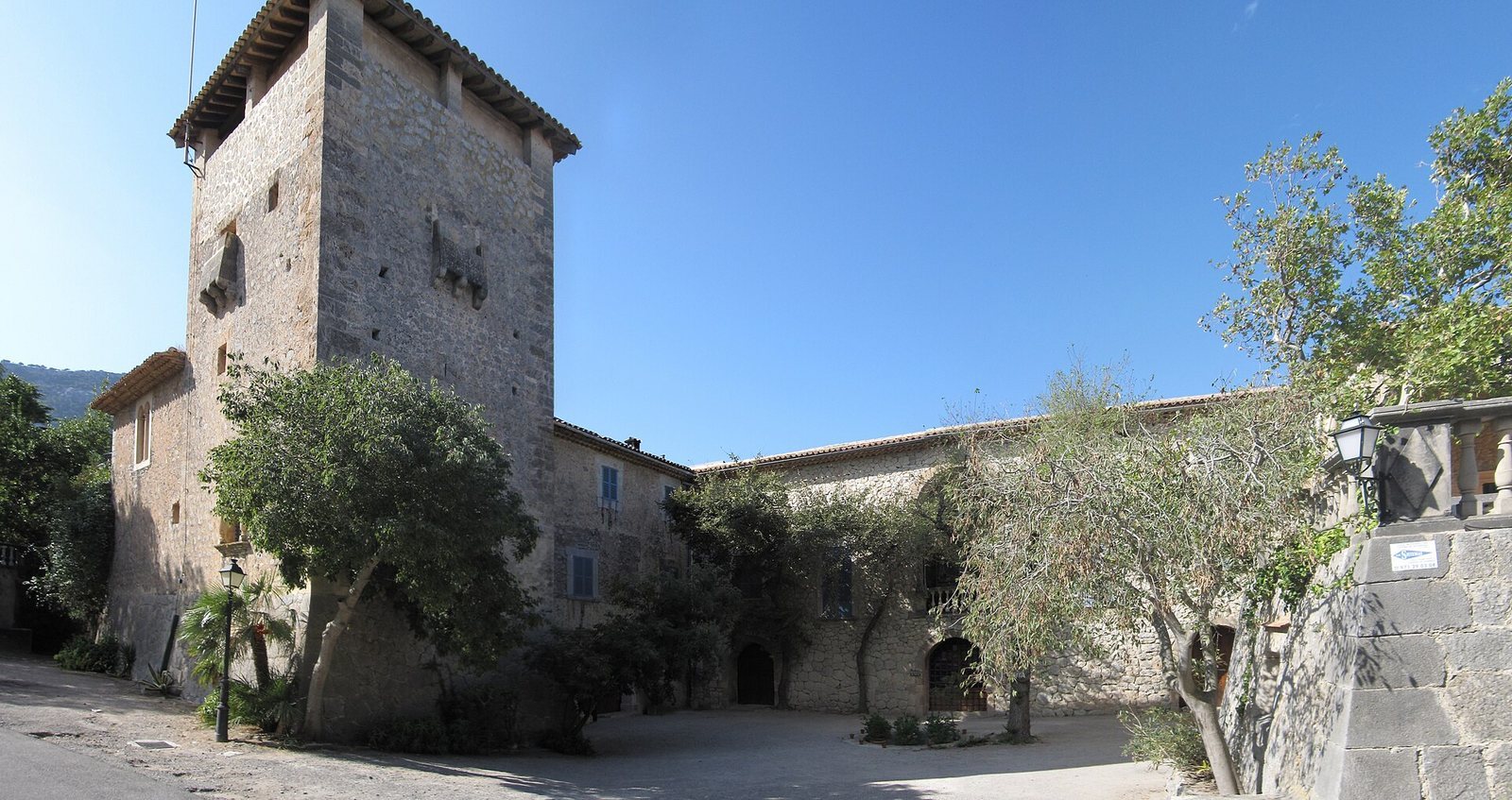
The main hall has a five-arched loggia, an open-sided gallery, where display cases hold Ludwig Salvator’s literary works. The museum’s collections include historical furniture, ceramics, and Mallorcan paintings dating from the seventeenth to nineteenth centuries.
The smaller villa S’Estanca is a separate building on the estate, constructed in the nineteenth century.