Newton St Loe Castle: A Fortified Manor House in Somerset
Site at a Glance
- Popularity
- Medium
- Country
- United Kingdom
- Primary era
- Medieval
- Eras represented
- Medieval
- Civilizations
- English
- Site type
- Military
- Remains
- Castle
On this page10 sections
History
Origins and the St Loe family
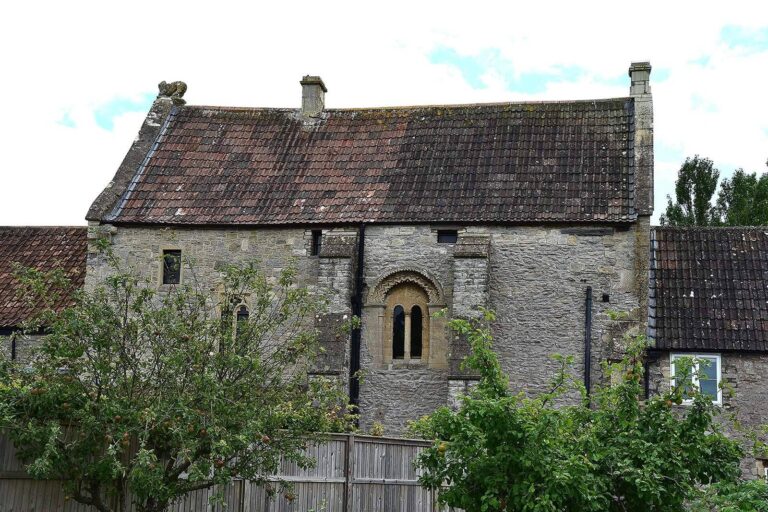
Newton St Loe Castle was a fortified manor house in the village of Newton St Loe, Somerset, United Kingdom. Probably built in the twelfth century, it stood within Newton Park, a medieval deer park, and later became a courtyard castle. The surrounding lands had belonged to the de Paveley family of Westbury, Wiltshire. After John de Paveley died without an heir, the estate passed through marriage to John de Sancto Laudo, a knight credited with actions at Acre during the Crusades, medieval Christian military campaigns fought chiefly in the eastern Mediterranean.
The castle was apparently known as St John’s Keep because William de Sancto Laudo was said to have held King John there under arrest. King John ruled England from 1199 to 1216.
Medieval rebuilding
At the beginning of the fourteenth century, the St Loe family carried out a broader building programme that included a keep and reshaped the castle. In 1375, Elizabeth St Loe, the last of her family, inherited the estate and married William, 2nd Baron Botreaux. During the first half of the fifteenth century, Sir Walter Hungerford, an English nobleman and military figure, had a new gatehouse built.
Country-house development and later use
In the nineteenth century, the estate was developed as a country house, and the keep was renovated. During the 1970s and 1980s, the castle housed the Religious Studies department of Bath College of Higher Education, now Bath Spa University. Bath Spa University continues to use the site. In 1984, the keep and gatehouse were each designated Grade I listed buildings, England’s highest listed-building category. Both are also Scheduled Monuments, a status that protects archaeological or historic sites.
Remains
Plan and defenses
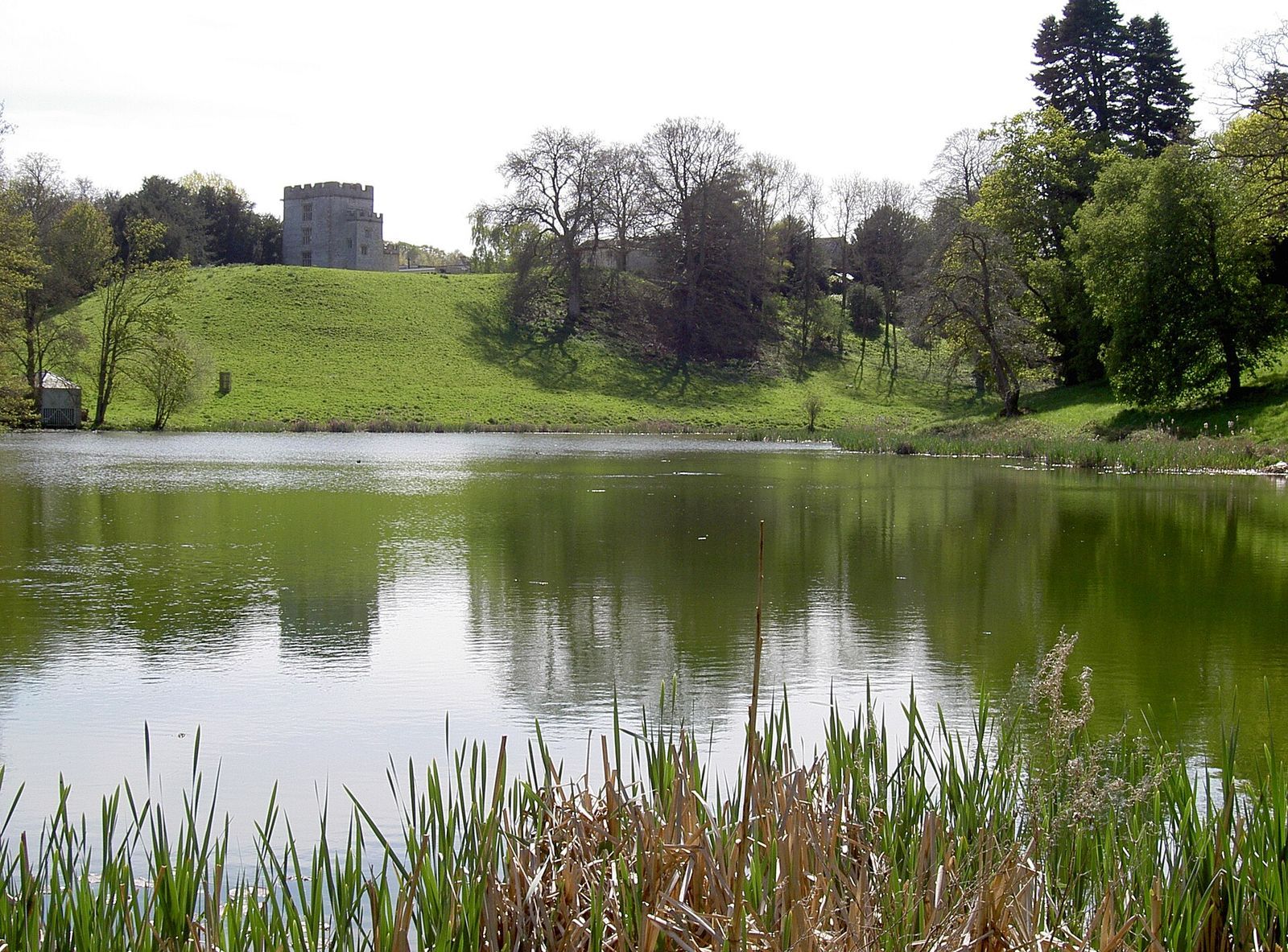
The stone castle had a rectangular plan organized around a courtyard, with a tower at each corner. A ditch protected three sides. A mound near the surviving buildings marks the position of one of the fourteenth-century corner towers.
Surviving buildings
Keep
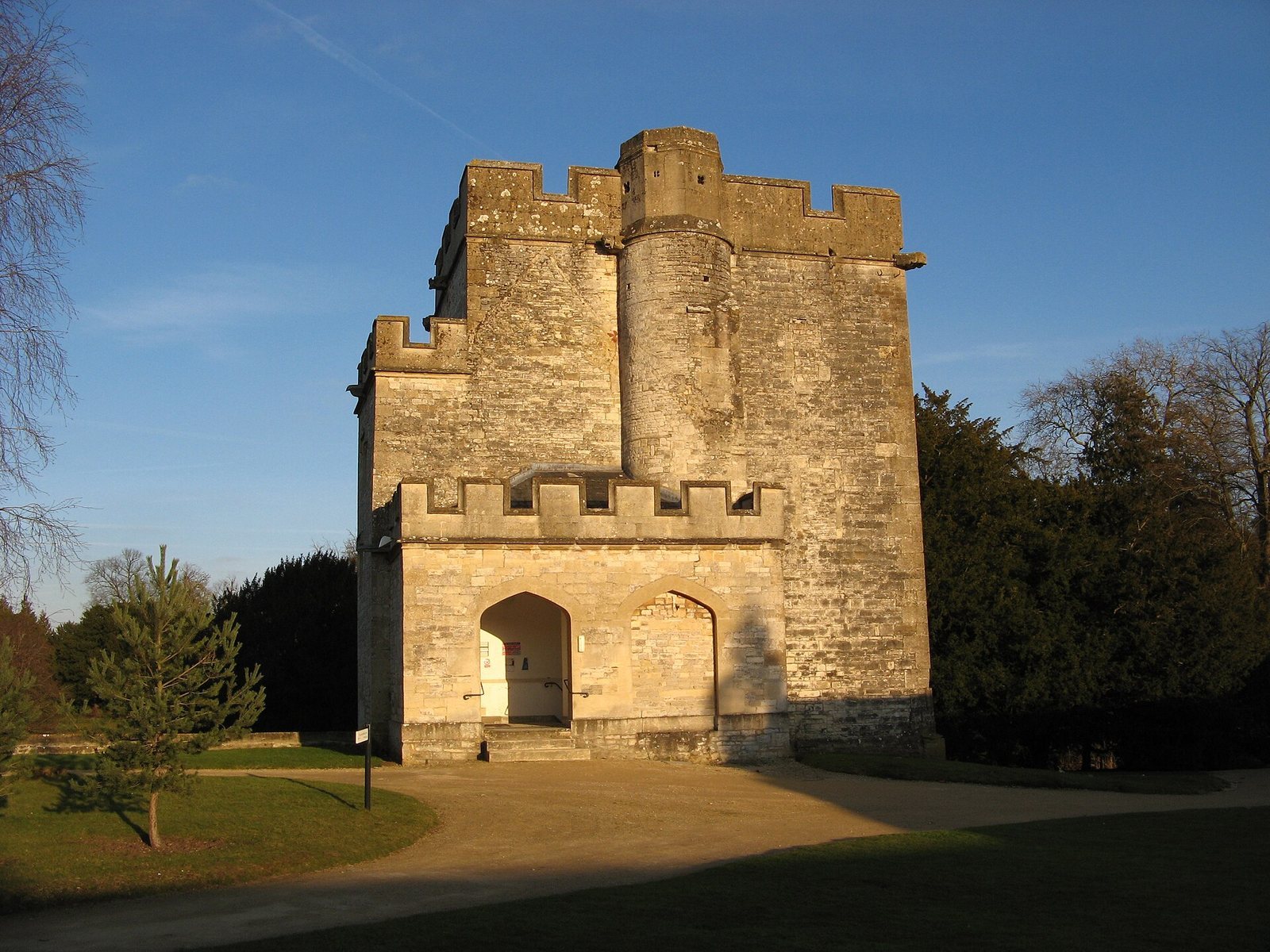
The keep, a fortified tower or stronghold, is one of the two intact surviving buildings. It is stone-built and was renovated in the nineteenth century.
Gatehouse
The intact stone gatehouse has turrets, machicolations, projecting openings through which defenders could attack below, and an early gunport, an opening designed for firing a gun.
Newton Park
The castle stood within Newton Park, originally a medieval deer park, an enclosed area managed for keeping deer. In the nineteenth century, the park was extensively landscaped as part of the creation of a country house and gardens.