Helmsdorf Manor House (Stolpen): A Saxon Estate
Site at a Glance
- Popularity
- Medium
- Country
- Germany
- Primary era
- Modern
- Eras represented
- Early Modern, Modern
- Civilizations
- Electorate of Saxony, German, Holy Roman Empire, Kingdom of Saxony
- Site type
- Domestic
- Remains
- Manor House
On this page7 sections
History
Helmsdorf Manor House is a historic estate in Helmsdorf, within the municipality of Stolpen, Saxony, Germany. Its first manor house was completed by 1597, and the building was almost entirely reconstructed in the early twentieth century in a historicist style drawing on earlier architectural styles.
From outlying estate to knightly estate
The estate passed to Moritz of Saxony in 1543. A first castle, intended as a manor house, was planned and was completed by 1597, judging from dates marked on the building.
Saxon official Melchior Albhart, whose responsibilities included state finances and mining, acquired the estate in 1648. His sons, including the jurists Christian and Caspar, developed it into a knightly estate answerable directly to the territorial authorities. Its economic holdings included a grist and sawmill at Hermsdorf. The mill’s compulsory-use rights required residents of Stürza and Dobra to have their grain ground there.
The Schröter estate and rebuilding
The Schröter family, later known as von Schröter, acquired the castle and its associated holdings in 1711. Over time, they sold off much of the estate’s economic property. By around 1900, little remained beyond the castle, a small amount of usable land, and the park.
Dresden banker Charles Friedrich Schmieder bought the estate in 1906, intending to create a representative residence. He commissioned the Dresden firm Lossow & Kühne to carry out a near-total rebuilding. The work retained the Schröter family coat of arms and remnants of the earlier castle. Schmieder’s wife was descended from composer Franz Liszt, and the estate hosted concerts organized by the Liszt Association. Plans to redesign the park were halted by the outbreak of the First World War and never carried out.
Institutional use and recent restoration
In 1937, the Saxon state guild for the baking trade acquired the estate. After the Second World War, it used the property as a vocational school and convalescent home. A successor institution continued operating there during the East German period. Deferred maintenance contributed to the estate’s decline from the 1980s.
In the 1990s, the guild opted to establish a new facility in Dresden and sold the estate to a private buyer in 1999. The successor school is now the Saxon Bakers’ Vocational School Dresden-Helmsdorf. Horst Richter bought the estate on 3 September 2025 and began restoration.
Remains
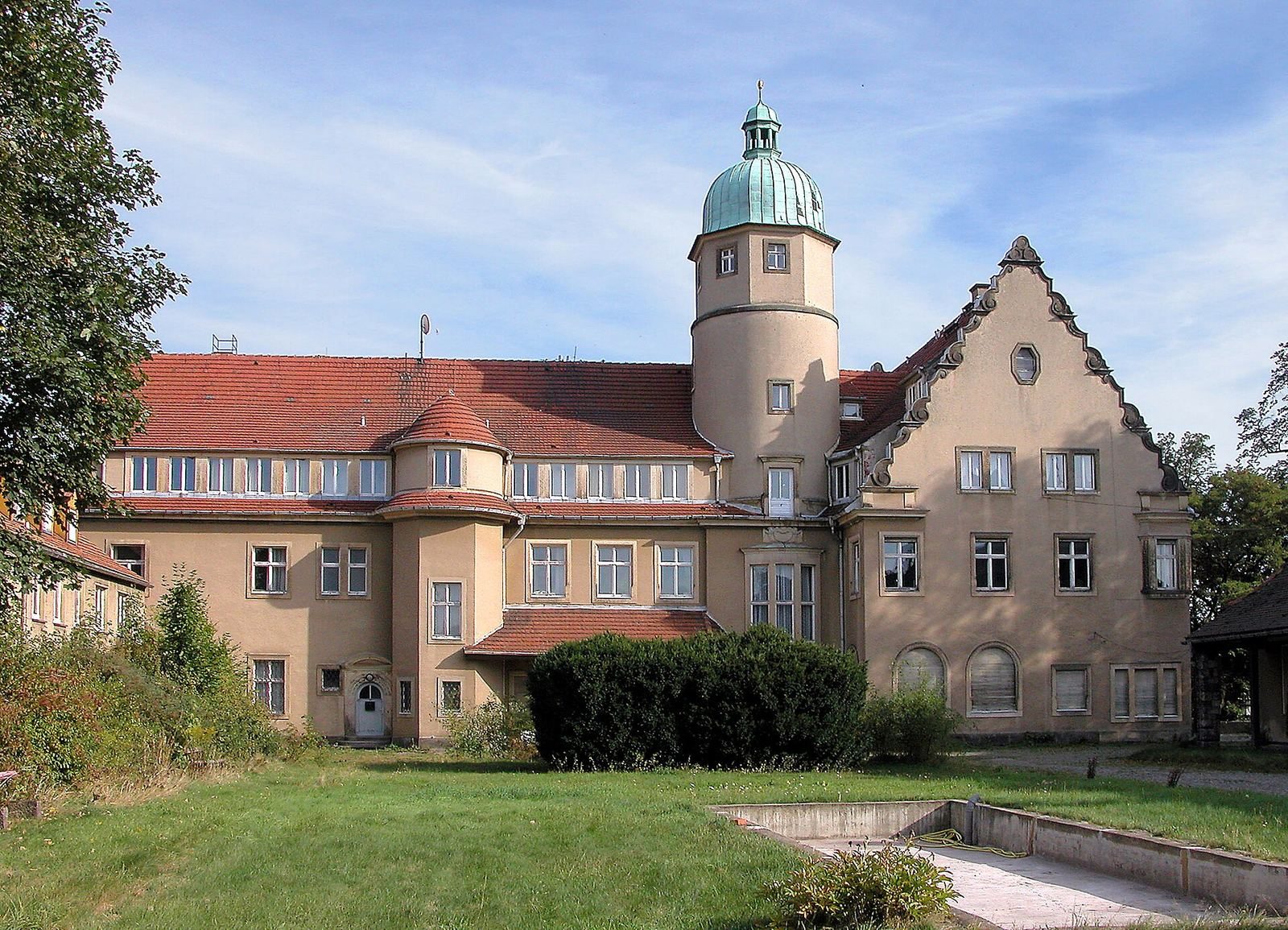
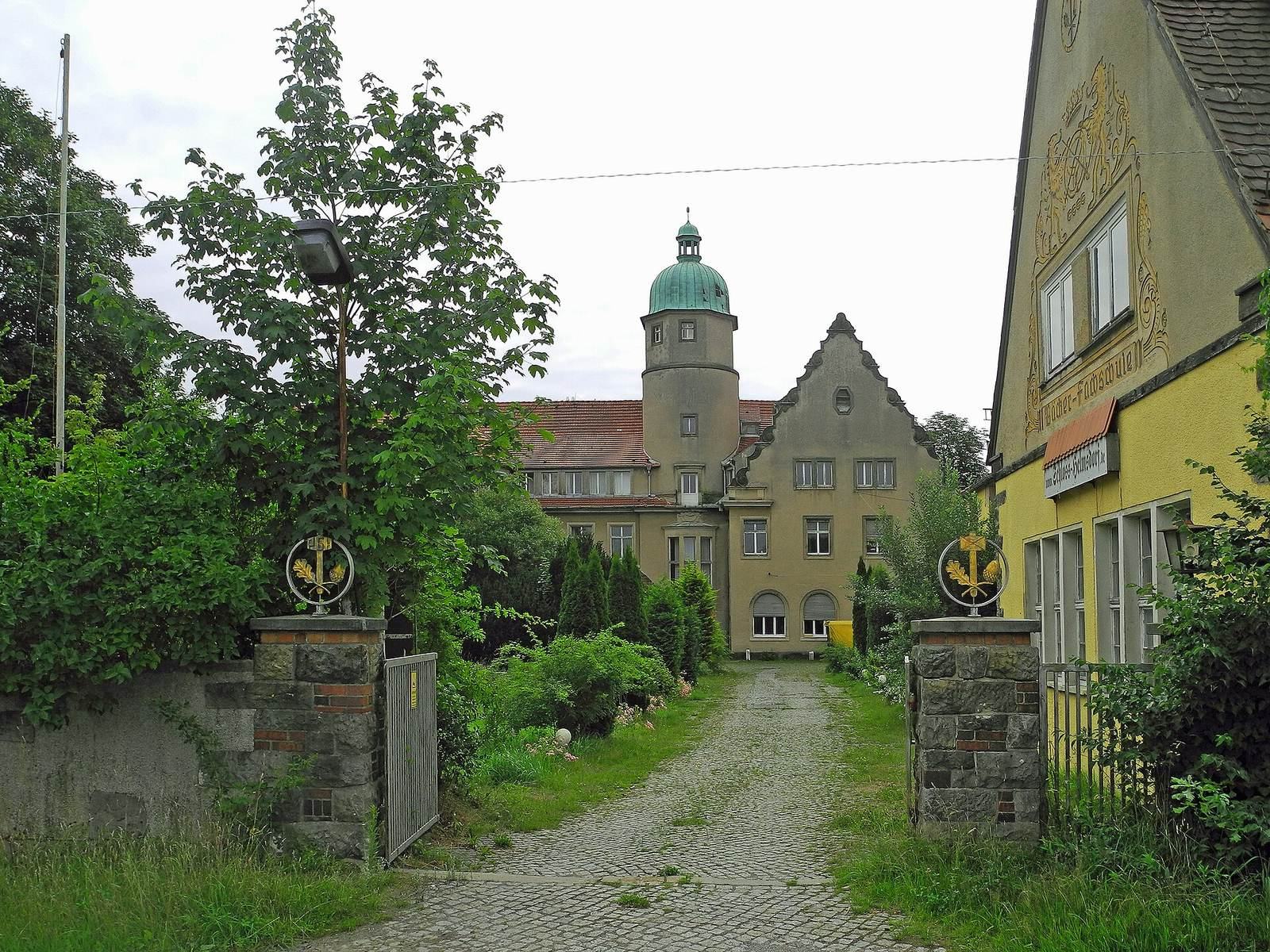
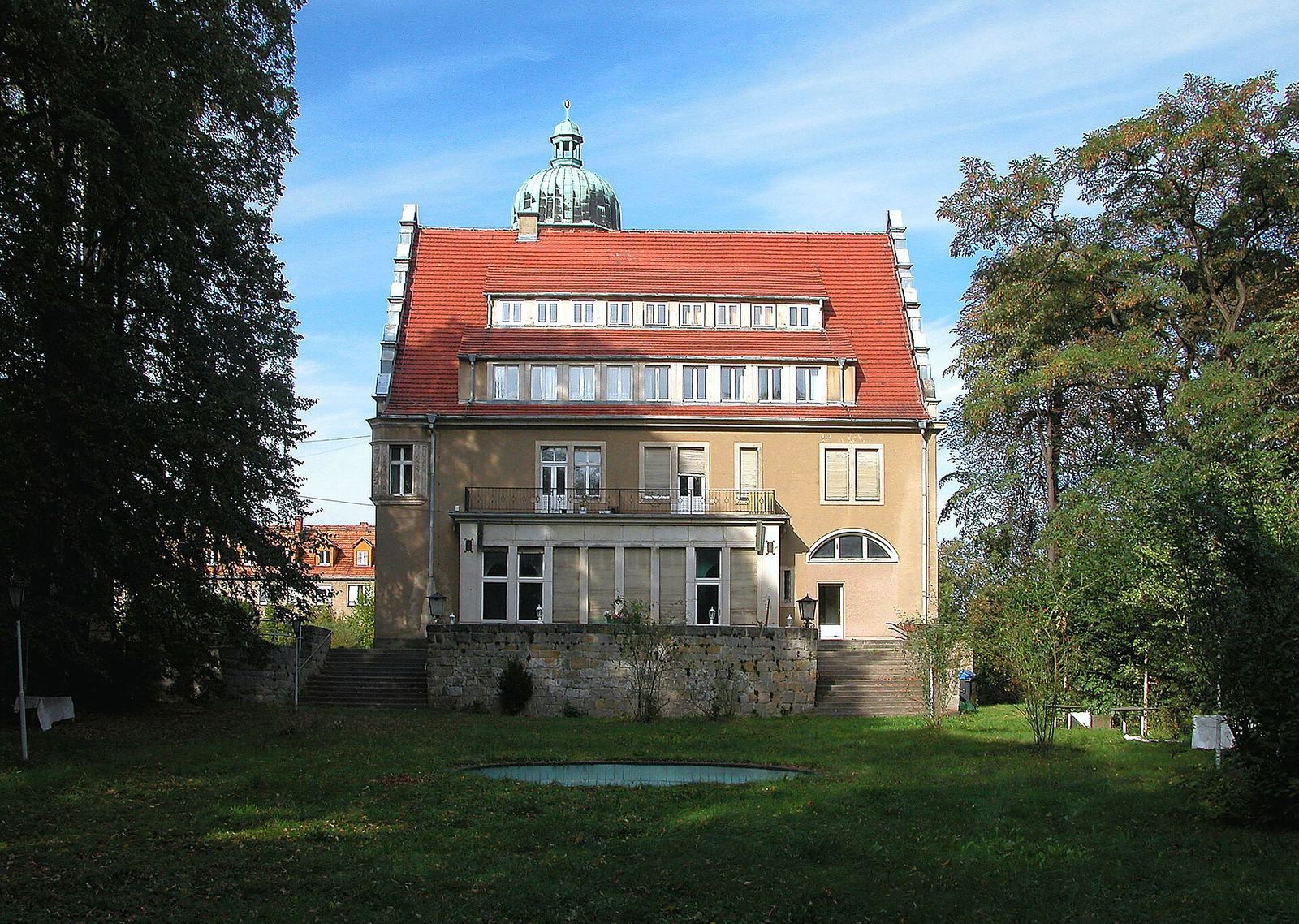
The estate’s main building is an elongated, two-storey manor house, set within grounds that included a large park. Its form and ornament reflect the early twentieth-century rebuilding, alongside features retained from the earlier castle.
Main house
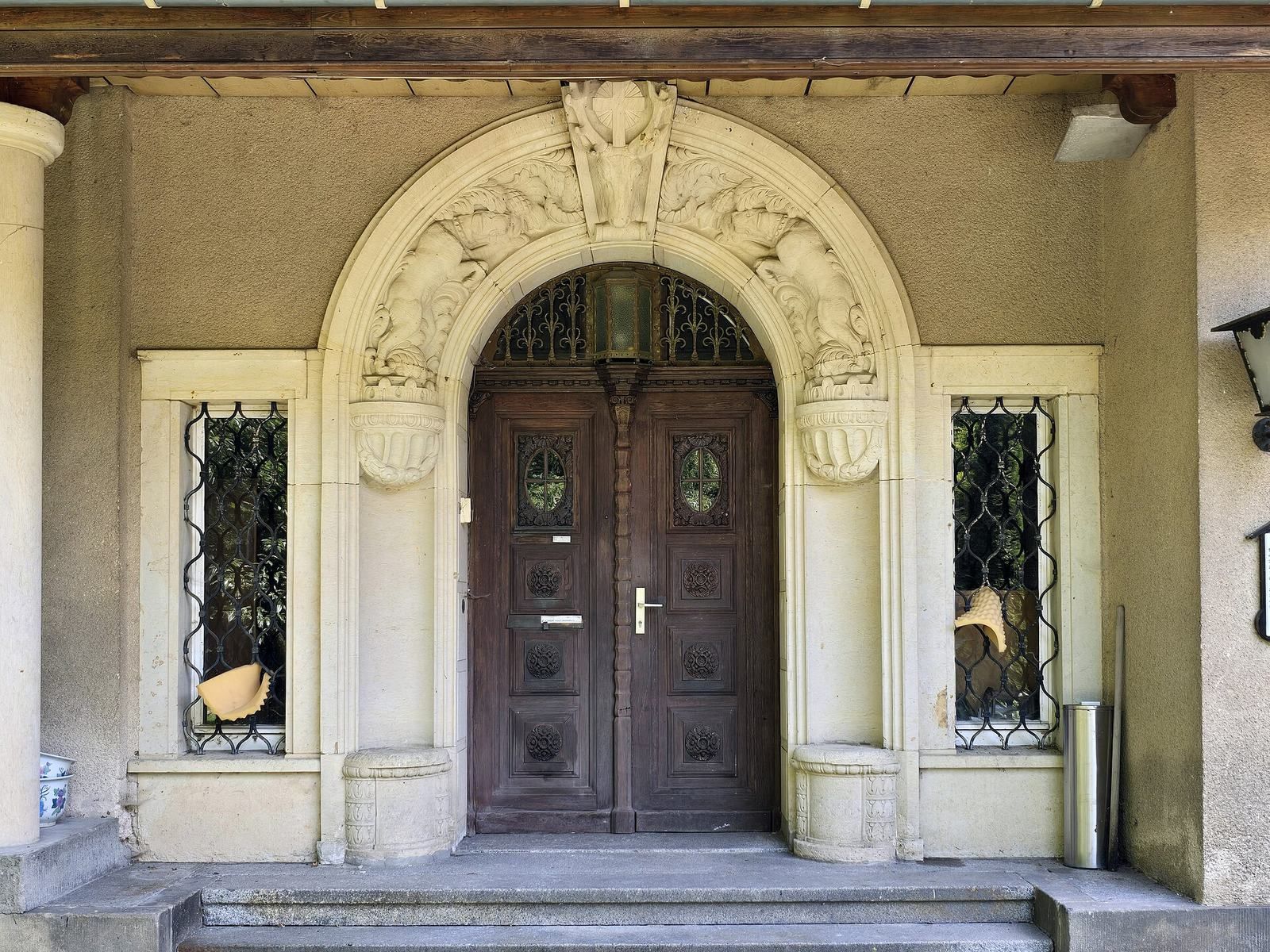
The house has a pitched roof, scroll-shaped volute gables, and a round tower at its western end. Stucco ornament decorates the exterior. Inside, the salons, or reception rooms, were fitted with elaborate fine-wood panelling. The Schröter coat of arms and numerous remnants of the earlier castle also survive in the rebuilt structure.
Park and outbuildings
Around the turn of the twentieth century, the park covered approximately 45,000 square metres, and the Wesenitz flowed around it. The estate’s outbuildings, like the main house, have been in severe disrepair or ruinous condition since 2020.