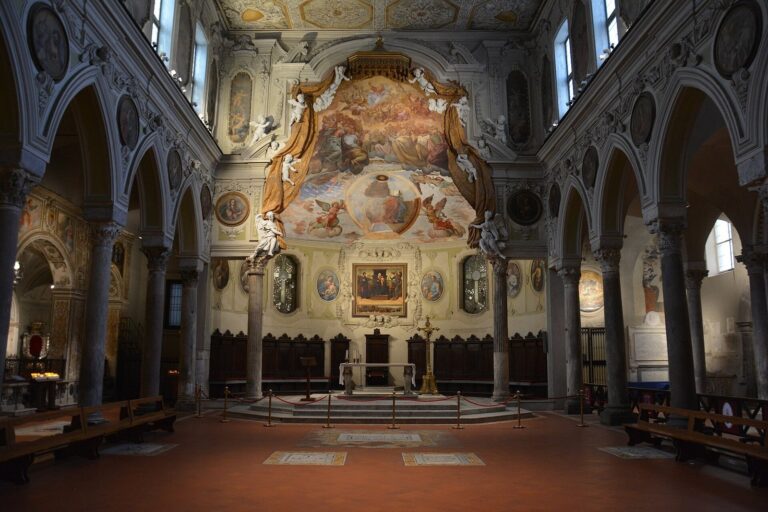
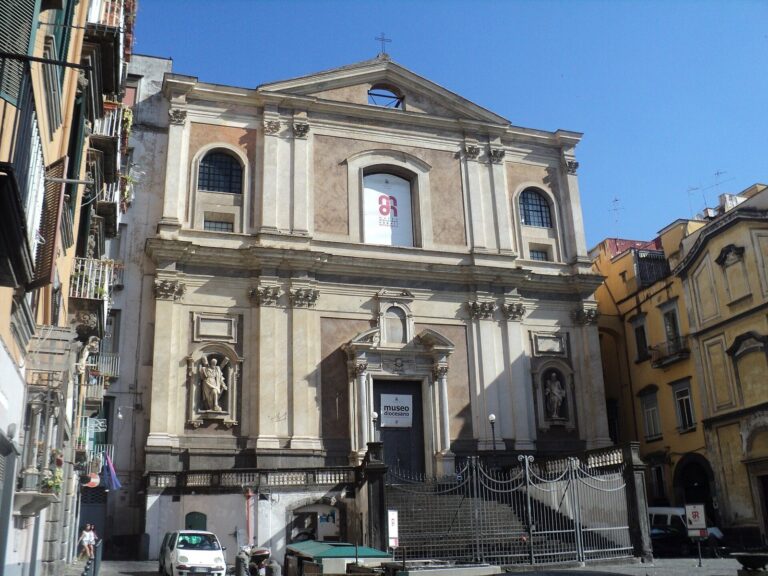
Palazzo Caracciolo di Avellino: A Historic Palace Complex in Naples
Site at a Glance
- Popularity
- Medium
- Country
- Italy
- Primary era
- Medieval
- Eras represented
- Medieval, Early Modern
- Civilizations
- Habsburg, Habsburg Spain, Kingdom of Naples, Spanish
- Site type
- Domestic
- Remains
- Elite Residence
On this page9 sections
History
Palazzo Caracciolo di Avellino is a historic palace complex in Naples, Italy, in the San Lorenzo district. Its medieval residence was built by the Gambacorta family in the late fourteenth century.
Monastery and medieval palace
A monastery of San Potito stood at the site of today’s Largo Proprio d’Avellino from around AD 350. Severus, bishop of Naples, founded it. Centuries later, the Gambacorta family built its residence opposite the monastery, with Giacomo De Santis as its designer.
The palace is also associated with Giovanni Caracciolo, a Neapolitan nobleman who was the lover and household steward of Queen Joanna II, ruler of Naples from 1414 to 1435.
De’ Rossi ownership and the 1522 restoration
The Gambacorta inheritance probably passed to Lucrezia Gambacorta, wife of Giovanni de’ Rossi. As the de’ Rossi family became connected with the princes of Avellino, the palace was divided between the two families. In 1522, the de’ Rossi commissioned its first restoration, promoted by the Seggio di Montagna, a historic civic body through which groups of Naples’s elites took part in public affairs.
The Seggio requested the demolition of a pedestrian passage that connected the two residences with Folliero property. In return, the de’ Rossi sought a lower street level on Vico San Petrillo, where a small church dedicated to Saint Peter, founded by the De Ferrari family, stood. They also requested permission to rent rooms to students, who had previously been prohibited from lodging in the city.
Caracciolo ownership and later uses
The property later passed in part to the poet Torquato Tasso, son of Porzia de’ Rossi, and in part to Domizio Caracciolo, duke of Atripalda. Domizio left his share to his nephew Camillo Caracciolo, prince of Avellino. After disputes over the division, the entire palace passed to the Caracciolo family in 1596.
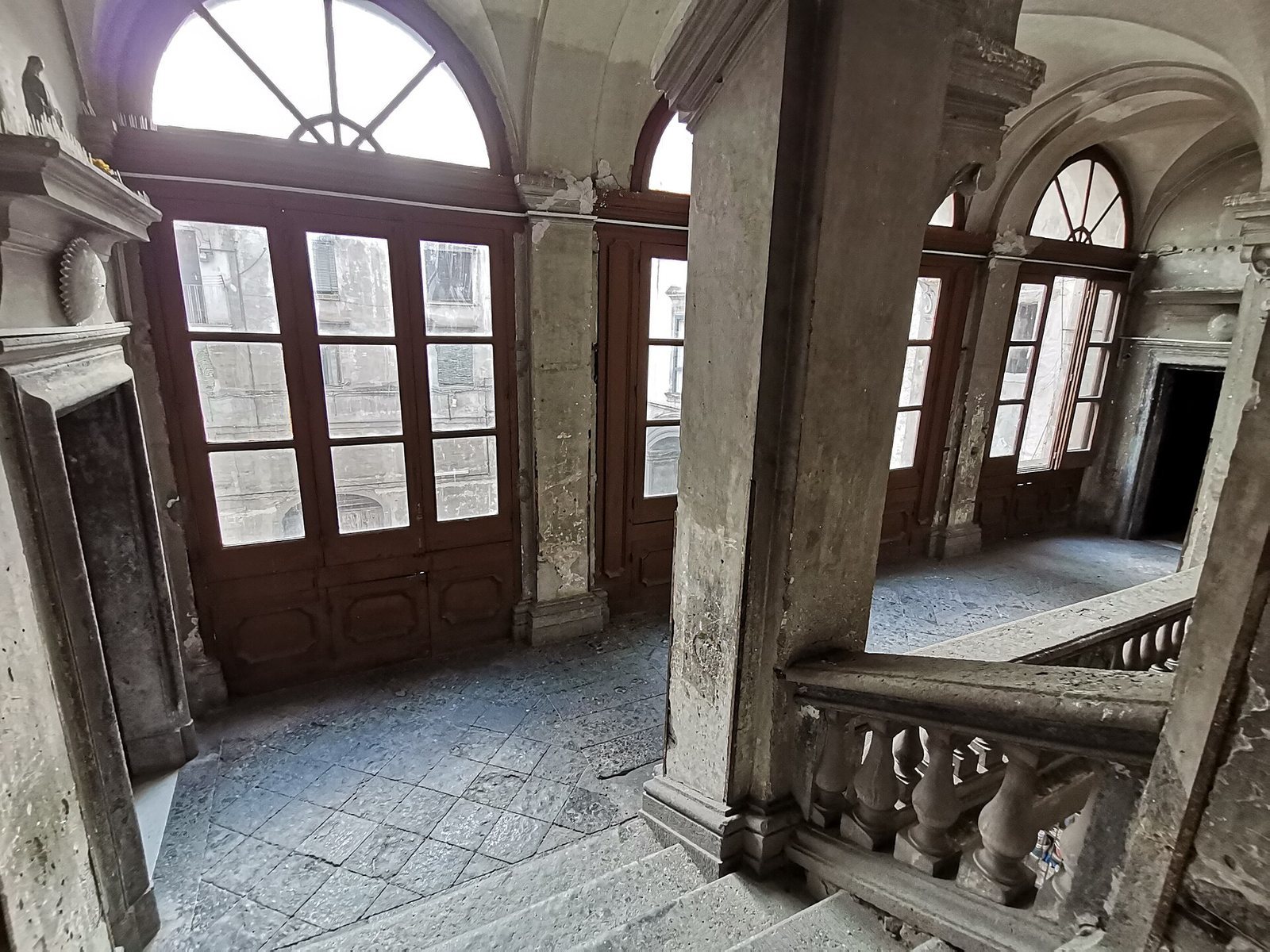
In 1610, the nuns of San Potito sold their monastery to Camillo with authorization from Pope Paul V. Renovations began in 1612: an open staircase was added to the original courtyard, and the monastery became part of the palace complex. The palace escaped the unrest of 1647, when Masaniello led a popular revolt in Naples.
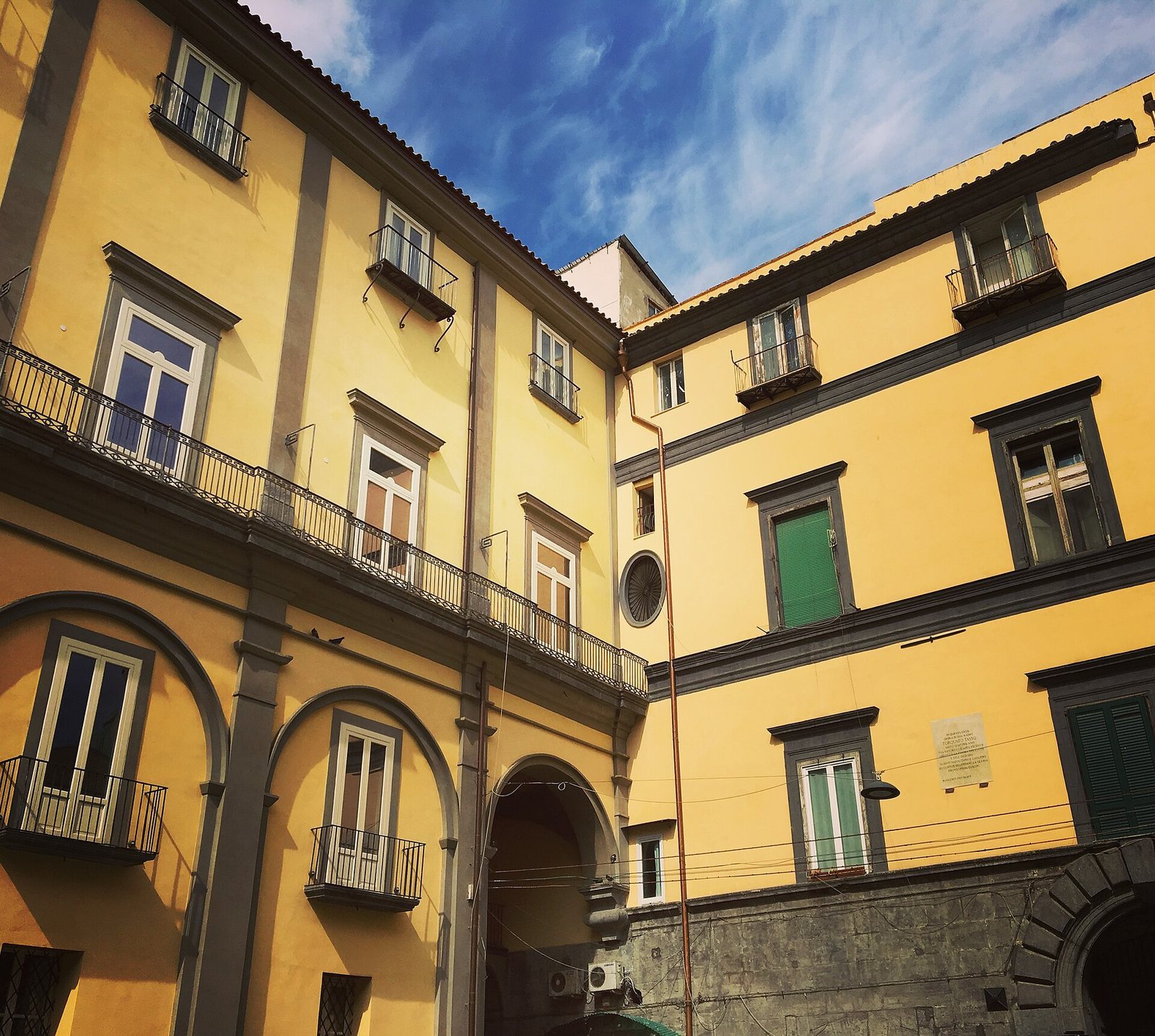
In the nineteenth century, the palace became the seat of the Istituto Pontano, a Neapolitan educational institution. It was later restored and converted into apartments. The former monastery building now houses the Fondazione Morra Greco contemporary art gallery.
Remains
Palace and monastery fabric
At Largo Proprio d’Avellino, surviving elements of the complex bring together fabric from the palace and the monastery incorporated into it. They include masonry from the original palace, a western remnant of the monastery cloister, and decorated rooms on the upper floors.
Piperno base
A portion of the original palace’s base survives on Via San Giovanni in Porta. It is made of piperno, a local volcanic building stone.
Western cloister and arches
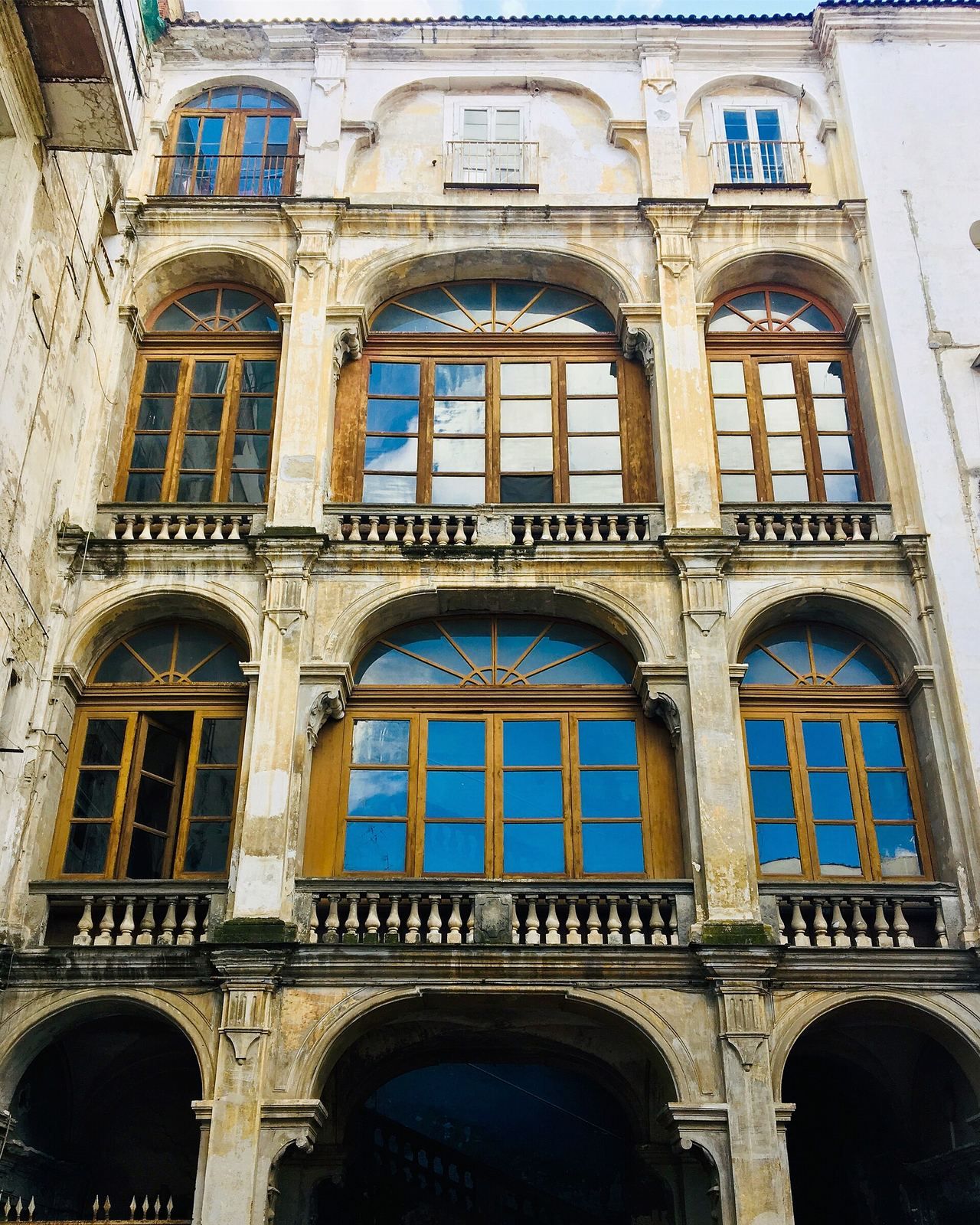
Part of the San Potito monastery’s cloister survives on the western side of the complex. Its seven rounded arches have curved mouldings and rest on pilasters, flat rectangular supports projecting from a wall, with lateral supports. These carry a projecting horizontal band topped by a continuous balcony. The first arch serves as a passage above Via Anticaglia.
The balcony sits at a different level from the horizontal band marking the original palace’s storeys. It may have been intended to continue along the street, with the old palace front altered to meet it; the reason the work was not completed is unknown.
Frescoed rooms
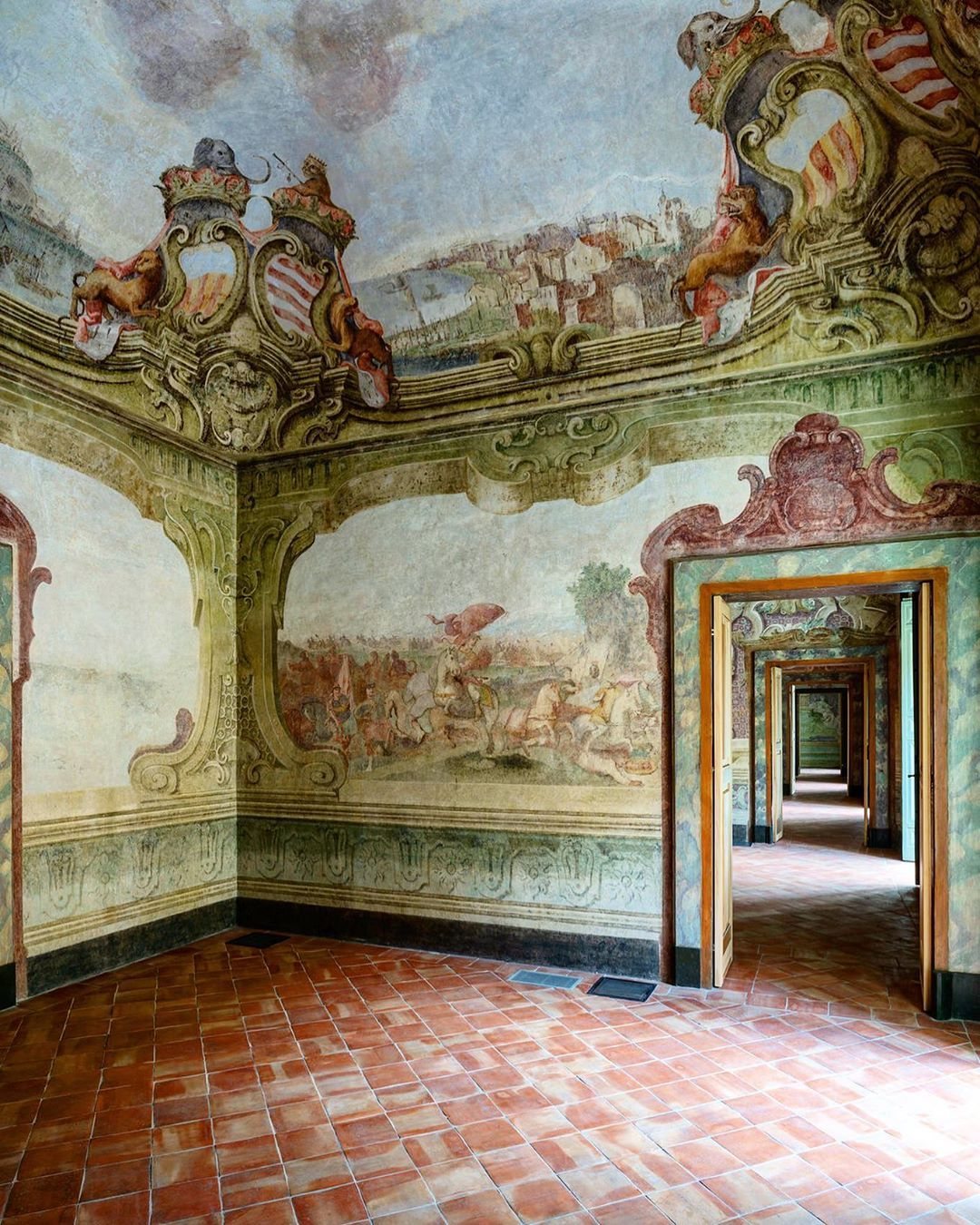
A recent major restoration of the exterior elevations and the interiors of the wing used by the Fondazione Morra Greco brought a sequence of first-floor rooms with frescoes by Giacomo del Pò to light. The Neapolitan painter was active in the late seventeenth and early eighteenth centuries. Painted decoration survives in a few second-floor rooms; structural collapse after decades without maintenance contributed to the loss of decoration.