Bryn Bras Castle: A Neo-Romanesque Country House in Wales
Site at a Glance
- Popularity
- Medium
- Country
- United Kingdom
- Primary era
- Modern
- Eras represented
- Modern
- Civilizations
- British
- Site type
- Domestic
- Remains
- Castle
On this page7 sections
History
Construction and Barnard’s ownership
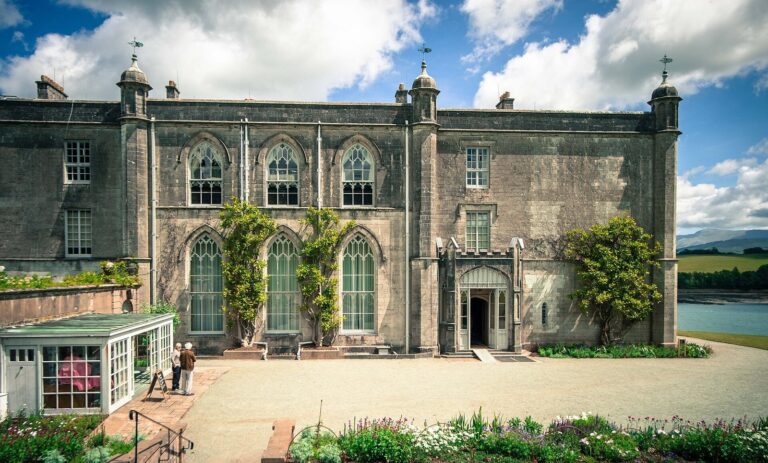
Bryn Bras Castle is a country house in Gwynedd, Wales, on the old road between Llanrug and Llanberis. Built between 1829 and 1835, it was designed by Thomas Hopper for Thomas Williams, a lawyer, on the site of an earlier structure. Its Neo-Romanesque style revived features of medieval Romanesque architecture.
Captain Frank Stewart Barnard bought the castle in 1897 and lived there until his death in 1917. He operated the estate as a stud, a breeding establishment, and served as High Sheriff of Caernarvonshire in 1903–04. The High Sheriff is a county officeholder in England and Wales whose responsibilities and status have varied over time.
The Alves estate and later use
The estate later passed to oil magnate Duncan Elliot Alves, who was Mayor of Caernarvon for six years and High Sheriff of the county in 1931–32. After his death in 1938, the estate changed hands several times, and much of the surrounding land was sold. In 1962, the castle hosted the first motorcycle Dragon Rally. It was later converted into apartments and remains privately owned.
The house is listed Grade II*, a category for buildings of more than special interest. Its gardens and landscaped park are Grade II on the Cadw/ICOMOS Register of Parks and Gardens of Special Historic Interest in Wales; Grade II denotes special interest.
Remains
The site comprises a Neo-Romanesque country house and its grounds, which include boundary features, gardens and landscaped parkland.
House and grounds
House and boundary features
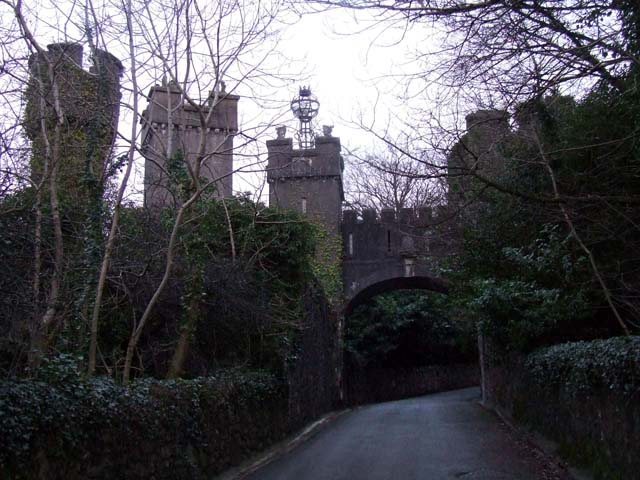
The country house is accompanied by boundary walls, gates and turrets. Together, these built features form part of the surviving estate layout.
Gardens and park
The grounds include a walled knot garden, where planting is arranged in interlacing geometric patterns. A pool and a statue of Pan, the Greek god associated with wild nature, shepherds and flocks, stand within it. Two gladiator statues and an observatory are also features of the gardens and landscaped park.