Ca’ d’Oro in Vicenza: A Gothic and Renaissance Palace
Site at a Glance
- Popularity
- Medium
- Country
- Italy
- Primary era
- Medieval
- Eras represented
- Medieval, Early Modern
- Civilizations
- Venetian
- Site type
- Domestic
- Remains
- Elite Residence
On this page9 sections
History
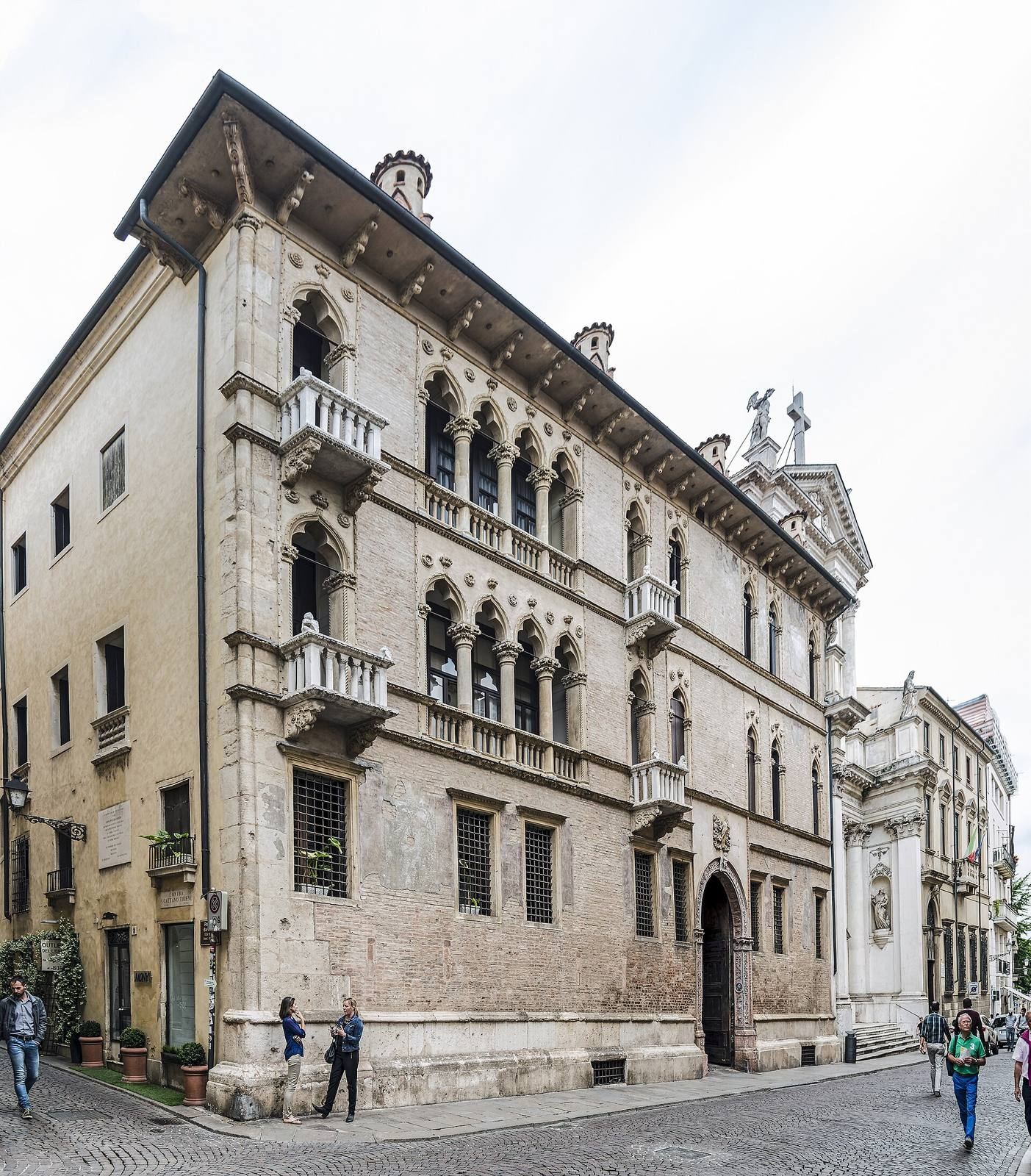
Ca’ d’Oro in Vicenza, also known as Palazzo da Schio, is an aristocratic palace in Italy whose construction began in the fourteenth century and continued through late Gothic and early Renaissance phases.
Medieval construction and Renaissance work
The Caldogno family erected the palace in the fourteenth century. Around 1477, the Dal Toso family carried out a late Gothic completion, extending the building at the rear. Work on the courtyard was finished around 1500. Renaissance architect and sculptor Lorenzo da Bologna reorganized the ground floor and created the portal.
Later remodelling and wartime damage
Toward the end of the eighteenth century, the atrium and interior were remodelled. Count Giovanni da Schio (1798–1868) assembled the antiquities displayed in the palace’s lapidarium, a collection of stone antiquities.
Bombing during the Second World War destroyed nearly all of the palace’s painted façade decoration.
Remains
Façade and courtyard
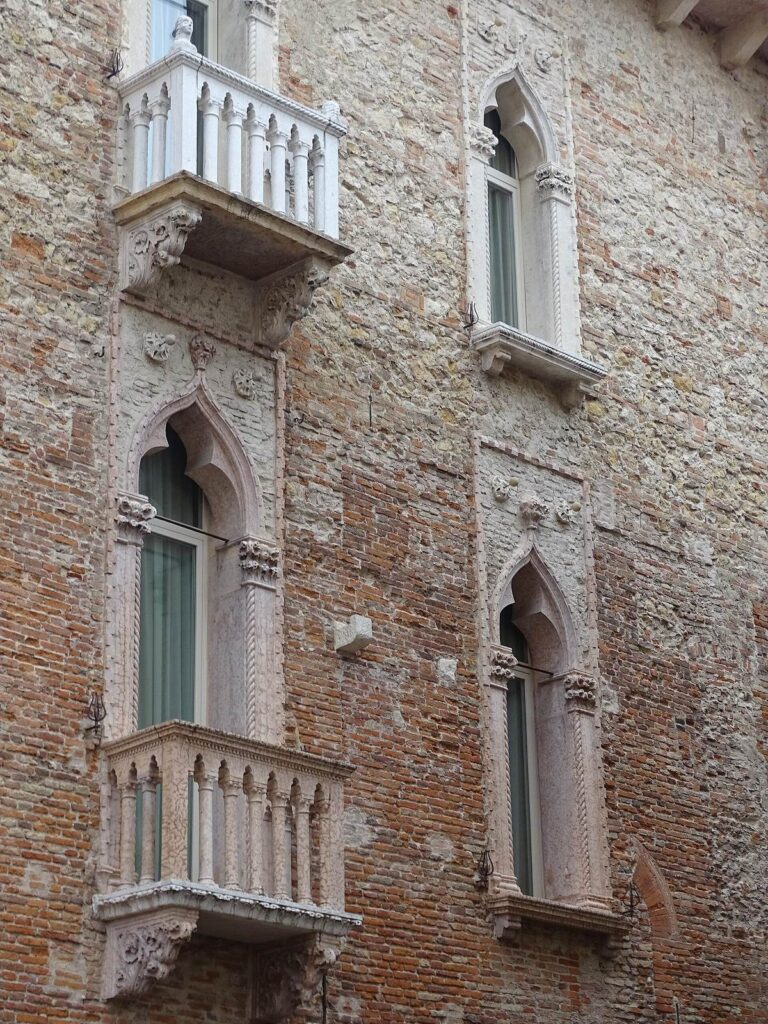
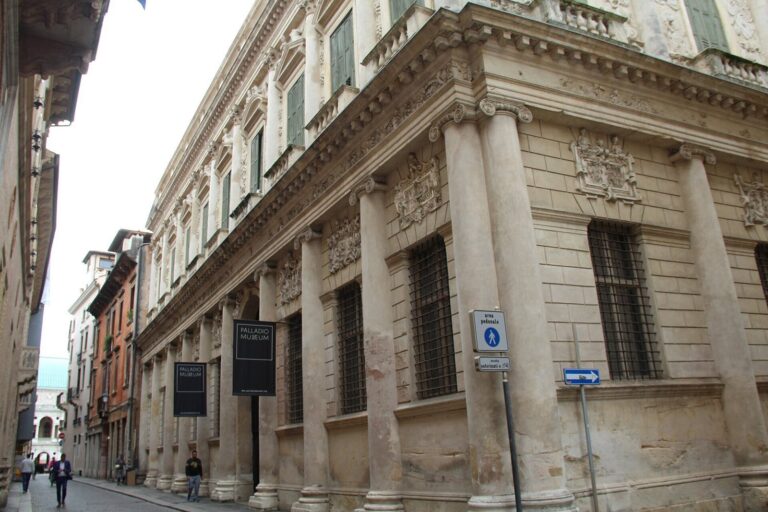
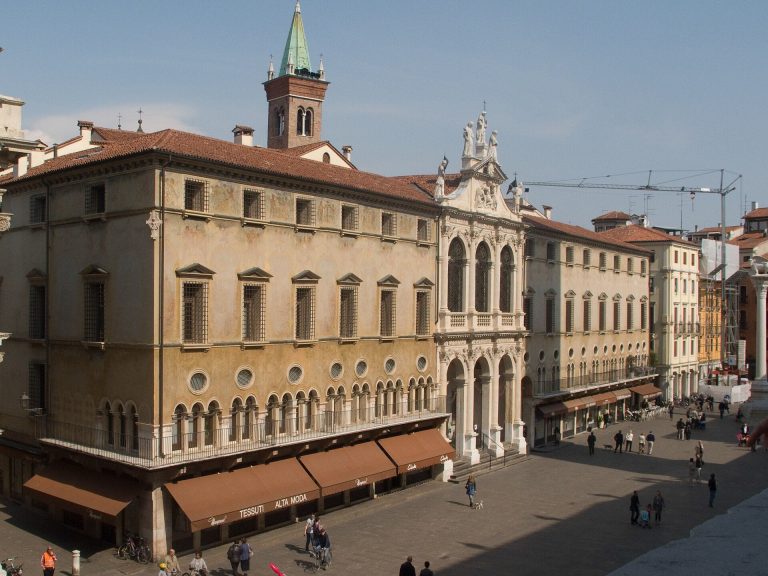
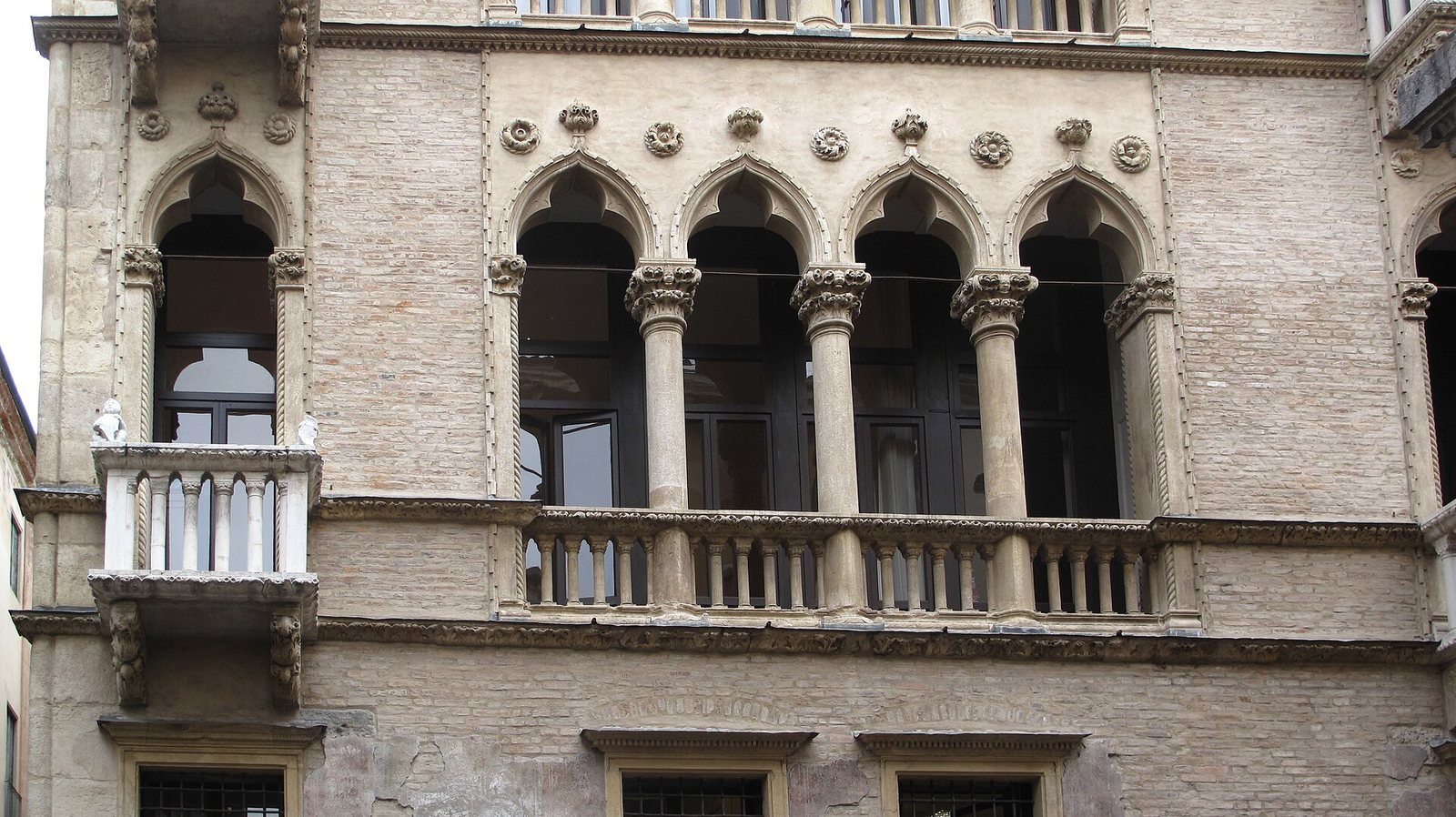
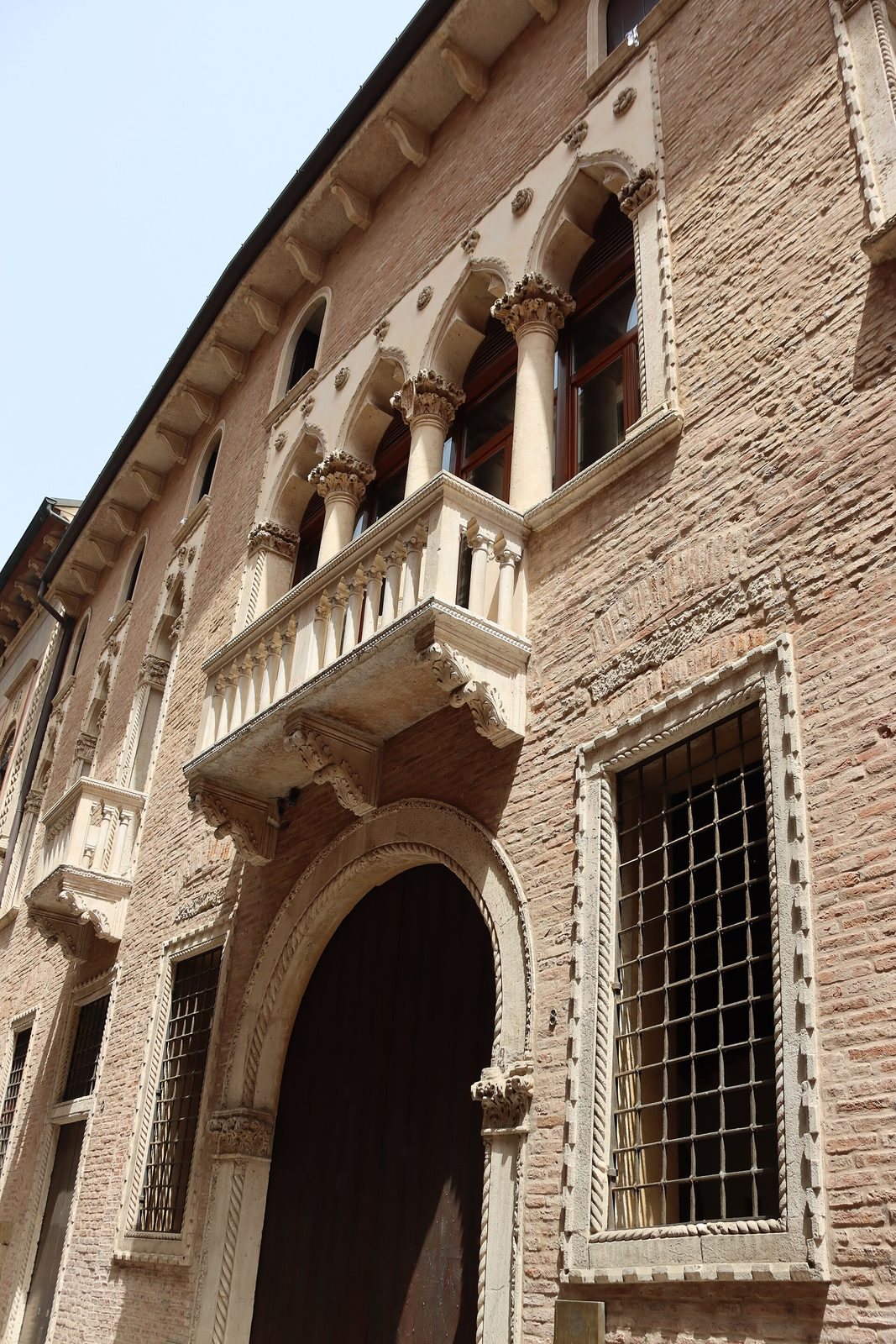
The palace combines florid Gothic and early Renaissance forms. It stands on Corso Palladio beside the Church of San Gaetano. Its façade has a four-light window, divided into four vertical openings, and a Renaissance portal decorated with shallow carvings of candelabra, cornucopias, grotesque masks, fantastic animals, and acanthus leaves. Wall paintings in several colors once covered the façade, and a few fragments survive. Documentary and photographic evidence indicates that the scenes included episodes set during the Crusades, medieval military expeditions chiefly associated with Christian campaigns in the eastern Mediterranean. On the wall to the right on entering the inner courtyard is a depiction of a panduro’s head, dating to the eighteenth century.
Lapidarium
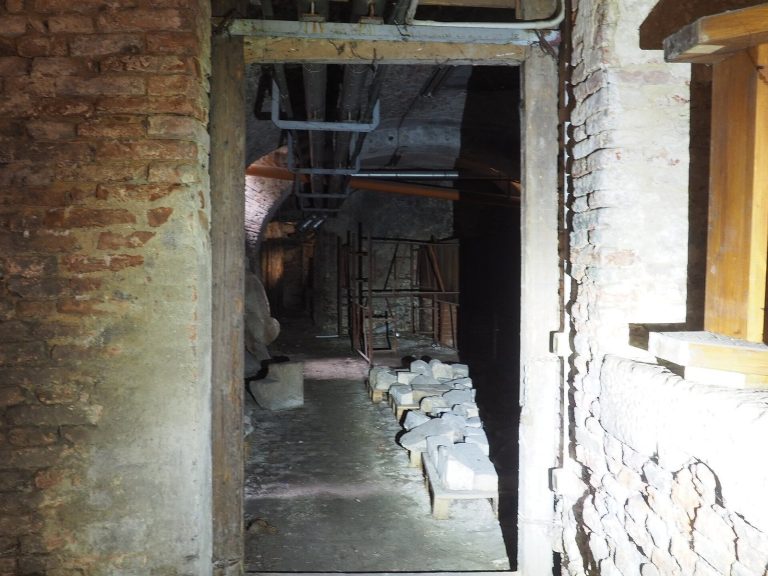
The small lapidarium is arranged in the atrium and courtyard.
Inscriptions, amphorae, and milestones
The collection includes Roman amphorae once used for wine and oil, inscriptions in Latin and Venetic (an ancient language of northeastern Italy), and milestones dating to the fourth century AD.
Sarcophagi
One sarcophagus, made of Greek marble, dates to the fifth century. Another, associated with the virgin Macrina, is dated between the fifth and sixth centuries BC. Its inscription praises Macrina as a virtuous woman in hexameter, a verse line of six metrical feet, arranged as an acrostic, a message formed from the initial letters of successive lines.
Roman architectural and commemorative pieces
Other objects include a Roman column shaft from the Theatre of Berga and a first-century AD upright stone monument for Terenzio, identified as a capsarius, a person attached to the Roman imperial military.