Palace Kasepuhan: Royal Palace of the Sultanate of Cirebon
Site at a Glance
- Popularity
- Very High
- Country
- Indonesia
- Primary era
- Medieval
- Eras represented
- Medieval, Modern
- Civilizations
- Unclassified
- Site type
- Domestic
- Remains
- Palace
On this page10 sections
History
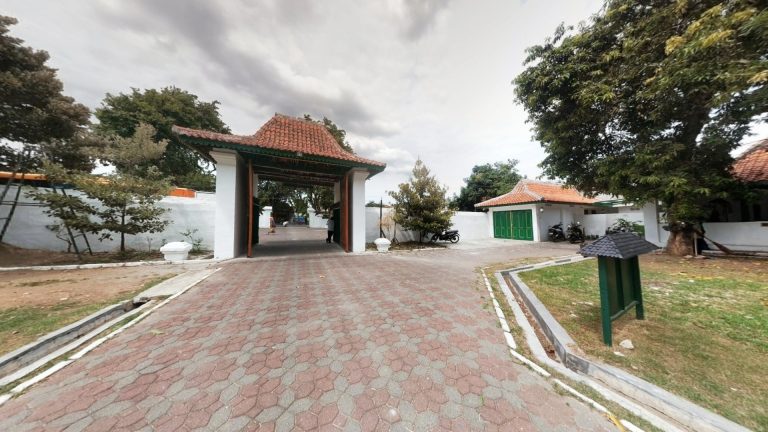
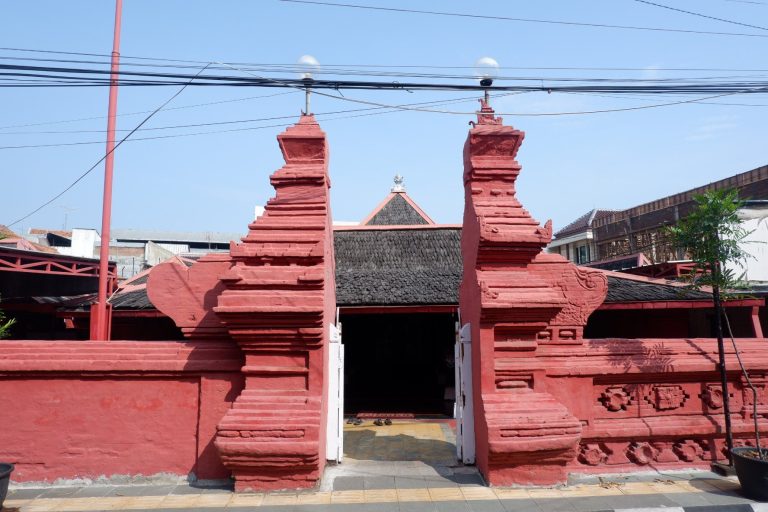
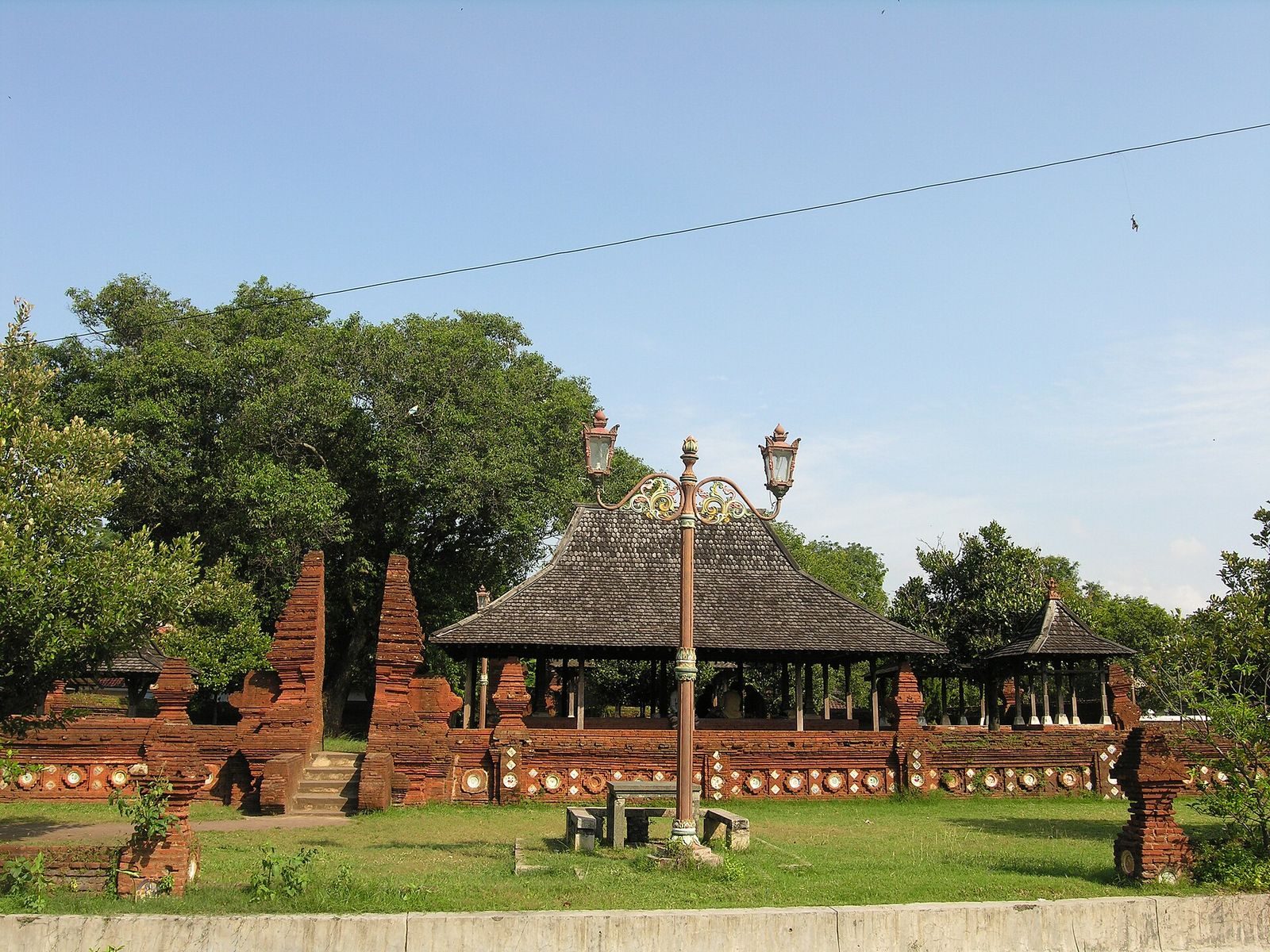
Palace Kasepuhan is a royal palace in Cirebon, Indonesia, built in 1447. It is the oldest sultan’s palace in Cirebon and serves as the residence of the Sultan of Kasepuhan and the royal palace of the Sultanate of Cirebon, an Islamic polity in western Java. Its architecture combines Sundanese, Javanese, Islamic, Chinese, and Dutch influences, and the Sultan continues to live there.
Remains
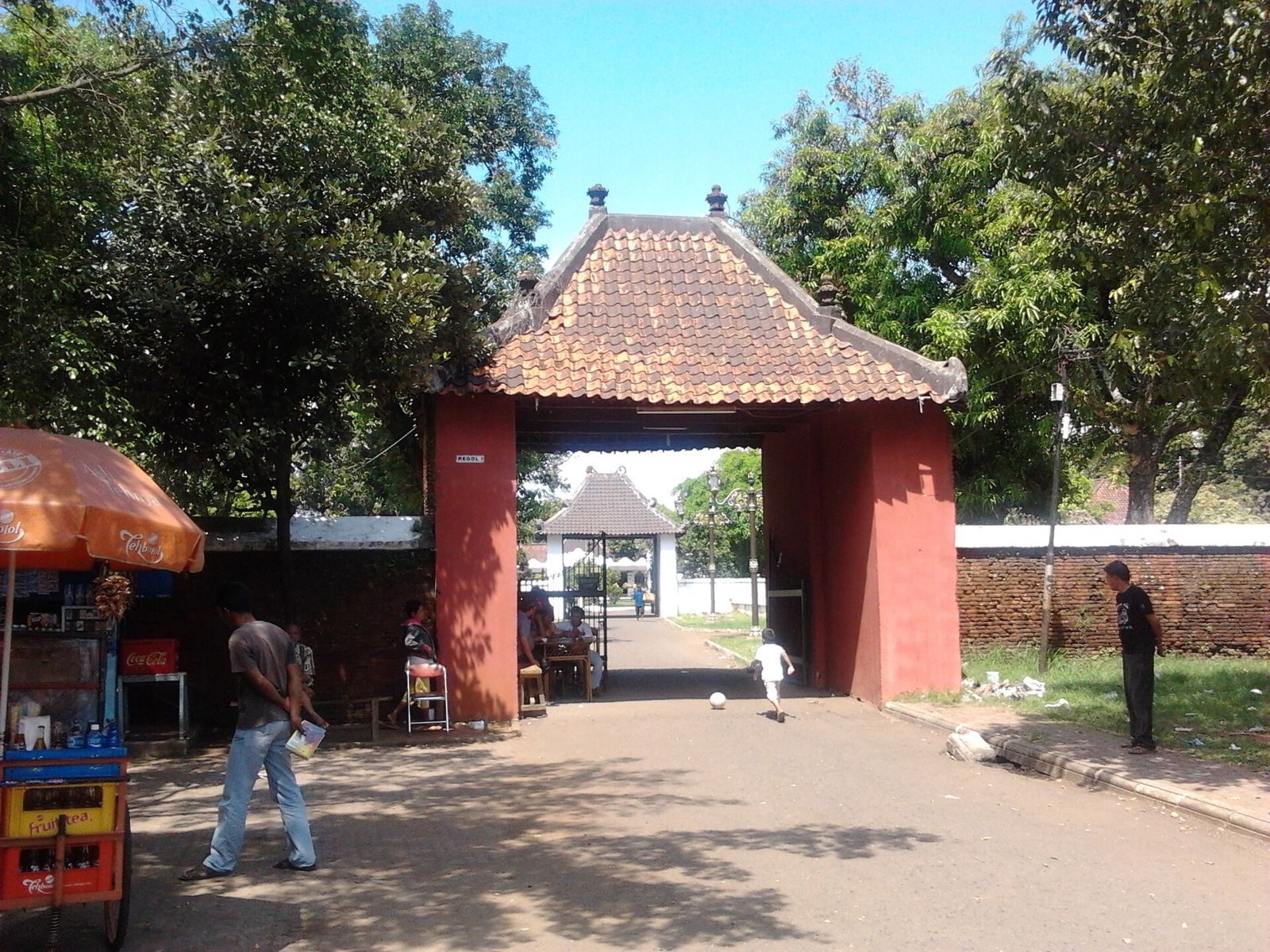
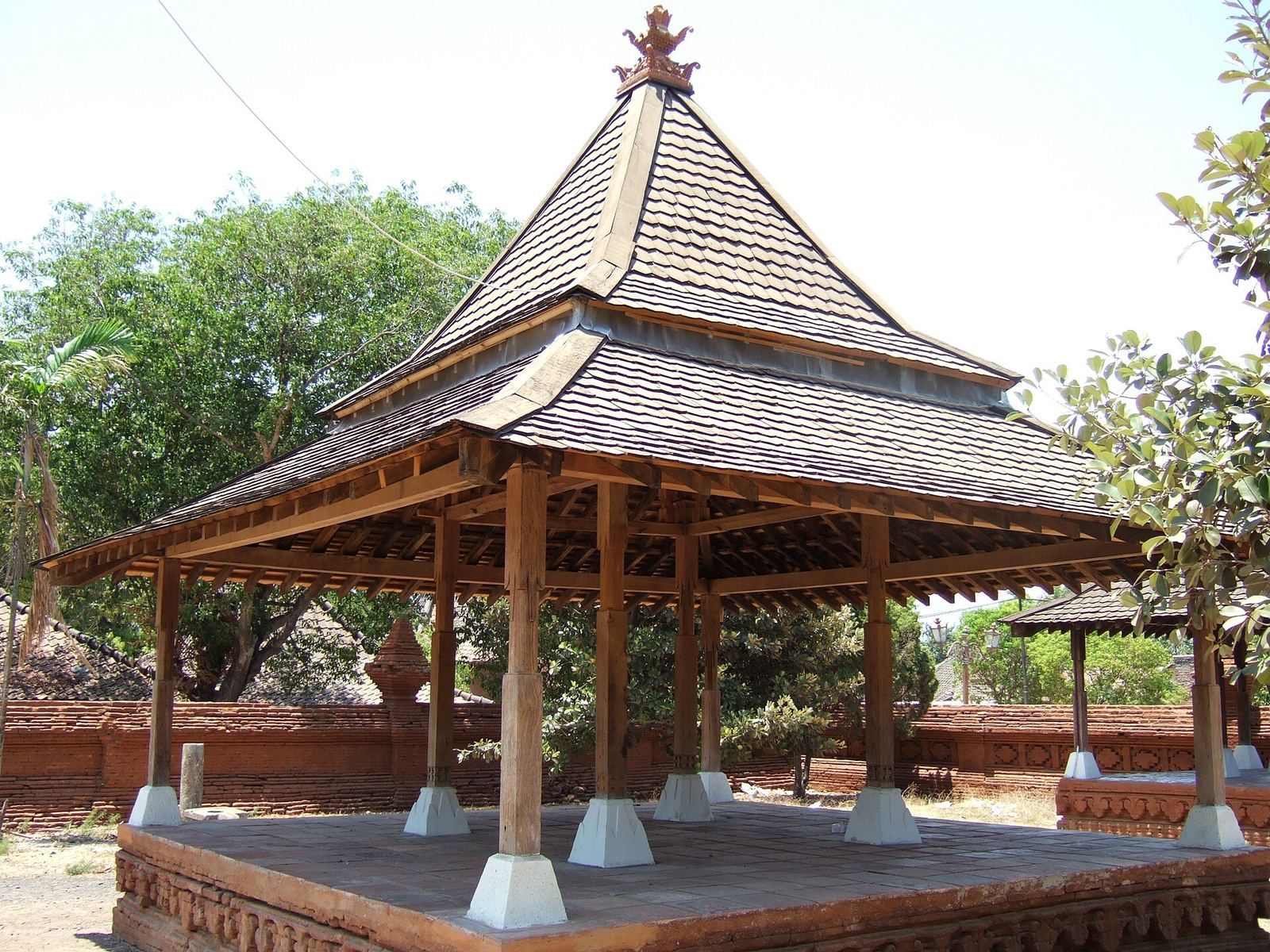
The palace’s physical features include a main building, a pavilion, a small pendopo (traditional Indonesian pavilion), a museum, and a separate nearby building for royal coaches. Roof tiles are among the materials used in its buildings.
Architectural features
Pavilion interior
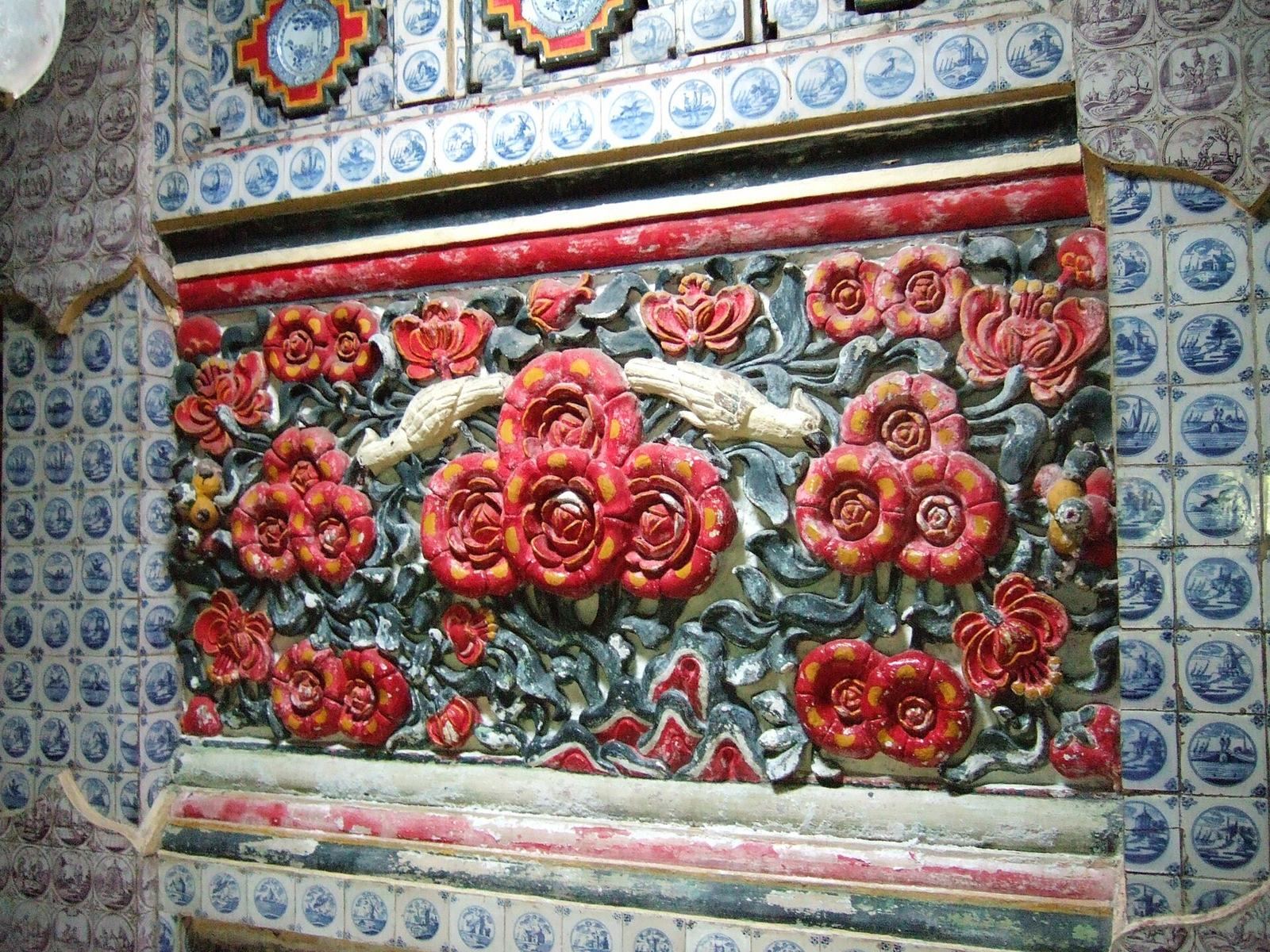
One pavilion has whitewashed walls decorated with blue-and-white Delft tiles, glazed tiles associated with Dutch Delftware. Its marble floor and ceiling-hung French chandeliers complete the interior.
Small pendopo
The small pendopo carries a legacy of Majapahit, a major historical kingdom in Java, and rests on carved brick bases. Its column carvings, made in the 1940s, copy ancient originals. Brackets branch outward from the columns, an innovation in the structure.
Main building and columns
The main building has unusually tall, pyramidal bases beneath its columns. Its pendopo has a tumpang sari ceiling, a tiered ceiling formed from stacked beams, with double braces and gilt ornament. Plaster and masonry columns across the complex have narrow, parallel ridges in their decoration. Ceramics set into walls, a feature common at old sites around Cirebon, appear more sparingly at the palace.
Collections and symbolic features
Museum
The small museum is somewhat neglected, with a restricted display that includes wayang, the Indonesian puppet-theatre tradition, kris daggers, cannon, furniture, Portuguese armor, and old royal clothing.
Royal coaches
A separate building nearby houses the elaborate, gilded Kereta Singabarong, a coach dating to the 17th century, alongside a modern duplicate used for official occasions.
Dewandaru roundabout park
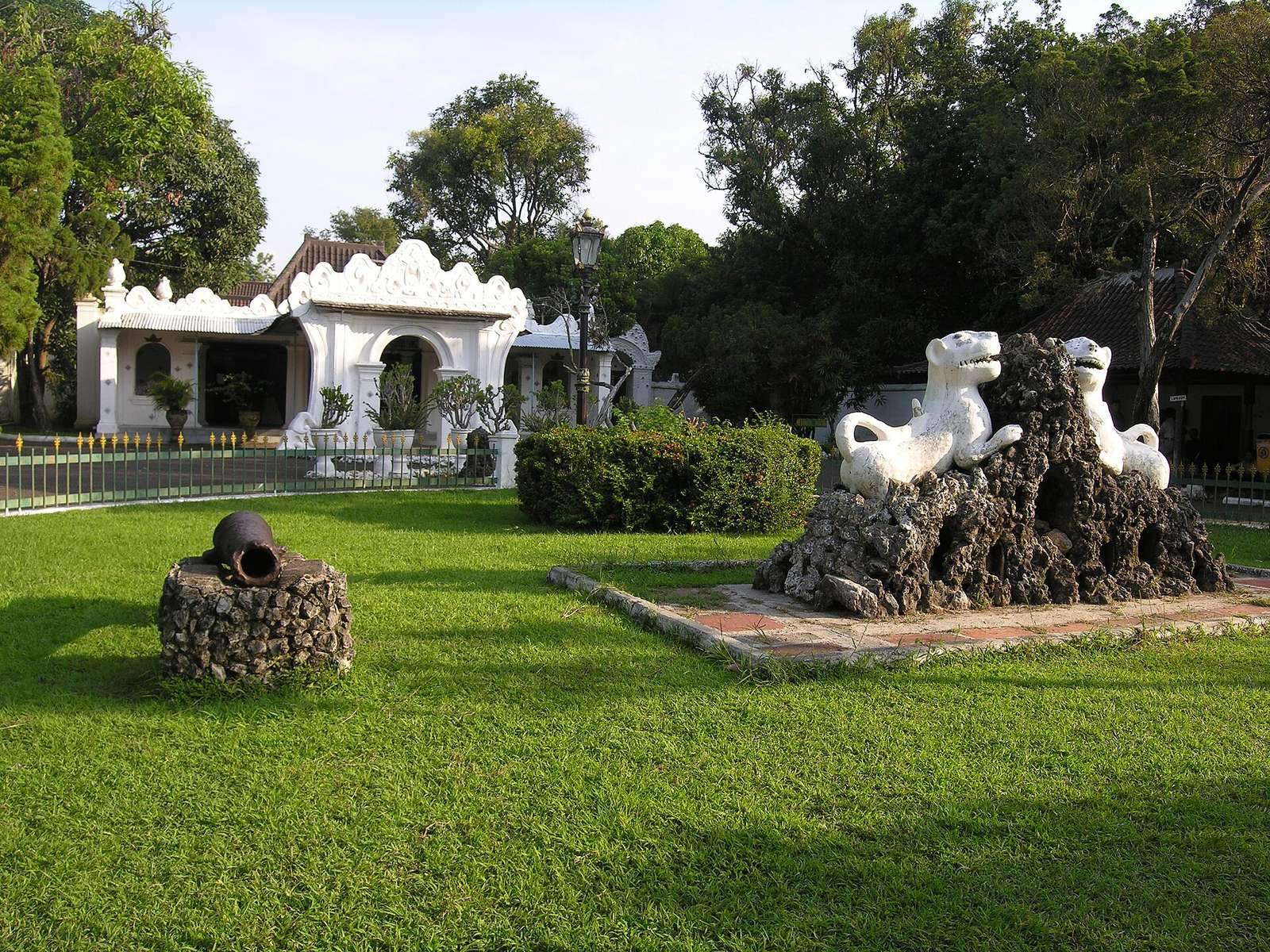
White Javan leopard statues stand in the Dewandaru roundabout park in the palace’s main area. They symbolize King Prabu Siliwangi, a celebrated figure in Sundanese tradition associated with Pakuan Pajajaran, a Sundanese kingdom in western Java.