Palazzo Doria De Fornari: A Medieval Rolli Palace in Genoa
Site at a Glance
- Popularity
- Medium
- Country
- Italy
- Primary era
- Medieval
- Eras represented
- Medieval, Early Modern, Modern
- Civilizations
- Genoese
- Site type
- Domestic
- Remains
- Elite Residence
On this page6 sections
History
Palazzo Doria De Fornari is a medieval palace in Genoa, Italy, built for the Doria family, a prominent Genoese lineage. It later passed to the De Fornari family. The palace was also one of Genoa’s Palazzi dei Rolli, buildings designated by the Republic of Genoa to host official visitors, with hosting duties assigned according to each guest’s rank.
Medieval origins and later renovation
The palace’s likely entrance was from Piazza San Matteo. Its chronology and architectural decoration are consistent with other Doria family buildings. Between the late 16th and early 17th centuries, the building was renovated as Piazza Nuova, now Piazza Matteotti, was enlarged and Piazza San Domenico was reorganized.
Changes to the square and later uses
Until the 1820s, a Dominican church and convent dominated Piazza San Domenico. After the convent was demolished, the area was reshaped; the Carlo Felice Theatre and the Ligurian Academy of Fine Arts later occupied the former convent site.
During the 19th century, the palace was refurbished and adapted for commercial use. In 1855 it operated as the Albergo Lega Italiana, later becoming the Grand Hotel de Gènes and subsequently the Banco di Chiavari.
Remains
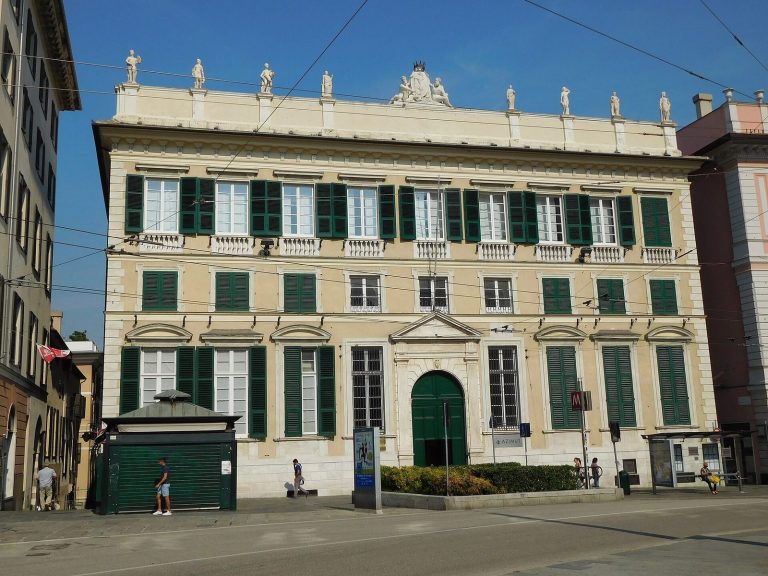
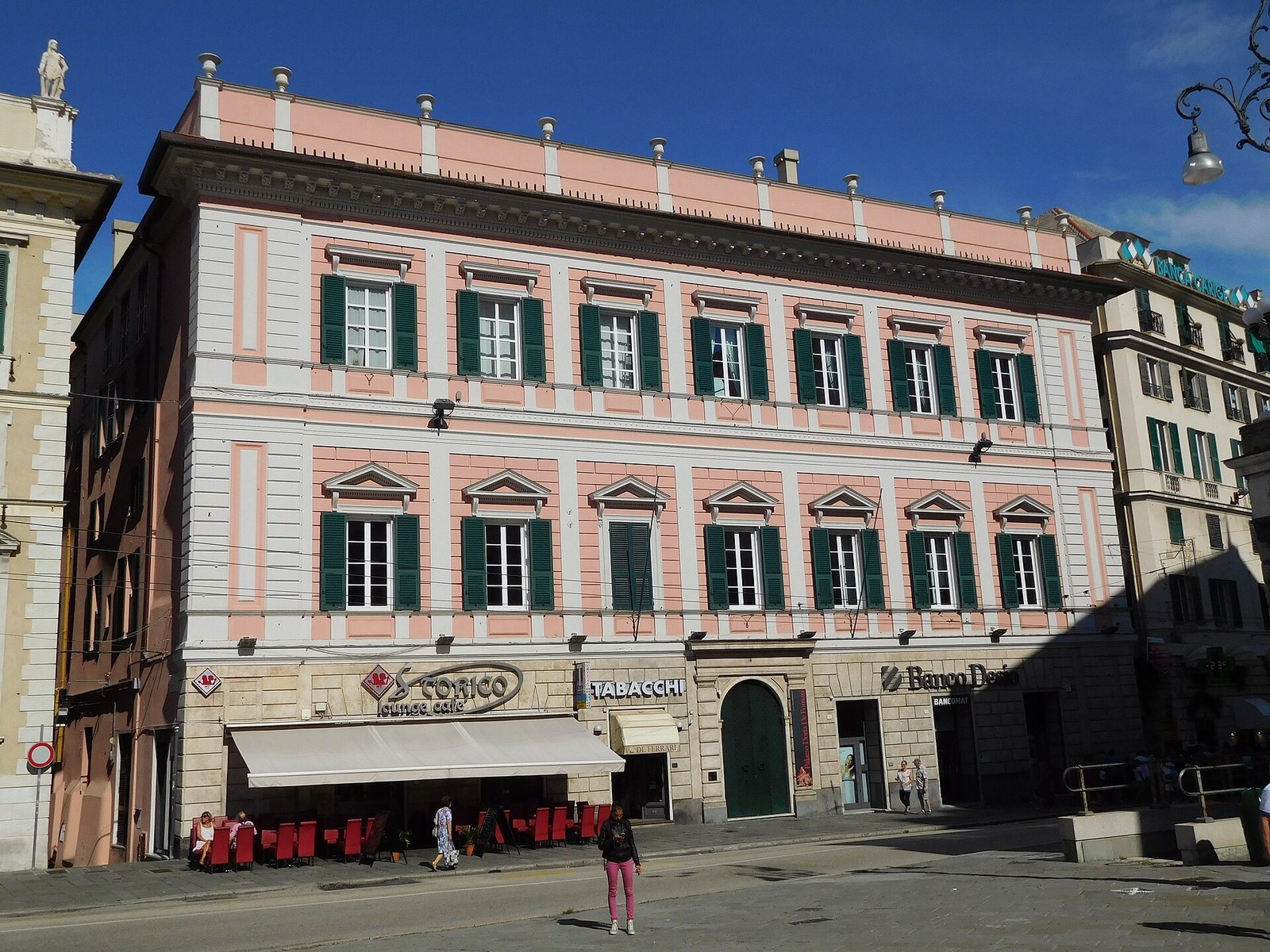
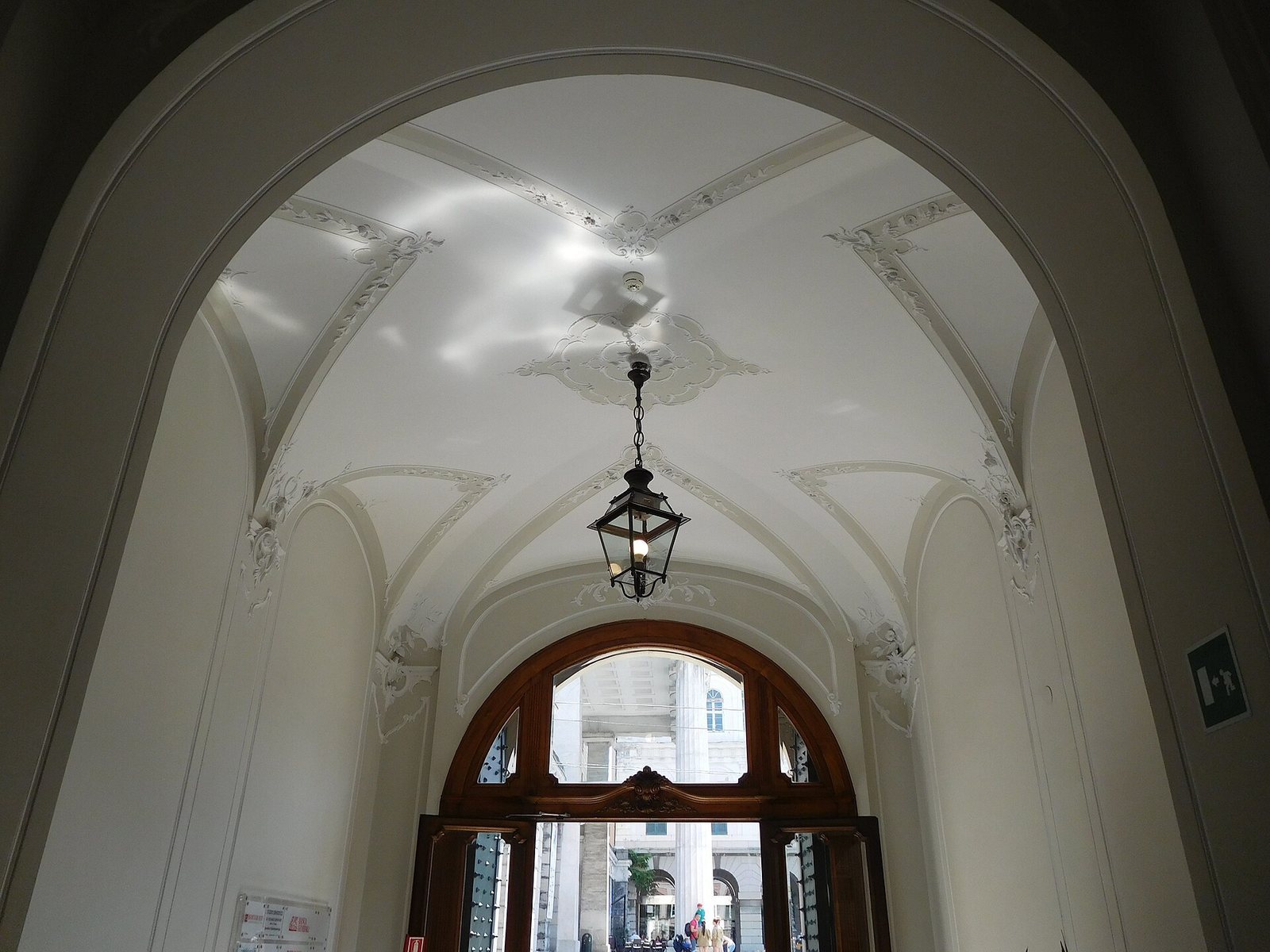
At Piazza De Ferrari 4 in Genoa’s historic center, the palace has a 19th-century facade in the Ligurian Neoclassical style, an architectural approach inspired by ancient Greek and Roman forms. Its entrance leads to a monumental marble staircase, while decorated rooms survive on the principal floor.
Facade and ground-floor features
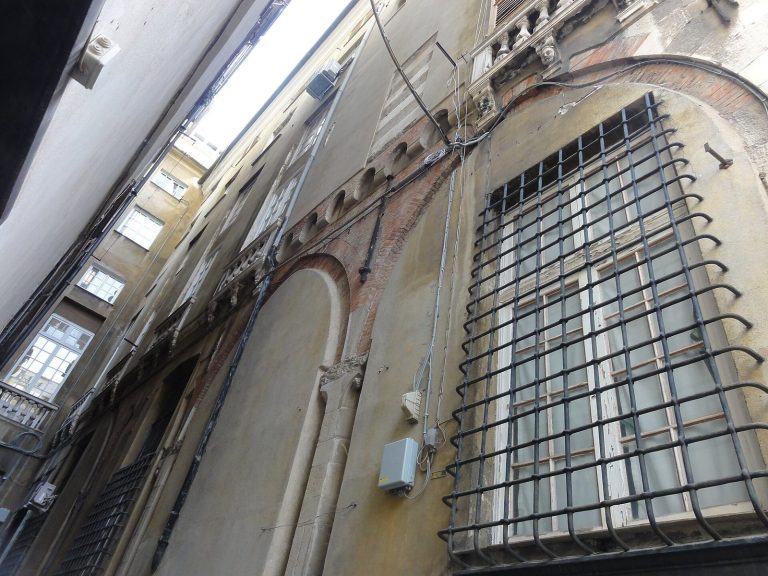
The side facing Piazza De Ferrari once had a terraced garden bordered by two open-sided galleries, or loggias. These features remained characteristic of the facade until the 19th-century transformation of the square and its surrounding buildings. Medieval arches also survive in ground-floor rooms beneath the paving of modern Piazza De Ferrari. They rest on black-and-white two-coloured pillars with Gothic capitals.
Principal-floor decoration
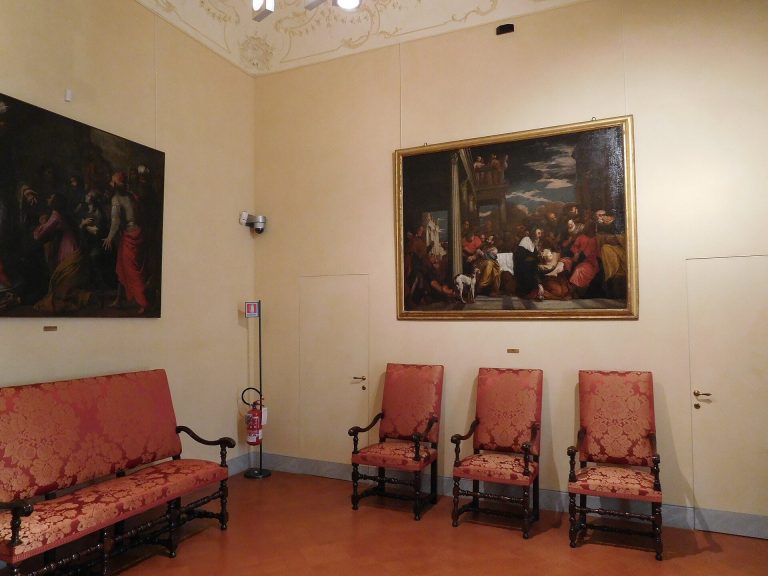
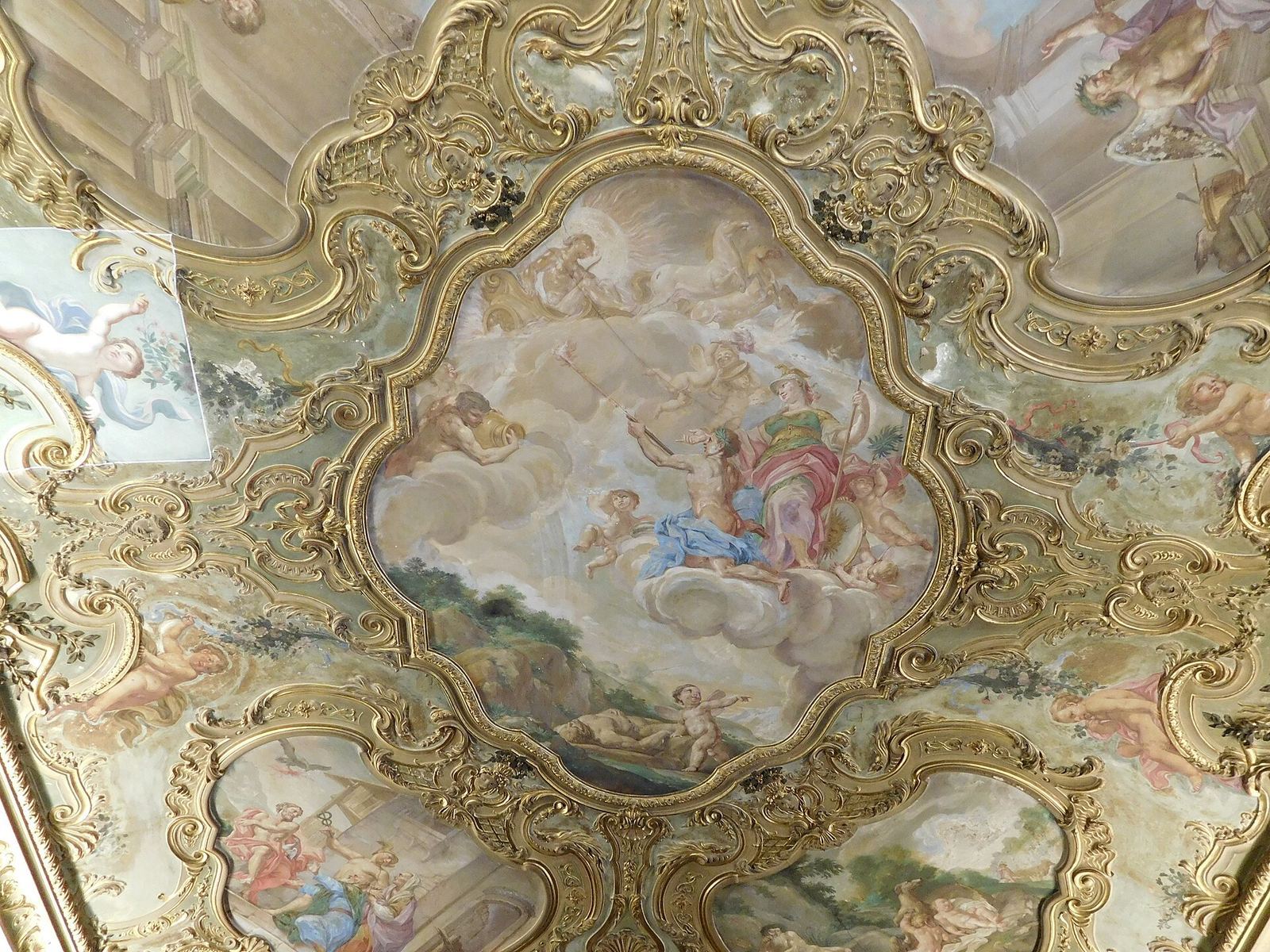
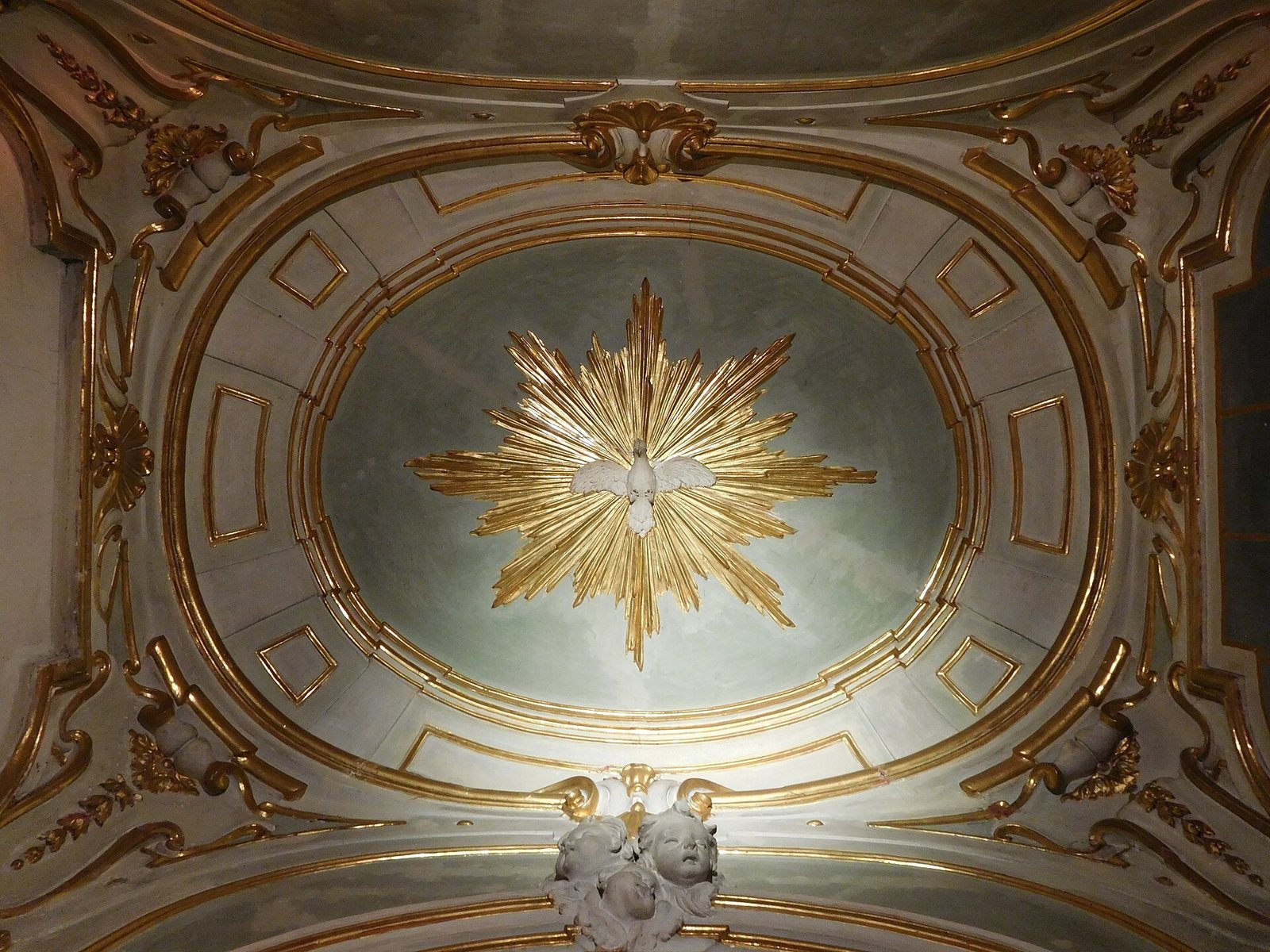
The principal-floor rooms retain valuable decoration from the late 18th century. Lorenzo De Ferrari painted an early Neoclassical salon with Apollo, the classical god associated with the arts, as its subject. Decorative stucco, a molded plaster material, in several rooms and the small gallery was probably designed by De Ferrari; one salon depicts episodes from the story of Aeneas, the Trojan hero of Roman legend. Francesco Campora’s frescoes, set within stucco frames, include a salon featuring Prometheus, the mythological figure who defied the gods, and other classical stories, as well as an alcove showing the Birth of Love. A separate room painted by the Florentine artist Sigismondo Betti presents complex allegorical scenes about the passage of time.