Kauzenburg: Residence of the Front County of Sponheim and Castle Ruin
Site at a Glance
- Popularity
- Medium
- Country
- Germany
- Primary era
- Medieval
- Eras represented
- Medieval, Modern
- Civilizations
- German, Holy Roman Empire
- Site type
- Military
- Remains
- Castle
On this page8 sections
History
Foundation and Sponheim rule
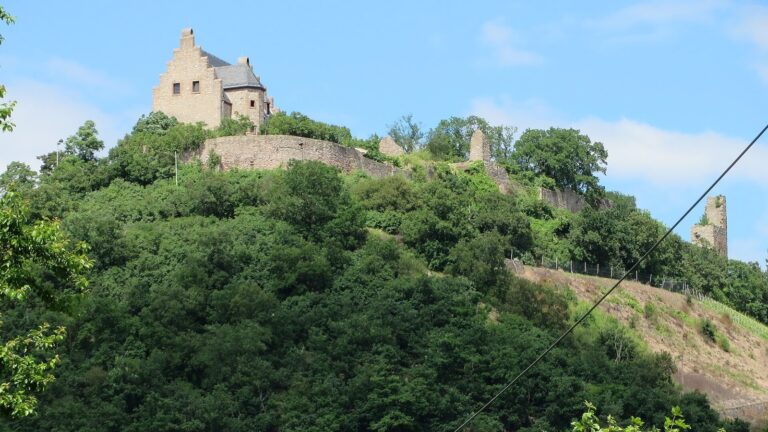
Kauzenburg is a hilltop castle ruin in Bad Kreuznach, Germany, whose first castle complex was built by Counts Gottfried III and Johann I of Sponheim between 1206 and 1230. It served as a residence for the Front County, one of the territorial divisions of the County of Sponheim, on a contested frontier of the Holy Roman Empire, a multi-territorial polity in central Europe.
A charter issued by King Philip of Swabia in 1206, prohibiting the construction of a castle, provides the first mention of Kauzenburg. The present-day Neustadt district grew around the stronghold, and nobles who served there settled nearby.
Fifteenth-century partitions
In 1417, ownership was divided between the Counts of Sponheim and Ludwig III, Elector Palatine, a prince entitled to take part in choosing the Holy Roman Emperor. A further division in 1437 involved Ludwig IV, a senior territorial ruler known as Count Palatine of Heidelberg, Frederick III of Veldenz, and the Margrave of Baden. In 1444, Stefan of Palatinate-Simmern-Zweibrücken inherited the share held by Veldenz.
During the Palatine War, a regional conflict of the mid-fifteenth century, the Margrave of Baden lost his share, while Elector Philipp enlarged the castle. Baden returned to co-ownership in 1503.
Seventeenth-century warfare and destruction
During the Thirty Years’ War, a major European conflict of the seventeenth century, the Spanish commander Marquis Spinola captured Kreuznach and the castle in 1620. Spanish forces strengthened the site until 1632, when the Swedish king took it. Imperial troops, serving the Holy Roman Emperor, captured the town and castle in 1635. French forces led by Henri II d’Orléans-Longueville, Duke of Longueville, retook the castle in 1639, but Imperial troops under Gil de Haes seized it in 1641.
After the Peace of Westphalia, the treaties that ended the Thirty Years’ War in 1648, the castle passed to Baden and the Palatinate. It was then first called the “Veste Kauzenburg,” meaning “Fortress Kauzenburg.” In the late 1680s, French forces under General Louis-François de Boufflers captured and demolished it, setting its buildings on fire.
The ruin and modern rebuilding
Andreas van Recum, later ennobled as Baron von Recum, acquired the ruin in 1803, making it part of the Bangert estate. His family retained it until 1881, with Otto von Recum as its last family owner. The property later passed to the Kreuznach families Puricelli and Gräff, and subsequently to Werren’s widow. A traditional story about the origins of Rheingrafenstein Castle also refers to Kauzenburg.
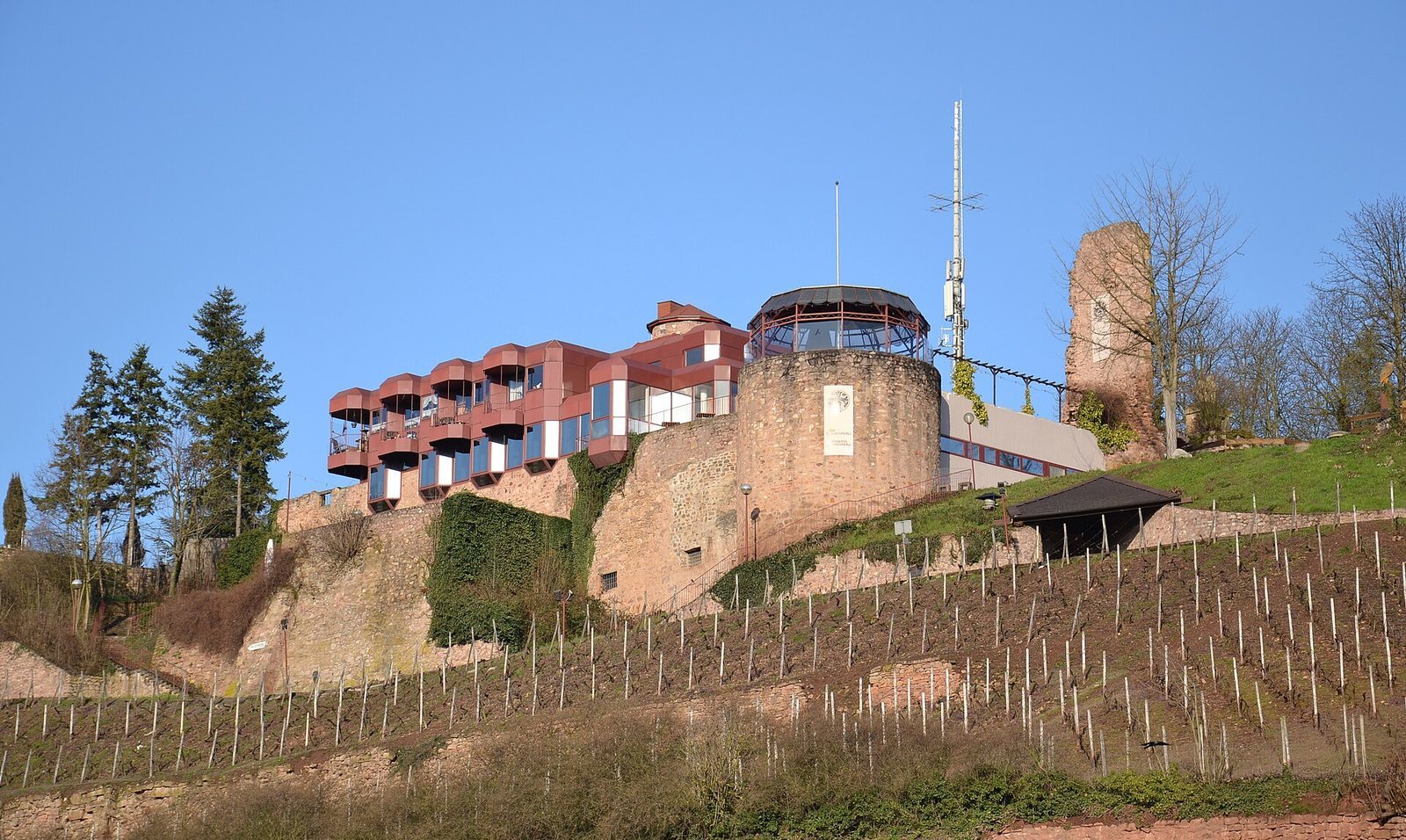
Wine merchant Elmar Pieroth acquired the castle and its grounds in 1969. Seeking to encourage regional tourism, he had structures added in preceding years removed in 1970 and commissioned German architect Gottfried Böhm to design a new building. Construction took place in the early 1970s.
Remains
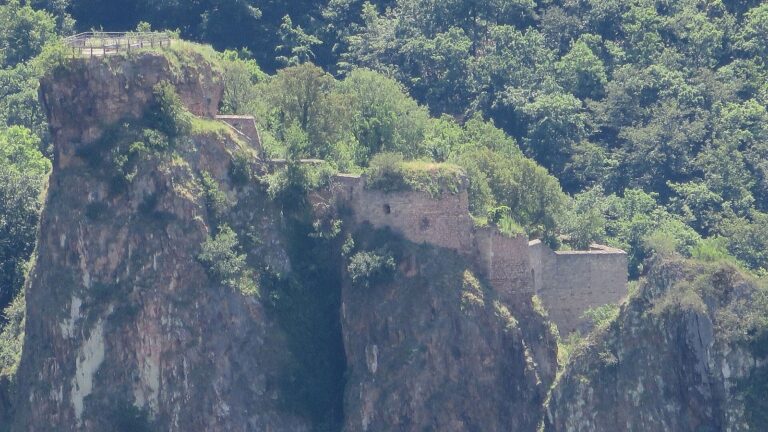
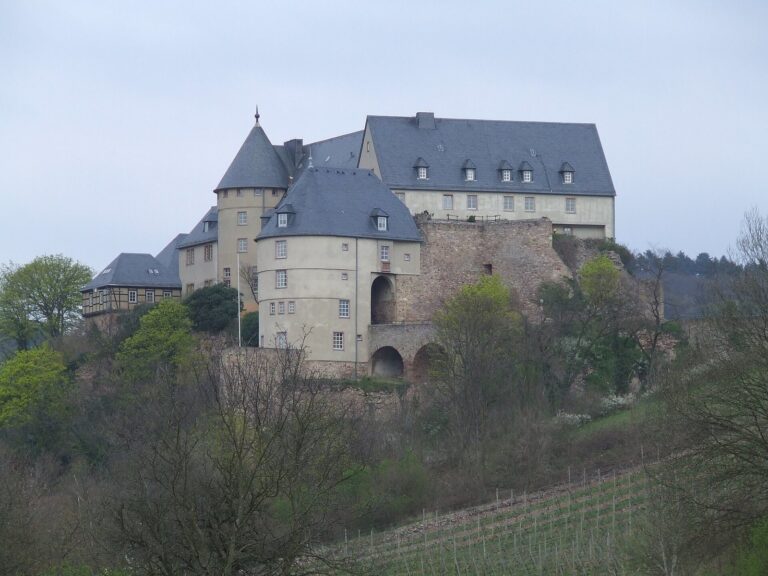
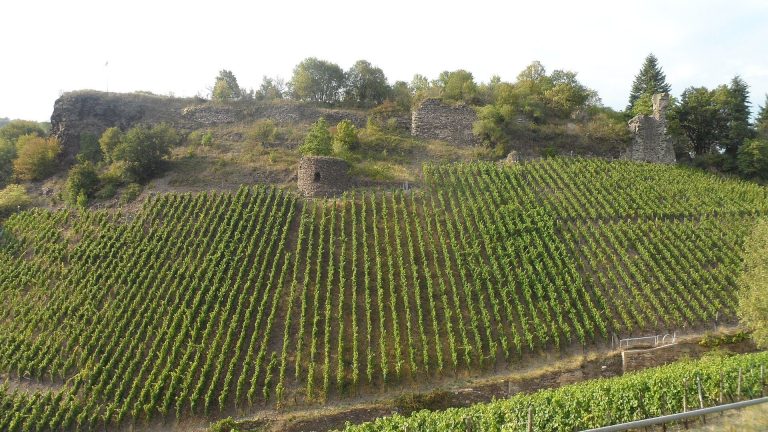
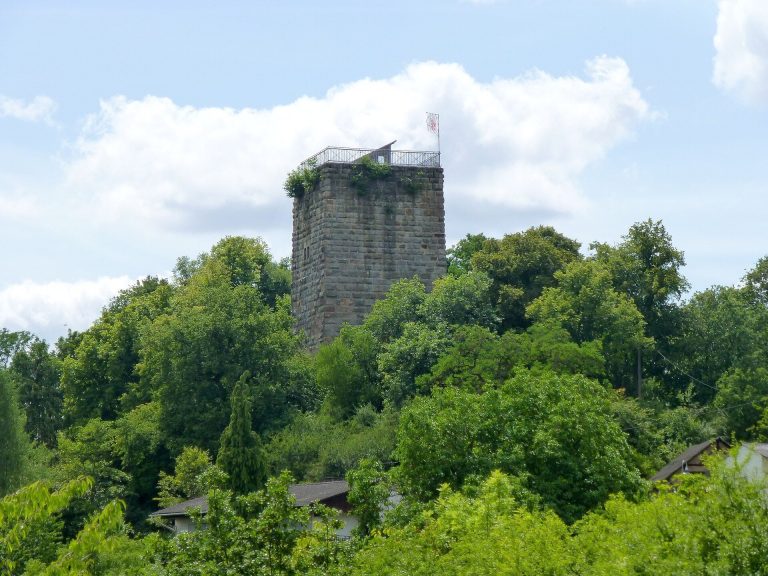
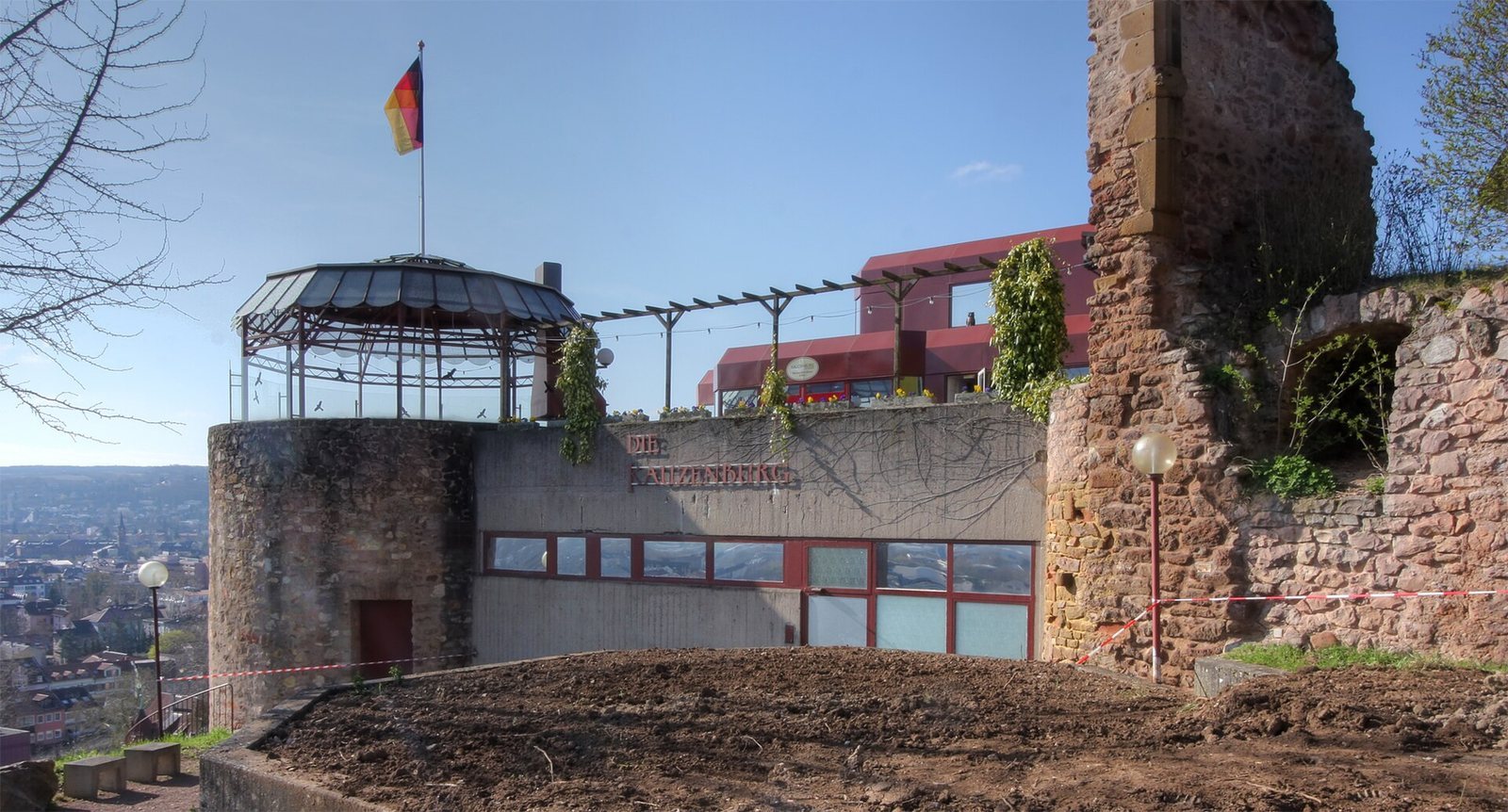
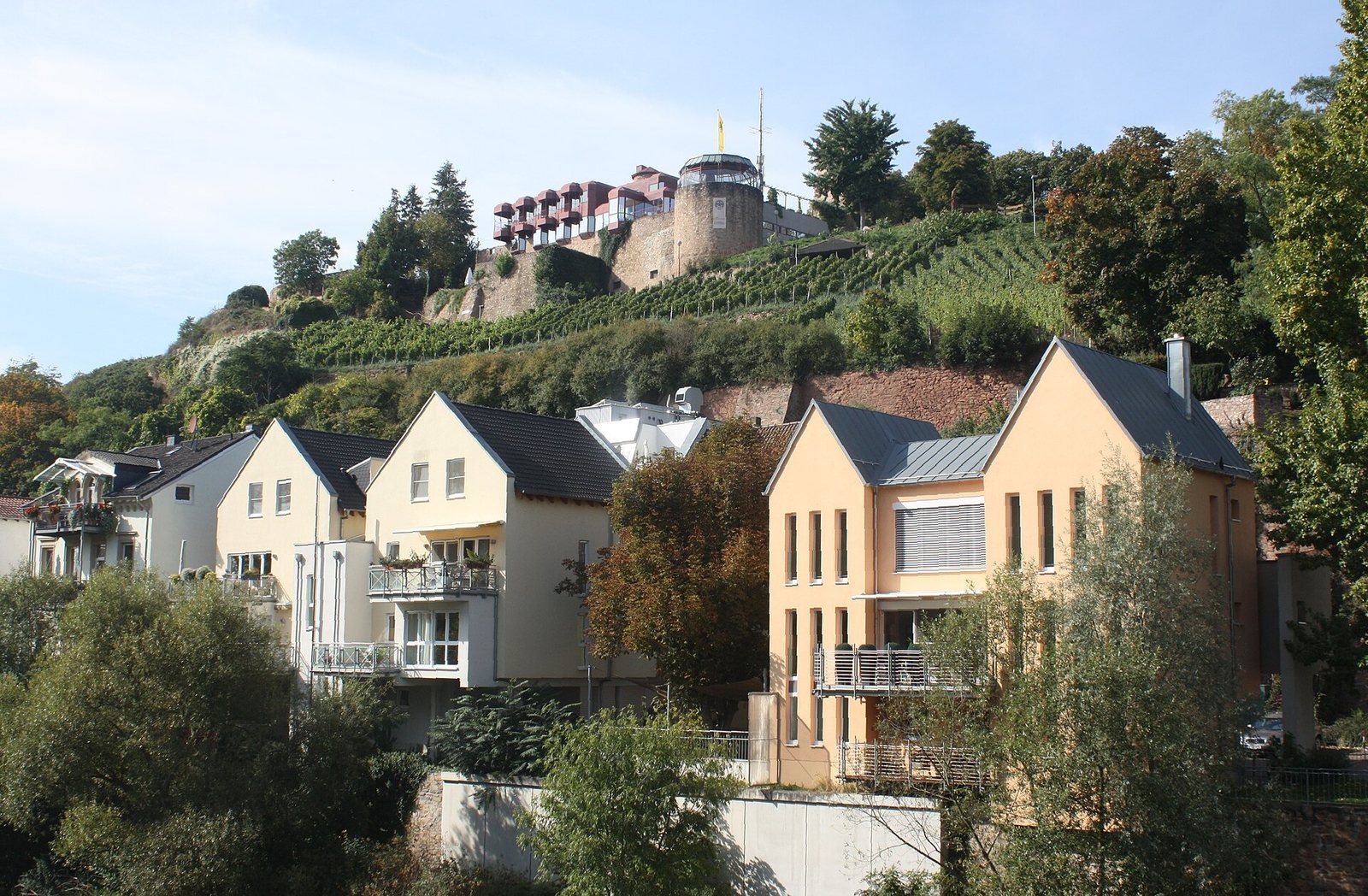
The site brings together surviving castle masonry, foundations containing vaulted spaces, and a later building constructed on the old walls. The modern design combines the visible masonry with glass and metal elements.
Castle walls and modern building
The ruin’s exterior masonry is topped by bay windows in a cubist design. The later building uses extensive glass and metal, with wine red as its principal color. A transmitter operated by Southwest Broadcasting is also located at Kauzenburg.
Foundations and cellars
Large vaulted spaces and cellars within the castle foundations were uncovered and cleared. They were probably intended for storing weapons, and were later used to hold the locally known Schloss Kanzenburger wine.