Almodóvar Palace: A Noble Residence in Murcia
Site at a Glance
- Popularity
- Medium
- Country
- Spain
- Primary era
- Early Modern
- Eras represented
- Early Modern, Modern
- Civilizations
- Spanish
- Site type
- Domestic
- Remains
- Elite Residence
On this page8 sections
History
From family houses to palace
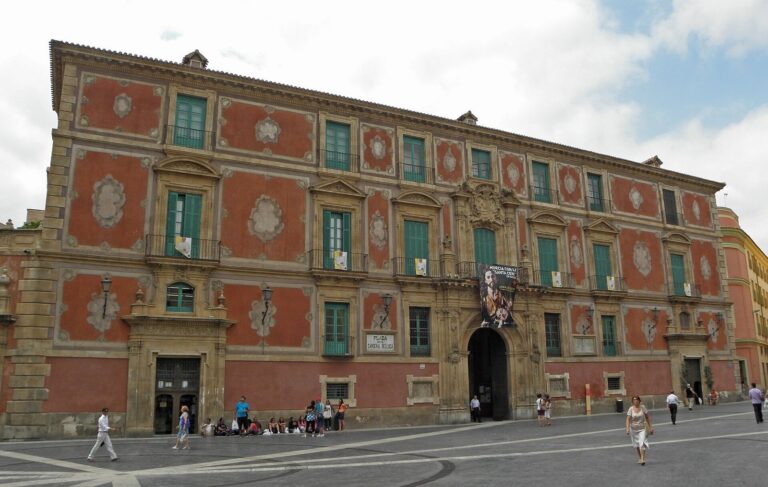
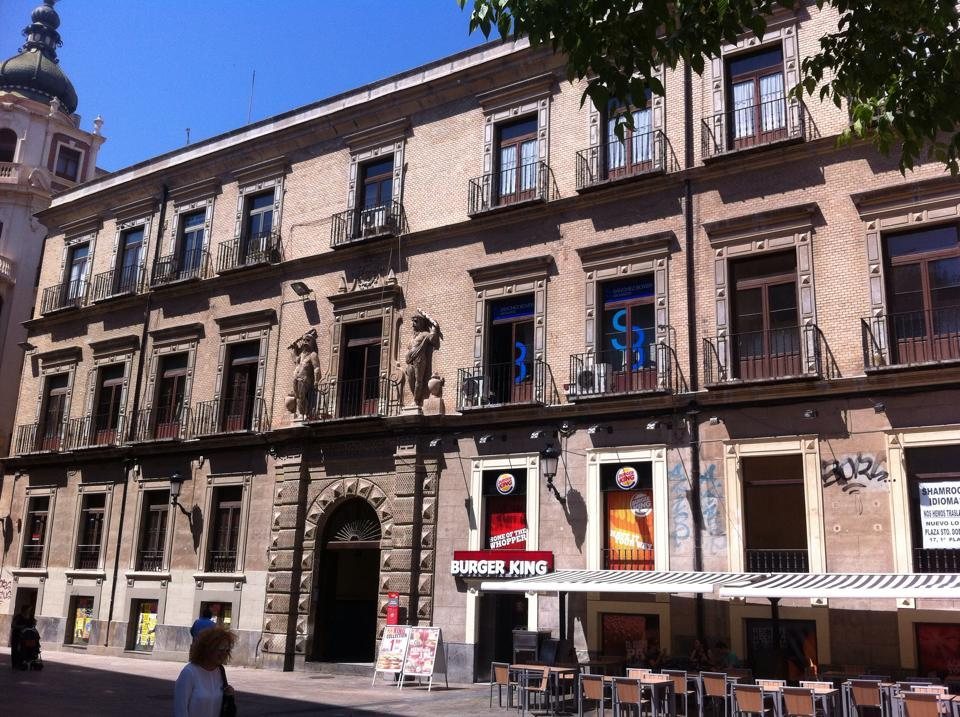
Almodóvar Palace is a noble residence in Murcia, Spain, whose present building dates to the early seventeenth century and displays Mannerist style, a late Renaissance approach that often departed from classical balance in favor of more complex forms. It developed from houses owned by the Santa Cruz and Lucas families, built against the city wall beside the Market Gate. The gate opened from Trapería onto a square outside the walls, known as the Market Square. Over time, the houses became associated with the Almodóvar and Melgarejo names.
The palace stood between Trapería, one of Murcia’s main thoroughfares, and a square that had served as the city’s commercial center since medieval times. Other noble residences along Trapería included the Celdranes house and the palace of the Marquises of Beniel.
The Rosary connection
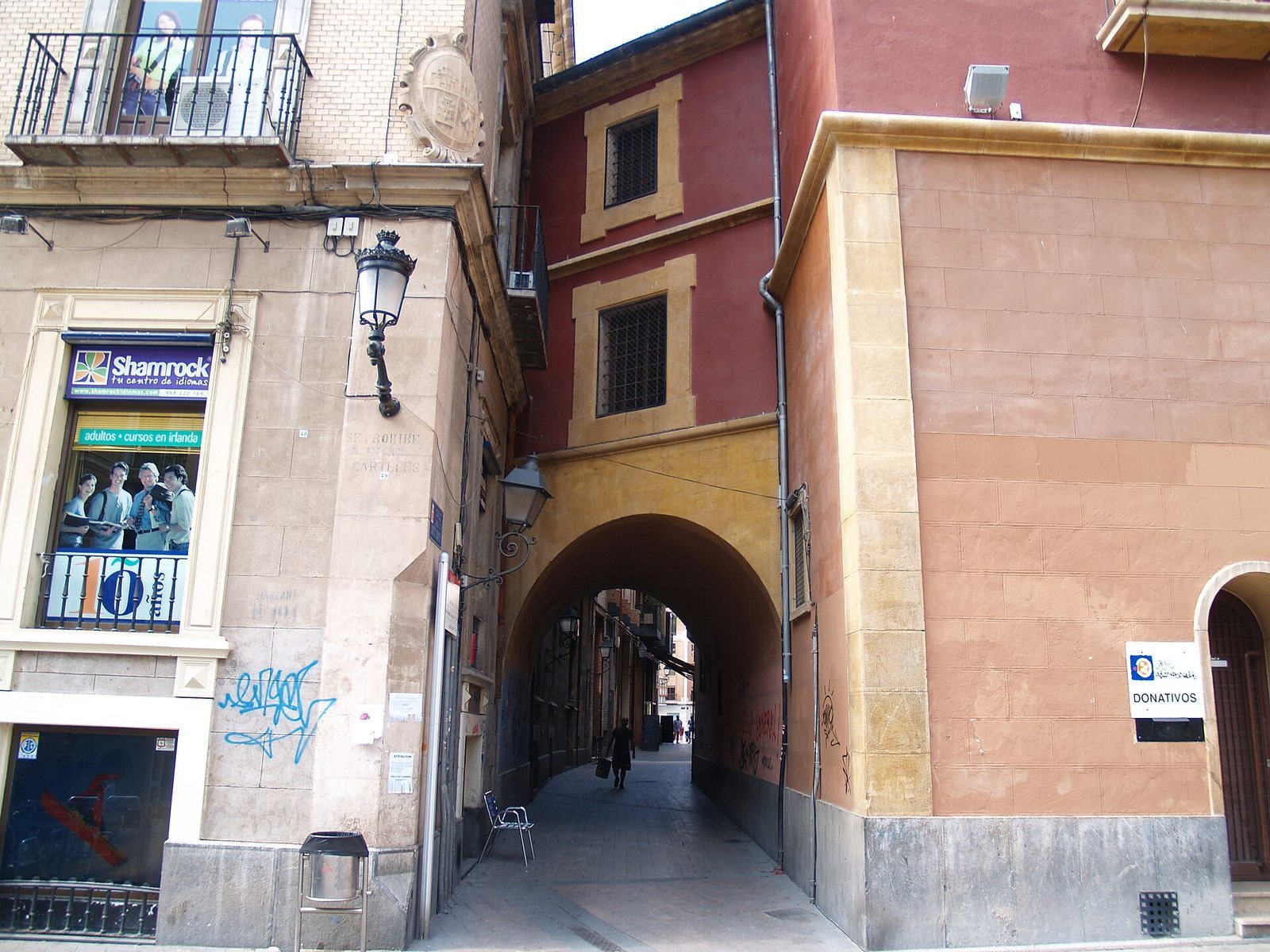
In the eighteenth century, the Counts of Almodóvar commissioned an arch across the street to connect their palace with the Chapel of the Rosary. The counts belonged to the Rosary Confraternity, a religious association whose members shared a devotional purpose, including prayers associated with Mary. The chapel was attached to the Convent of Santo Domingo, and the connection let the counts attend services without crossing the street. The architect was Toribio Martínez de la Vega.
Schools and civic uses
From the nineteenth century, the palace housed Murcia’s Tribunal of Commerce, a court concerned with commercial matters. The Saavedra Fajardo school moved into the building in 1870, followed by the Sacred Hearts school in 1890. In 1908, the palace was enlarged to incorporate a house on the corner of Serrano Alcázar Street. It later served as the seat of the provincial Civil Government, the local office representing Spain’s central government, and as a police station until 1950.
Remains
The palace combines late Renaissance features with a Mannerist design. Its entrance portal and the arch linking the building to the Chapel of the Rosary are the principal architectural features described here.
Palace facade
Portal and balconies
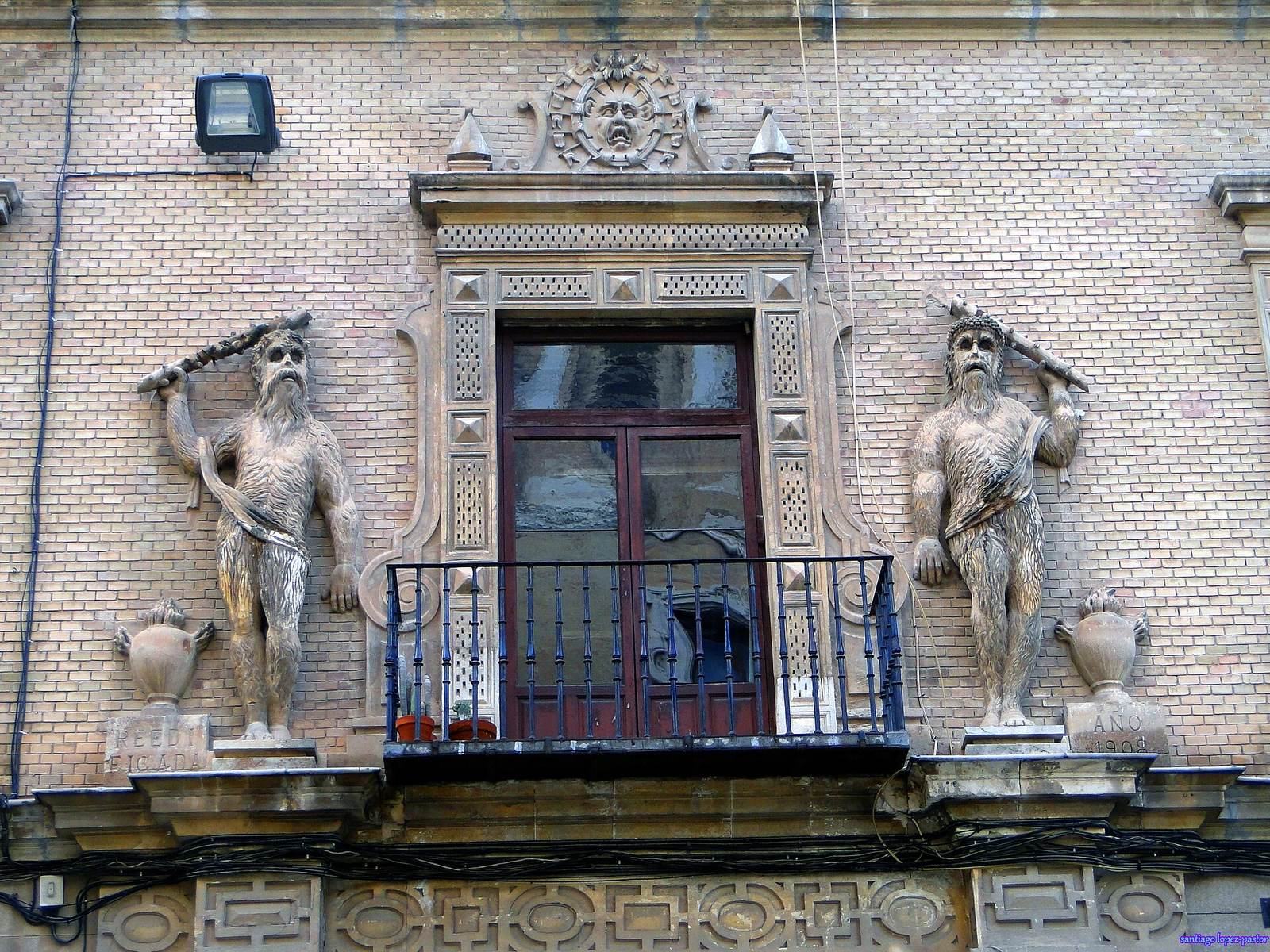
The enlargement retained the entrance portal but moved it to the center of the expanded facade. The work added a basement with windows and another floor in place of the former attic or chamber. Two balconies were placed on each side of the portal. A pair of giant statues flanks the principal balcony. They form a heraldic motif and represent the “savage” figure, recalling the Renaissance idea of the “noble savage,” an imagined uncivilized person regarded as naturally virtuous.
Arco de Santo Domingo
The Arco de Santo Domingo spans the street between Almodóvar Palace and the Chapel of the Rosary, which is attached to the Convent of Santo Domingo.