Castello di Drugolo: A Medieval Stronghold in Italy
Site at a Glance
- Popularity
- Medium
- Country
- Italy
- Primary era
- Medieval
- Eras represented
- Medieval
- Civilizations
- Unclassified
- Site type
- Military
- Remains
- Castle
On this page6 sections
History
Castello di Drugolo is a castle in Italy whose history as a stronghold reaches back to the tenth century. A medieval predecessor stood before the Gritti family rebuilt the castle at the end of the fourteenth century, and the earlier stronghold may have had Lombard origins.
Medieval ownership
In the early fifteenth century, Pandolfo III Malatesta, an Italian ruler and military commander, seized the castle. In 1409 he granted it as a fief, a landholding held through a feudal relationship, to Malagnino da Padenghe. Malagnino transferred it to the brothers Bartolino and Antonio Guarini, who passed it to the Milanese Vimercati family in 1411.
After the Vimercati rebelled, Pandolfo confiscated the castle again on 27 September 1414 and sold it for 400 gold ducats to the Commune of Padenghe, a self-governing municipality. The Vimercati regained ownership on 21 January 1436, then sold the property to Giovanni Averoldi of Brescia for 1,600 florins and 36 imperial soldi.
Averoldi ownership and later changes
On 4 November 1452, Francesco Foscari, the elected head of the Venetian Republic, granted the village independent commune status. This separated it from the Riviera’s Quadre, local administrative divisions. The Averoldi family imposed a toll on traffic passing through the Riviera, harming wine merchants. The village also came under the church jurisdiction of the parish of Bedizzole, a connection that permanently linked it to the Diocese of Brescia. The Averoldi rebuilt the castle in 1498 and again in 1575.
In the eighteenth century, Giulio Antonio II Averoldi began reclaiming land around the castle, had basins built to collect rainwater, and drove bandits from the area. After his death, his sons Giovanni, Angelo, and Gherardo inherited the property. It was later acquired by Angelo Averoldi, who served as podestà, or chief civic magistrate, of Brescia in 1848.
Andrea Averoldi (1839–1920) sold the castle and some of its land to his cousin Gherardo Averoldi (1862–1940). Severe financial problems led Gherardo to relinquish it in 1935. Baron Armando Lanni della Quara, the highest bidder, restored the castle and demolished rural houses built beside its perimeter walls.
Remains
Castle and enclosure
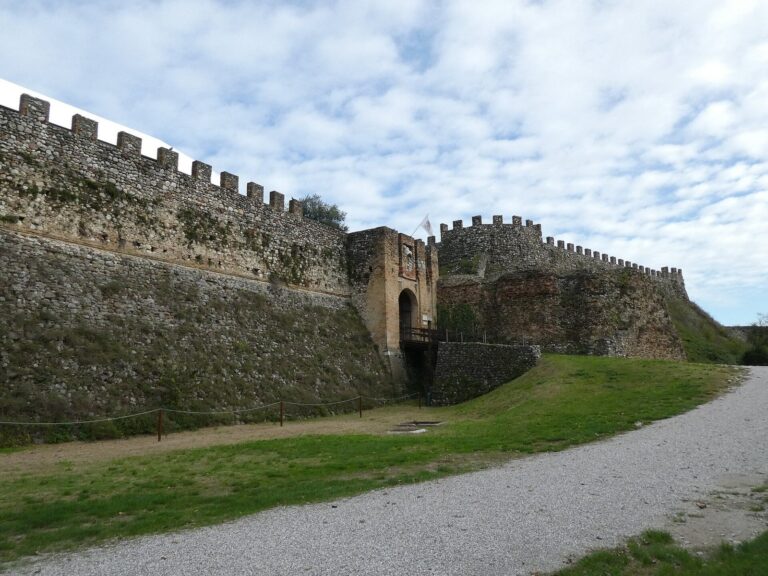
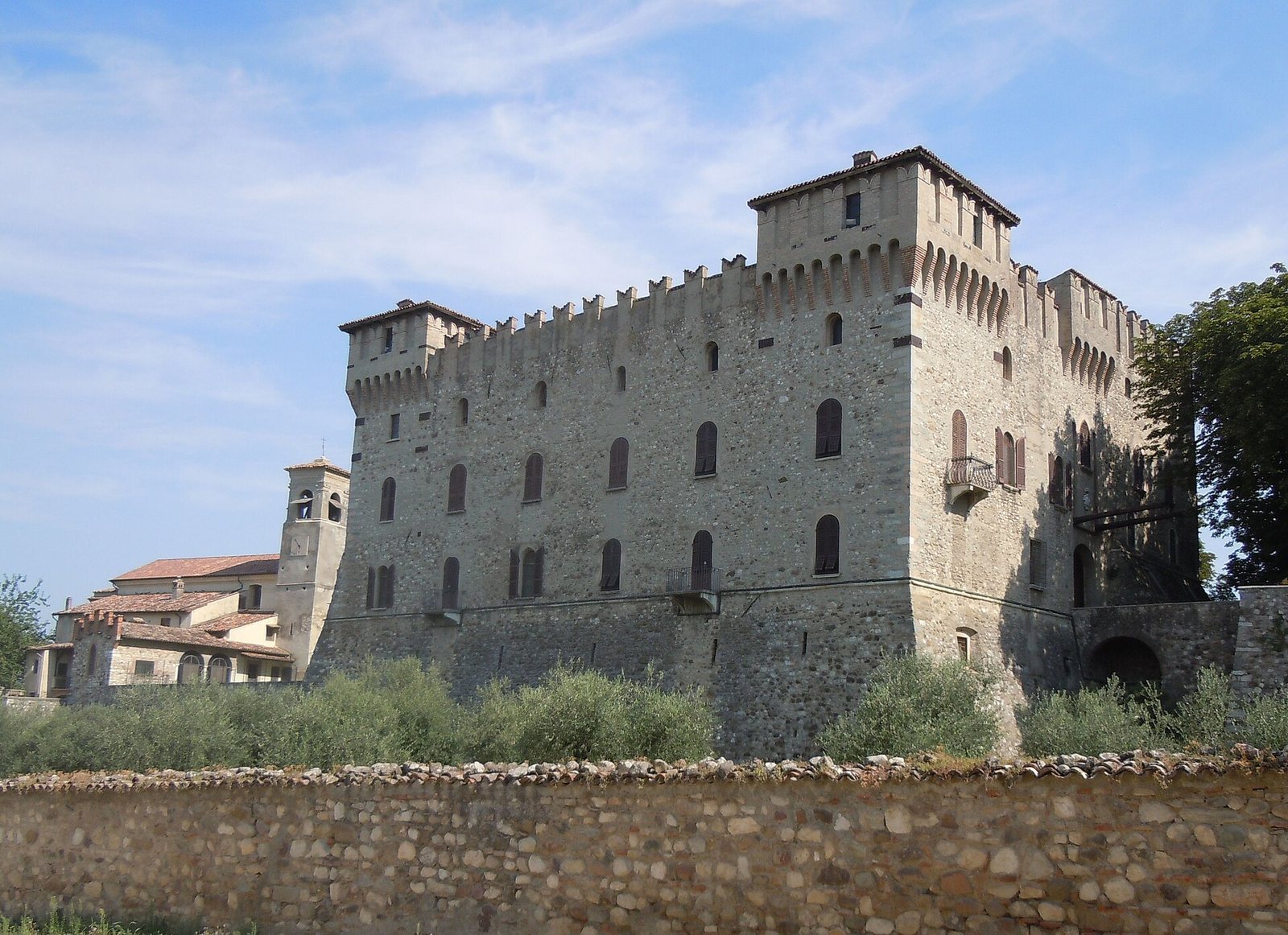
The castle stands among hills a short distance from Lake Garda. Its square building has two corner towers and stands on a high wall with a sloping face; perimeter walls enclose the compound. The masonry is made of pebbles and mortar, and the battlements follow the Ghibelline pattern, a style associated with a medieval Italian political faction.
Church of St Michael
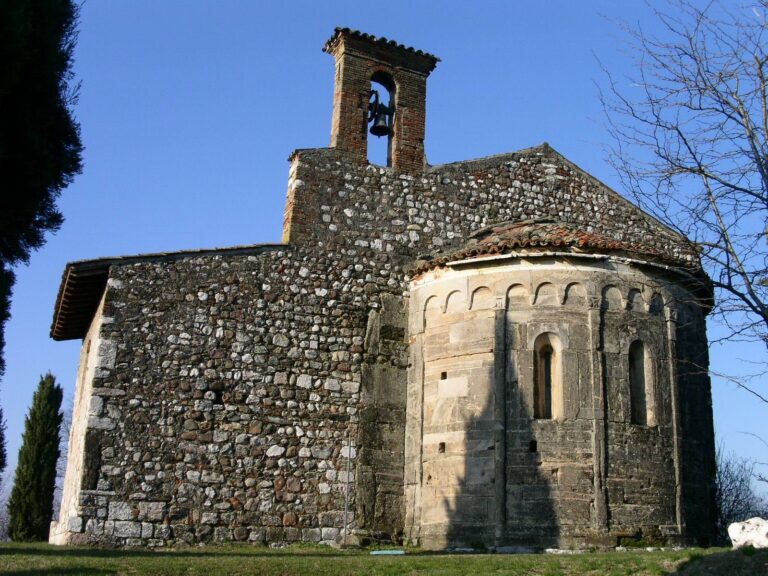
Within the perimeter walls stands the twelfth-century Church of St Michael, named for Michael, an archangel in Christian tradition.