Radspielerhaus: An Urban Palace in Munich
Site at a Glance
- Popularity
- Medium
- Country
- Germany
- Primary era
- Early Modern
- Eras represented
- Early Modern, Modern
- Civilizations
- Electorate of Bavaria, Holy Roman Empire, Kingdom of Bavaria
- Site type
- Domestic
- Remains
- Elite Residence
On this page7 sections
History
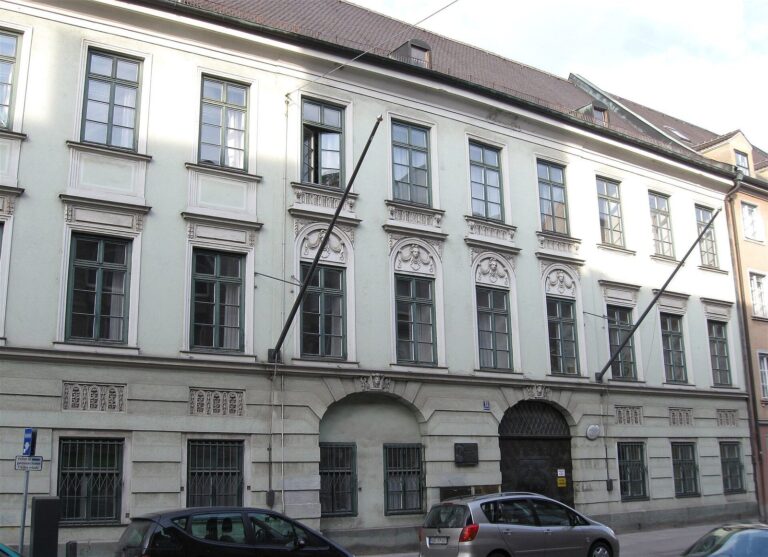
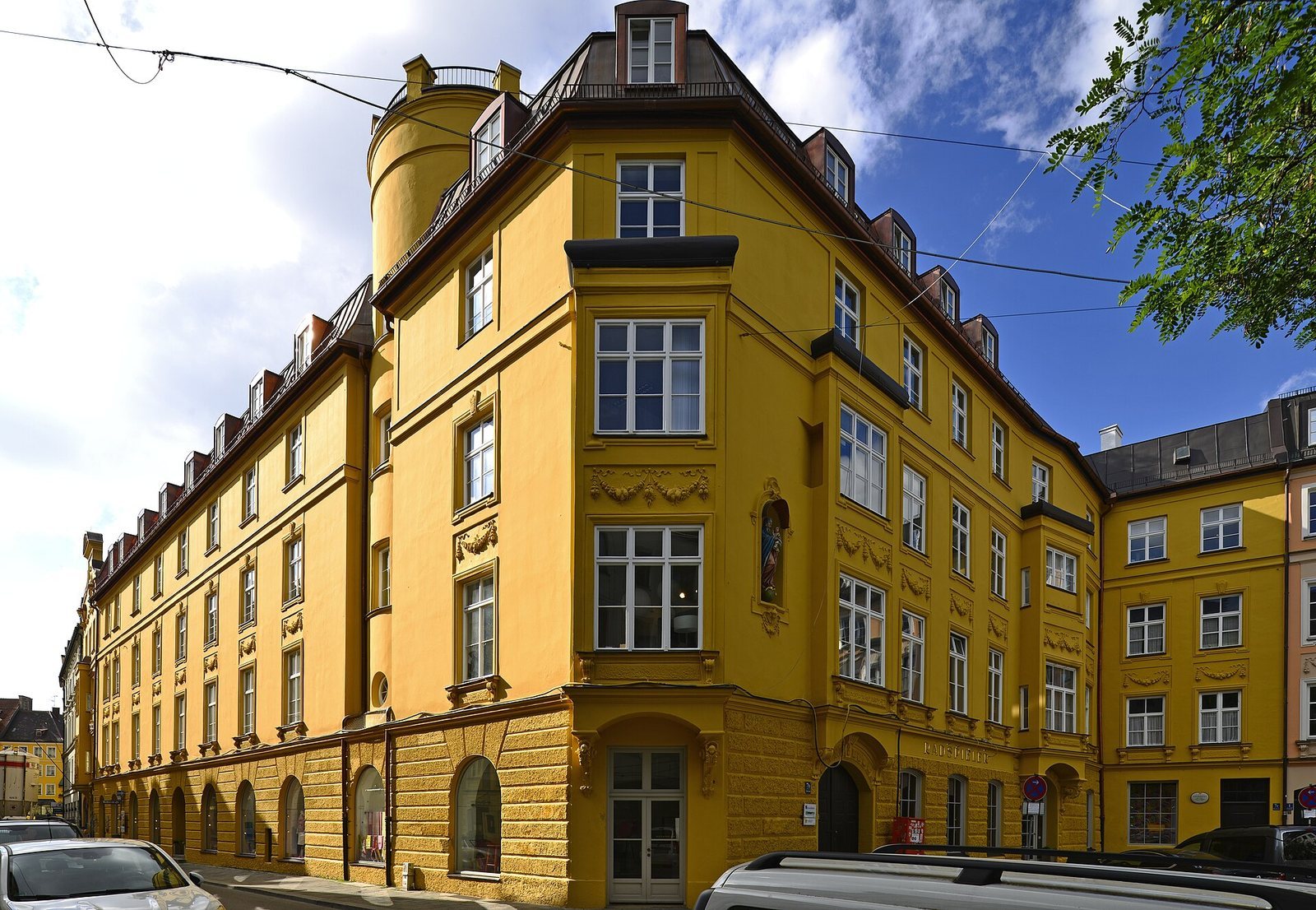
Radspielerhaus is an urban palace in Munich, Germany. Electoral review councillor Johann Rudolf Wämpl commissioned a replacement building in 1678 for two separate houses he owned on the site. The palace has a simple early Neoclassical appearance.
In 1688, the property was given to Baron Gaudentius von Rechberg, an Electoral and Royal Bavarian chamberlain, a senior official in a ruler’s household, in recognition of his service. Members of Bavaria’s ruling Wittelsbach dynasty, dukes Albrecht Sigismund and Maximilian Heinrich, both bishops, stayed there. The German poet and writer Heinrich Heine lived at the palace in 1827–28.
Nineteenth-century occupants and alterations
In 1800, the Rechberg family hosted French general Louis Bastoul, who had been badly wounded at the Battle of Hohenlinden. He remained at the palace until his death.
Architect Jean Baptiste Métivier altered the palace after 1817. Josef Radspieler, a supplier to the Bavarian royal court whose workshops furnished King Ludwig II’s castles, acquired the property in 1848. During Radspieler’s ownership, Hackenstraße was widened while the address was still Hundskugel 7. Radspieler raised the palace and made its former rear the front. He also hosted Marija Antonowna Naryshkina, a former mistress of Russian Emperor Alexander I.
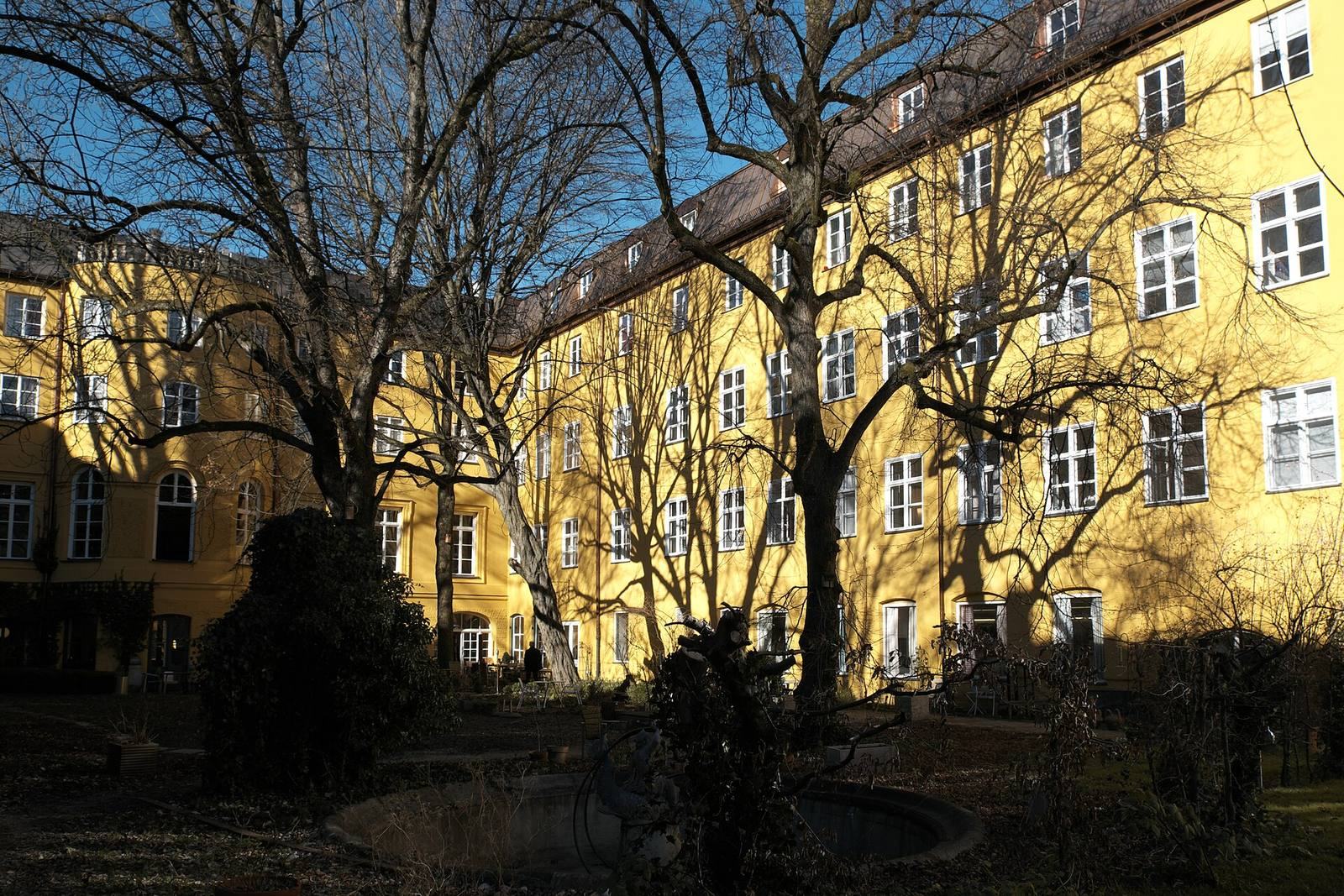
Renovation of part of the palace began in 2014, alongside proposals to convert it to commercial and residential use. Plans also included restoring the garden and its fountain and planting large trees.
Remains
The palace and its grounds
The site brings together an urban palace and a private garden behind it. Excavations in the garden also revealed a historic cellar and pottery from earlier periods.
Palace
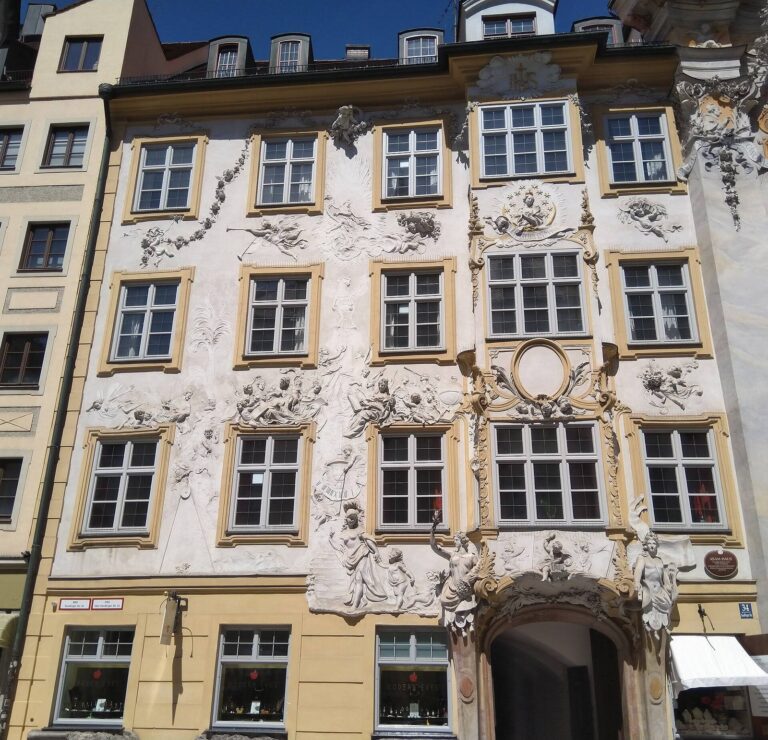
The street elevation has a rusticated base, a finish in which stonework is treated to look rough and deeply jointed, and several decorative bay windows. The building stands at Hackenstraße 7.
Private garden
The garden is the last surviving private garden in Munich’s old town. It contains a fountain made by sculptor Roman Anton Boos.
Cellar and finds
Excavations for a proposed underground garage uncovered an old cellar containing construction rubble, which may have come from the nearby Asamhof. The work also yielded pottery fragments from the Bronze Age and Iron Age.