Temple House: A Georgian Country House in Ireland
Site at a Glance
- Popularity
- Medium
- Country
- Ireland
- Primary era
- Modern
- Eras represented
- Medieval, Modern
- Civilizations
- British, Crusader, Knights Templar
- Site type
- Domestic
- Remains
- Manor House
On this page6 sections
History
Temple House is a country house in the Georgian style, associated with the reigns of George I through George IV in the eighteenth and early nineteenth centuries, near Ballymote in south County Sligo, Ireland. Its estate includes Templehouse Castle, built by the Knights Templar, a medieval religious military order, in 1181.
Templar and Hospitaller ownership
The Templars received formal title to the land in 1216, after the castle had been built. King John of England, who ruled from 1199 to 1216, confirmed their title. When the Templar order was dissolved in 1311, the property passed to the Knights Hospitaller, another medieval religious military order.
In 1627, the castle was converted into a private residence. During the Irish rebellion of 1641, its owners supported the rebels. The English army besieged the castle and used artillery, badly damaging it and reducing it to ruins.
Perceval ownership and later conflict
George Perceval, who had settled in Ireland, acquired the estate in 1665 through marriage to an heiress of the Crofton family, associated with Longford House in Colooney. The estate remained with the Percevals, several of whom served as High Sheriffs of Sligo, county officials with judicial and administrative duties. Colonel Alexander Perceval (1787-1858), a Member of Parliament for County Sligo and Sergeant-at-Arms in the House of Lords, an officer responsible for order and security in the chamber, spent lavishly. The estate was sold after his death. His third son, also named Alexander, made a fortune in China and bought the property back.
In 1920, during the Irish War of Independence, the struggle over Irish independence, the Irish Republican Army (IRA), an Irish republican paramilitary organization, attacked the house. The wife of its owner, Major Alexander Perceval, was seriously injured.
Remains
Country house and estate
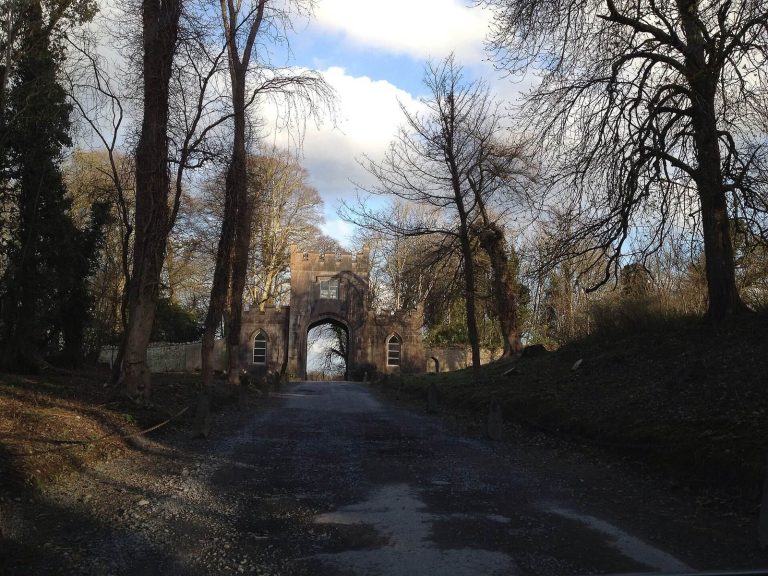
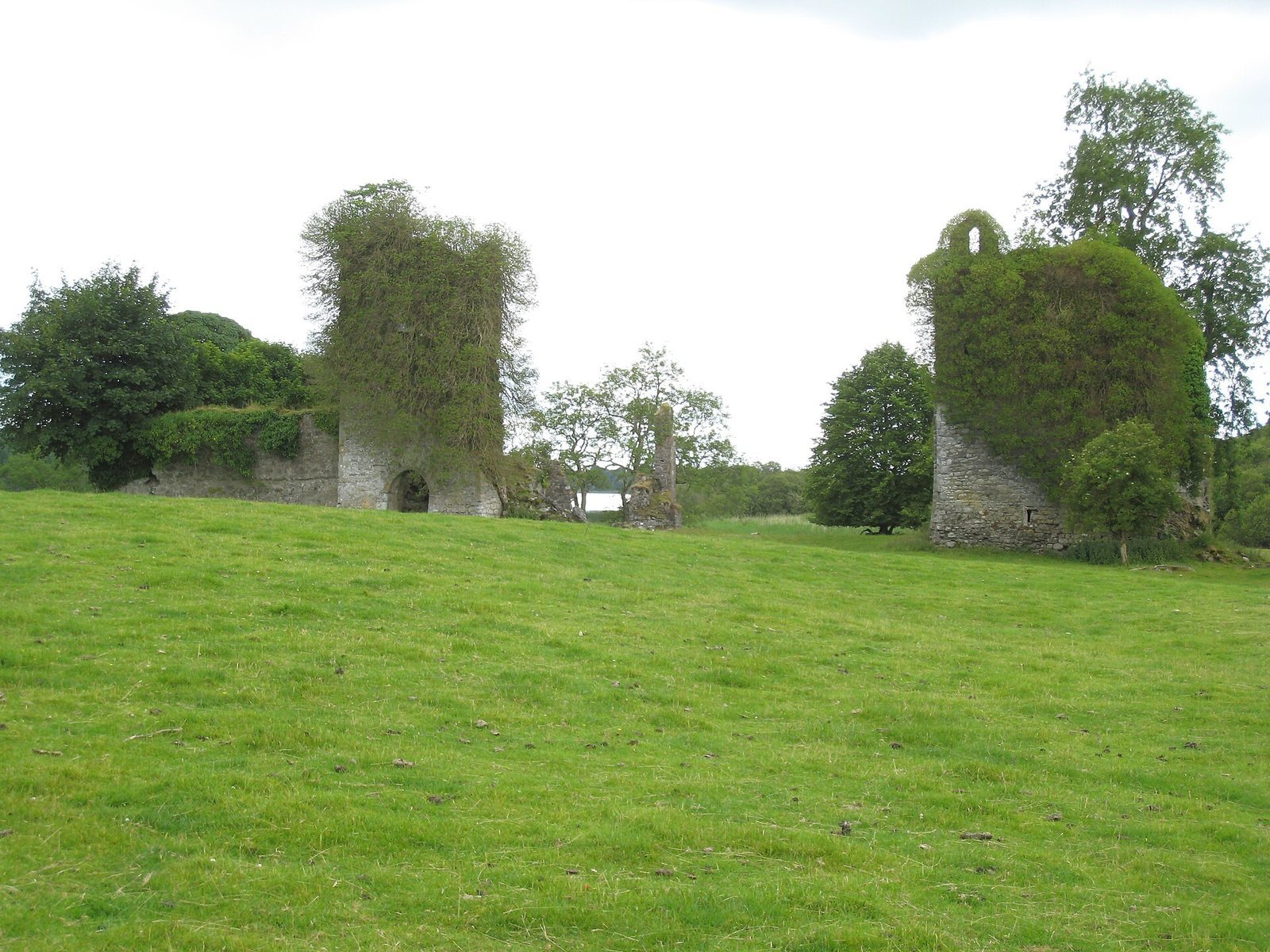
Temple House stands on an estate of about 1,000 acres (400 hectares) beside a lake and overlooks the castle ruins on the lakeshore. Colonel Alexander Perceval rebuilt the house around 1825 in Georgian style, replacing an earlier Gothic house. Around 1864, a seven-bay side block, with seven divisions across its facade, was added at right angles to the five-bay main block, and the house was further embellished.
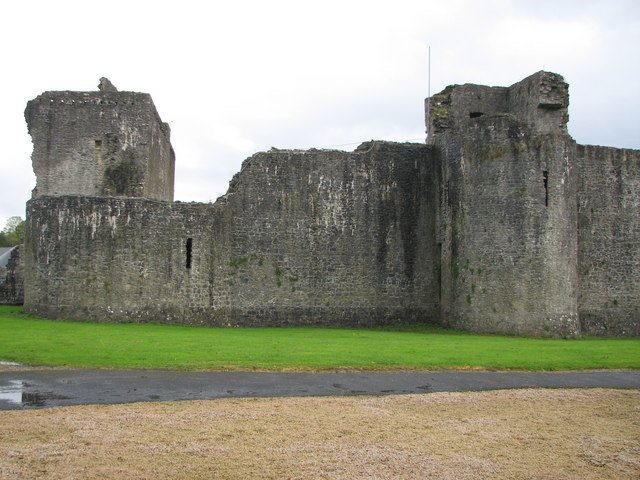
Templehouse Castle
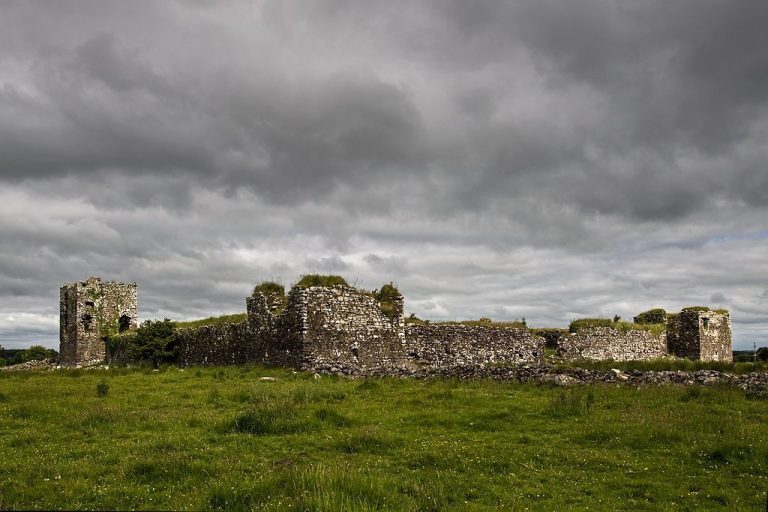
The castle ruins are at Ballinacarrow, near Ballymote in south County Sligo. The structure is rectangular and keep-less, meaning it lacks a castle’s principal stronghold tower.