Kamlapati Palace: An Eighteenth-Century Palace in Bhopal
Site at a Glance
- Popularity
- Medium
- Country
- India
- Primary era
- Early Modern
- Eras represented
- Early Modern
- Civilizations
- Unclassified
- Site type
- Domestic
- Remains
- Palace
On this page6 sections
History
Kamlapati Palace is an eighteenth-century palace in Bhopal, India, built in 1722 and associated with Rani Kamlapati and her husband, Nizam Shah. Its origin is linked to both: Nizam Shah built it as a gesture of affection, while the surviving building forms part of a palace constructed by Kamlapati.
Kamlapati was one of Nizam Shah’s seven wives. He was a Gond ruler, belonging to an Indigenous people of central India, and chief of Ginnorgarh. The son of Suraj Singh Shah, Nizam Shah ruled in the early eighteenth century over a territory formed by the merger of 750 villages.
After Nizam Shah’s death, Kamlapati tied a rakhi, a thread given in a rite expressing protection and kinship, to Dost Muhammad Khan. He protected her and her son from their enemies, and she rewarded him with Bhopal, which he developed as his capital. Their story is associated with Hindu-Muslim unity in Bhopal, an association that continues to the present.
Bhopal takes its name from Bhojpal, an ancient embankment built by Bhoj, a Parmara king. The Parmaras were a medieval ruling dynasty of Malwa, and Bhoj reigned from AD 1010 to 1055. Sardar Dost Mohammad of Bhopal, who ruled from AD 1708 to 1726, built Fatehgarh Fort and laid the foundation of modern Bhopal.
In 1989, the Government of India placed the palace under protection, and the Archaeological Survey of India became its custodian. The Survey designates it a Monument of National Importance and preserves it.
Remains
Surviving architecture
Palace form and setting
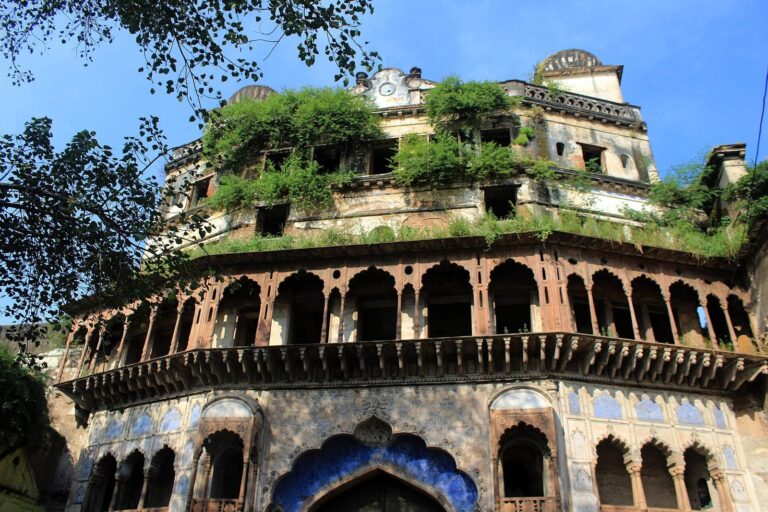
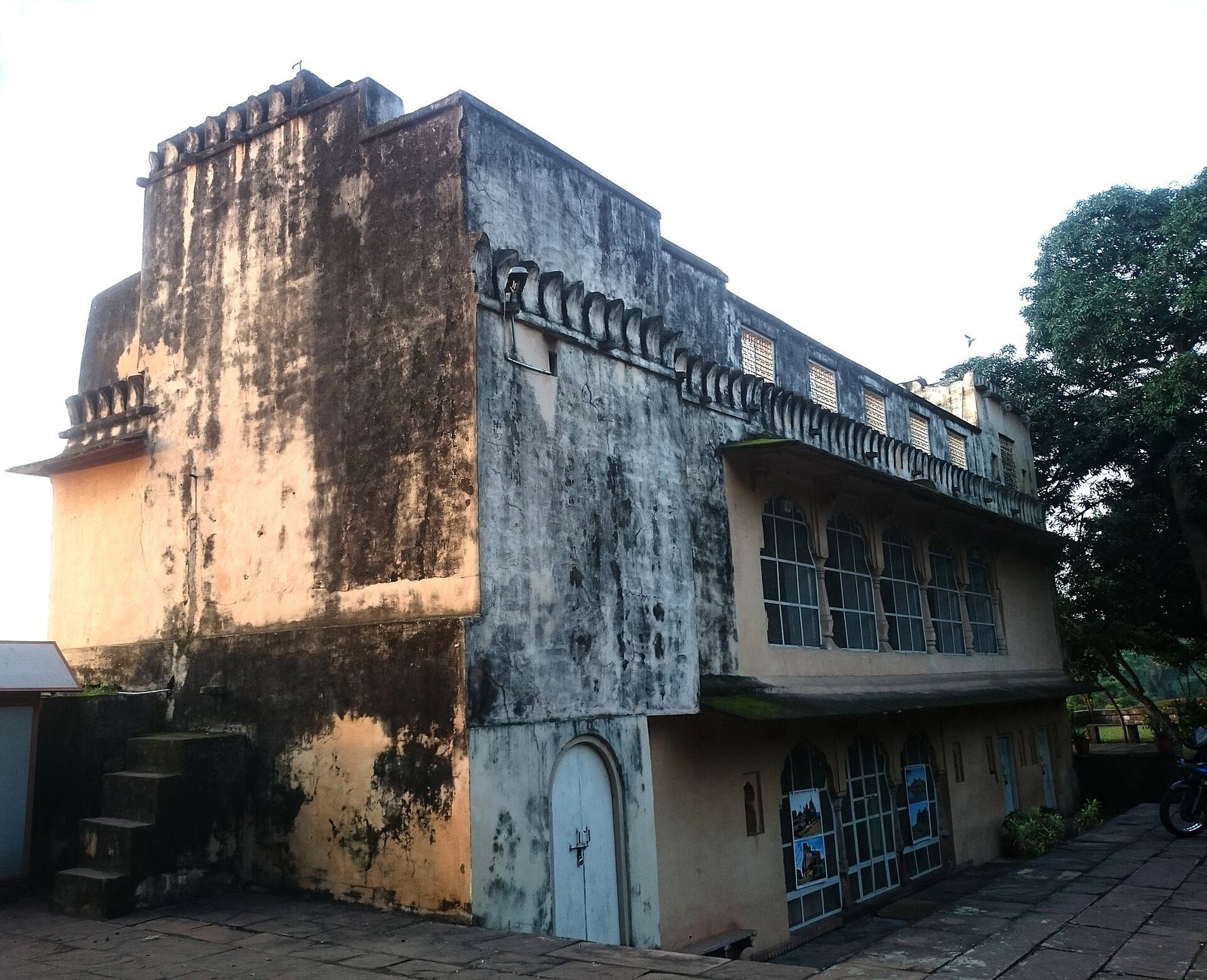
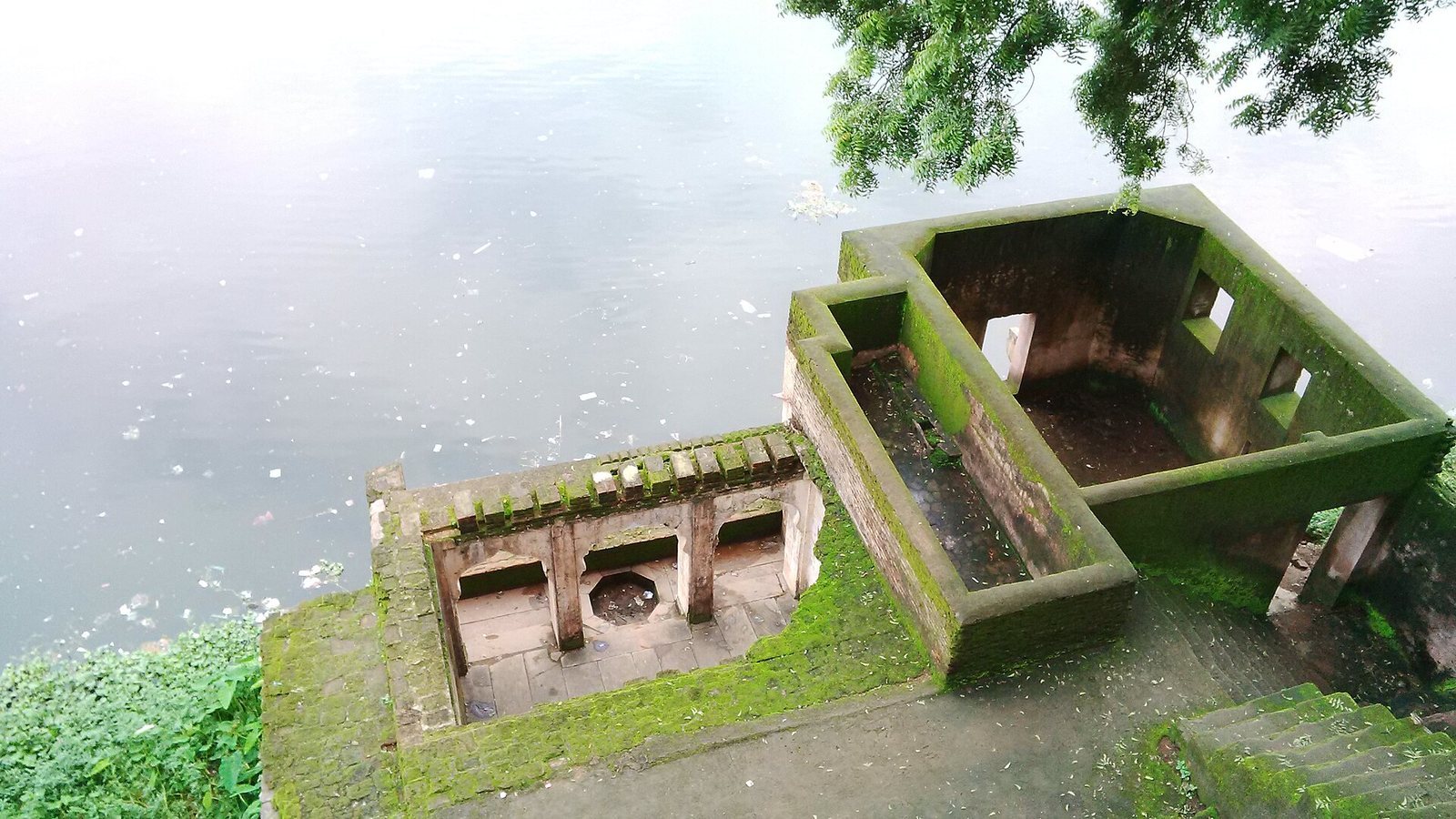
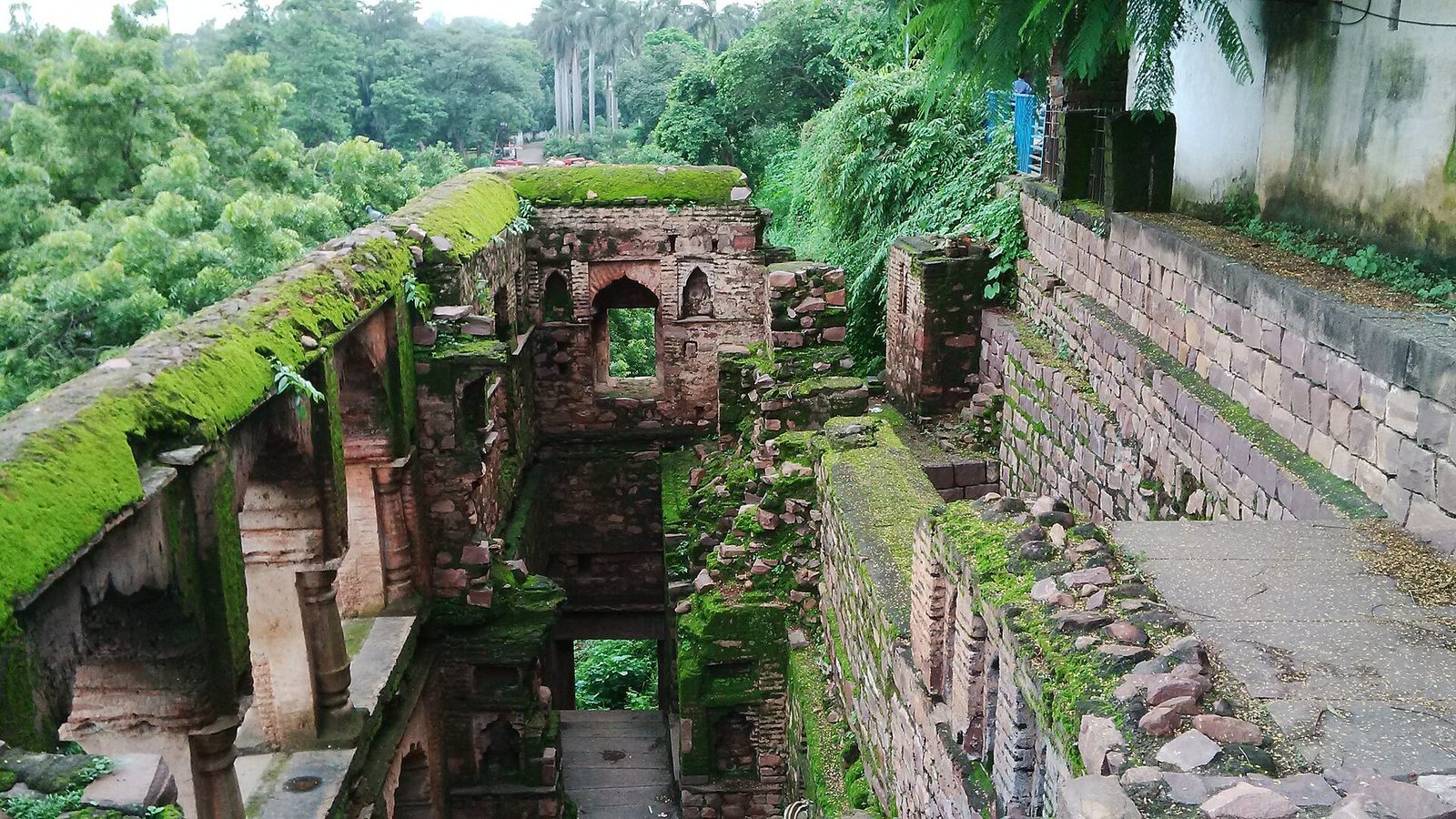
The surviving palace is a two-storey building within Kamla Park, on the bridge between Bhopal’s larger and smaller lakes. It stands east of the Bhojpal embankment and is built of lakhauri bricks, small, thin bricks. The building is the earliest surviving example of secular architecture of its period in Bhopal.
Facade
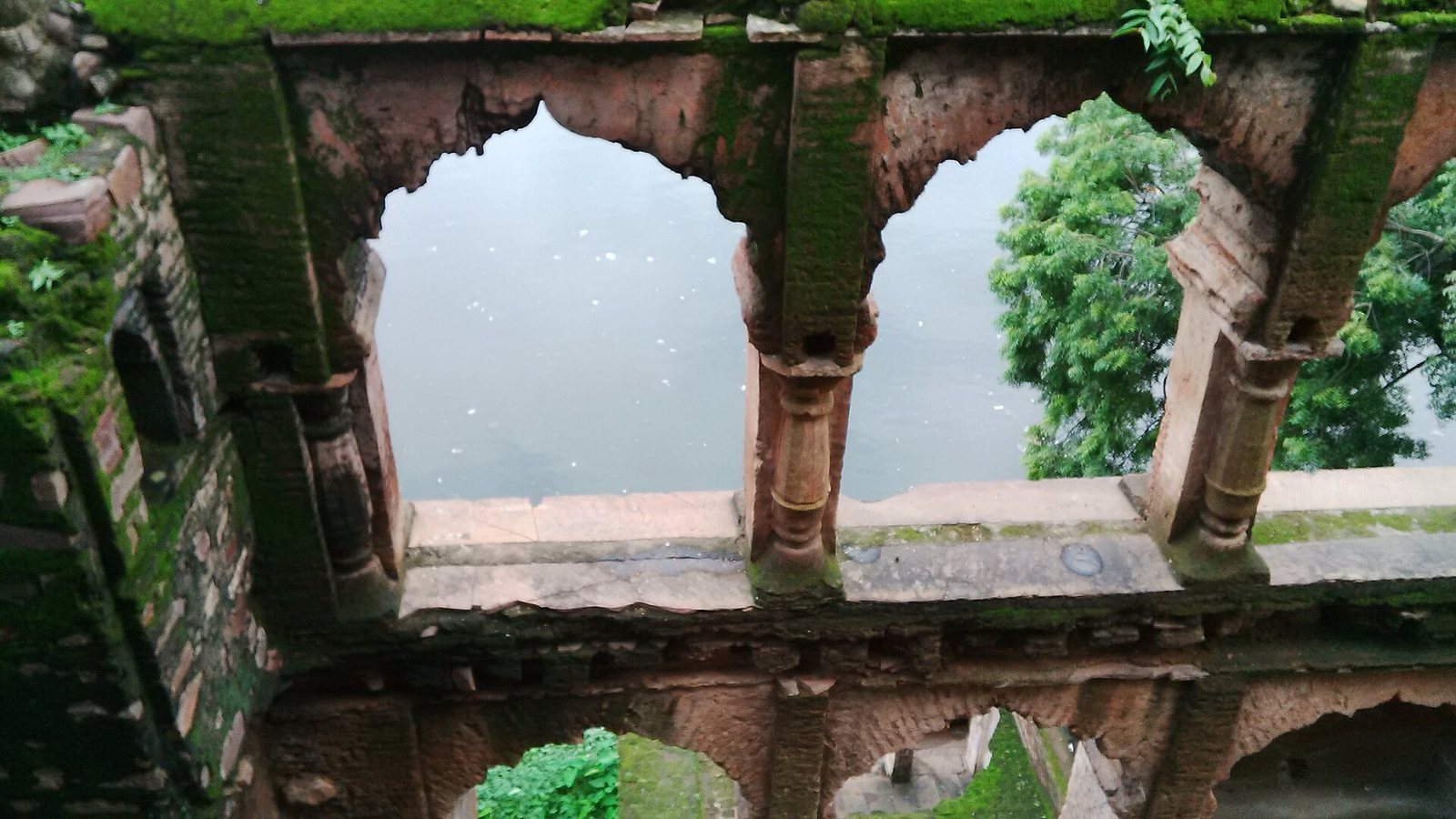
The facade has cusped arches with scalloped curves, supported by fluted pillars with grooves along their shafts. Its parapet has lotus-petal-shaped merlons, or raised sections, and brackets support chhajjas, projecting eaves or shades.
Fatehgarh Fort remains
The remains of Fatehgarh Fort occupy a hill west of the palace.