Taj Mahal Palace: A 19th-Century Royal Residence in Bhopal
Site at a Glance
- Popularity
- High
- Country
- India
- Primary era
- Modern
- Eras represented
- Modern
- Civilizations
- British
- Site type
- Domestic
- Remains
- Palace
On this page9 sections
History
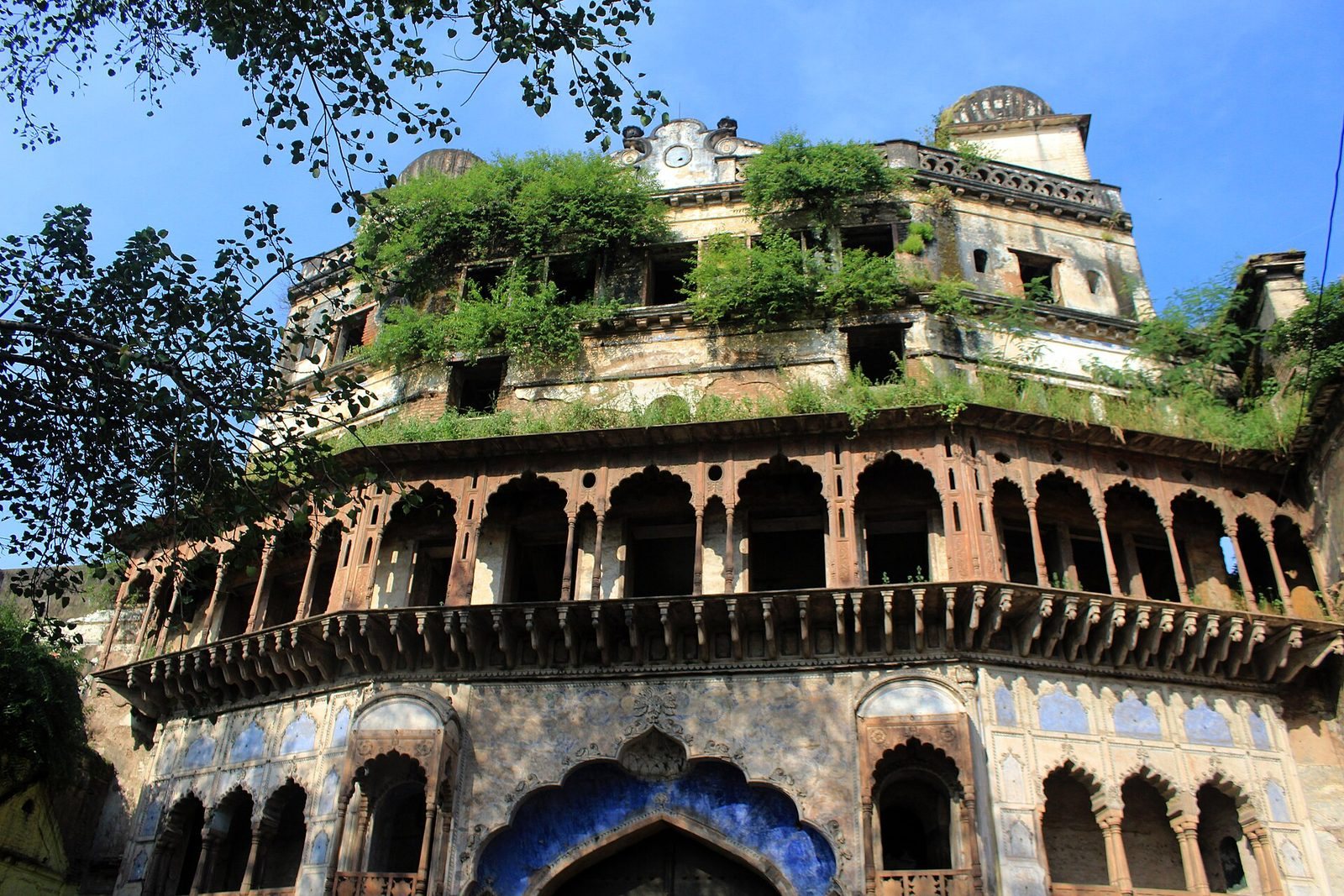
The Taj Mahal Palace is a royal residence in Bhopal, India, built for Shah Jahan Begum, ruler of Bhopal, between 1871 and 1884 in the Indo-Saracenic style, a blend of South Asian forms and European design. At the time, it was counted among the world’s largest palaces.
Construction and naming
Building the palace took 13 years and cost ₹3,000,000. It was first called Raj Mahal, meaning “Royal Palace.” A British Resident, the British government’s political representative at a princely state’s court, admired the building and proposed a new name: Taj Mahal.
The name referred to the Taj Mahal at Agra, associated with the Begum’s namesake, the 17th-century Mughal emperor Shah Jahan. The Mughal Empire was a Muslim-ruled empire that governed much of the Indian subcontinent from the 16th to the 19th century. Shah Jahan Begum accepted the suggestion. After construction ended, she is said to have ordered a three-year celebration called Jashn-e-Taj Mahal.
Refuge, decline, and restoration
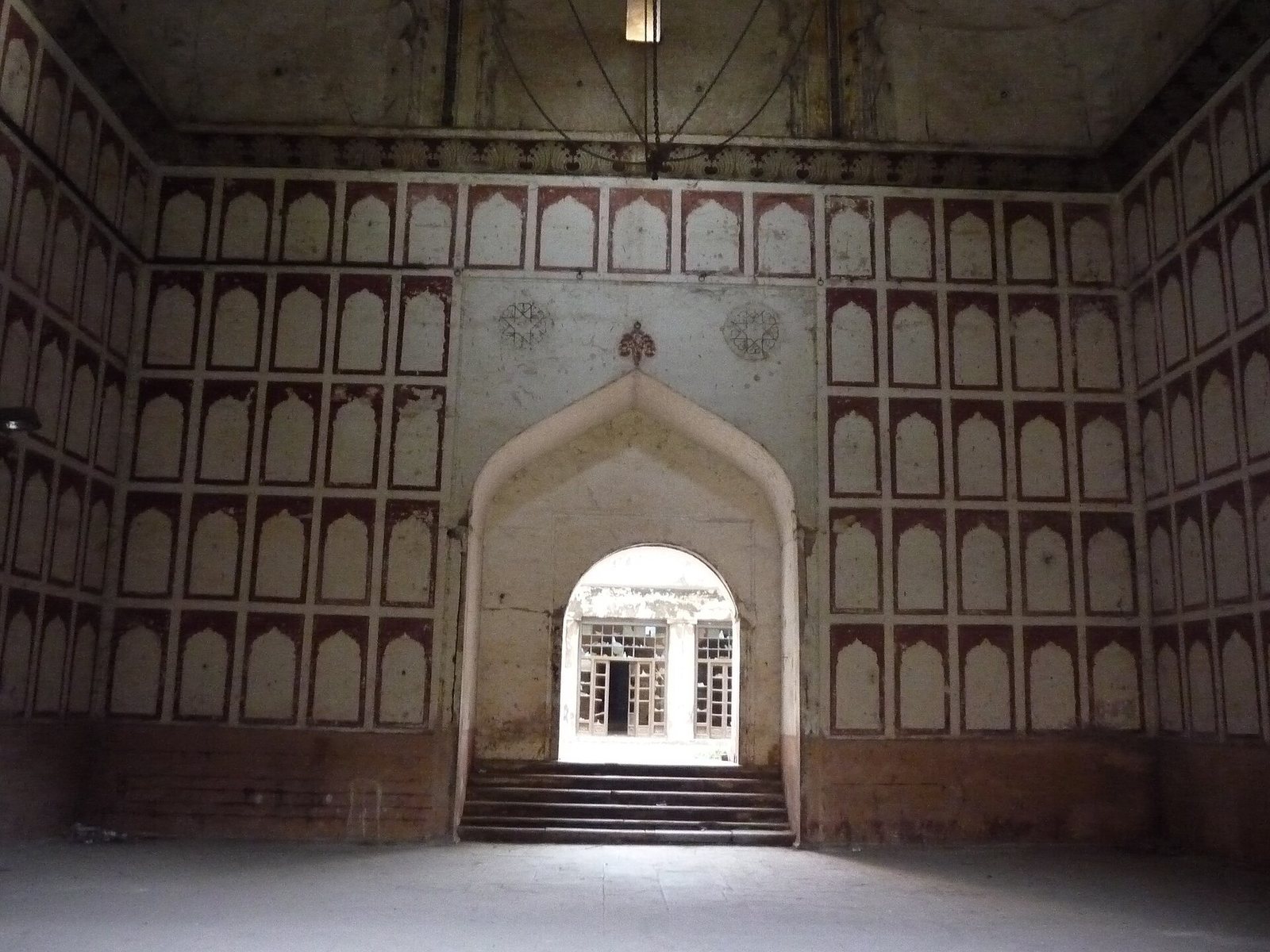
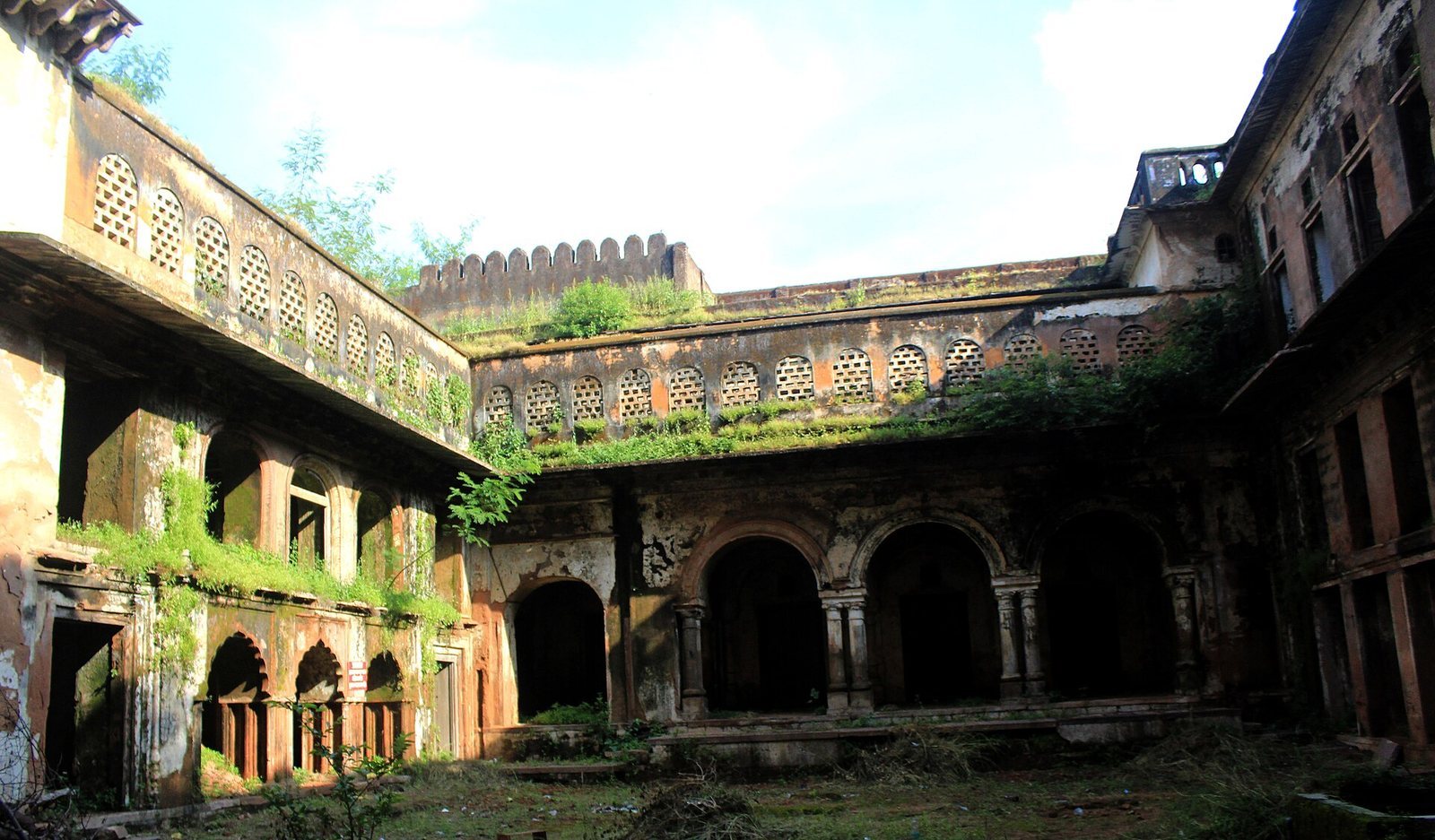
After the 1947 Partition of India, Hamidullah Khan, Nawab (a South Asian title for rulers and other senior figures) of Bhopal, allowed Sindhi refugees to stay in the palace. They moved to Bairagarh after about four years, and the palace was damaged during their stay. Members of the royal family lived there for a time after independence, but gradually left because they could not afford repairs. By 2008, large parts of the palace complex had collapsed.
The Madhya Pradesh government declared the palace a state heritage monument in 2005, and the state archaeology department carried out partial restoration. The designation was revoked in 2011. In 2017, the property was leased to a private builder from Indore for development as a 120-room heritage hotel.
Remains
Layout and design
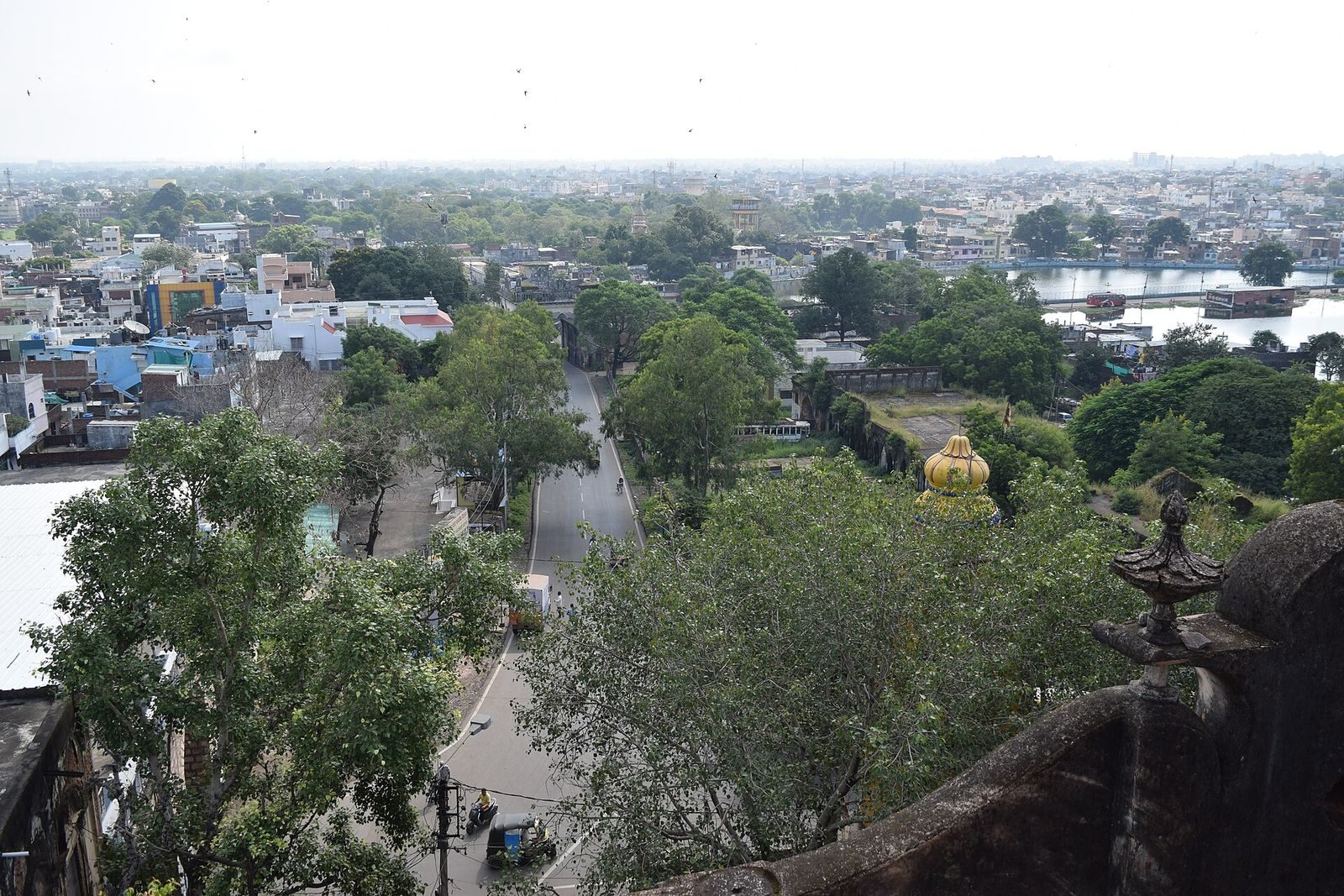
The palace stood beside the Taj-ul-Masajid mosque and formed part of a complex arranged along three lakes. The wider complex also included Benazir Palace, the Begum’s summer residence. Its design brings together British, French, Mughal, Arabic, and Hindu influences. Breezes from the lakes helped keep the building cool.
Principal architectural features
Main entrance
The palace’s main entrance is a seven-storey structure.
Rooms and Sheesh Mahal
The palace contains 120 rooms, including the Sheesh Mahal, a hall of mirrors.
Savon Bhadon Pavilion
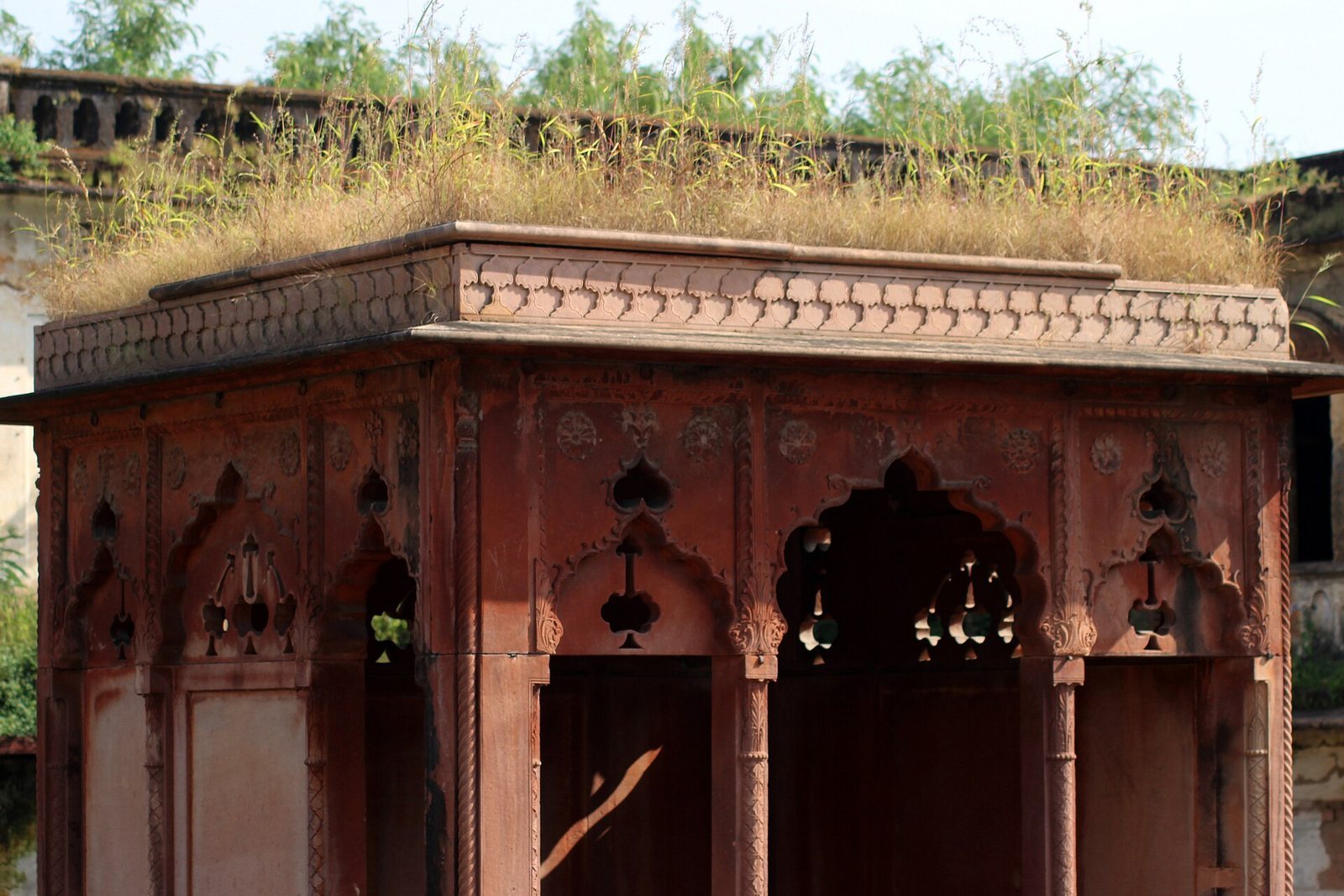
The Savon Bhadon Pavilion is an elaborate fountain-like structure designed to create the effect of rain.