Dagsburg (Lothringen): A Medieval Castle Site in France
Site at a Glance
- Popularity
- Medium
- Country
- France
- Primary era
- Modern
- Eras represented
- Modern
- Civilizations
- German
- Site type
- Religious
- Remains
- Chapel
On this page8 sections
History
Foundation and family connections
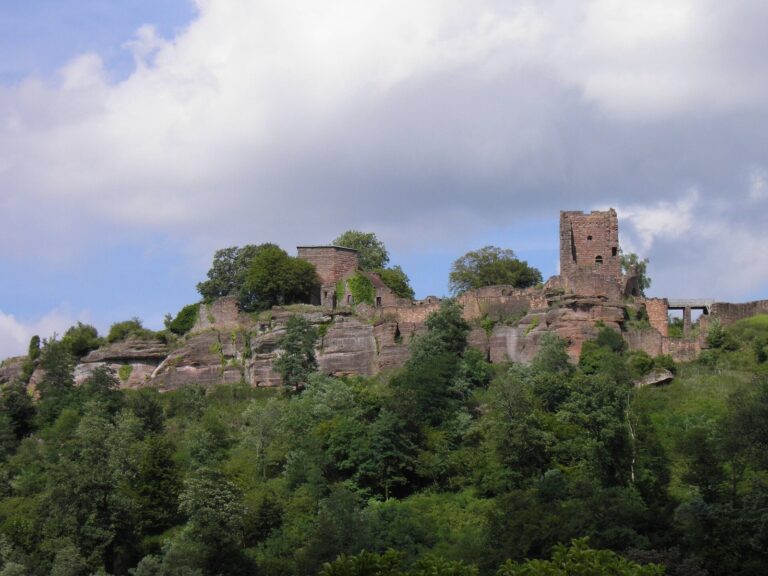
Dagsburg (Lothringen) is a medieval rock-top castle site above Dabo in France, built in the first half of the 10th century by Count Eberhard, a duke of Alsace from the Etichonid family. Its name reflects a contemporary spelling of Dachsburg. In the Middle Ages, the lands around Dabo formed the small County of Dagsburg, whose lordship passed between different holders through inheritance, alliances, and marriage.
By the late 10th century, family ties connected Dagsburg with the people who later built a second castle of the same name in Upper Alsace, about 70 km to the south. Hugo VI, count of Nordgau and Egisheim, married Heilwig of Dagsburg. Their younger son, Bruno of Egisheim-Dagsburg, was elected pope as Leo IX at Worms in 1048 and led the Catholic Church from 1049 to 1054. The later castle in Upper Alsace was built around 1150 and apparently took its name from Heilwig’s home castle.
Leiningen rule and demolition
In 1241, Count Friedrich III of Leiningen inherited Dagsburg and the surrounding county. His descendants thereafter used the name Leiningen-Dagsburg. In 1679, Louis XIV, king of France, ordered the castle demolished.
Chapel dedicated to Leo IX
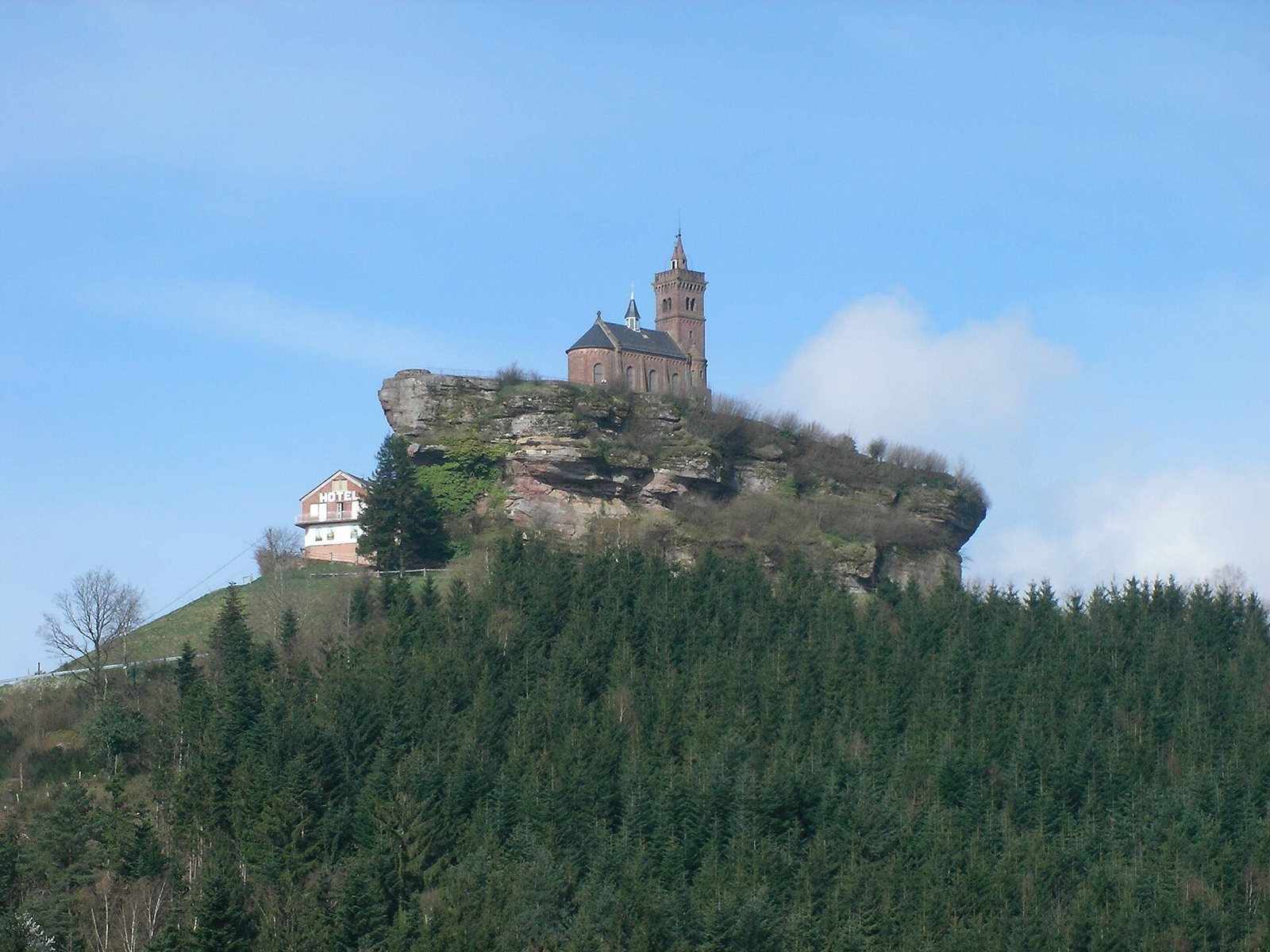
A chapel honoring the canonized Pope Leo IX was built on the plateau in 1828. Leo’s mother, Heilwig, came from Dagsburg. After the chapel deteriorated, a replacement was built between 1889 and 1892.
Remains
Castle site and chapel
Castle site
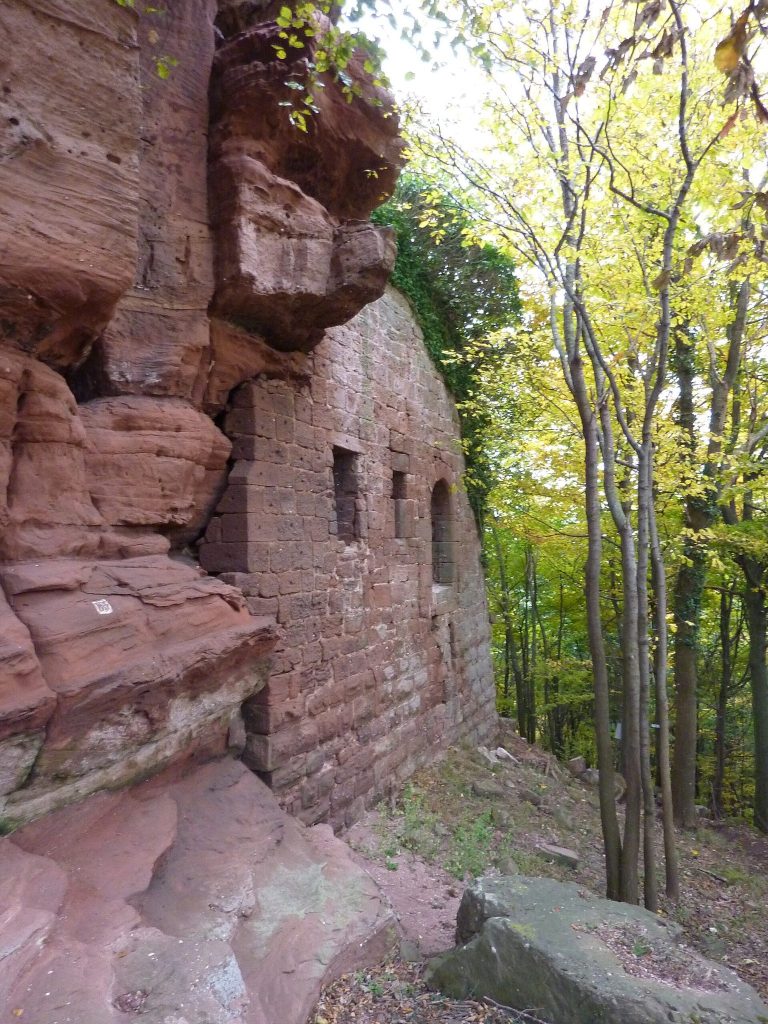
The former rock-top castle occupied the plateau of the 30 m-high sandstone Rocher de Dabo, at an elevation of 664 m above sea level. The site lies above Dabo in the northwestern Vosges. The castle was demolished in 1679, and the plateau remains a castle site.
Pope Leo IX Chapel
The chapel on the plateau is Neo-Romanesque, a 19th-century revival style based on Romanesque forms. A statue of Pope Leo IX is located at the chapel.