Achim Manor House: A Baroque Residence in Germany
Site at a Glance
- Popularity
- High
- Country
- Germany
- Primary era
- Early Modern
- Eras represented
- Early Modern, Modern
- Civilizations
- Unclassified
- Site type
- Domestic
- Remains
- Manor House
On this page9 sections
History
Construction under Steinberg
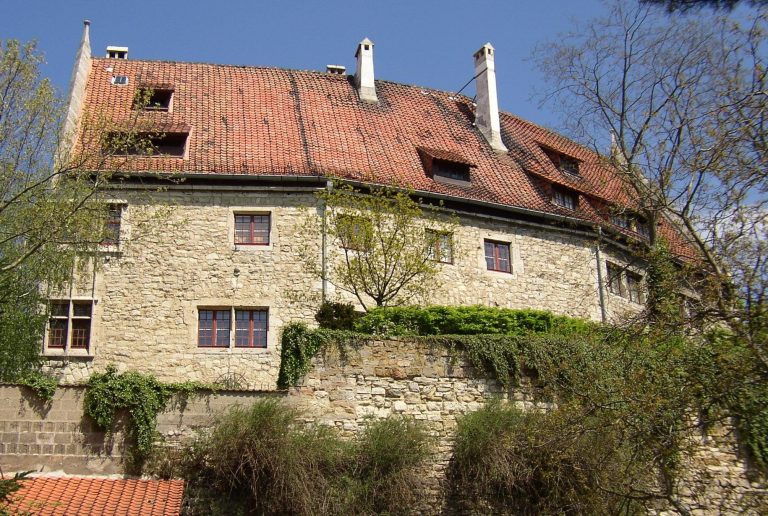
Achim Manor House is an early eighteenth-century manor house in Germany, built in the Baroque style, a European artistic and architectural style, by Hermann Korb for Friedrich II von Steinberg. Korb was a German architect. Steinberg served Duke Anton Ulrich of Brunswick-Wolfenbüttel as chief court marshal, a senior court official, and held other high offices at the ducal court. He also commissioned Brüggen Castle, built at about the same time. The estate’s stables were constructed in 1694. Work on the manor house probably began around 1704-05 and was completed in 1706.
Sale, fire, and renovation
The estate was sold to the sovereign authority in 1750. A fire in 1791 led to renewal of the rear façade and, particularly, the farm buildings. The property has been privately owned since 1986 and was renovated between 2000 and 2015.
Remains
Estate layout
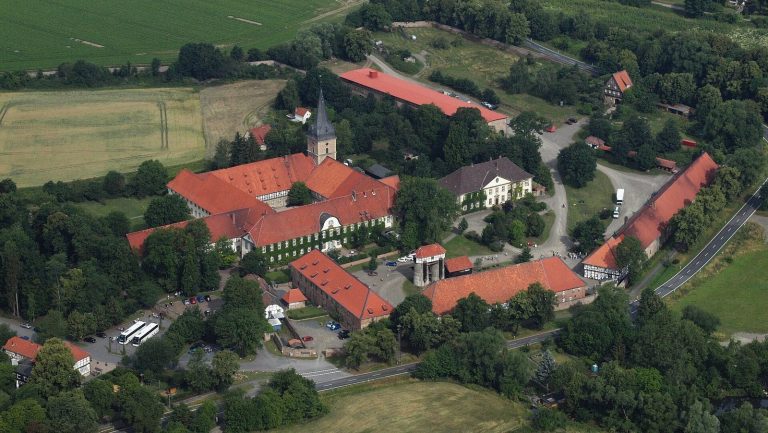
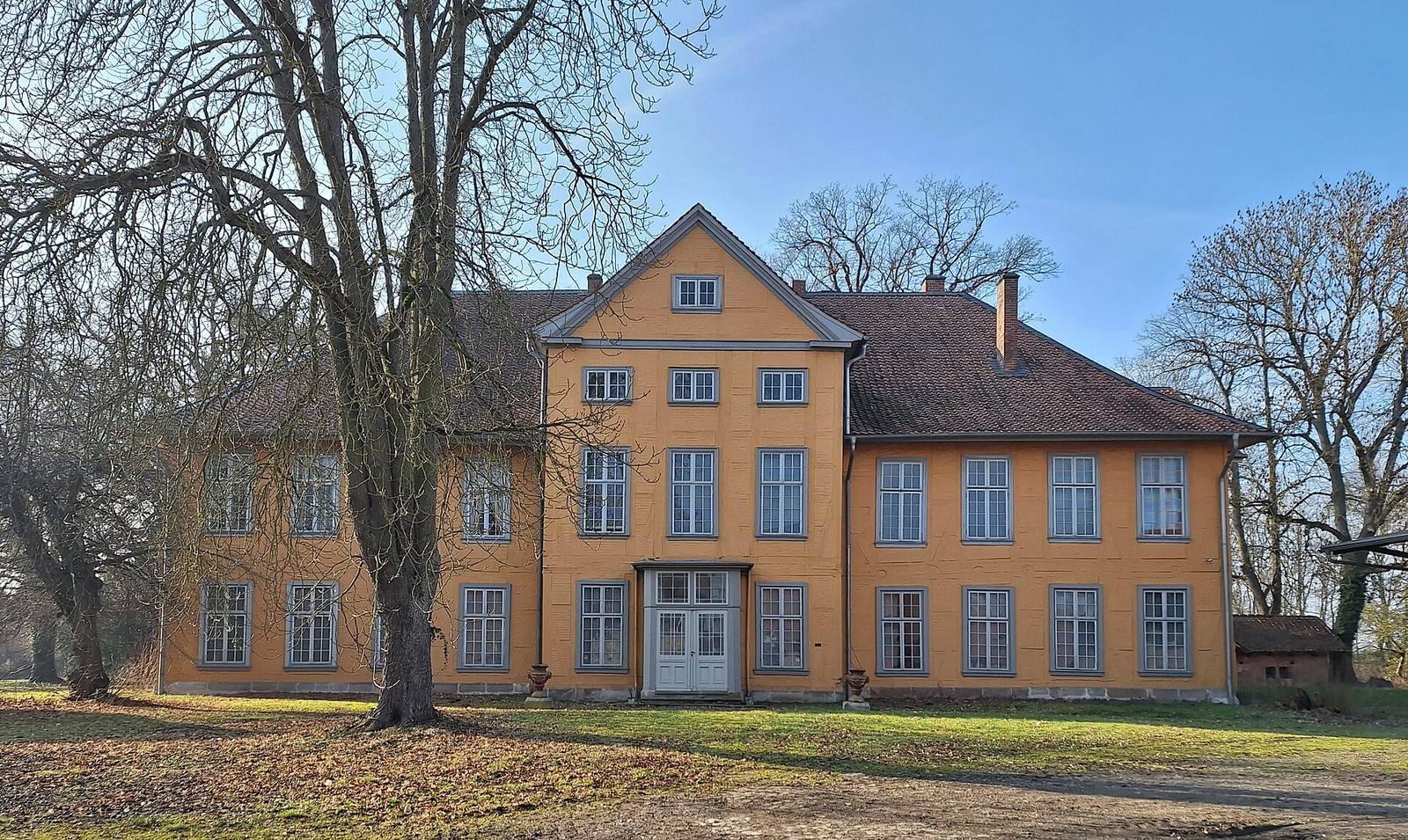
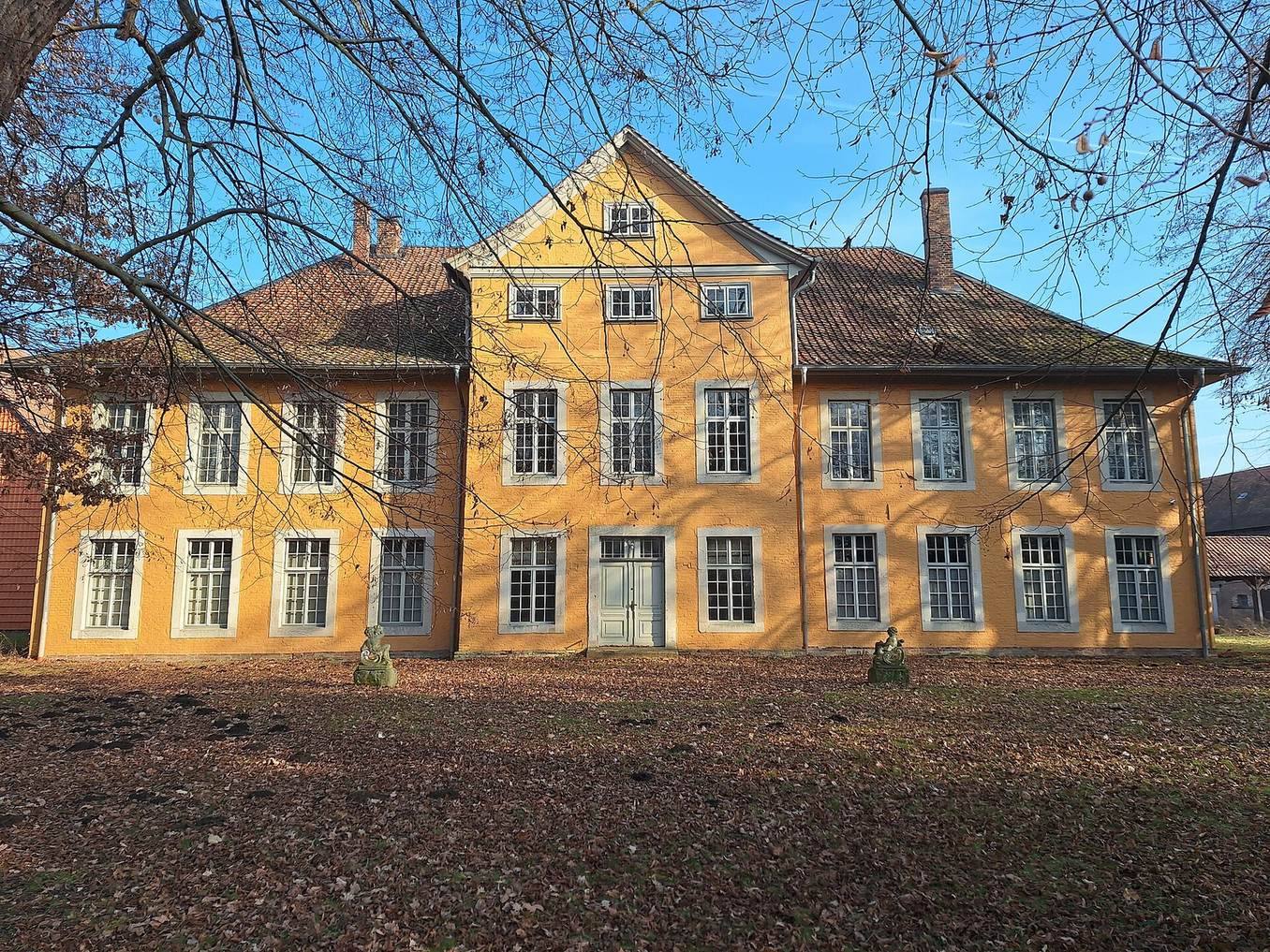
The manor house, farm buildings, and stables form a horseshoe-shaped Baroque complex, comparable in design to Salzdahlum Palace, a Baroque palace near Wolfenbüttel. The two-storey manor house is half-timbered, with a visible timber frame and infill, and has a flat surface finish and a hipped roof. Each long side has eleven window bays.
Interior
Staircase
A broad staircase with two flights rises from the vestibule, turns back at a landing, and leads to the entrance of the raised banqueting hall.
Banqueting hall
The hall sits on the upper floor above the vestibule, with its tall space extending through part of that floor. Paired Corinthian pilasters, flat wall supports with ornamented capitals, and a prominent cornice shape the room; pilasters also line its walls. Circular wall paintings between the pilasters in the upper parts of the walls were replaced in the nineteenth century.
Ceiling painting
An oval oil painting on canvas covers the ceiling. Probably by Tobias Querfurt, a painter at the Wolfenbüttel court, it shows sculpture, painting, and music among clouds in an open sky, accompanied by guardian angels. Six figures stand at two balustrades around the allegory, facing outward. They are believed to include Steinberg, Duke Anton Ulrich, Korb, who points downward, and Querfurt, who points up toward the painting. The arms bearing the duke’s initials appear on the artist’s side.