Fort Mahon: A Coastal-Artillery Fort at the Mouth of the Slack
Site at a Glance
- Popularity
- Medium
- Country
- France
- Primary era
- Early Modern
- Eras represented
- Early Modern, Modern
- Civilizations
- French, German
- Site type
- Military
- Remains
- Fort
On this page9 sections
History
Construction and changing names
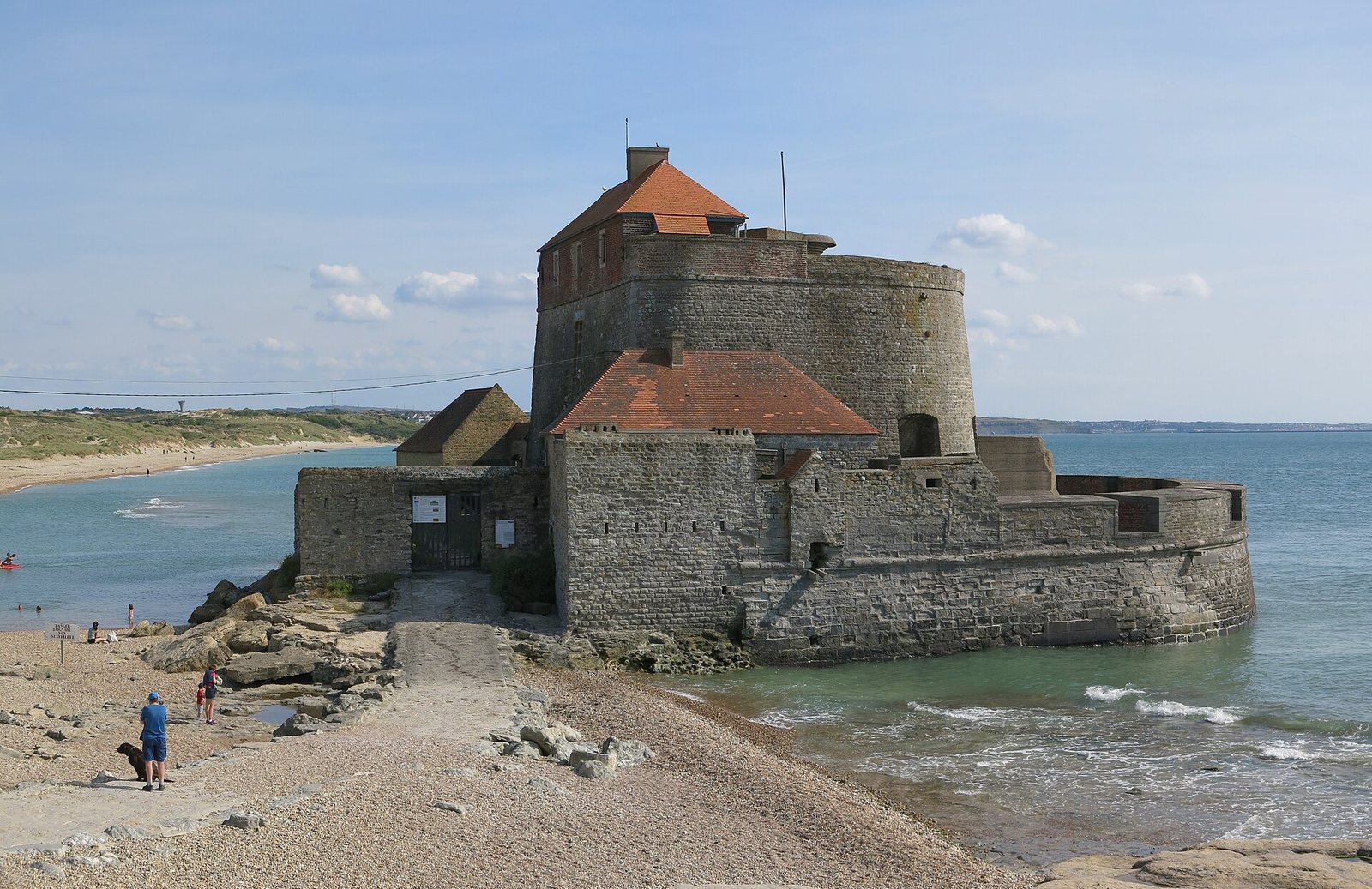
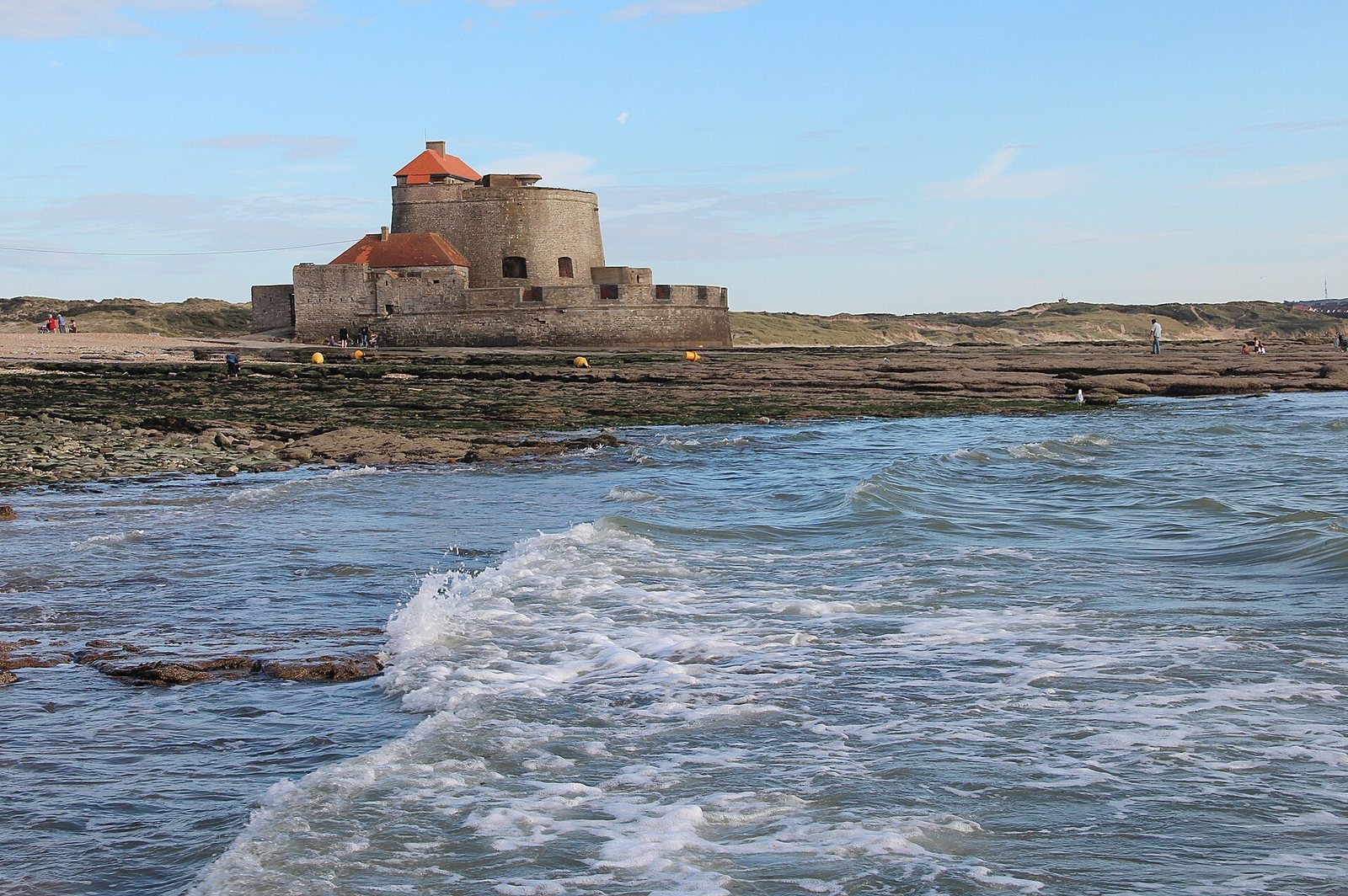
Fort Mahon is a coastal-artillery fort at the mouth of the Slack in France, built in 1680 by the French military engineer Vauban on the orders of King Louis XIV. It was intended to defend a naval port and is the only preserved coastal fort still standing between Cherbourg and the Belgian border.
Official records called the structure the Tower of Ambleteuse through the 1803 Napoleonic land register. The name Fort Mahon first appears in 1840 and is thought to have resulted from an administrative transcription error. Fort Vauban and Old Fort were also used. The 1965 decree classifying it as a French historic monument called it Fort d’Ambleteuse and noted Fort Mahon as an alternative. In 1967, when the Friends of Fort d’Ambleteuse association was founded, that name came into use; Dr. Méreau is credited with creating it.
Military use and wartime damage
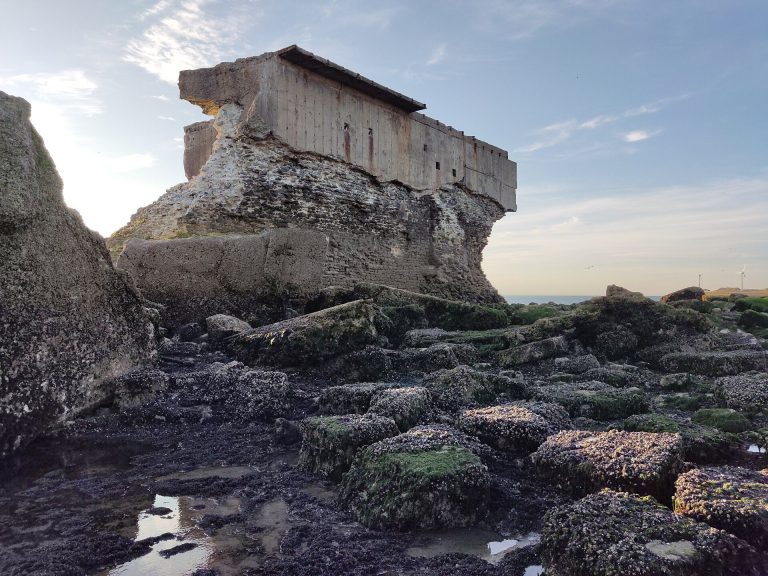
The French Army garrisoned the fort, which remained in military service until 1945. During the German occupation in the Second World War, it was used to imprison foreign forced laborers. German forces altered its interior and strengthened its landward defenses. The fort survived the region’s carpet bombing, but two sea mines exploded in 1945 and destroyed its outer defenses.
Protection and restoration
A doctor and a geologist organized volunteers to found the Friends of Fort d’Ambleteuse in 1967. The association acquired the fort for a symbolic franc and became its owner. Restoration proceeded in stages: the ramparts were repaired with state assistance, auxiliary buildings with public and association support, and work in 2010 extended across the buildings, including the main roof. The fort now functions as a museum.
Remains
Layout and construction
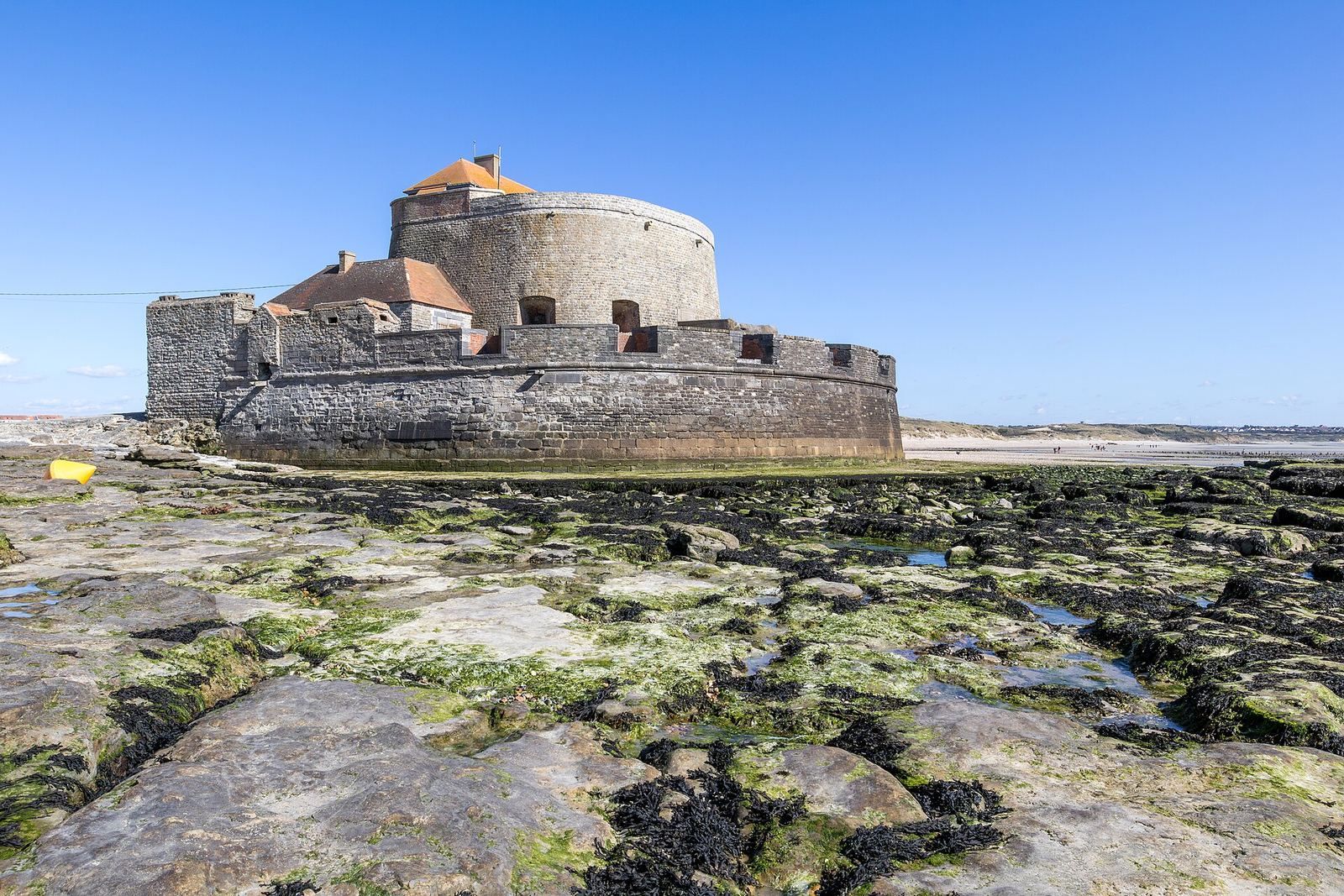
Fort Mahon occupies the coast at the mouth of the Slack, where high tides can surround it. Its brick construction is arranged around separate sea-facing defenses and a landward area with a parade ground and garrison quarters.
Tower and coastal defenses
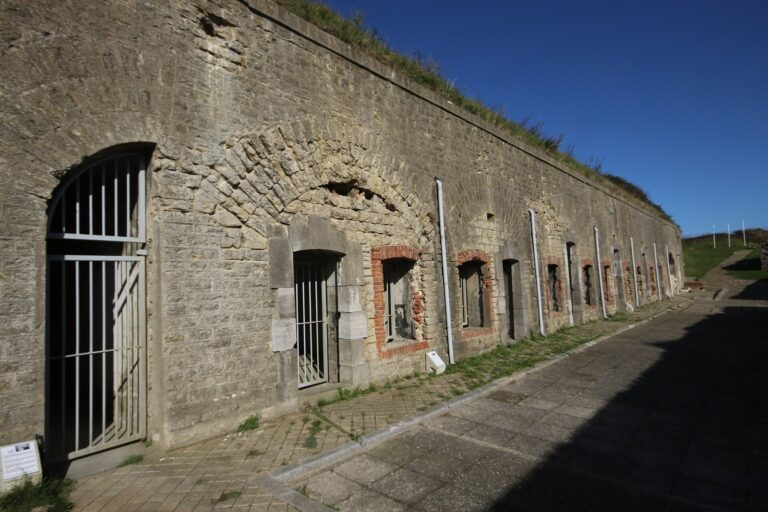
The central artillery tower rises 15 metres. A terrace and horseshoe-shaped rampart protect its seaward side; the rampart has been restored to its original form, including the alternating raised sections and gaps along its top. The coastal battery, a group of guns defending the shore, held five guns in a stone-lined defensive position. Sea-facing gun openings pass through walls up to three metres thick, while an outer sea wall shields the inner gun terrace.
Landward defenses
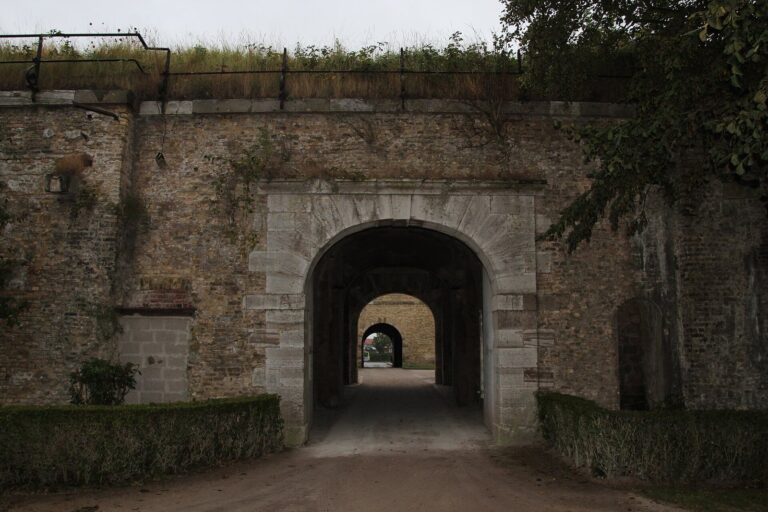
The landward parade ground is enclosed by a wall with an angled projection pointing outward. Openings in the walls were made for muskets and small cannons. A German casemate, an enclosed fortified position, stands in the courtyard, and a small fortified weapons post was added on the inner, landward side.
Tower interior and museum
Inside the tower, a ring-shaped casemate, an enclosed fortified space, is divided vertically by a concrete slab poured by German forces. Rooms below it have been adapted as exhibition spaces, and the fort contains two exhibition rooms. Six three-dimensional scale models trace Ambleteuse’s history from the English citadel associated with Henry VIII, king of England, to the development of the seaside resort. At the tower’s summit, a table identifies directions, and a board interprets the view across the Strait of Dover. Orientation plaques are also installed throughout the buildings.