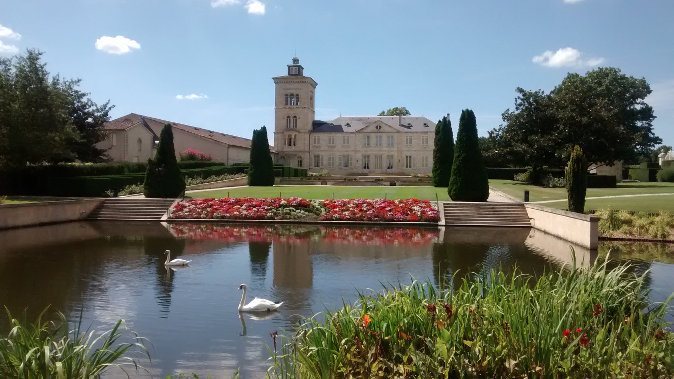
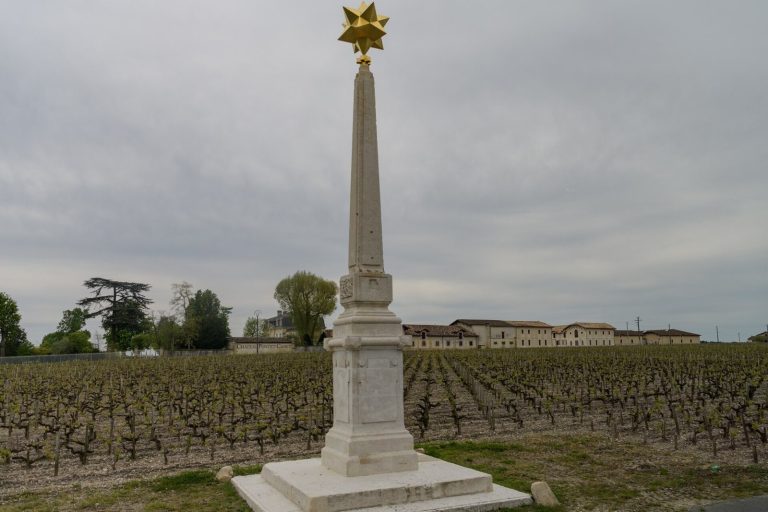
Château Latour: A Historic Wine Estate in Pauillac
Site at a Glance
- Popularity
- Very High
- Country
- France
- Primary era
- Modern
- Eras represented
- Medieval, Modern
- Civilizations
- English, French
- Site type
- Economic
- Remains
- Production Complex
On this page10 sections
History
Château Latour is a historic wine estate on the southeastern edge of Pauillac, France, with the Gironde estuary a few hundred metres to the east. Its history as a wine estate reaches at least the fourteenth century, when a tower attributed to Gaucelme de Castillon stood here by 1331.
Medieval origins and early vineyards
A fortified watchtower is recorded at the site in 1378. It was intended to defend the estuary during the Hundred Years’ War, a long conflict between the English and French crowns. The tower’s name appears in forms including La Tour en Saint-Mambert and La Tour en Saint-Maubert, and gave its name to the surrounding estate. English rule in the area ended in 1453, when the Battle of Castillon brought French victory and French royal forces destroyed the original tower.
Vines grew at the site from the fourteenth century. The French Renaissance essayist Michel de Montaigne discussed Latour wine in his sixteenth-century writings. Toward the end of that century, the de Mullet family brought several small holdings together as one property.
The Ségur family and eighteenth-century wines
From 1670, the estate passed through a succession of related families. The de Chavannes acquired it, and marriage transferred it to the de Clauzel family in 1677. Alexandre de Ségur’s marriage to Marie-Thérèse de Clauzel in 1695 brought Latour into the Ségur family’s holdings. Alexandre added Château Lafite in 1716. In 1718, his son Nicolas-Alexandre de Ségur added Château Mouton and Château Calon-Ségur and began producing high-quality wines. Latour became widely known in the early eighteenth century, including in England.
After Nicolas-Alexandre’s death in 1755, his estate was divided among his four daughters. Three of them inherited Latour in 1760. A manager ran the property while its owners were away and kept in correspondence with them. Latour received more attention than it had under its previous owner, who had favoured Lafite, and the wine improved. In 1787, American diplomat Thomas Jefferson ranked La Tour de Ségur as a first-quality vineyard in his own classification.
Revolution, reunion, and the 1855 classification
The French Revolution divided the estate. The Comte de Ségur-Cabanac, a nobleman of the Ségur family, fled France, and the state sold his share in 1794. After changing hands several times, Latour was reunited in 1841, when the family recovered shares previously held by wine merchants. In 1842, the family established a property-holding company, the Société Civile de Château Latour, and became its shareholders.
In 1855, Latour was named one of four original First Growths in the Bordeaux wine classification, the system’s highest rank. The ranking reflected the prices the wines achieved in trade and helped establish Latour’s reputation and high prices. Mouton Rothschild became a fifth First Growth in 1973.
Modern ownership and winemaking
In 1963, the Ségur family, by then known as de Beaumont, sold 75 percent of the estate’s shares to British interests that included Pearson Group and Harveys of Bristol. Pearson was controlled by Lord Cowdray. Henri Martin and Jean-Paul Gardère became managers, overseeing investment in research on grape growing and winemaking, vineyard expansion through purchases and replanting, and larger winemaking facilities. Latour was the first of the First Growths to replace its oak fermentation vats with temperature-controlled stainless-steel tanks. Martin and Gardère resigned in 1987 after 24 years.
During the 1960s, the estate began producing its second wine, Les Forts de Latour, which has been made since 1966. It also set a rule that grapes for the Grand Vin, the estate’s principal wine, must come only from vineyards shown on its 1759 plan. A third red wine, Pauillac, also called Pauillac de Latour, began around 1990 and uses fruit from young vines. The Grand Vin typically consists of about 75 percent Cabernet Sauvignon and 20 percent Merlot, with the balance Cabernet Franc and Petit Verdot. Les Forts is typically about 70 percent Cabernet Sauvignon and 30 percent Merlot.
Allied Lyons bought Latour in 1989. In 1993, François Pinault acquired the estate and placed it within his holding company, Groupe Artemis. More than 80 percent of the estate’s shares belong to Pinault. Château Latour is legally protected as a National Cultural Property, with a restriction on sale to non-French buyers.
Remains
Vineyard landscape
The estate has about 65 hectares of vineyards, including the 47-hectare plot around the château known as l’Enclos, or the enclosure. This tract covers a hill, with streams along its northern and southern boundaries and marshy ground to the east toward the Gironde. The vineyard soil lies over early Quaternary deposits, sediments from an early geological period, and contains about 40 to 50 percent stones. It is low in nutrients but permeable and well aerated. Cabernet Sauvignon predominates among the vines, alongside Merlot and smaller plantings of Cabernet Franc and Petit Verdot. Some vines in l’Enclos are more than a century old. The estate replaces diseased or over-aged vines individually, so younger plants grow among the older vines rather than in separate blocks.
Historic buildings
La Tour de Saint-Lambert
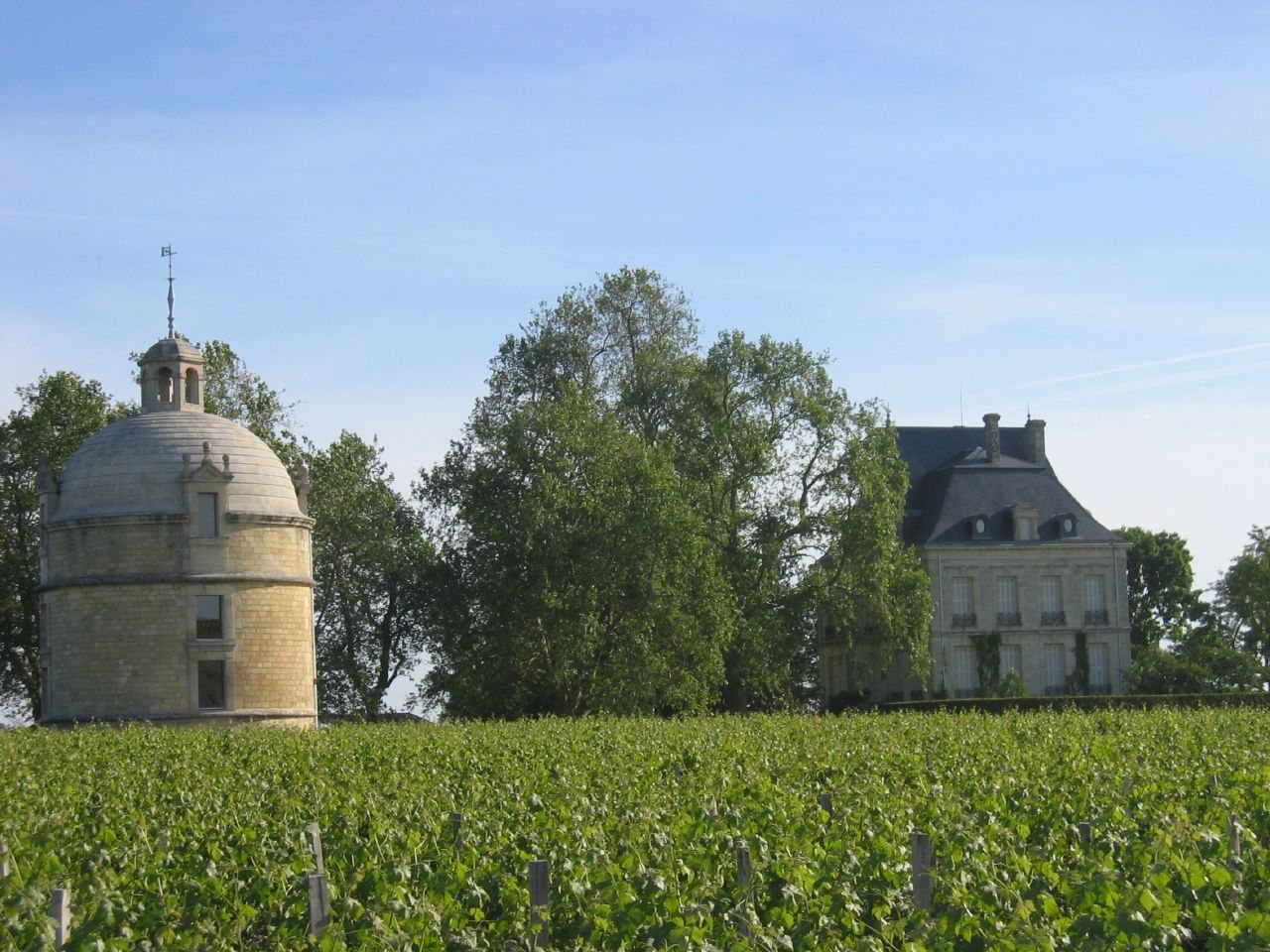
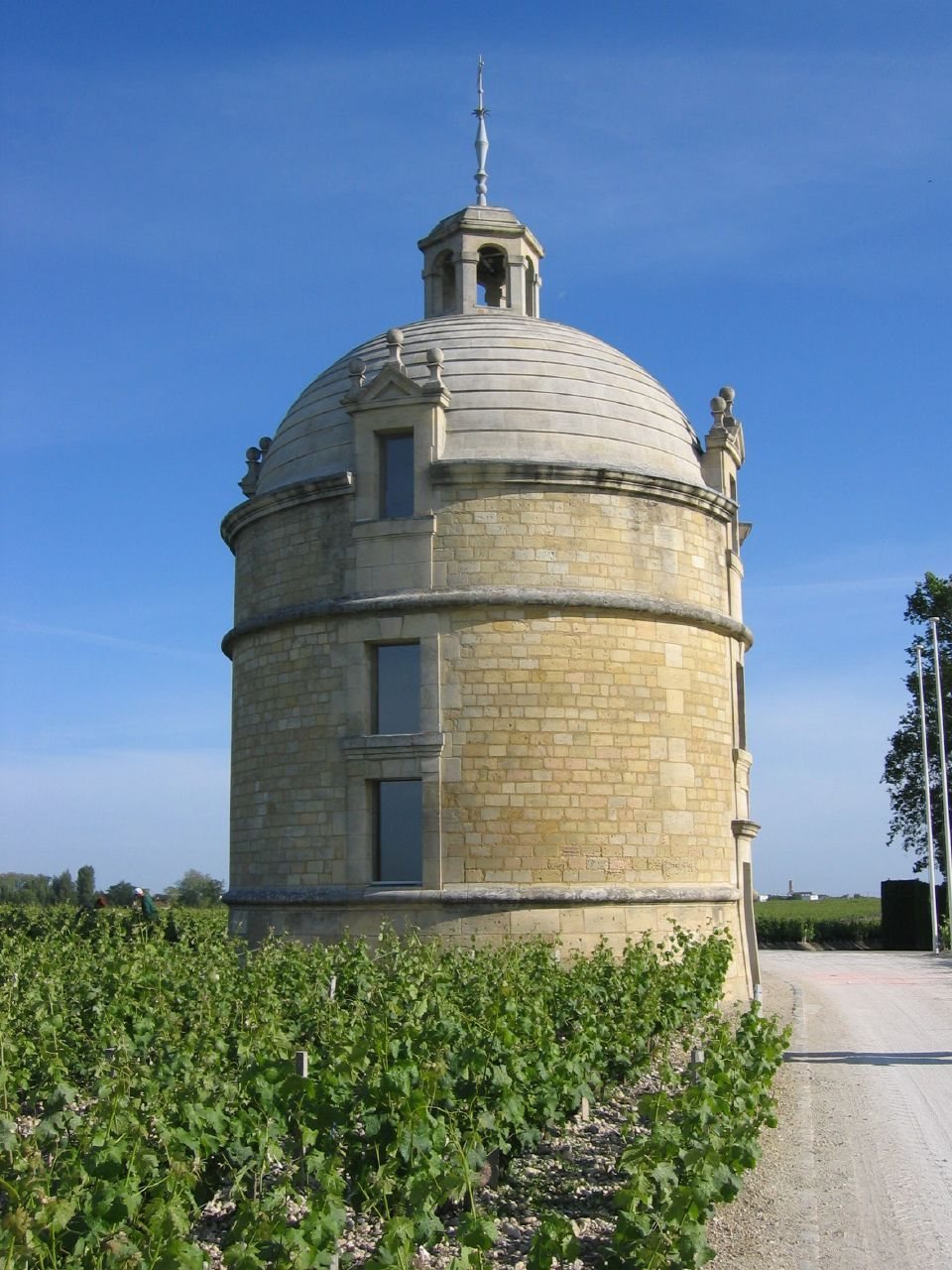
A circular tower called La Tour de Saint-Lambert was built on the estate around 1620. With its rounded roof, it served as a pigeon loft. It is believed to have been modelled on the earlier defensive tower and remains an emblem of the estate.
The château
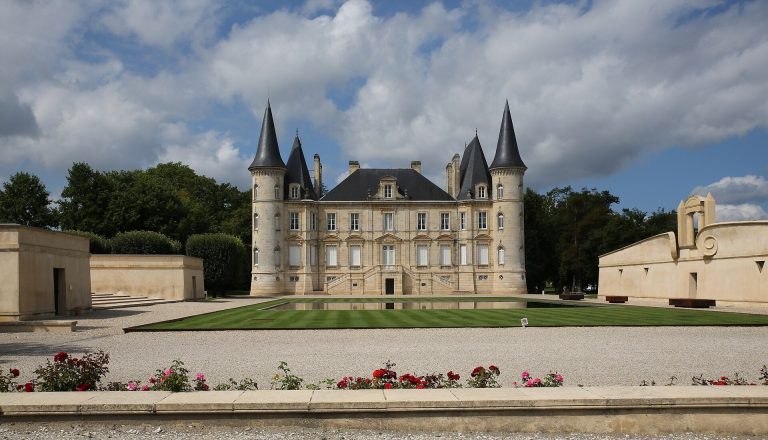
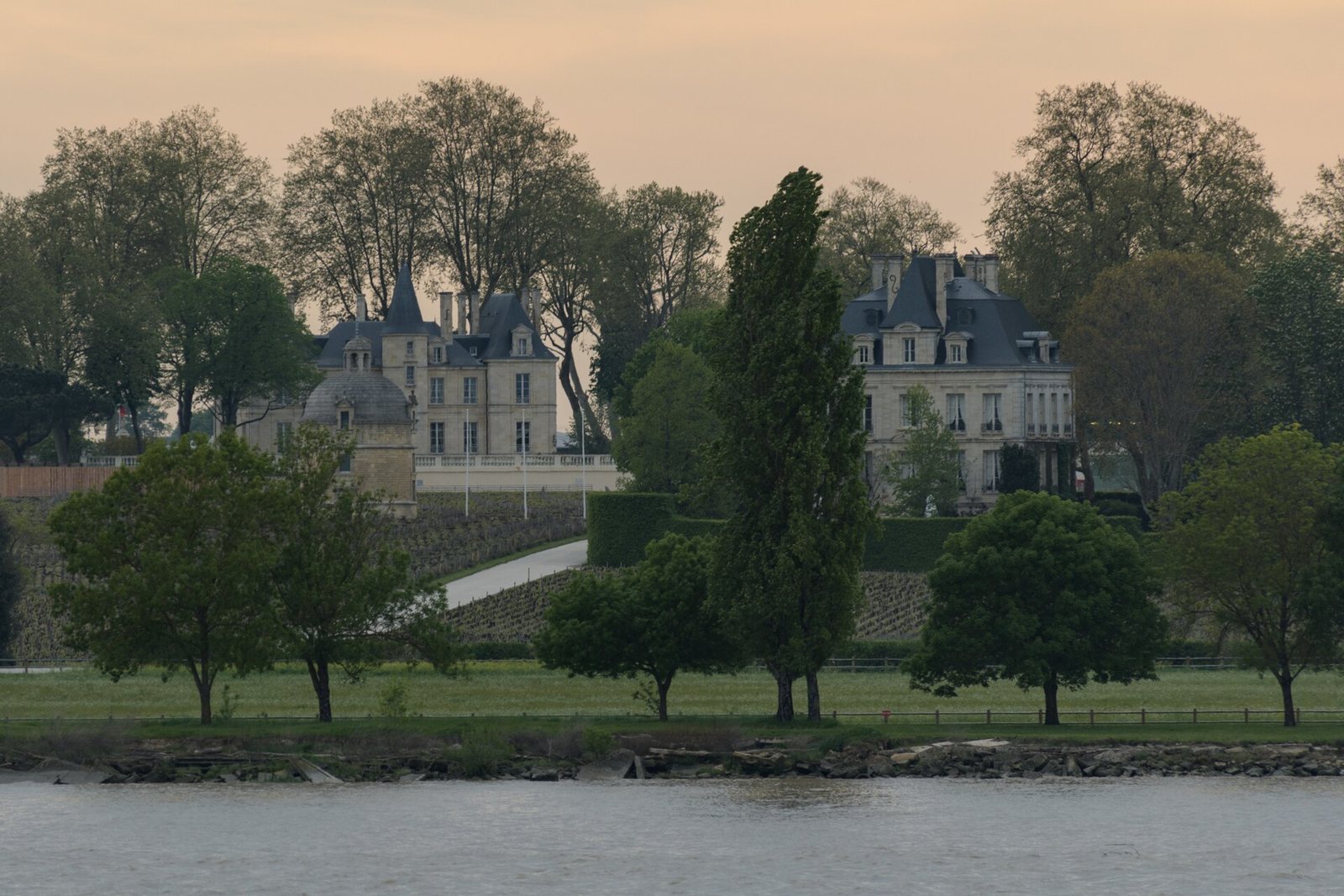
The present château building was completed in 1864.