Fort aan de Klop: A Dutch Waterline Fort near Utrecht
Site at a Glance
- Popularity
- Medium
- Country
- Netherlands
- Primary era
- Modern
- Eras represented
- Early Modern, Modern
- Civilizations
- Dutch
- Site type
- Military
- Remains
- Fort
On this page11 sections
History
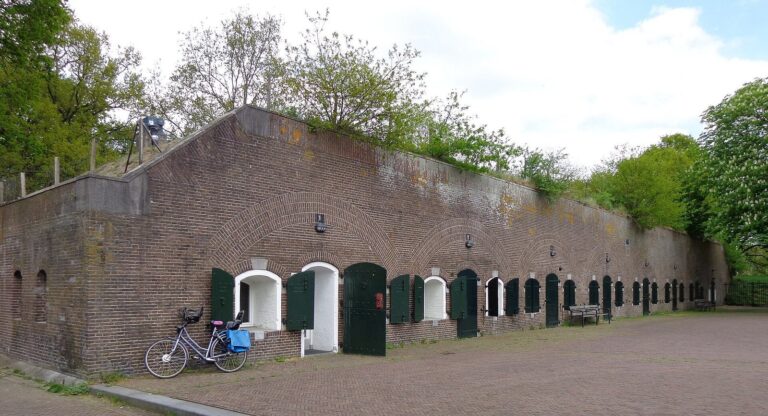
Fort aan de Klop is a Dutch fortification near Utrecht, Netherlands, built from 1819 to 1821 as part of the New Dutch Waterline. Its history began with earlier defenses at a strategic crossing near the Vecht, and it later served military purposes before becoming a recreational site.
Early defenses and the Vecht crossing
A defensive earthwork was built here in 1629 to resist Spanish attacks. In 1787, a redoubt, or small defensive work, was constructed to block the French army from reaching the Vechtdijk. The site also lay by routes used by small boats travelling along the Vecht and Westbroekervaart, now called Klopvaart, towards Utrecht. The inn De Clophaemer offered lodging and operated a ferry across the Vecht when there was no bridge. The fort’s name and those of several local organizations derive from the inn; Fortlaan in Zuilen recalls the ferry.
The New Dutch Waterline
In 1811, the decision was made to move the Old Dutch Waterline eastward, placing Utrecht behind its defenses. The Old and New Dutch Waterlines were defensive systems of fortifications that used controlled flooding to make terrain difficult for an enemy to cross. Work on the New Dutch Waterline near Utrecht began in 1816, and Fort aan de Klop was built between 1819 and 1821 to help defend the city.
A bombproof guardhouse, designed to withstand bombardment, was added in 1850–1852. After the fortified work at Maarsseveen was completed in 1881, Fort aan de Klop no longer had the same importance as an artillery-support point.
Military use and later adaptation
The fort was put into a state of defense in 1870, during the Franco-Prussian War, fought between France and Prussia in 1870–1871. It was prepared again during the 1914 mobilization at the start of the First World War, serving mainly as a depot and auxiliary first-aid station. In 1939 it was prepared for military use, and during the Second World War the German army stored ammunition there.
The Ministry of Defence continued to use the site for military-equipment storage and as a repair workshop until about 1980. A large garage shed was built in the 1950s, and the fort was later rented to a company that trained police dogs. Utrecht municipality and the foundation responsible for preserving and operating the fort subsequently developed it for recreation. A restoration project began in 2004, and the fort is now used for recreation. Fort aan de Klop is a national monument; nine components within the fort and four other New Dutch Waterline components nearby are registered.
Remains
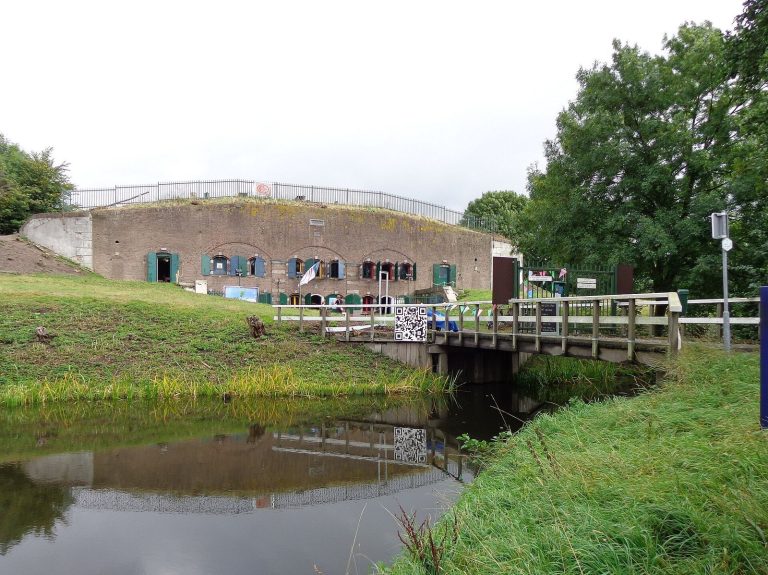
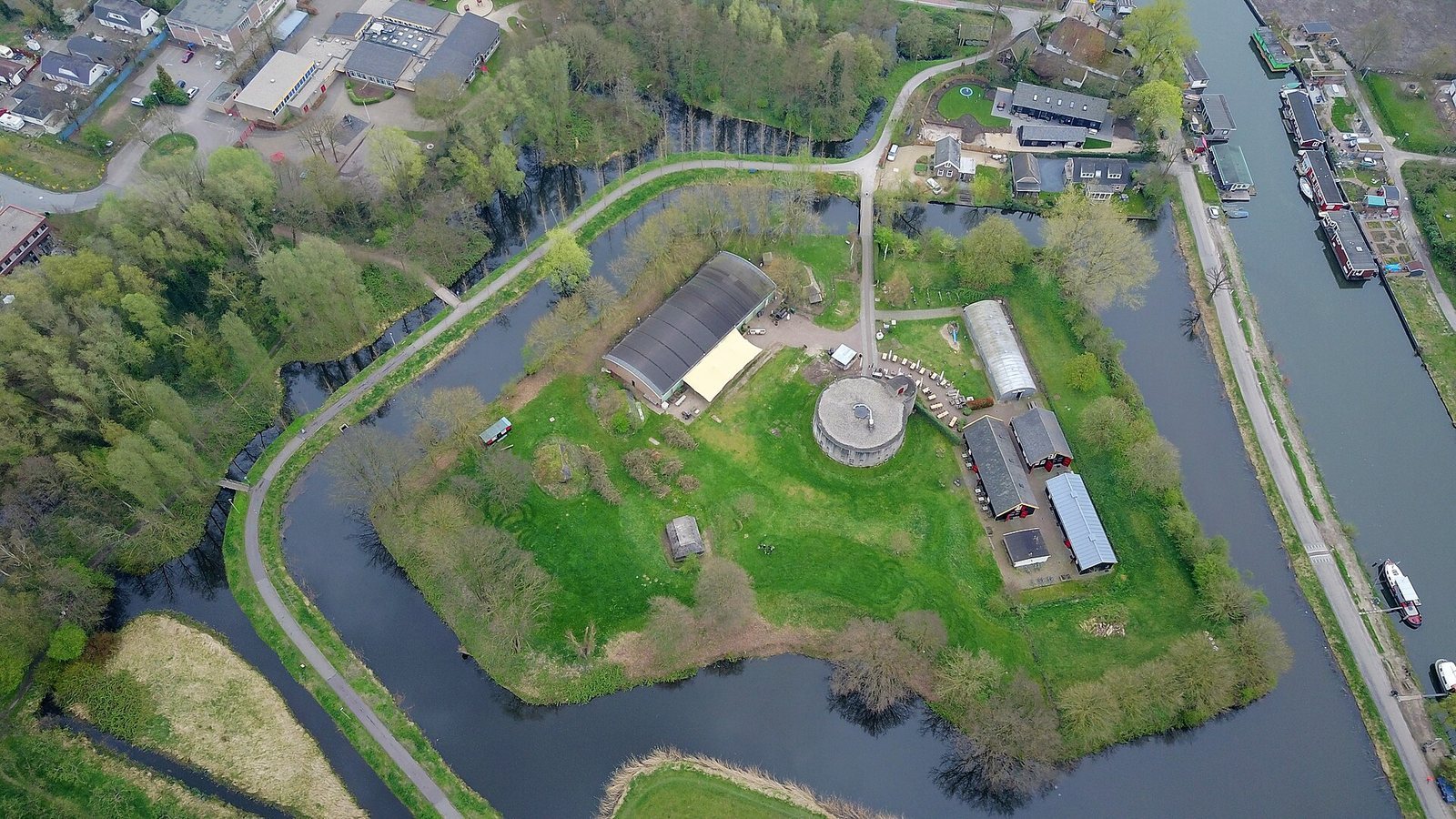
The fort’s layout developed from a closed rectangular earthwork into a site with a central brick guardhouse, a moat, sheds, and later military and service buildings. The guardhouse and three wooden sheds were restored through the project that began in 2004.
Central works and entrance
Guardhouse
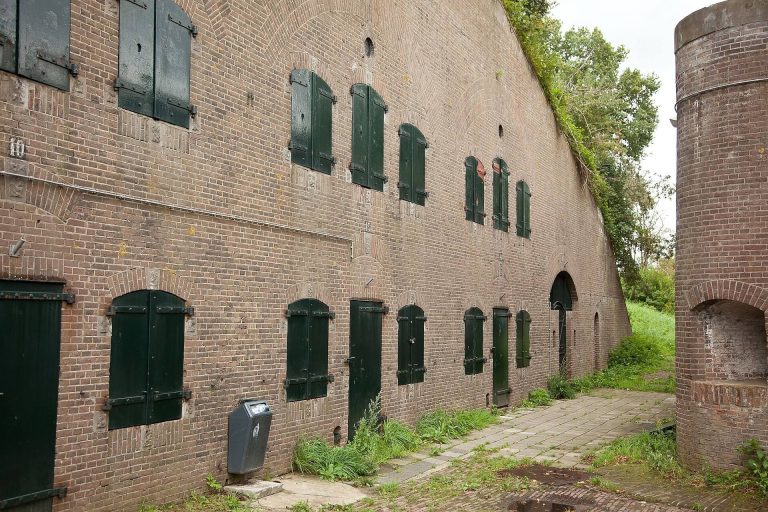
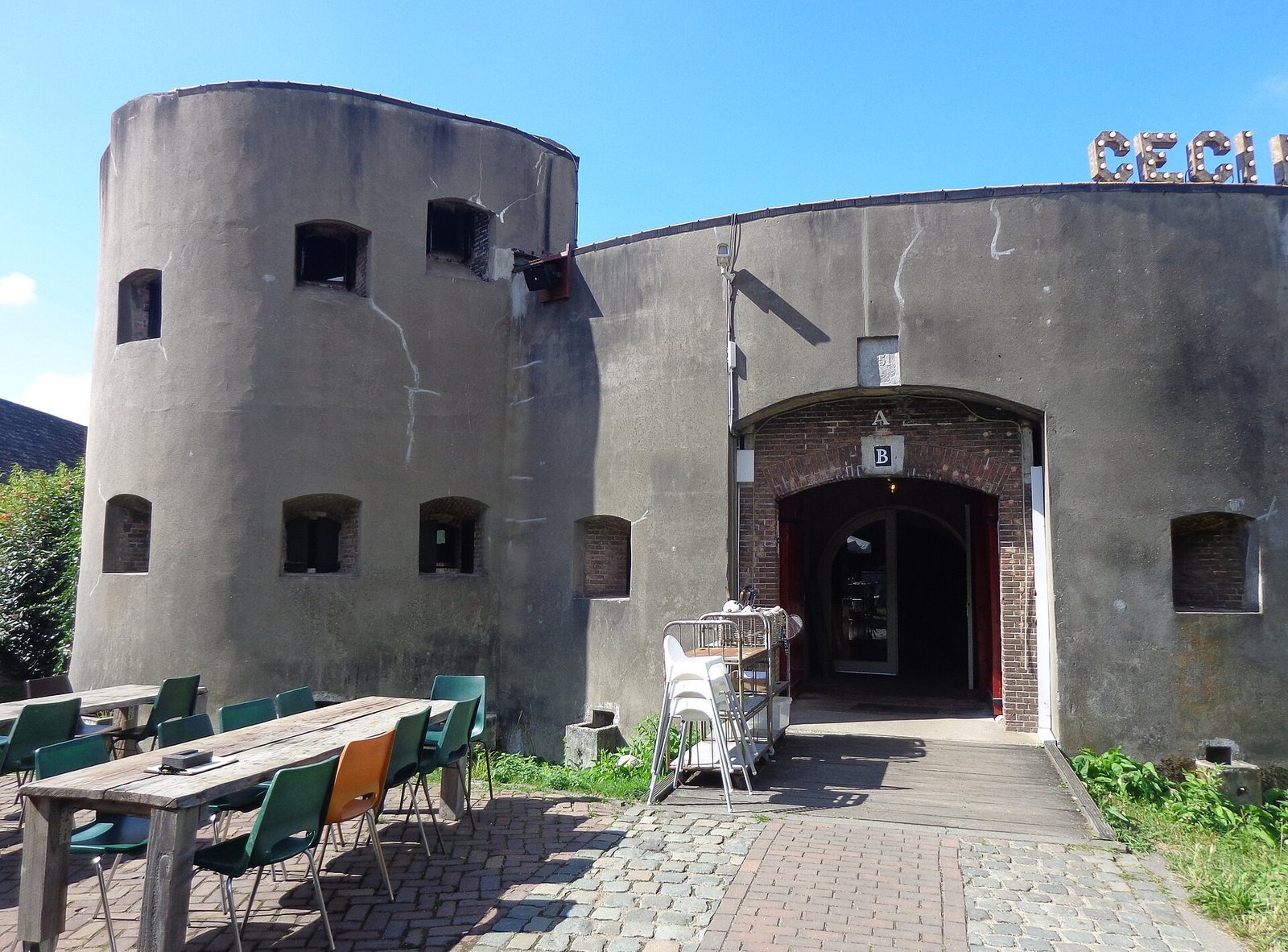
The round, brick guardhouse stands at the center of the fort. Built in 1850–1852, it has a cellar and a ground floor. Its roof carried a lookout and signal post. A moat followed the guardhouse’s outer walls.
Bridge and entrance buildings
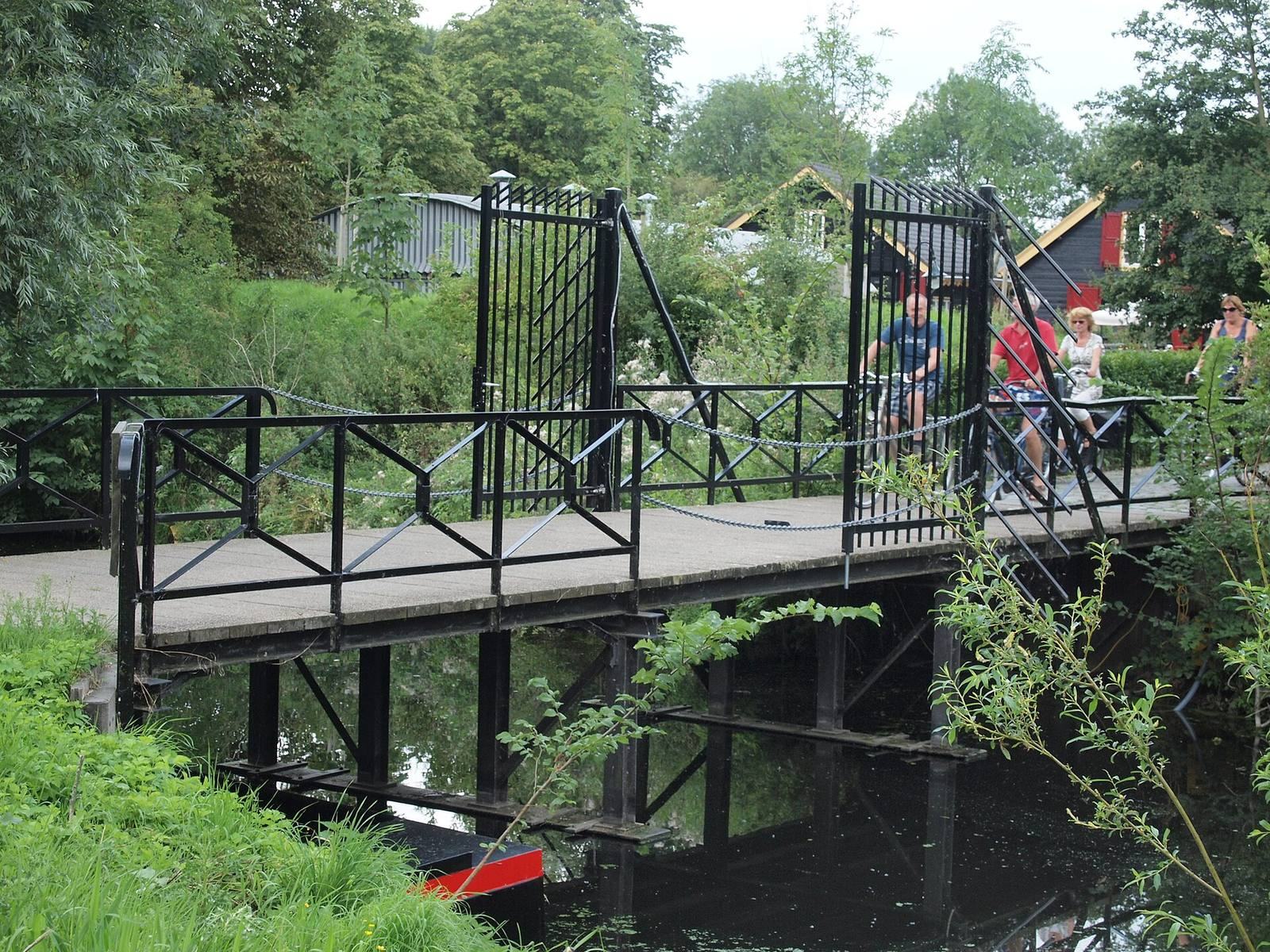
A drawbridge at the main entrance crossed the moat. The original bridge was replaced in 1891 and later completely renovated. A caretaker’s house stands beside the entrance.
Sheds and defensive features
Artillery and storage sheds
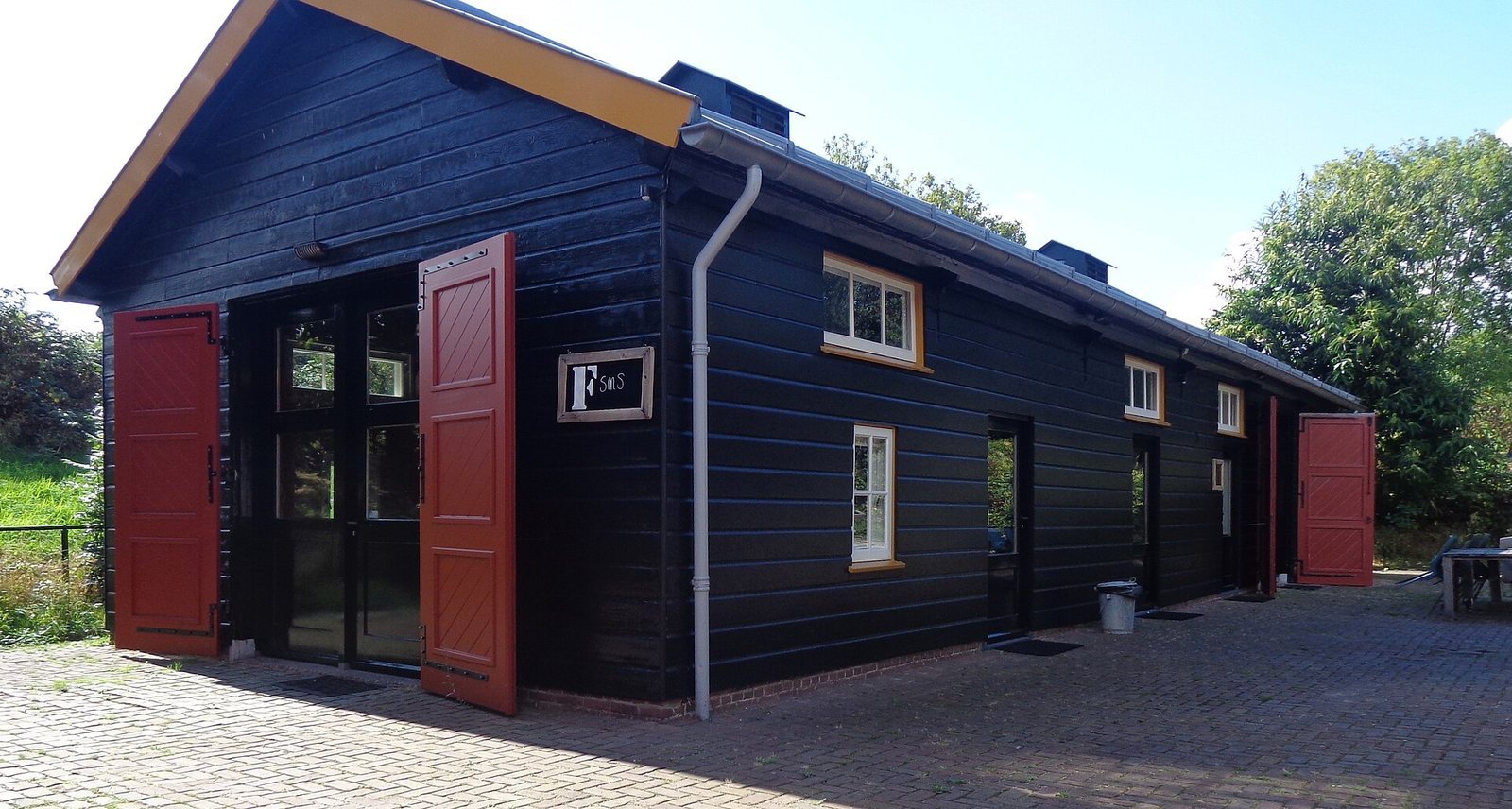
Three wooden sheds were built in 1877, 1898, and 1914 for artillery or storage. A separate artillery shed, made of sheet steel, was transferred to the fort from Fort Lunet II. The three wooden sheds were restored in the project begun in 2004.
Twentieth-century military works
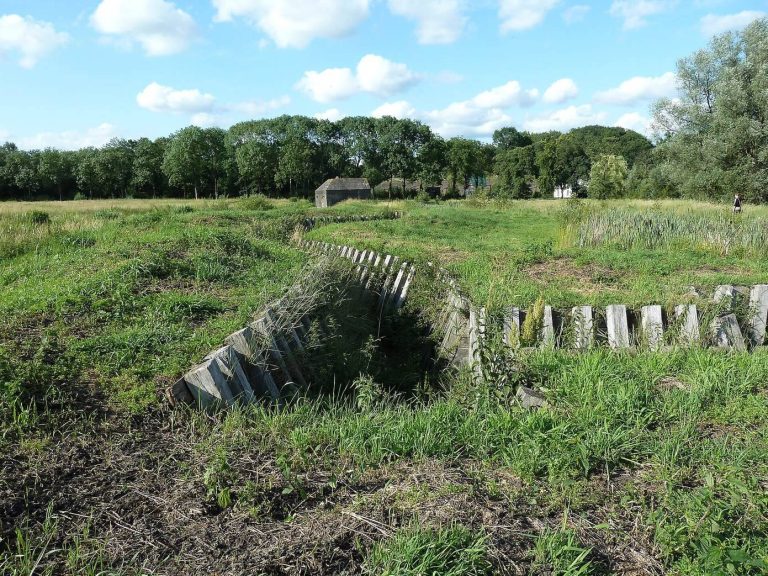
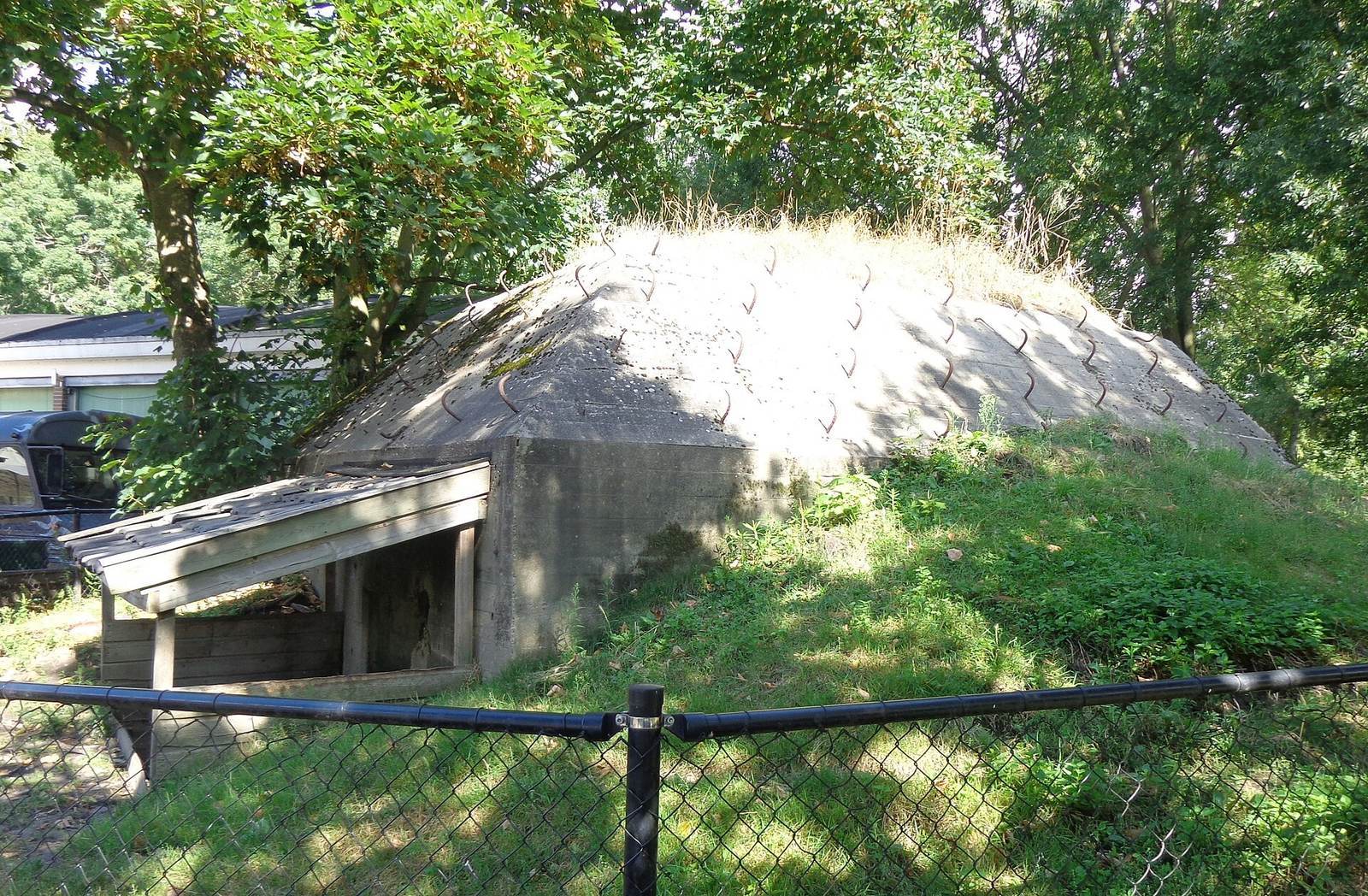
In 1939, trenches were dug across the fort’s interior and ramparts, with reinforced-concrete group shelters behind them. These shelters provided protected positions for groups of soldiers. A large garage shed was added on the northeast side in the 1950s.