Horneburg Castle: A Water Castle and Administrative Seat in Germany
Site at a Glance
- Popularity
- Medium
- Country
- Germany
- Primary era
- Early Modern
- Eras represented
- Medieval, Early Modern
- Civilizations
- Electorate of Cologne, Holy Roman Empire
- Site type
- Domestic
- Remains
- Castle
On this page10 sections
History
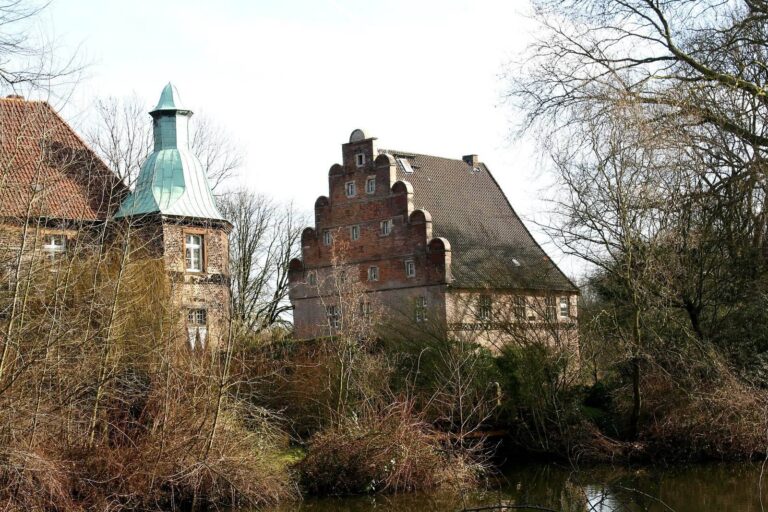
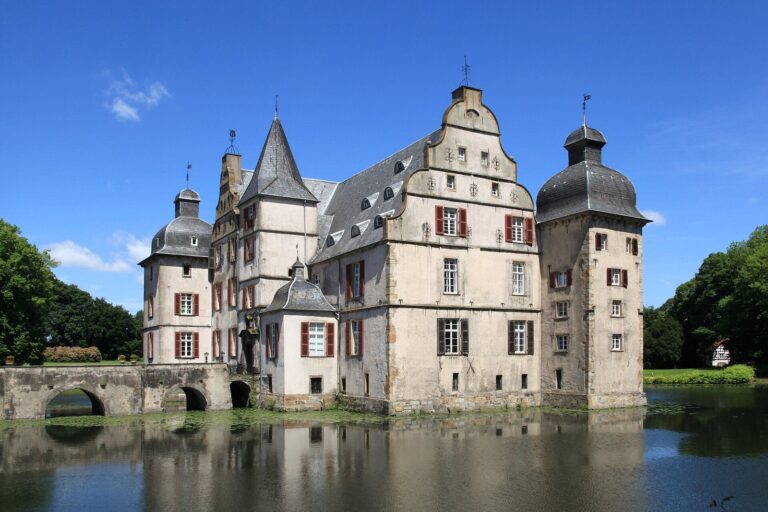
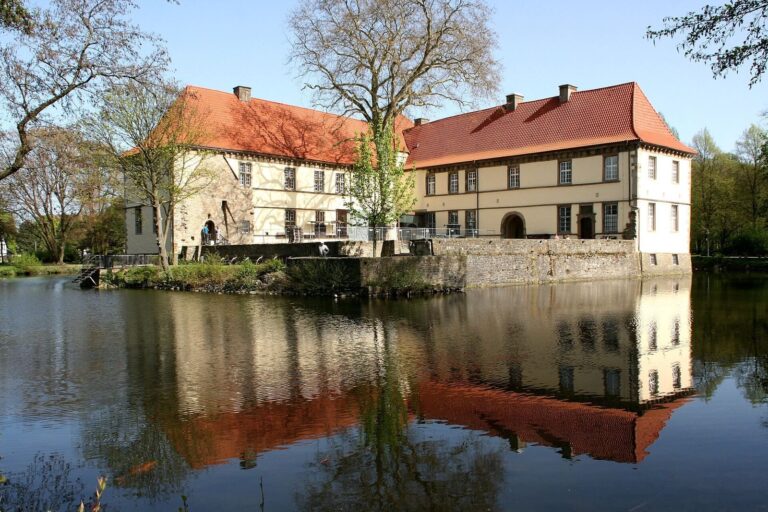
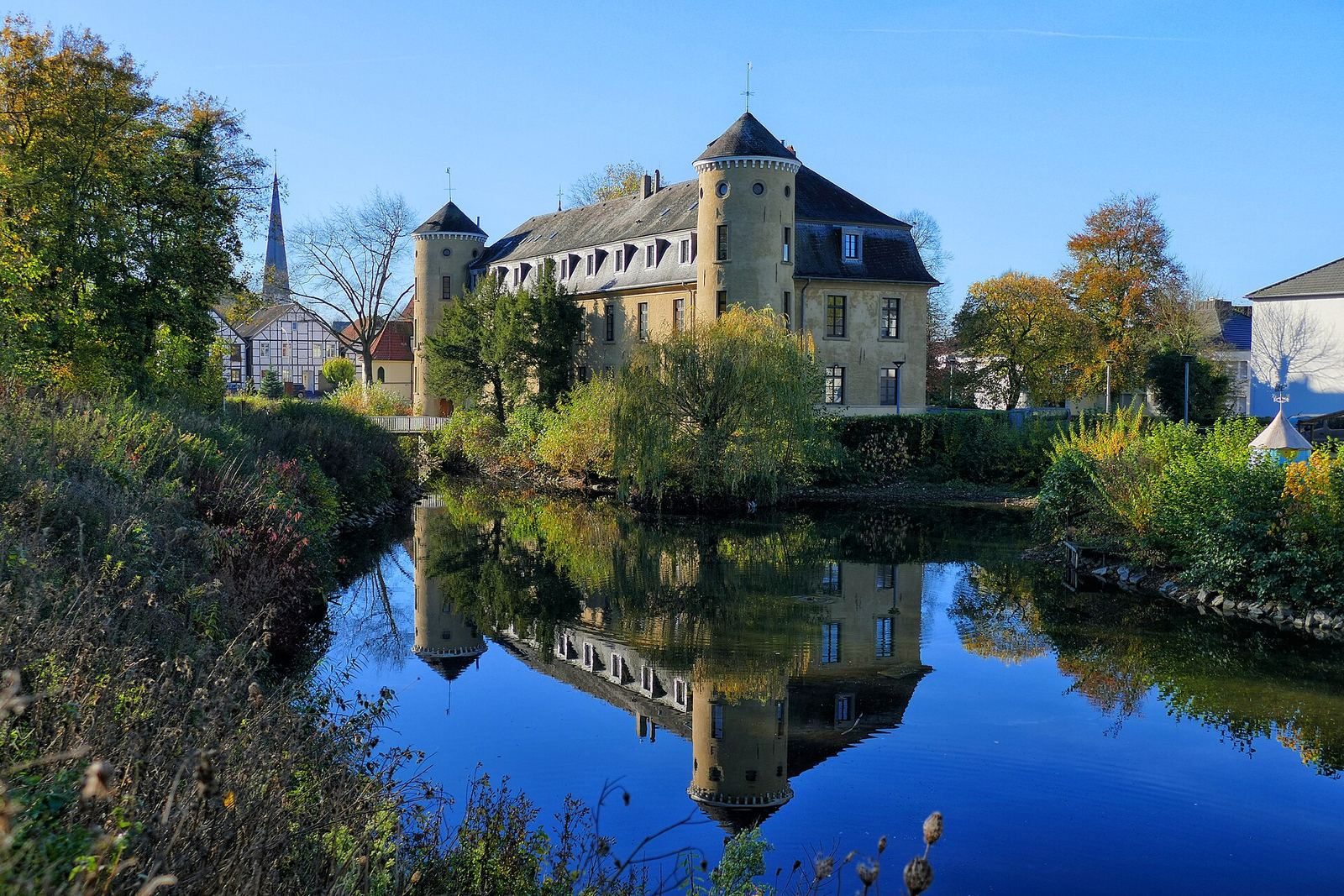
Horneburg Castle is a medieval sandstone water castle in Germany’s historic Vest Recklinghausen territory. Its origins are placed before 1384. First associated with the Lords of Oer, it later became an administrative centre and revenue office for the Electorate of Cologne, an ecclesiastical principality ruled by the Archbishop of Cologne, who also held electoral rank in the Holy Roman Empire.
Early records and the Lords of Oer
The name Horneburch appears in a bailiwick register compiled before 1220 and in a larger register from around 1220, which associates Horneburg with Oberhof Richrode. By the end of the twelfth century, the House of Oer headed the Reichshof Oer, an estate under imperial authority that included Horneburg. Revenues from the estate went to the clergy and administration of Cologne Cathedral. A 1384 agreement between Archbishop Frederick III of Saarwerden and Count Engelbert IV of the Mark also refers to Horneburg in the Vest Recklinghausen.
Horneburg served as the seat of the Lords of Oer until 1418. In 1389, Heidenreich von Oer bought the Reichshof, including Horneburg, from the cathedral chapter and expanded and fortified the castle. His son Heinrich tried to assert authority over nearby settlements, but after his defeat in 1418 he was forced to leave. A family using the castle’s name, the Lords of Horneburg, is recorded as late as 1421.
The origin of the name remains uncertain. One explanation derives “horn” from a projecting point of land, whether a field extending into woodland or dry ground rising from marsh. Another connects the name with a water name meaning muddy, dark or grey, with environmental effects said to account for white or pale-blue colours. Since a predecessor fortress stood north of the later main castle, another proposal is that Saxons brought the name from their former homeland near the Lower Elbe. Local legend instead attributes it to a knight called Goddert von Horne.
Electoral administration
The Elector’s estates included farmland, woodland, buildings, mills and livestock holdings, and their revenues and services required a dedicated administration. Its office was first based in Recklinghausen, where estate administrator Johann Droege is recorded in 1410. After 1420 it moved to Horneburg, which offered more space, larger farm buildings and better facilities for storing grain and sheltering animals. The change affected Recklinghausen’s merchants and tradespeople: farmers who had previously combined deliveries or services with shopping in town now had less reason to visit. Horneburg became the centre of territorial and estate administration in the Vest. Its first recorded Kellner, an estate and revenue administrator, was Ludolf Hechelen in 1425.
The Archbishop of Cologne took full possession of Horneburg, including its chapel, in 1431. The castle’s officers included Drost Dirick van der Knippenborch in 1473; a Drost was a territorial officer with administrative or judicial responsibilities. Cordt vom Darle held an office there in 1522. In 1658 Johan Mathias Pranghe was appointed Kellner, and in 1665 he received the senior title Oberkellner after reorganizing the administration.
Religious conflict, justice and the church
In 1577 Gebhard Truchsess von Waldburg became Archbishop of Cologne. His conversion to Protestantism in 1583 sparked the Cologne War, a struggle over whether the archbishopric and territories such as the Vest would remain Catholic or become Protestant. On 31 May 1583, troops under Colonel Engelbert von der Lippe occupied Horneburg. The Vest was later recovered, and in May 1584 Gebhard’s successor, Ernest of Bavaria, held a territorial assembly at the castle. Ernest prevailed in the conflict in 1589.
Horneburg also housed the Vest’s criminal court and prison. Several witch trials took place there between 1588 and 1590. A charter of 8 January 1332 had described Engilbert with a phrase meaning “pastor of Horneburg.” This was a formula of humility, not evidence that he served as the local pastor.
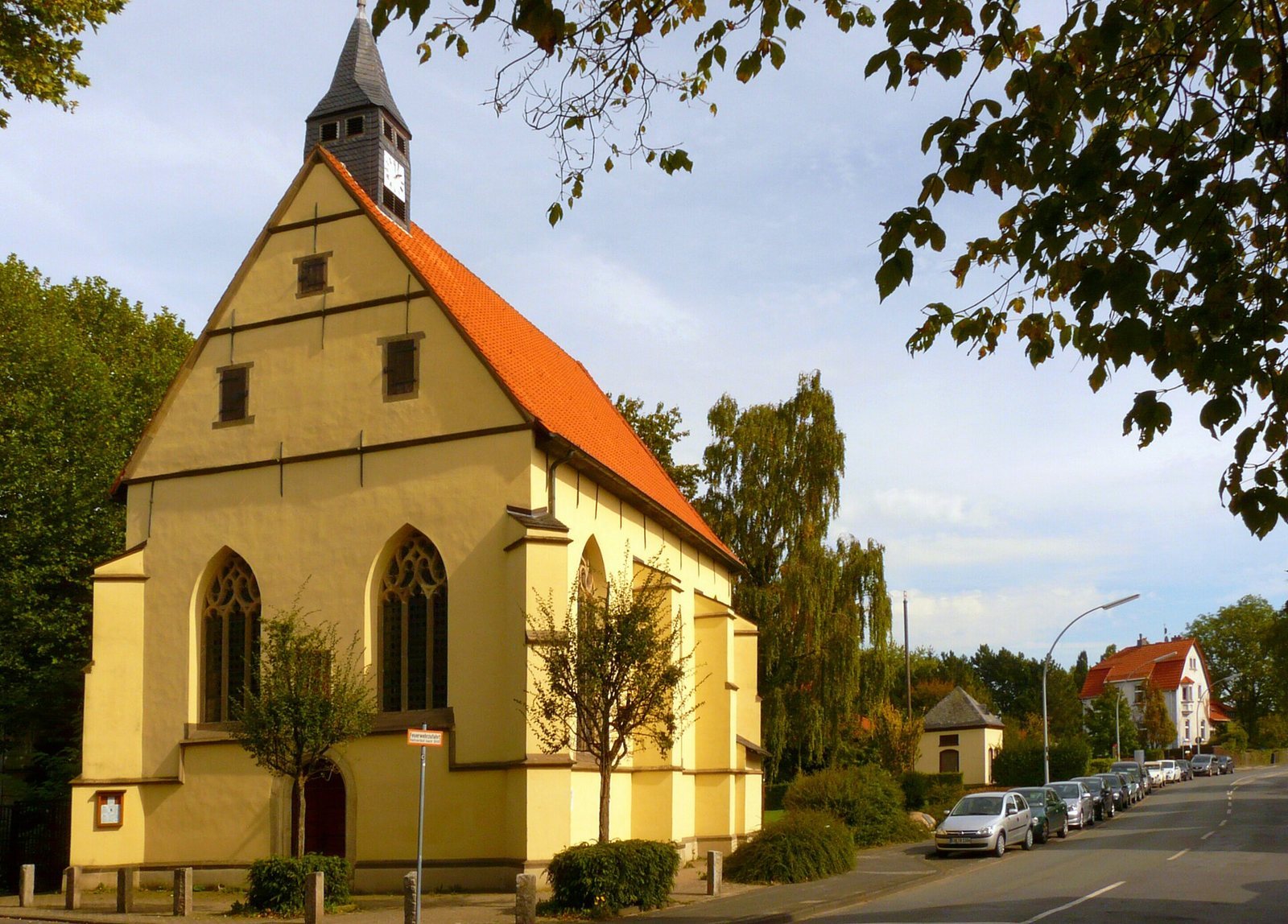
The church received the right to administer baptism in 1610. Heinrich Barckhoff, active there from about 1610 to 1650, oversaw its enlargement and remodelling; a church visitation in 1630 described it as new. He also founded a school in 1610, teaching grammar, Latin, religion and an introduction to philosophy himself during its first two years. Hessian troops captured him and the estate administrator in 1632. In 1635 he spent three weeks imprisoned at Dorsten, then became pastor. He later served as dean and as a church and territorial official in the Vest. The church gained full parish rights in 1672 and served as the parish church of St. Mary Magdalene until 1965. From 1968, it served the Russian congregation of Saints Boris and Gleb.
Destruction and later use
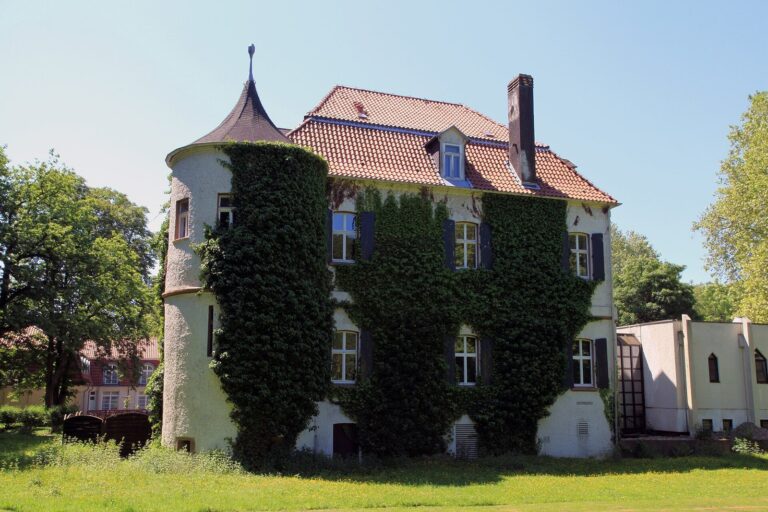
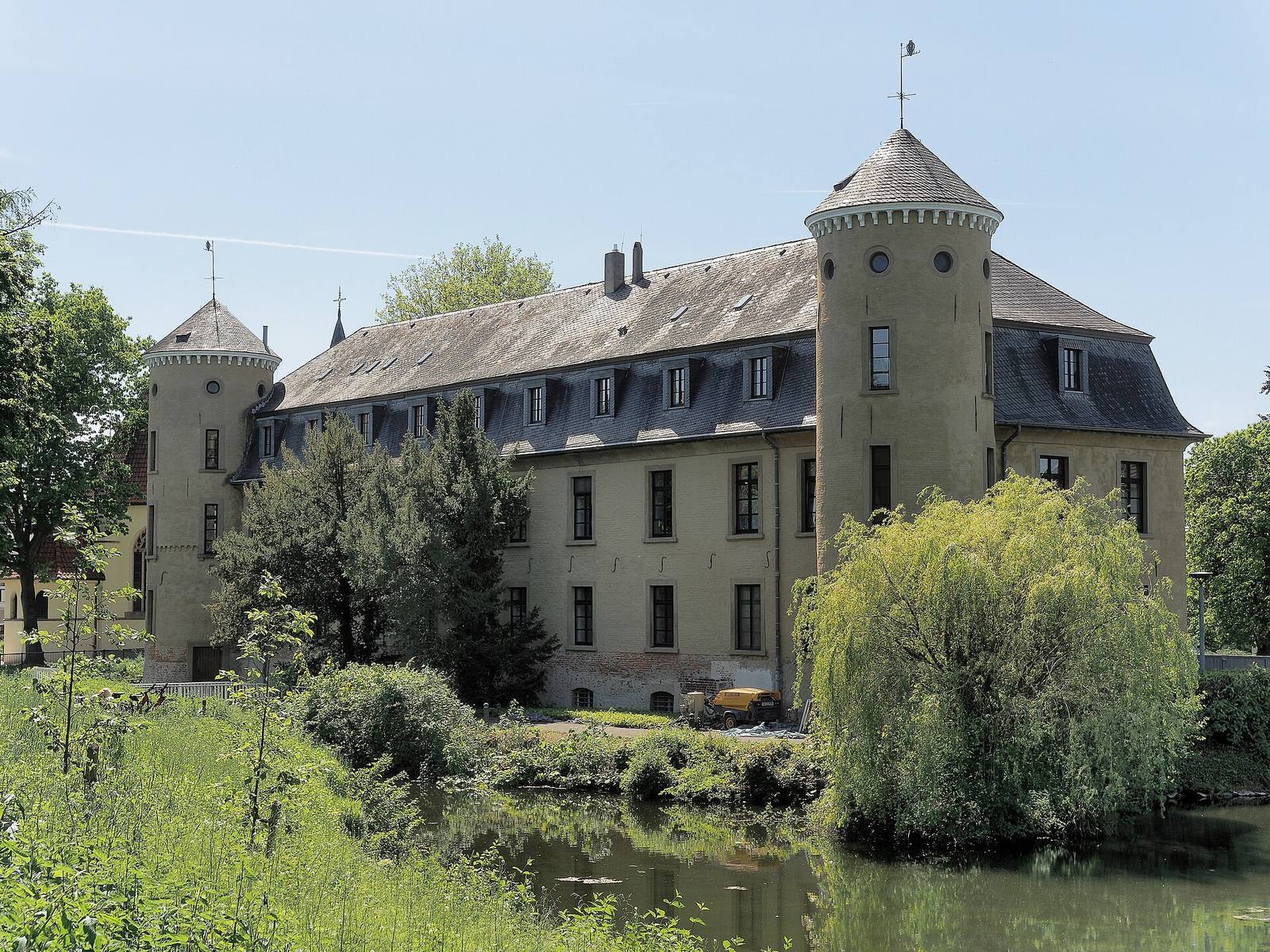
On 25 July 1646, during the Thirty Years’ War, a major European conflict fought from 1618 to 1648, French Marshal Henri de La Tour d’Auvergne, Viscount of Turenne, burned the castle and Horneburg’s privileged settlement. He acted in retaliation for a military defeat near Lünen and Hamm and an attack on his rearguard. The main castle was not rebuilt after the war. The site’s later built form developed around a manor house made from the former outer bailey.
Tsar Peter I of Russia stopped at Horneburg on 23 May 1698 while travelling from Amsterdam to Vienna. In 1802 the castle passed to the Duke of Arenberg. From 1907 to 1959 it housed a domestic-science school for farmers’ daughters, followed by a convalescent home for mothers run by the Münster Diocesan Caritas Association from 1959 to 1965. The County of Recklinghausen owns the building. From 1965 to 2023 it was used as a boarding school for pupils with special educational needs. On 22 September 2023, the facility was renamed Jugendhilfe Schloss Horneburg to reflect changes in the needs of those it served.
Remains
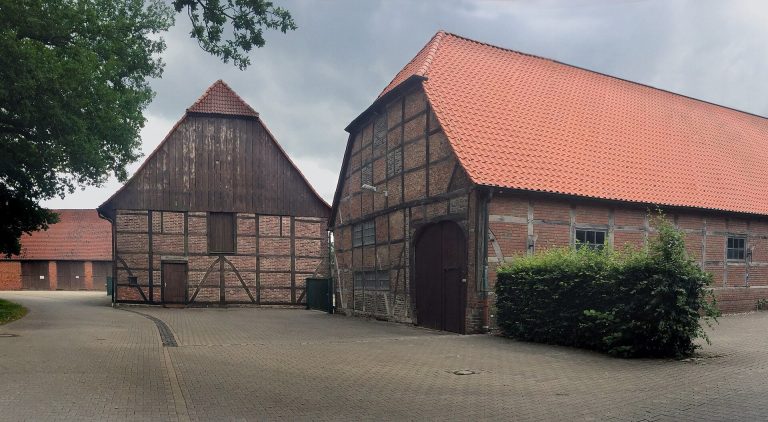
The castle was built of sandstone and protected by water. Parts of the former outer bailey survive, including a manor house of castle-like dimensions. A predecessor fortress stood to the north of the later main castle.
Castle chapel
Plan and construction
The chapel is a single-nave church with two bays and a polygonal choir end shaped as five sides of an imagined octagon. It measures 17.7 metres long and 9 metres wide. Buttresses support the nave and choir, while a slate-covered turret at the west end carries three bells. Inside, groin vaults, formed where two barrel-shaped ceilings meet, rest on ribs between round-arched crossways and on projecting supports, some carved with angels’ heads. The pointed windows are divided into three sections. Their heavy masonry, dating from 1654, carries curving fish-bladder patterns, a decorative motif.
High altar
The high altar is Baroque, a European art and architectural style. Its substantial frame has acanthus-leaf scrolls and putti, or childlike figures, and includes a late-seventeenth-century image of the penitent Mary Magdalene. A group showing the Crucifixion once occupied the central field; the figures of Mary and John are now in the Vestisches Museum in Recklinghausen. The central image later became a Sacred Heart statue, followed after 1925 by a painting of Mary Magdalene, Mary and John beneath the cross. That painting is now in the new church. A Byzantine image of Christ as ruler of all later took its place.
Other furnishings
At the left of the altar area is a sandstone sacrament niche in the Rococo style, a European art and architectural style. A seventeenth-century wall tabernacle has a panelled wooden door set between stone pilasters, with cartouche ornaments and angels’ heads around it. The round baptismal font, made in 1618, is decorated with a leaf band and an angel’s head. A fifteenth-century oak statue of Saint Anne with Mary and the Christ Child has had its paint renewed. Both the font and statue are now in the new church.