Hardenburg: A Castle and Former Residence of the Counts of Leiningen
Site at a Glance
- Popularity
- High
- Country
- Germany
- Primary era
- Medieval
- Eras represented
- Medieval, Early Modern, Modern
- Civilizations
- German, Holy Roman Empire
- Site type
- Military
- Remains
- Castle
On this page9 sections
History
Hardenburg is a ruined stone castle in Germany, built by the counts of Leiningen between 1205 and 1214 on land belonging to Limburg Abbey that they had unlawfully taken. Count Friedrich II von Leiningen is regarded as its founder, and 1205 is also the year of its first recorded mention.
Leiningen ownership and expansion
In 1237, the castle passed to Friedrich II’s son, Count Friedrich III. The Leiningen-Hardenburg branch formed in 1317, and the Leiningen-Rixingen branch separated in 1345 after an inheritance dispute. In 1512, after Count Emich IX was placed under an imperial ban, a formal proscription that could leave someone outside the protection of imperial law, Elector Palatine Ludwig V besieged Hardenburg. The Leiningens surrendered before the castle was damaged and recovered it in 1519.
Hardenburg was enlarged substantially in the late fifteenth and early sixteenth centuries, with stronger defenses against artillery. From 1560 to 1725, it served as the principal residence of the counts of Leiningen, who developed it into a residential palace. During the Thirty Years’ War (1618-1648), a major European conflict that affected many territories of the Holy Roman Empire, the castle sheltered people from nearby settlements.
Sieges, abandonment, and conservation
Hardenburg held out during an initial siege in the War of the Palatine Succession (1688-1697), a conflict involving France. French forces under General Mélac besieged it again in 1692, causing severe damage and destroying fortifications. In 1725, the counts of Leiningen-Dagsburg-Hardenburg moved their residence to their palace in Dürkheim. Hardenburg was not restored and continued to deteriorate.
French revolutionary troops set fire to the castle in 1794. The blaze destroyed the remaining buildings and valuable interiors, leaving a ruin that was not rebuilt as a castle. Hardenburg has been in public ownership since 1820, first under the Kingdom of Bavaria and later under the state of Rhineland-Palatinate. It has held protected-monument status since the nineteenth century. Repairs and conservation carried out from 2008 to 2012 included adding an intermediate floor and a 200-tonne cover slab to the round gate fortification.
Remains
Plan and fortifications
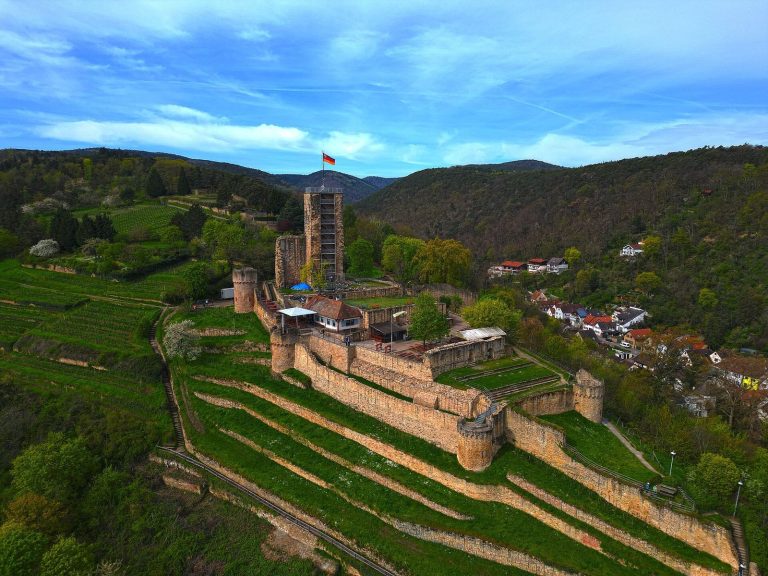
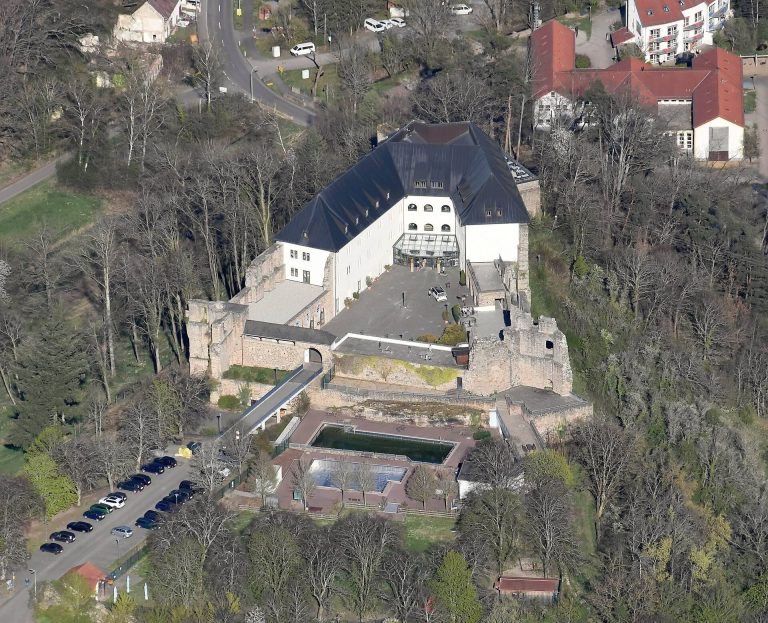
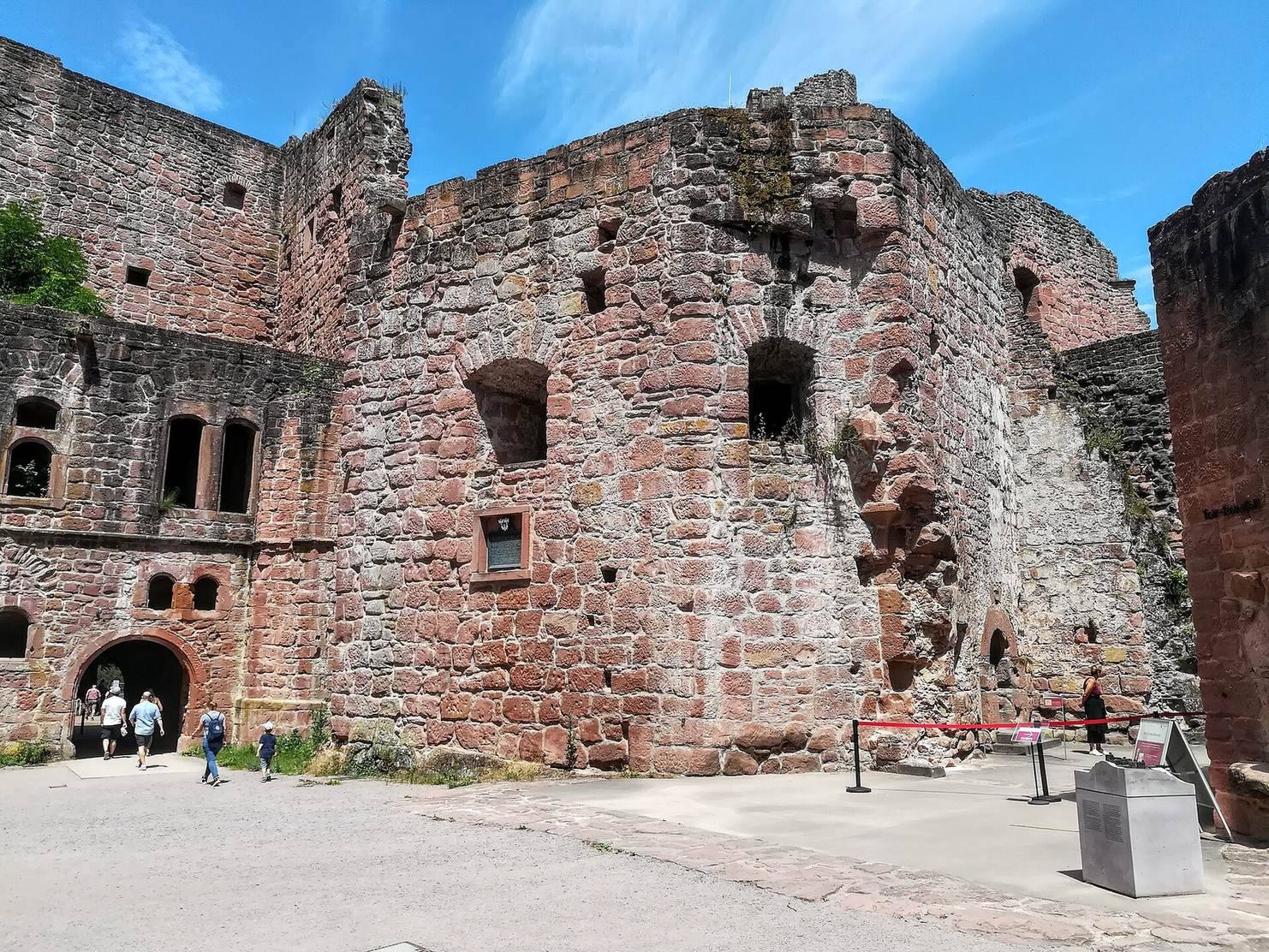
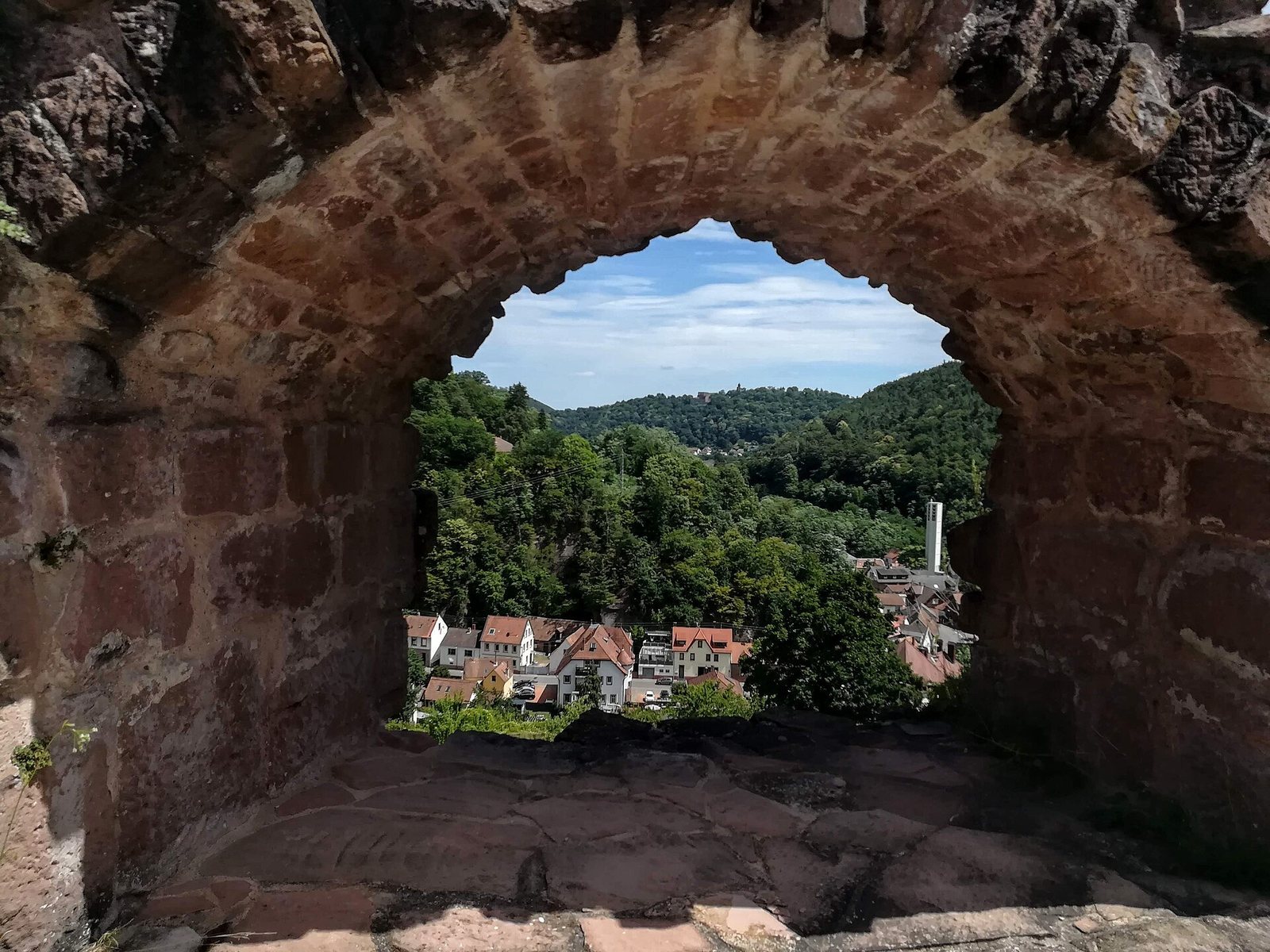
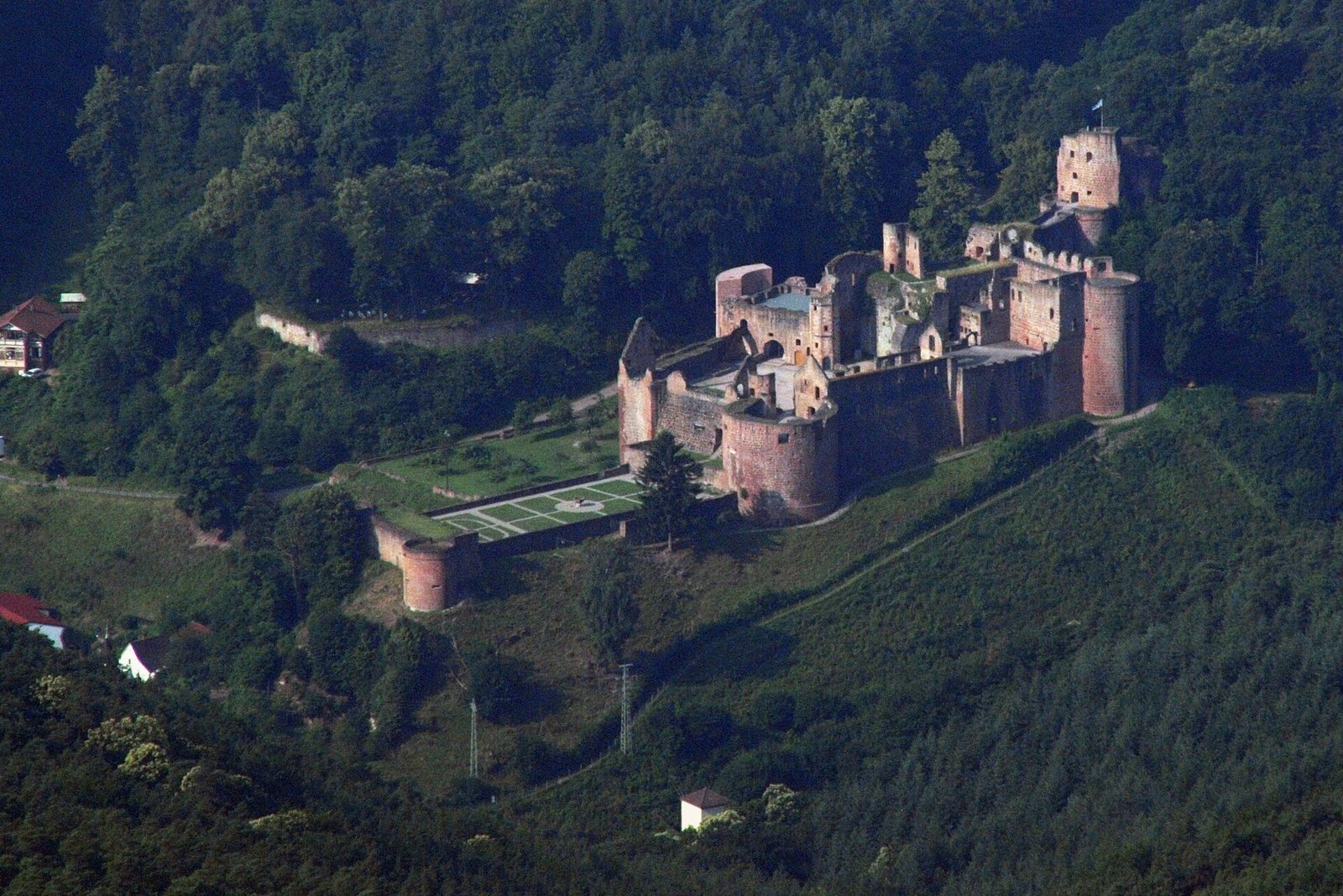
The stone castle occupies a rocky ridge about 200 metres long, roughly 200 metres above the Isenach valley. The valley opens toward the Rhine plain, and the castle’s position once allowed it to control the surrounding area and valley. Its main complex has an almost rectangular plan, measuring 180 by 90 metres. The principal defenses stand on the western side, where a massive bastion, a projecting defensive structure, protected the castle from the slope. The inner stronghold was defended by powerful towers and stone walls about seven metres high; at ground level, the bastion walls are almost seven metres thick. A viewing platform stands on the western bastion, with views over the castle and the valley toward the ruins of Limburg Abbey.
Surviving buildings and grounds
Residential remains
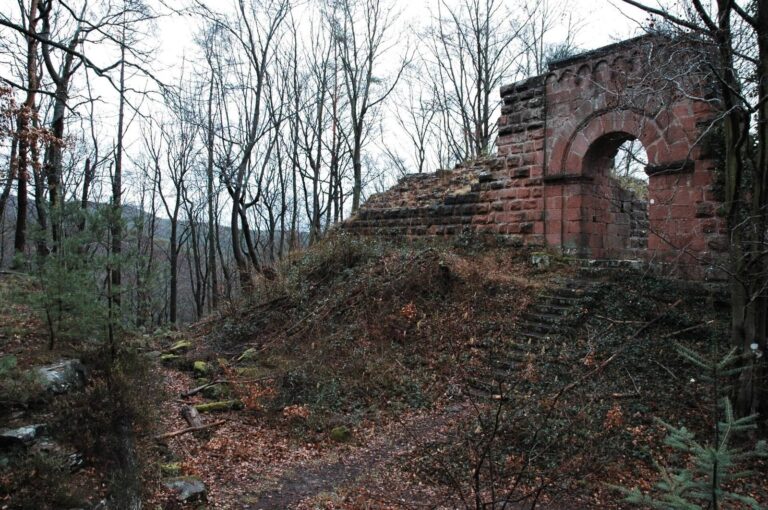
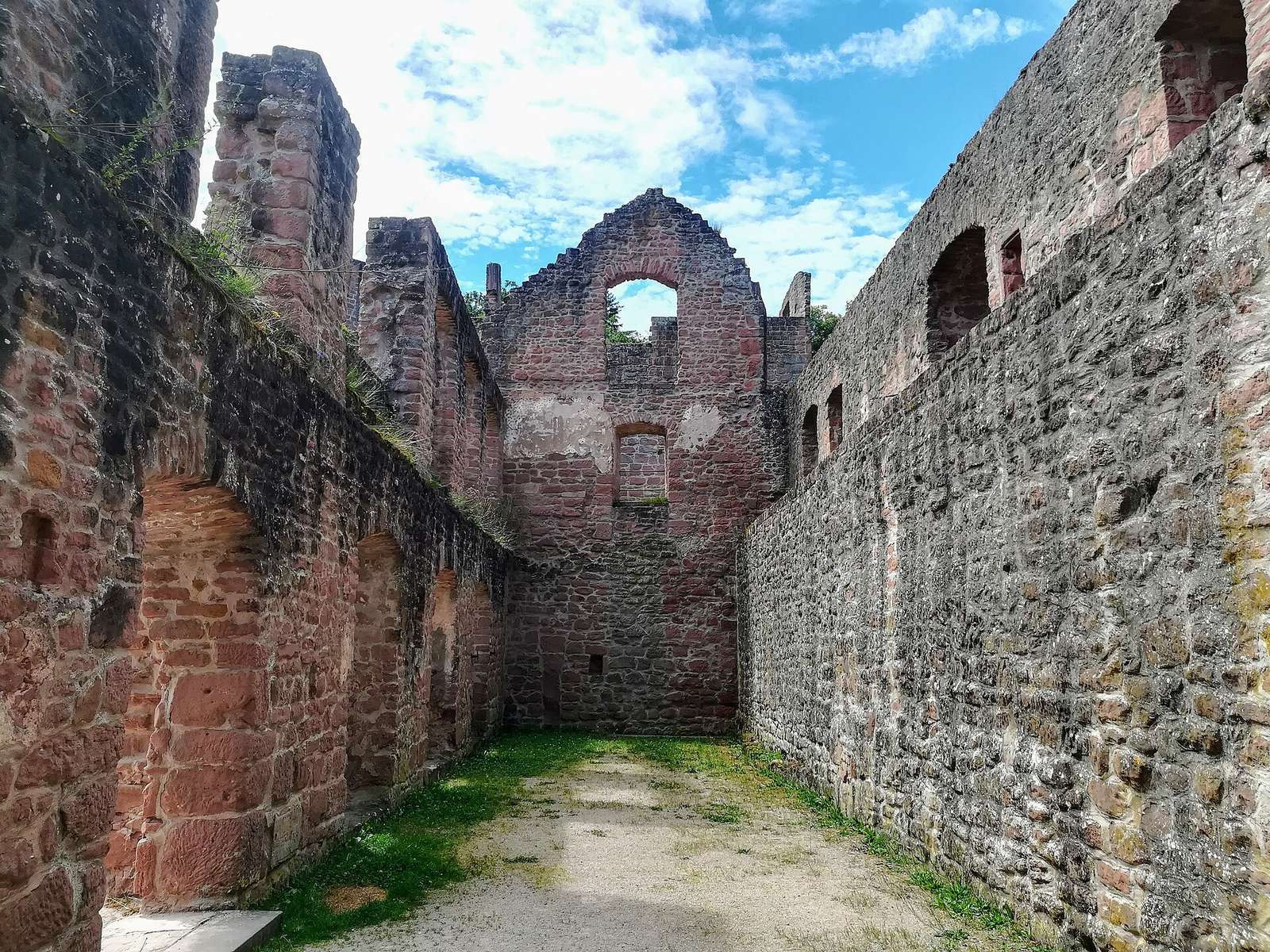
The castle is now a ruin, with fragments of towers, walls, and other buildings surviving. Stair towers, windows, and ornate doorways from the former residential rooms remain, while the eastern side is partly well preserved.
Cellars
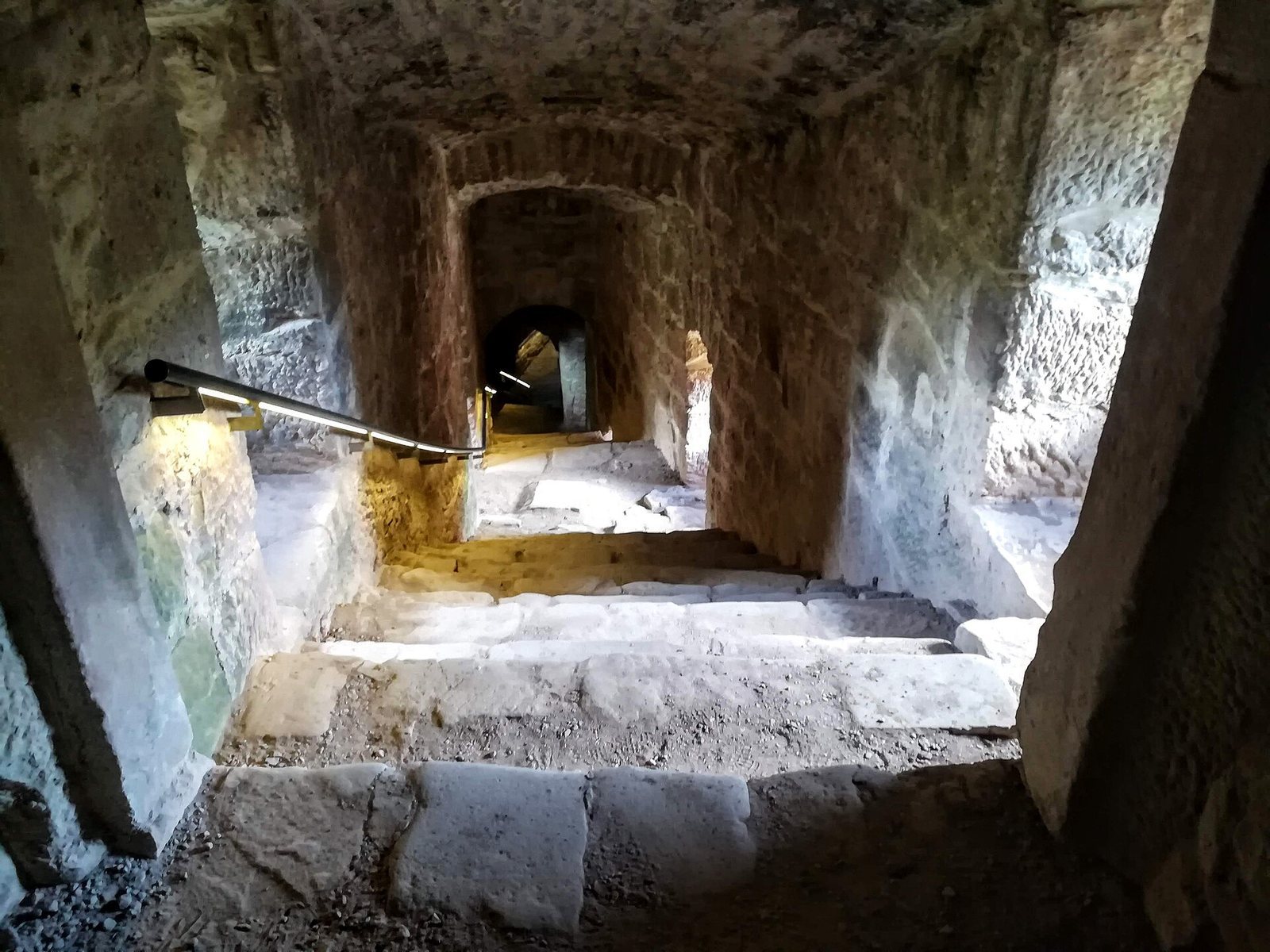
Built in 1509, the large underground cellars are among the best-preserved parts of the castle. Their broad ribbed vaults are ceilings supported by intersecting stone ribs.
Courtyard and garden
A well remains in the former inner courtyard, and the grounds also contain the remains of a garden.