Kremsegg Castle: A Historic Residence and Musical Instrument Museum
Site at a Glance
- Popularity
- Medium
- Country
- Austria
- Primary era
- Early Modern
- Eras represented
- Medieval, Early Modern
- Civilizations
- Habsburg, Habsburg Austria, Holy Roman Empire
- Site type
- Domestic
- Remains
- Castle
On this page9 sections
History
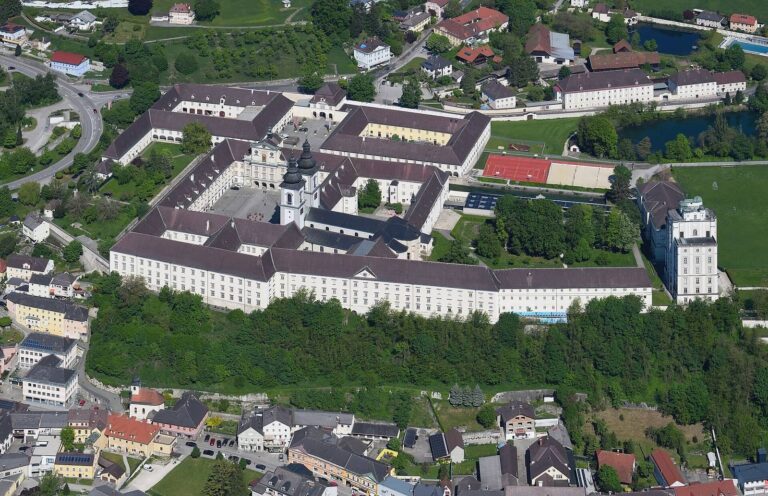
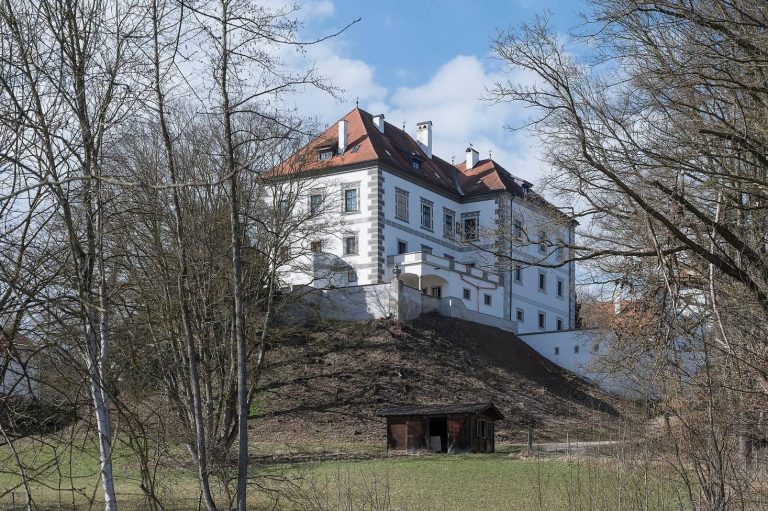
Kremsegg Castle is a historic residence in the Kremsegg district of Kremsmünster, in the Austrian state of Upper Austria. Its fortified predecessor served from the 13th century as a refuge for people of the Kremstal valley. After the estate passed to Kremsmünster Abbey in 1627, the abbey’s successors commissioned its conversion into a castle.
Fortified refuge and Grünthaler ownership
The Roth family held the fortified site, known as Crembseck. In 1464, it passed to the Grünthaler family through the marriage of Barbara Rothin and Andreas Grünthaler. Around 1600, the locally important Grünthaler Household Book was produced there. During the Counter-Reformation, the Catholic Church’s response to the spread of Protestantism, the Protestant Grünthalers were compelled to leave the country.
Abbey ownership and castle conversion
In 1627, Anton Wolfradt, the head of Kremsmünster Abbey, acquired the estate and its manorial rights, the authority attached to an estate. His successors commissioned its transformation into a castle, probably with the involvement of Jakob Prandtauer, an Austrian architect of the Baroque period. Kremsmünster Abbey sold the property in 1848, after which it changed hands frequently.
Private ownership and restoration
In 1929, the princely branch of the Kinsky family acquired the castle. After Prince Rudolf Kinsky’s death, the family invested proceeds from the sale of Bohemian estates there, including Schloss Lissa on the Elbe. Following Countess Therese Kinsky’s death in 1973, her cousin and adopted son, Count Josef Czernin-Kinsky, sold the castle to the Lutzky family in 1976. The castle and its parklands were extensively restored and reorganized. A vehicle museum displaying cars and motorcycles was established, and its vintage-car collection was later sold to the Oldtimer Museum Kröpfl in Hartberg, Styria.
The musical instrument museum
The association Musica Kremsmünster took over the castle in 1996 and held its first musical-instrument exhibition there that year. The Musical Instrument Museum Schloss Kremsegg operated in the castle until 31 December 2018. Its initial collection came from trumpeter Franz Xaver Streitwieser. His wife, Katherine, financed it with family assets associated with General Motors. The collection remained in the United States until her death, then moved under her will to Bavaria and, in 1996, to Upper Austria. In 2001, pianist and musicologist Paul Badura-Skoda lent part of his piano collection to the museum; in 2007, the museum acquired horn player and teacher Hans Pizka’s horn collection.
Exhibitions covered brass instruments, pianos, Franz Schubert, Friedrich Gulda, Johann Nepomuk David, and the Vienna horn, a type of orchestral horn associated with Viennese musical practice. The Schubert display explored his three recorded visits to Kremsmünster. The Gulda exhibition drew on his estate, which Musica Kremsmünster had archived. David attended Kremsmünster Abbey’s grammar school from 1909 to 1912.
Remains
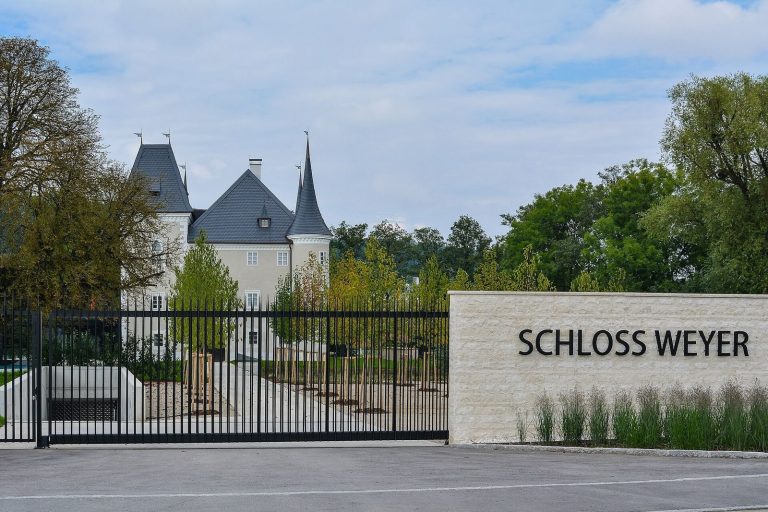
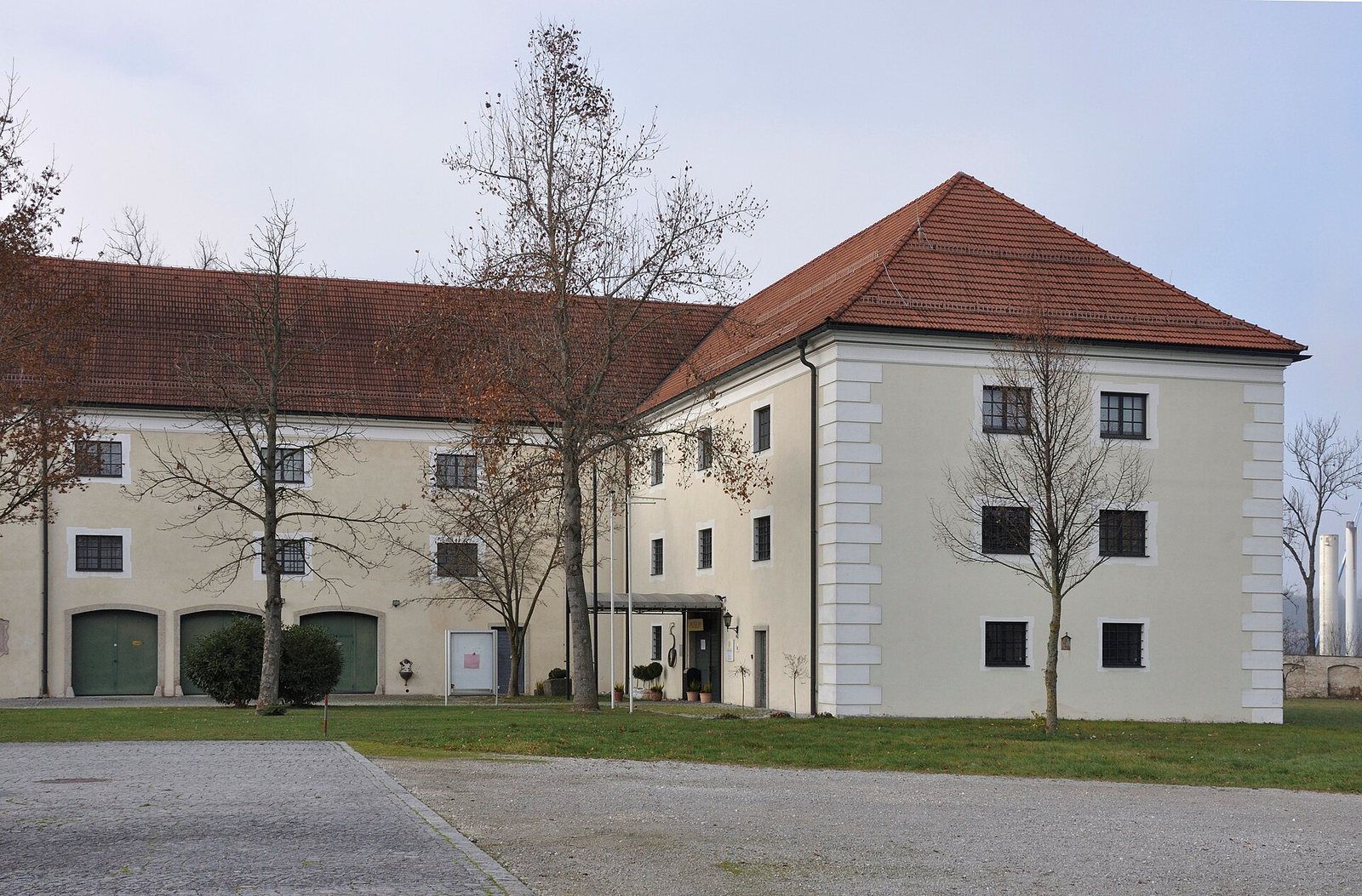
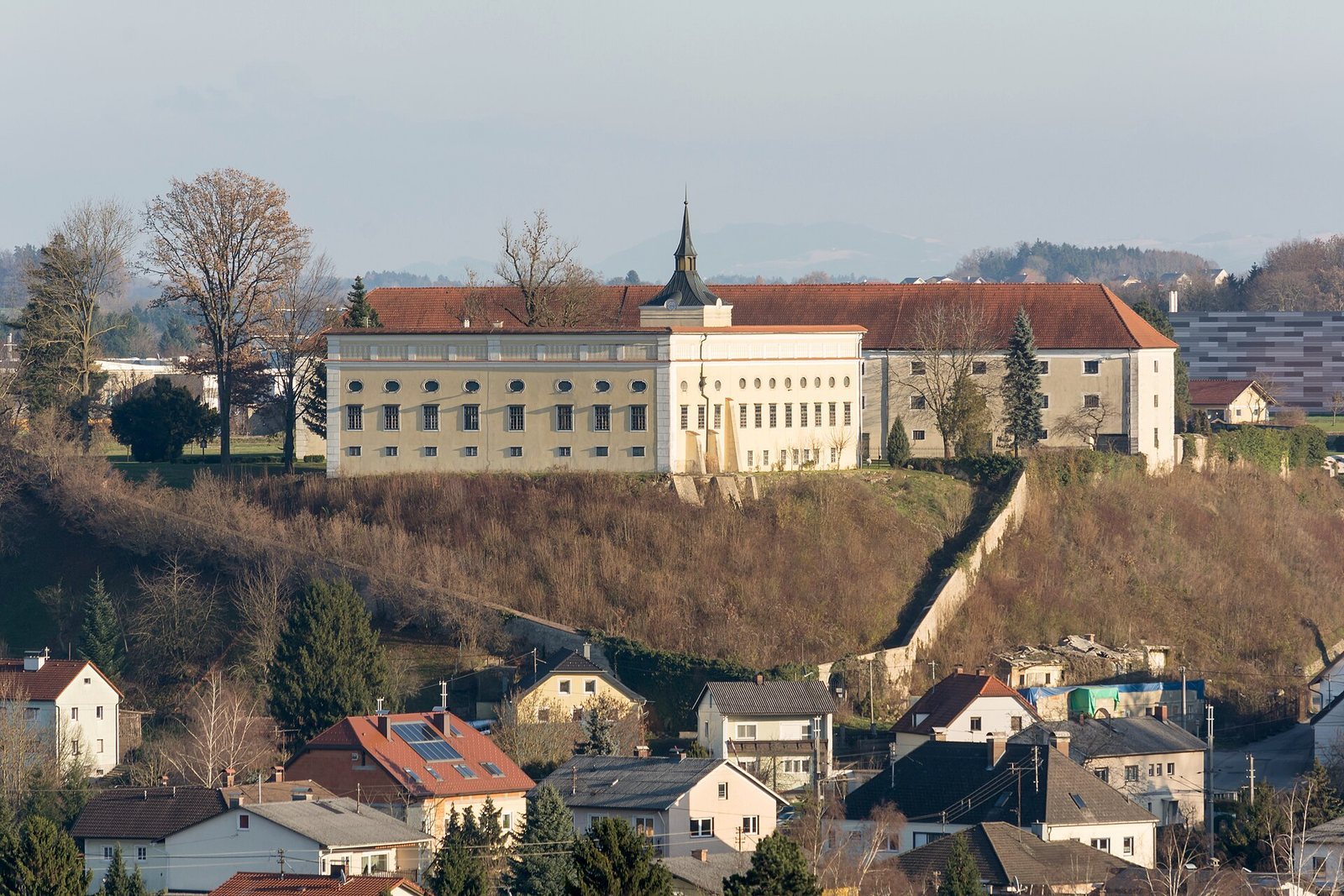
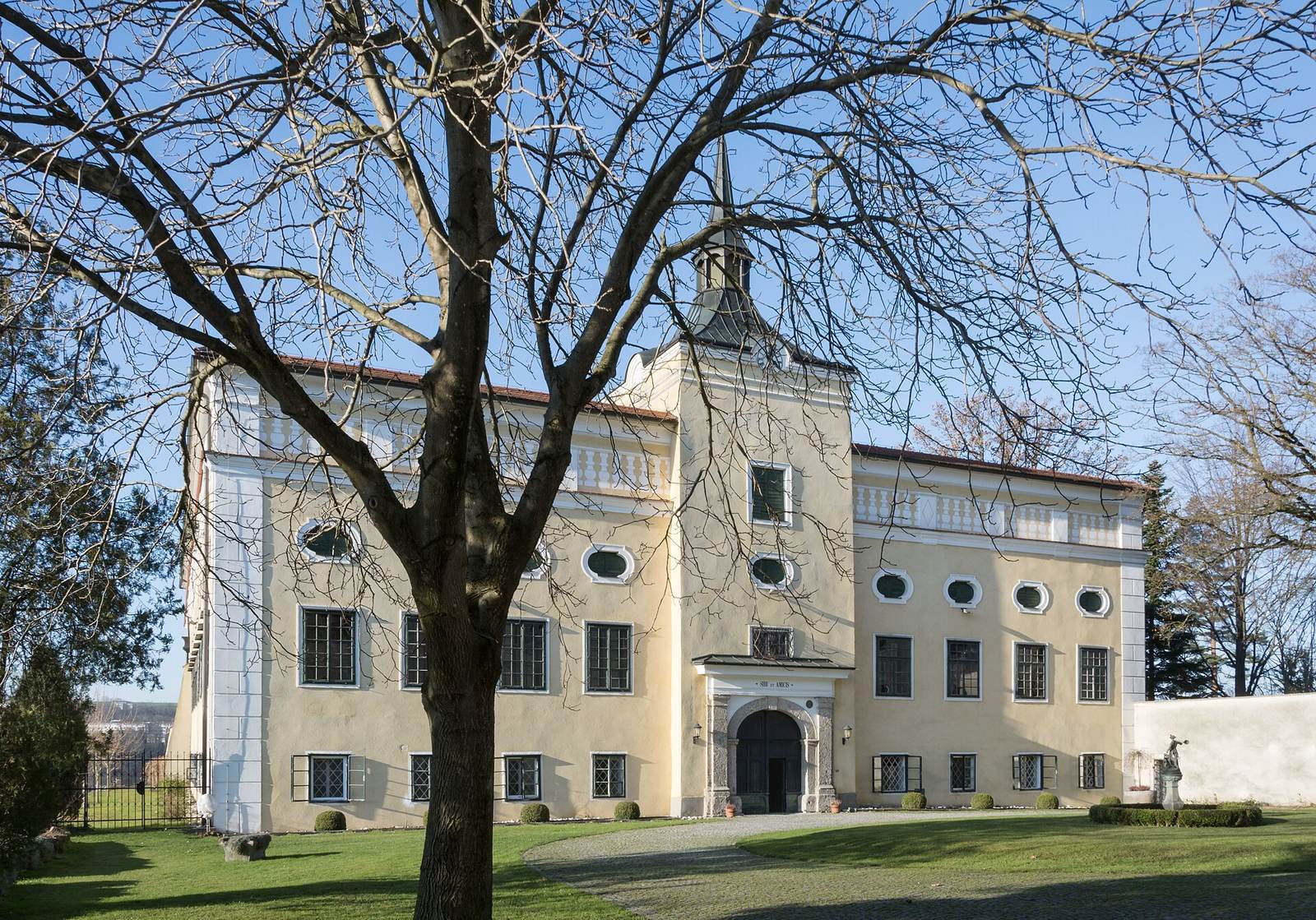
The complex is arranged around a two-storey, four-winged castle, approached through a gatehouse and fronted by a crosswing, a building wing set across the main range. The entrance route and courtyard connect the gate, forecourt, and residential building.
Approach, gate, and forecourt
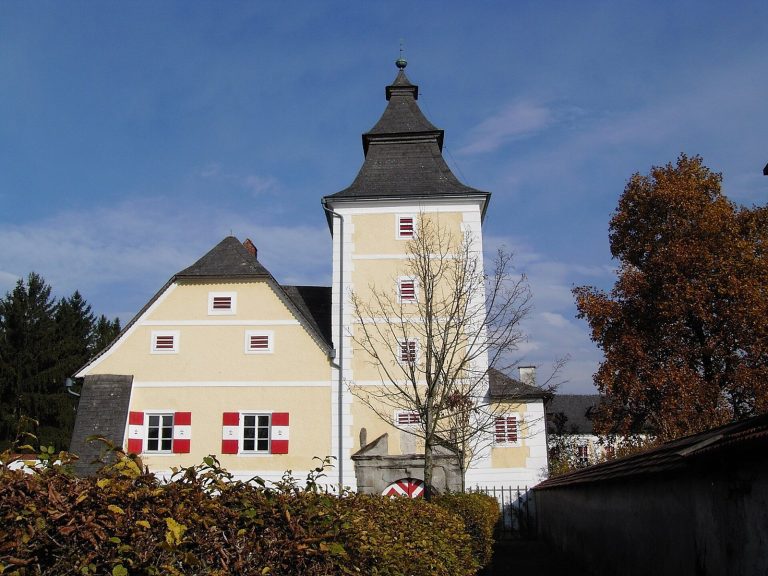
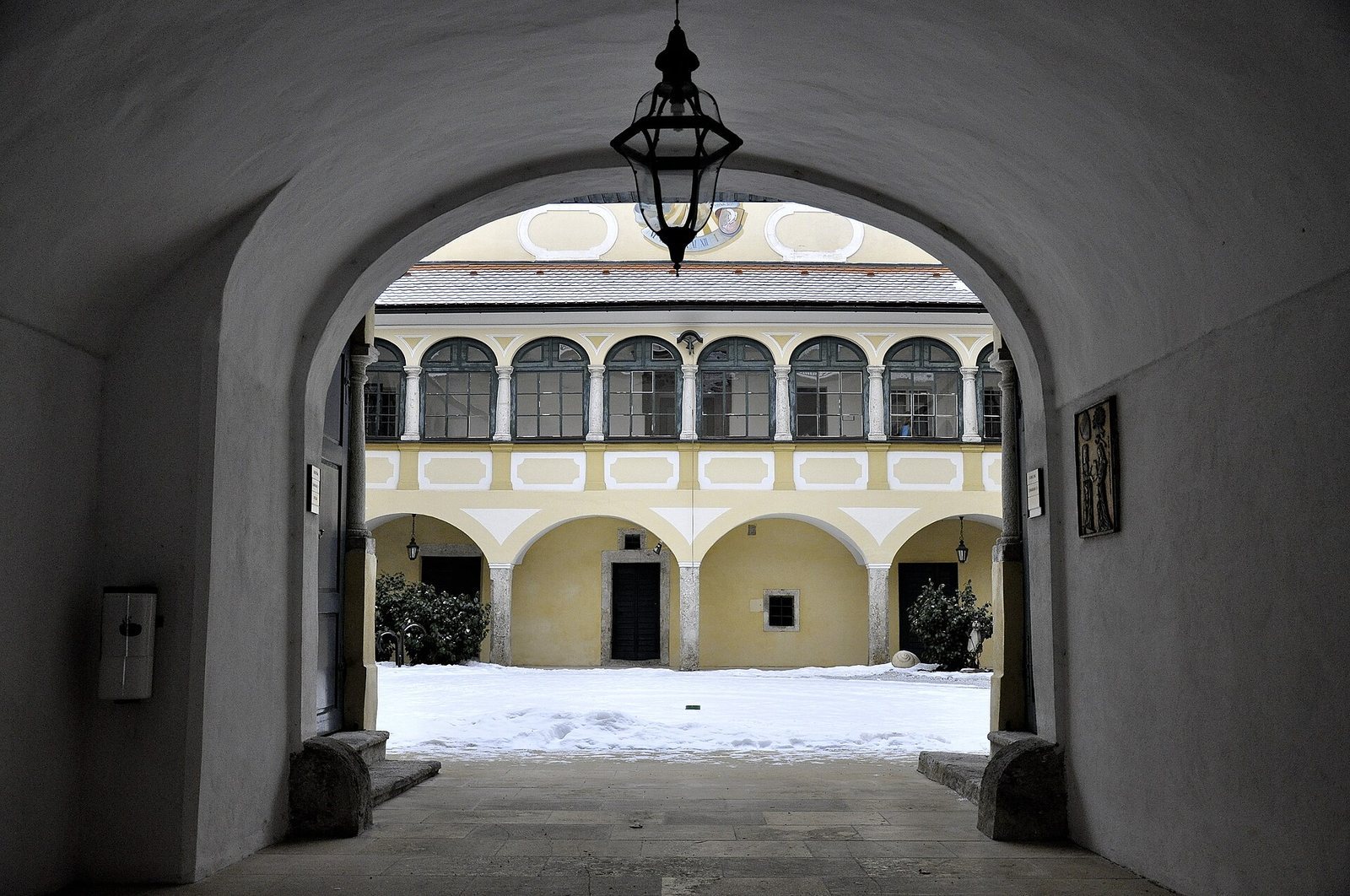
An access path branches from the Kremsmünster–Bad Hall road to the gatehouse, while an avenue leads to the crosswing in front of the main castle. A low wall joins one side of the crosswing and a higher wall the other; the latter contains a wrought-iron gate into the park. Above the entrance is Anton Wolfradt’s coat of arms. Wolfradt became Prince-Archbishop of Vienna, a senior church leader with princely rank, in 1631. A vaulted passage runs through the gate to a small square before the castle, where a fountain depicts a hunter blowing a hunting horn beside a dog.
Main castle and courtyard
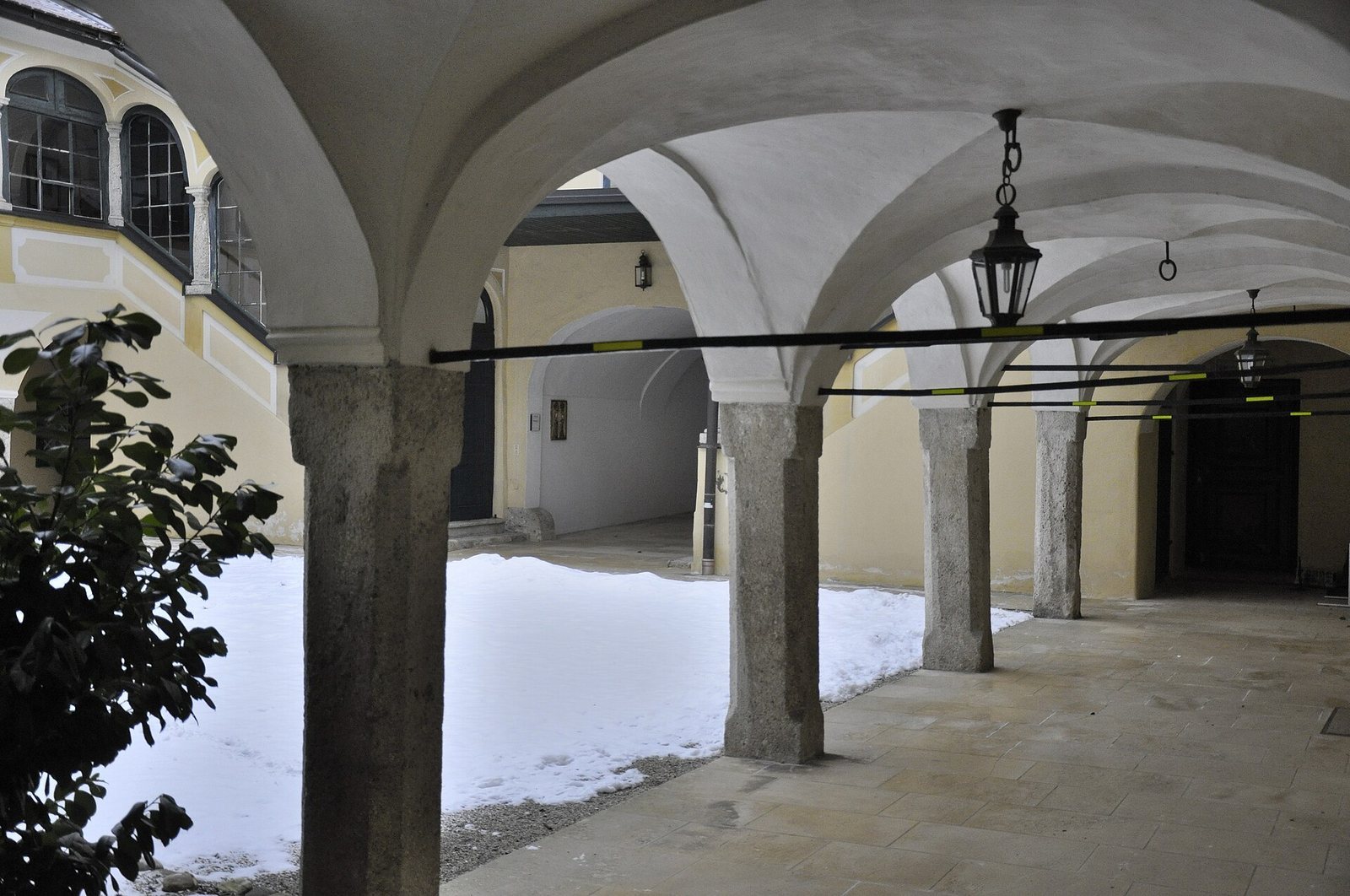
A massive central projection forms the castle entrance. It is the remnant of a tower demolished in 1803. Within the quadrangle, arcades, covered walkways formed by repeated arches, have glazing on the first floor. Stairways rise to the arcades on both sides of the entrance gate, and a sundial decorates one side of the courtyard.
Former museum collections
The former museum held more than 1,200 brass instruments, including rare and historically notable wind instruments from around the world. Its piano collection was presented in restored, playable condition, and its holdings also included a collection of horns.