Osteiner Hof: A Baroque Palace and Government Seat in Mainz
Site at a Glance
- Popularity
- Medium
- Country
- Germany
- Primary era
- Early Modern
- Eras represented
- Early Modern, Modern
- Civilizations
- Electorate of Mainz, Holy Roman Empire
- Site type
- Domestic
- Remains
- Palace
On this page9 sections
History
Construction and the Ostein family
The Osteiner Hof is a Baroque urban palace in Mainz, Germany, built from 1747 to 1752. Architect Johann Valentin Thoman designed it for Franz Wolfgang Damian von Ostein, a senior administrative official in Electoral Mainz. The project was financed by Franz Wolfgang’s brother, Prince-Elector Johann Friedrich Karl von Ostein. A prince-elector was entitled to take part in choosing the Holy Roman Emperor, and Mainz’s elector also held ecclesiastical authority.
From 1743, Johann Friedrich Karl also commissioned the nearby Bassenheimer Hof for his widowed sister, Maria Antonetta, Countess Waldbott von Bassenheim. He financed both palaces and planned two fountains to make the Thiermarkt, now Schillerplatz, a forecourt to the family residences. The more elaborate fountain proposal did not proceed after his death in 1763.
Government and military uses
After French revolutionary forces occupied the left bank of the Rhine, Mainz became the capital of the French Department of Mont-Tonnerre (Donnersberg) in 1798, under prefect Jeanbon St. André. As clergy and nobles were expropriated and fled, the Osteiner Hof passed into public ownership. It continued to serve as a government seat after the Napoleonic period.
When Wilhelm I was governor of Mainz from 1854 to 1859, the palace acquired the local nickname Gouvernement, meaning “government.” At the beginning of the Franco-Prussian War of 1870–1871, it served as the headquarters of Prince Friedrich Karl Nikolaus of Prussia. In 1914, General Hugo von Kathen announced the outbreak of the First World War to Mainz’s population from the central balcony.
Nazi administration and wartime damage
The palace became an important center of Nazi administration from 1933 to 1936. Mainz transferred it to the Nazi Party on 20 April 1933, but the party moved to the nearby Schönborner Hof several weeks later. The building subsequently housed the leadership of the SS and SA, Nazi organizations. From 1937, the Wehrmacht, Nazi Germany’s armed forces, used it as the city command.
Air raids on Mainz during the Second World War left the palace completely burned out. At the initiative of the French occupying power, it was restored in 1947–1948.
Postwar use and public traditions
The Bundeswehr used the Osteiner Hof from 1958 to 2014 as a barracks and officers’ mess, and the building served as its garrison command until 31 March 2014. It is owned by the Federal Agency for Real Estate and has provided space for young artists since military use ended. Each year on 11 November at 11:11, the opening of Mainz’s carnival season, Mainzer Fastnacht, is proclaimed from the palace balcony.
Remains
Plan and position
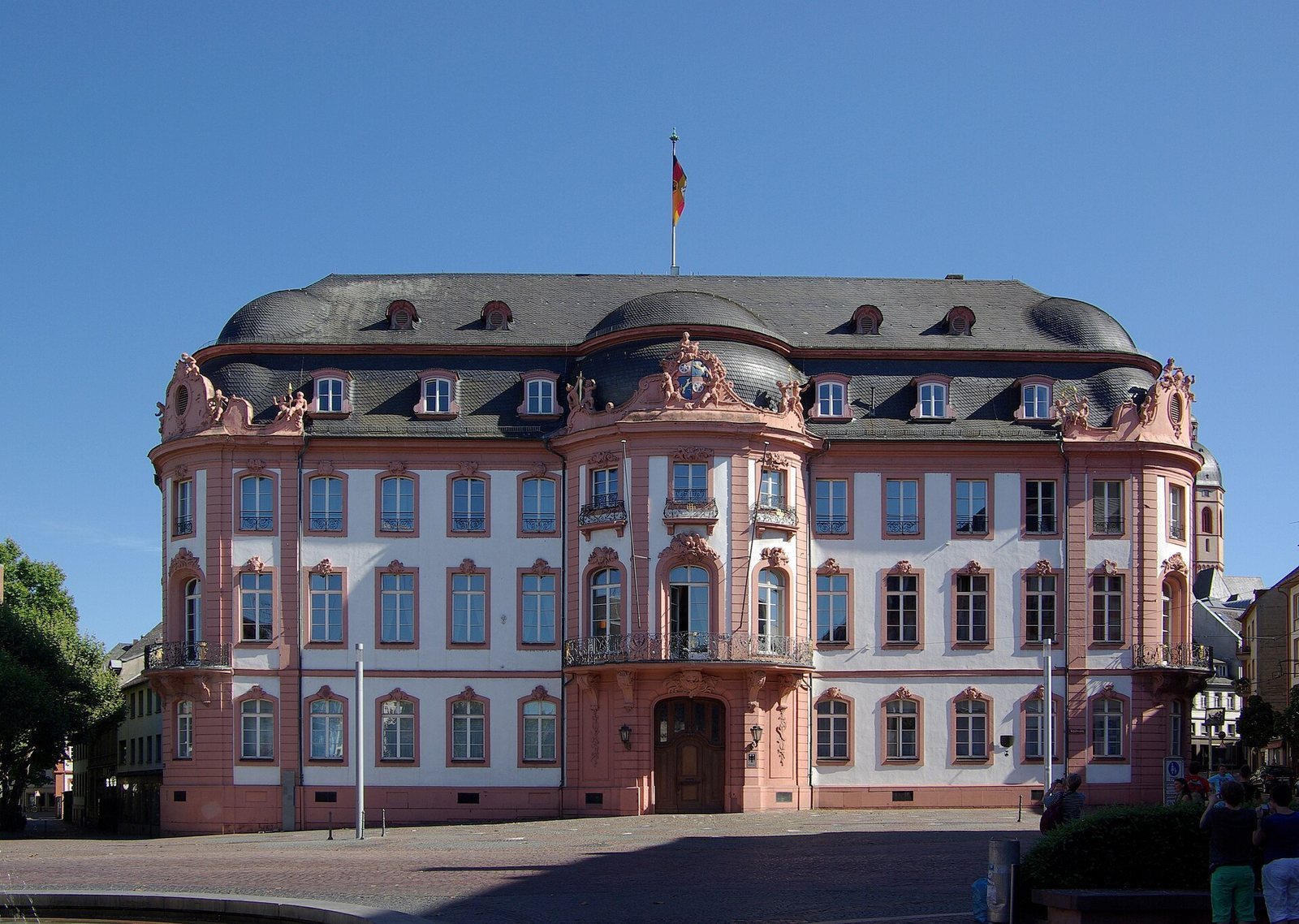
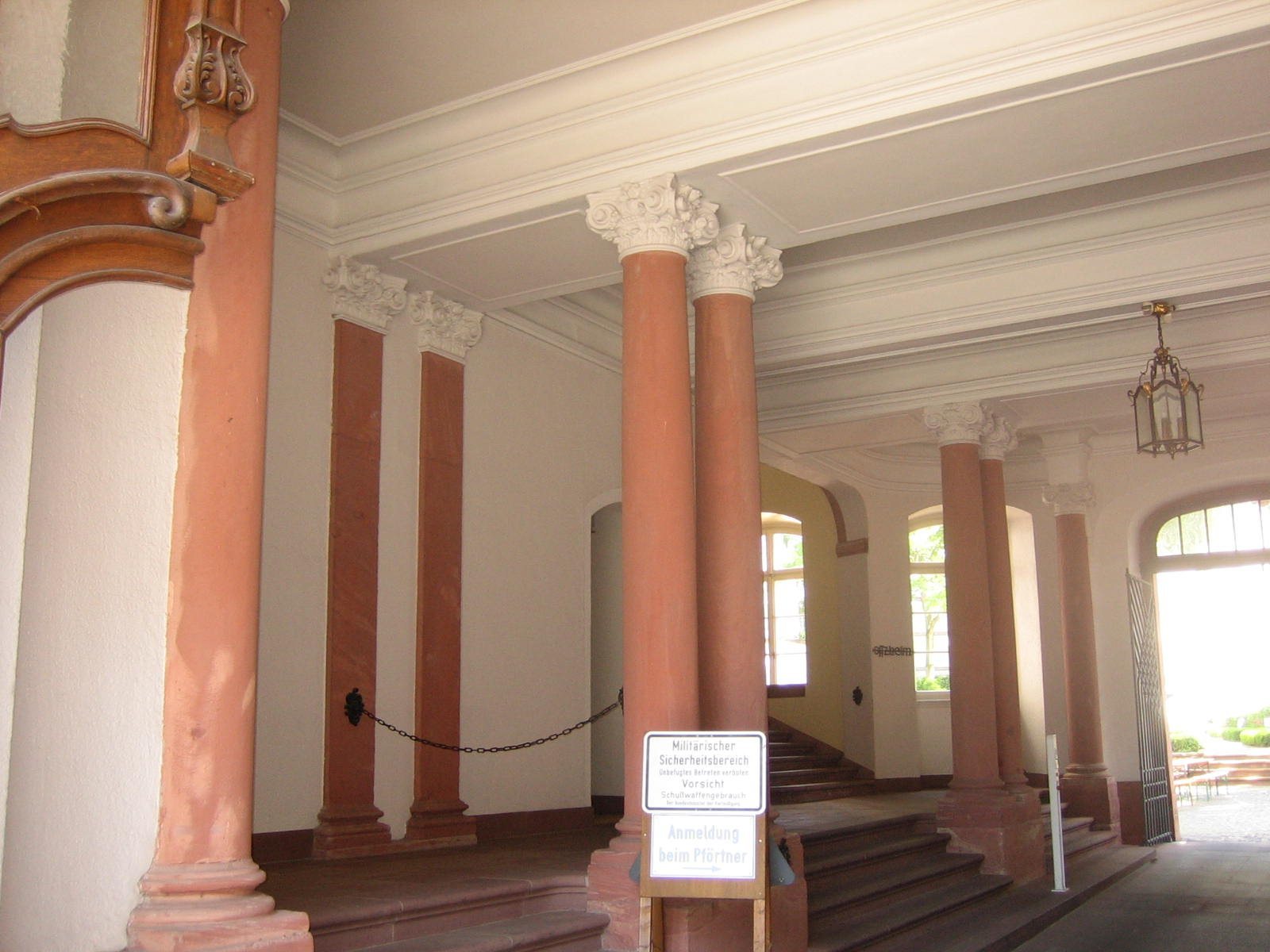
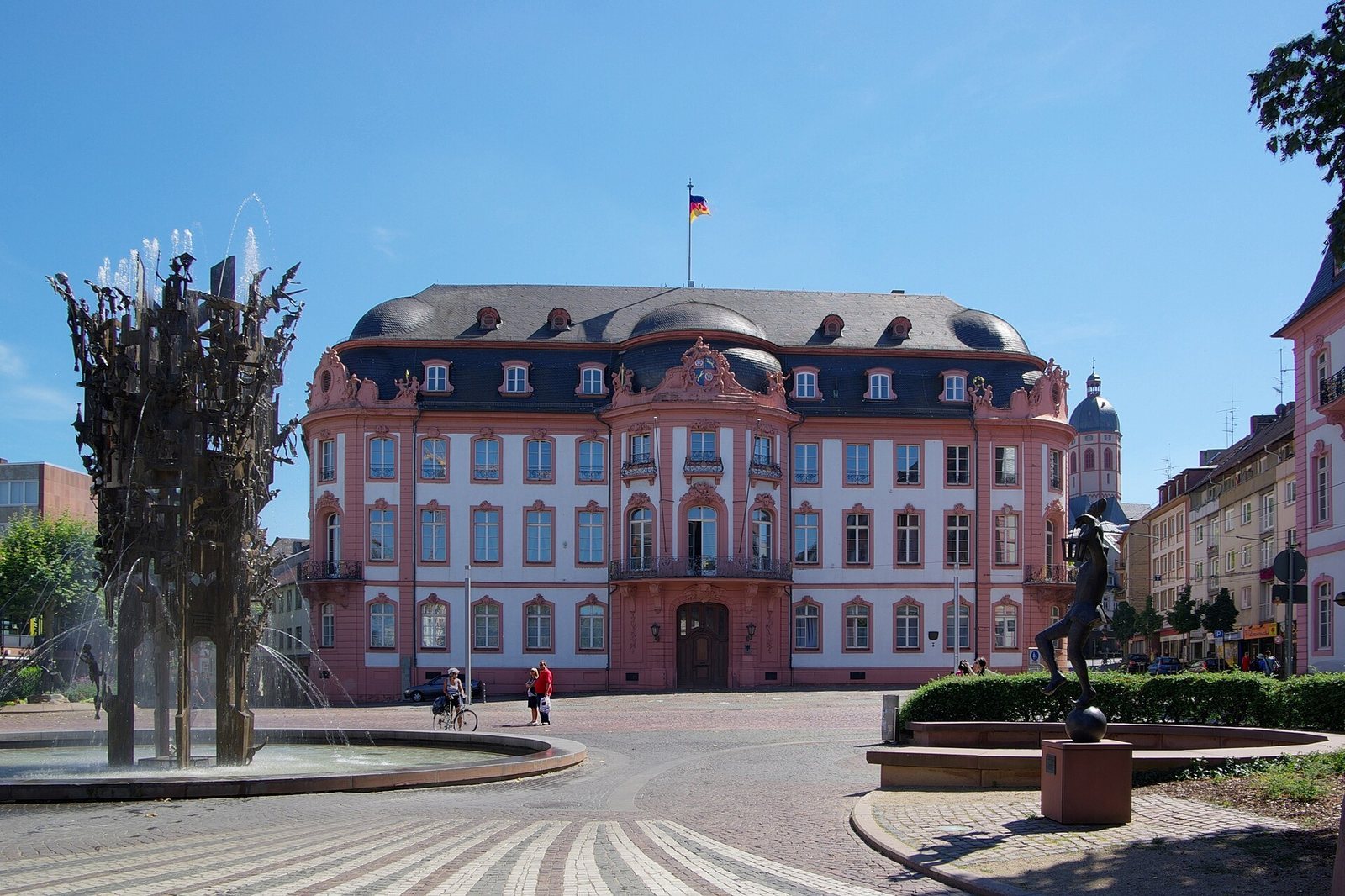
The three-wing palace forms the southern end of the former Thiermarkt, now Schillerplatz, which was lined with aristocratic residences. Set between two streets, its U-shaped plan gives it an almost freestanding appearance. Three outward-curving sections shape the building’s fronts. The central projection surrounds the carriage entrance and an elongated oval ballroom, while the two side projections mark the entrances to streets branching away from the square. This unusual arrangement and the oval rooms draw on designs by Thoman’s teacher and foster father, Maximilian von Welsch, for the Würzburg Residence.
Facades and decoration
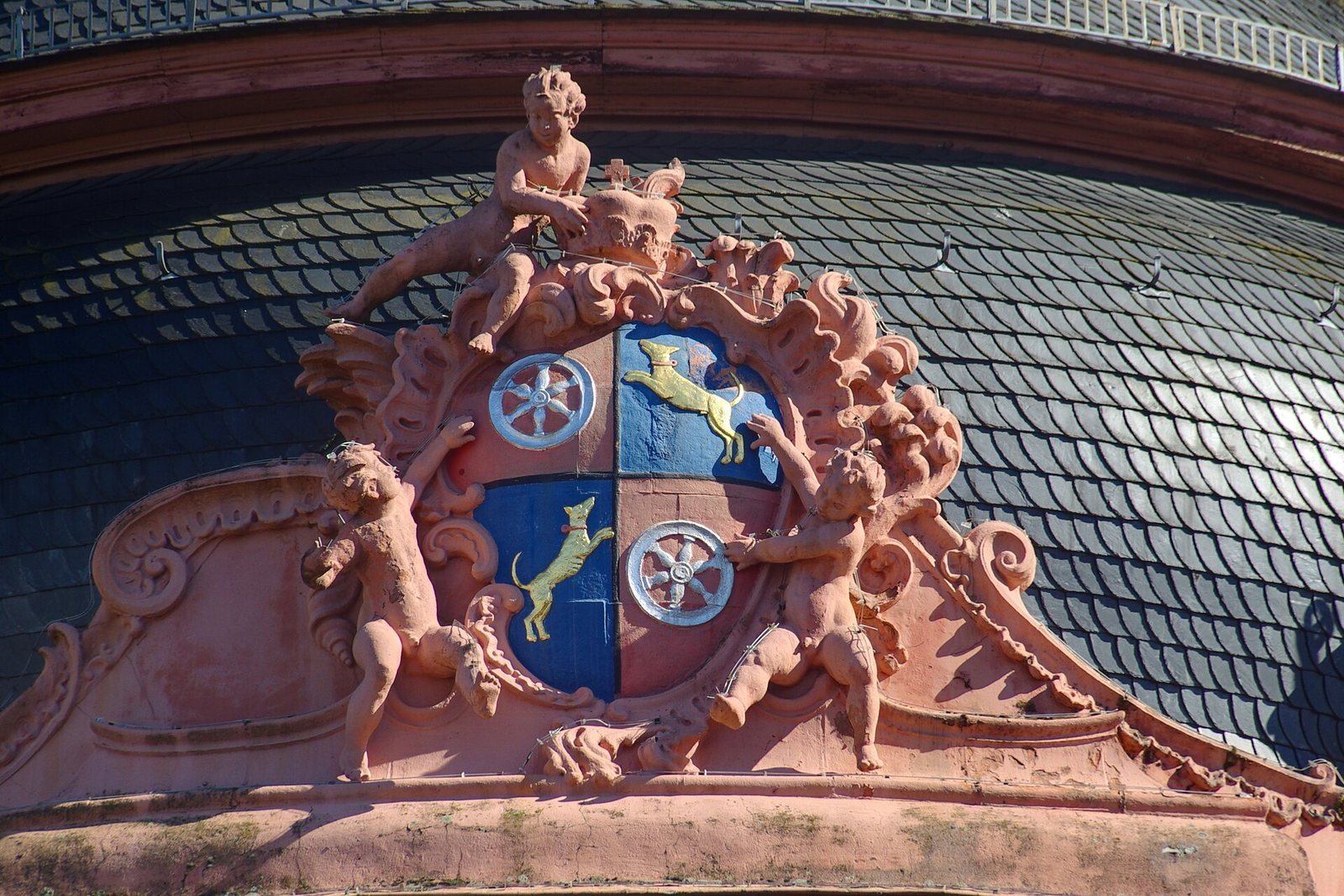
The gables above the projecting sections carry childlike decorative figures and framed heraldic panels topped by an elector’s hat. The quartered arms combine the Ostein greyhound with the wheel of Mainz. Ornamental panels in the Rococo style frame the windows. Above the balcony doors are symbols of earth, air, and water, alongside figures of Diana, the Roman goddess of hunting, and Mars, the god of war. Reliefs of musical instruments decorate both side walls of the carriage entrance, and an upper-storey bay projects from the palace’s southern corner.
Adjacent buildings and fountains
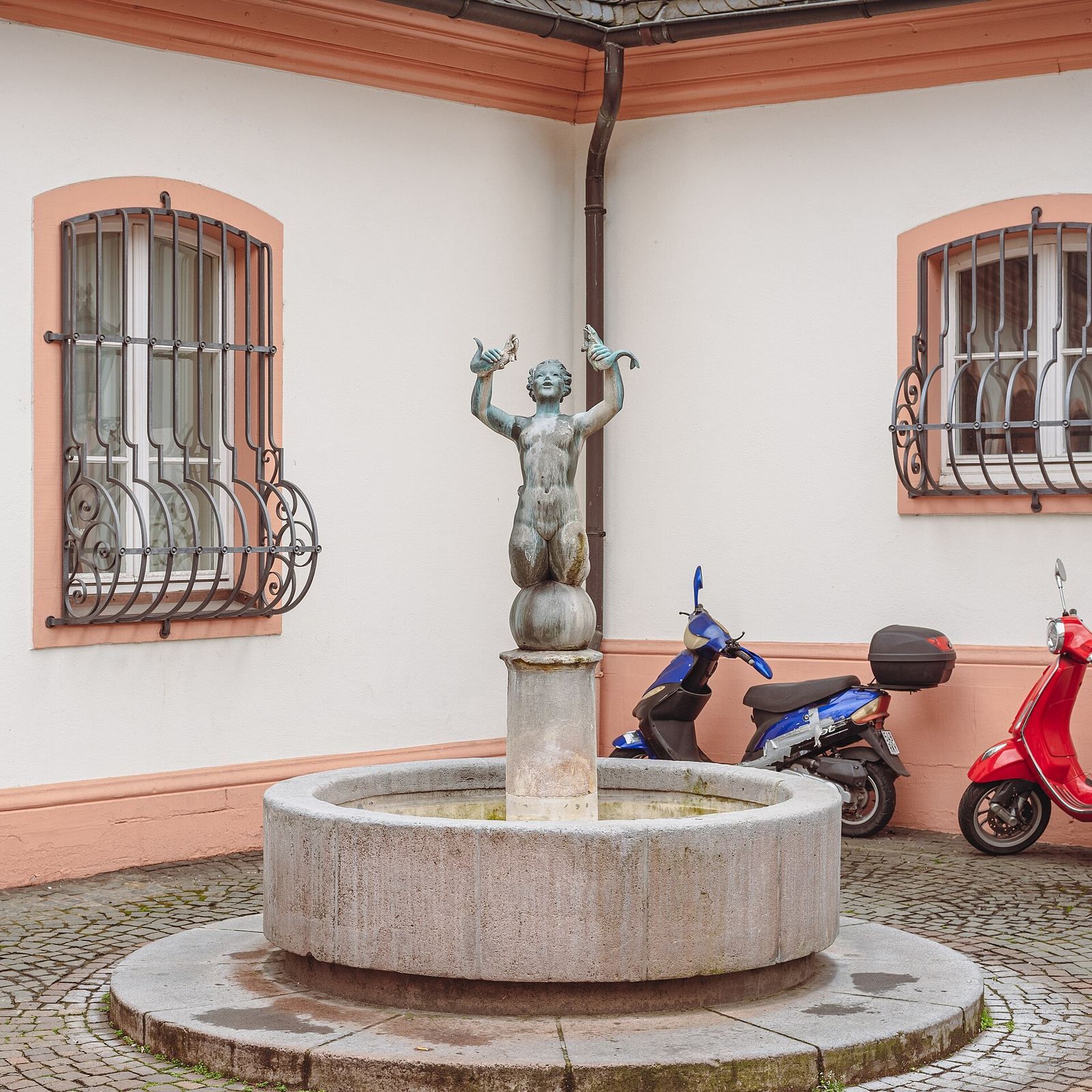
The Bassenheimer Hof stands directly beside the Osteiner Hof at a right angle. At the palace’s southern entrance is the Fischweiberbrunnen, whose sculpture was made by Elsa Montag, purchased by the city of Mainz in 1943, and installed beside Gaustraße in 1950. A carnival fountain also stands in front of the palace.