Dale Fort: A Coastal Artillery Fort in Pembrokeshire
Site at a Glance
- Popularity
- Medium
- Country
- United Kingdom
- Primary era
- Modern
- Eras represented
- Modern
- Civilizations
- British
- Site type
- Military
- Remains
- Fort
On this page12 sections
History
Construction and coastal defence
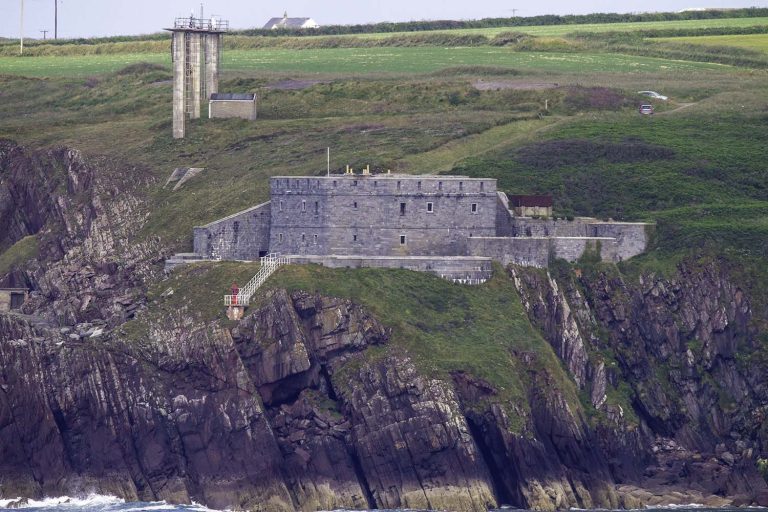
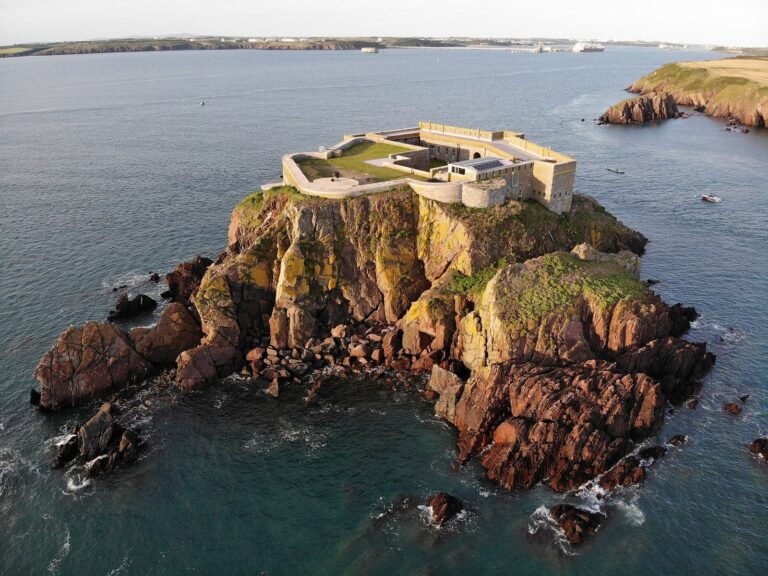
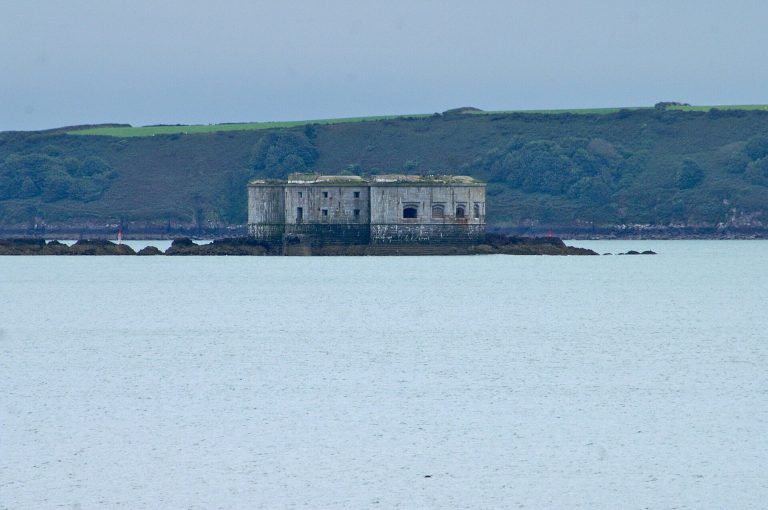
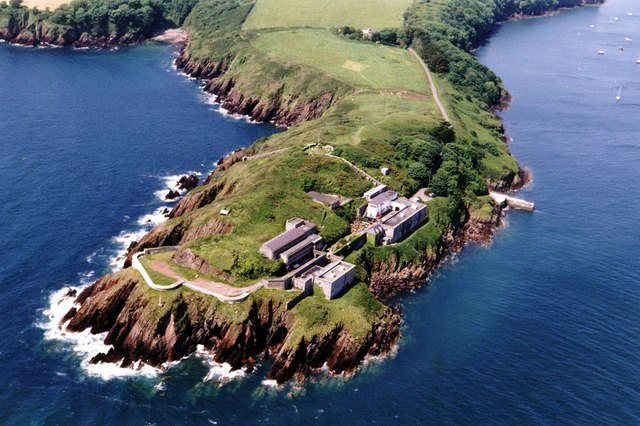
Dale Fort is a mid-nineteenth-century coastal artillery fort on Dale Head in Pembrokeshire, United Kingdom. Built around 1851 to 1856 and completed by 1858, it was intended to defend the anchorage at the entrance to Milford Haven. Its guns were to work in coordination with those at Thorn Island and West Blockhouse, creating overlapping fire across the approach.
A battery at the site had been proposed in 1829. The present fort followed a recommendation made in 1850 by Sir John Fox Burgoyne, a British military engineer then serving as Inspector-General of Fortifications. In 1876, a proposal to fit the fort with larger, more modern guns was not implemented.
Weapons trials, private use and wartime service
During the 1890s the fort was used to test Edmund Zalinski’s pneumatic dynamite gun, which used compressed air to fire its projectile. The design was not adopted.
In 1902, Lieutenant-Colonel A. Owen-Evans of the Royal Engineers, the British Army’s military engineering corps, bought the fort and made it a family home. It passed to new owners after his death in 1925. During the Second World War, the Admiralty requisitioned the fort as a degaussing and mine-watching station. Degaussing reduces a vessel’s magnetic signature, helping protect it from magnetic mines. The fort was returned to its owner after the war.
Use as a field studies centre
The West Wales Field Society acquired the fort in 1946 and leased it that August to the Council for the Promotion of Field Studies. The Wardens of Skokholm initially worked from the site. In 1959, the Field Studies Council, as the former council was renamed, took ownership and began operating Dale Fort as a field studies centre.
Remains
Layout and surviving structures
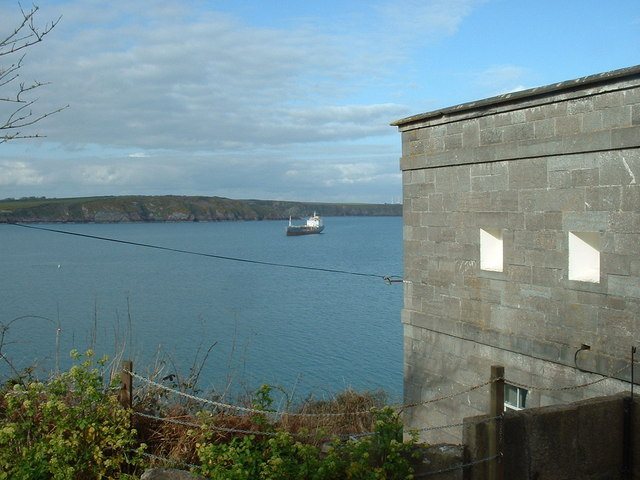
The stone-built fort occupies the eastern end of a rocky promontory. A ditch cut through the rock crosses the promontory and slopes down to the shore on both sides, separating the fort from the landward approach. The fort survives as a complete work, with its entrance and defensive buildings on the western side and its gun battery at the eastern end.
Landward defences
A wall with openings for small arms runs along the western side. At its centre, a D-shaped bastion, or projecting defensive position, contains openings through which three guns could fire.
Entrance building
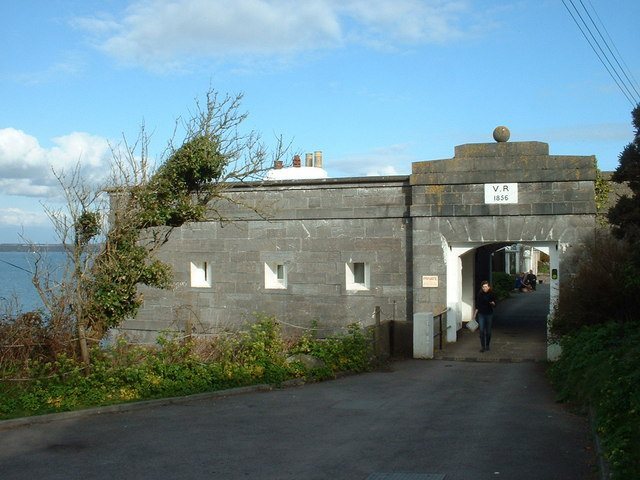
The defensible building in the northwest corner has three ranges. Its central range faces the ditch and contains guardrooms. The main entrance passes through this range, reached by a bridge across the ditch. The northern range provided barracks for ordinary soldiers, while the southern range held storerooms.
Northern buildings
The officers’ quarters and main ammunition magazine lie along the northern edge. A modern accommodation building stands above the magazine.
Eastern gun battery
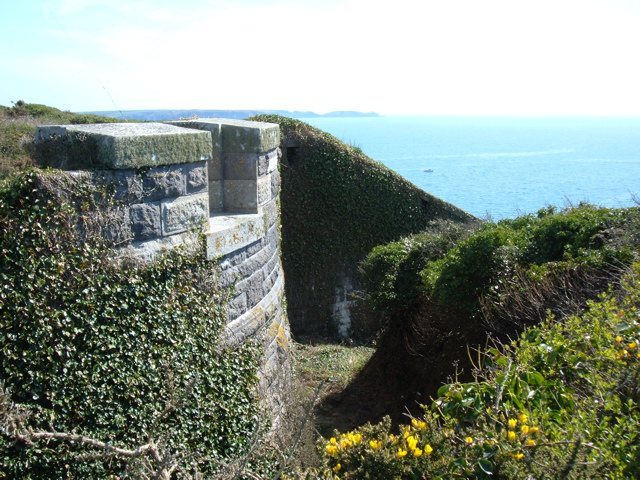
The battery stands on cliffs at the fort’s eastern end, overlooking Milford Haven. It has seven positions designed for 68-pounder guns to fire over a parapet from open positions. The four positions at the southern end sit higher than the other three.
Main gate
An inscription dated 1856 is set into the main gate.
Dynamite-gun position
The position used for the dynamite-gun trials lies toward the north of the fort, near the present dining area.