El-Jamai Palace: A Moroccan Residence and Hotel
Site at a Glance
- Popularity
- Medium
- Country
- Morocco
- Primary era
- Modern
- Eras represented
- Modern
- Civilizations
- Alaouite, French
- Site type
- Domestic
- Remains
- Elite Residence
On this page6 sections
History
El-Jamai Palace is a residence in Fes, Morocco, built in the Moorish-Moroccan style (a broad North African Islamic tradition). Work on its oldest pavilion began in 1879 as the home of Muhammad Ibn al-Arabi al-Jami’i, a senior minister to Sultan Moulay Hassan I, who ruled from 1873 to 1894. The palace later became a luxury hotel.
Residence and political reversal
The Jamai family also built and owned Dar Jamai in Meknes around the same period. After Abd al-Aziz succeeded Moulay Hassan I in 1894, the family lost favor at court. The grand vizier and the minister of war, both members of the family, were imprisoned in Tetouan, and the state confiscated the family’s property. The family later recovered it.
Conversion into a hotel
The palace was converted for luxury-hotel use in 1919. Architect Edmond Gourdain expanded it in 1927. Two years later, the Compagnie Générale Transatlantique, a French shipping company, acquired the property through a subsidiary and adapted it for tourists on North African tours. Negotiations had begun in 1923 and involved about forty heirs. The last five delayed signing for four years, and the transfer also required women living in the palace, who had refused to leave, to depart.
Financial difficulties at the Transat company led to the hotel’s sale to the Compagnie des chemins de fer du Maroc (CFM) in 1931. Morocco’s National Office of Railways (ONCF), the national railway operator, was established in 1963 through the acquisition of three railway concessions, including the one held by CFM, which owned the palace. In 1998, ONCF leased hotel management to the Accor group for twenty years. Accor operated the property under the Sofitel brand, and the hotel closed in 2014.
Remains
Palace grounds and buildings
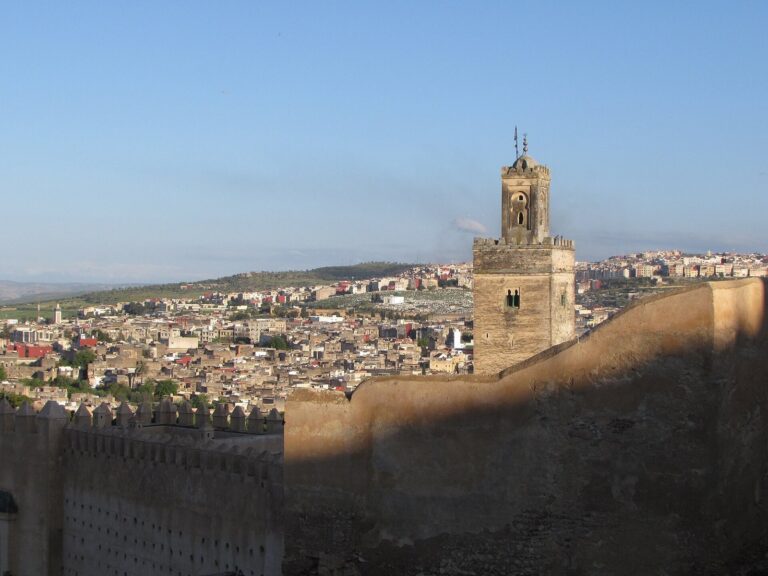
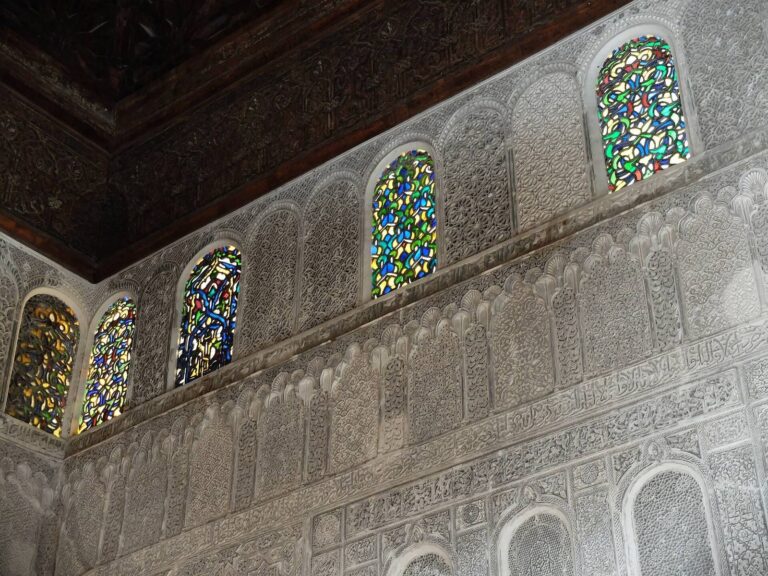
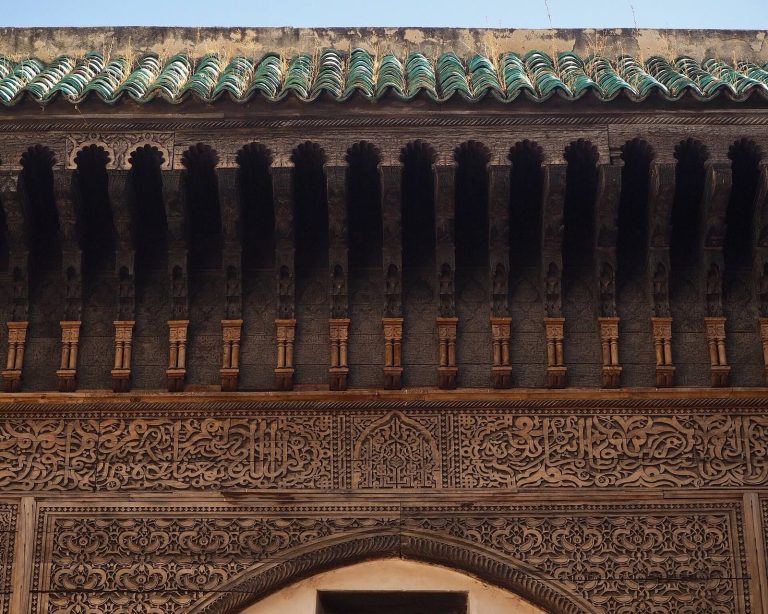
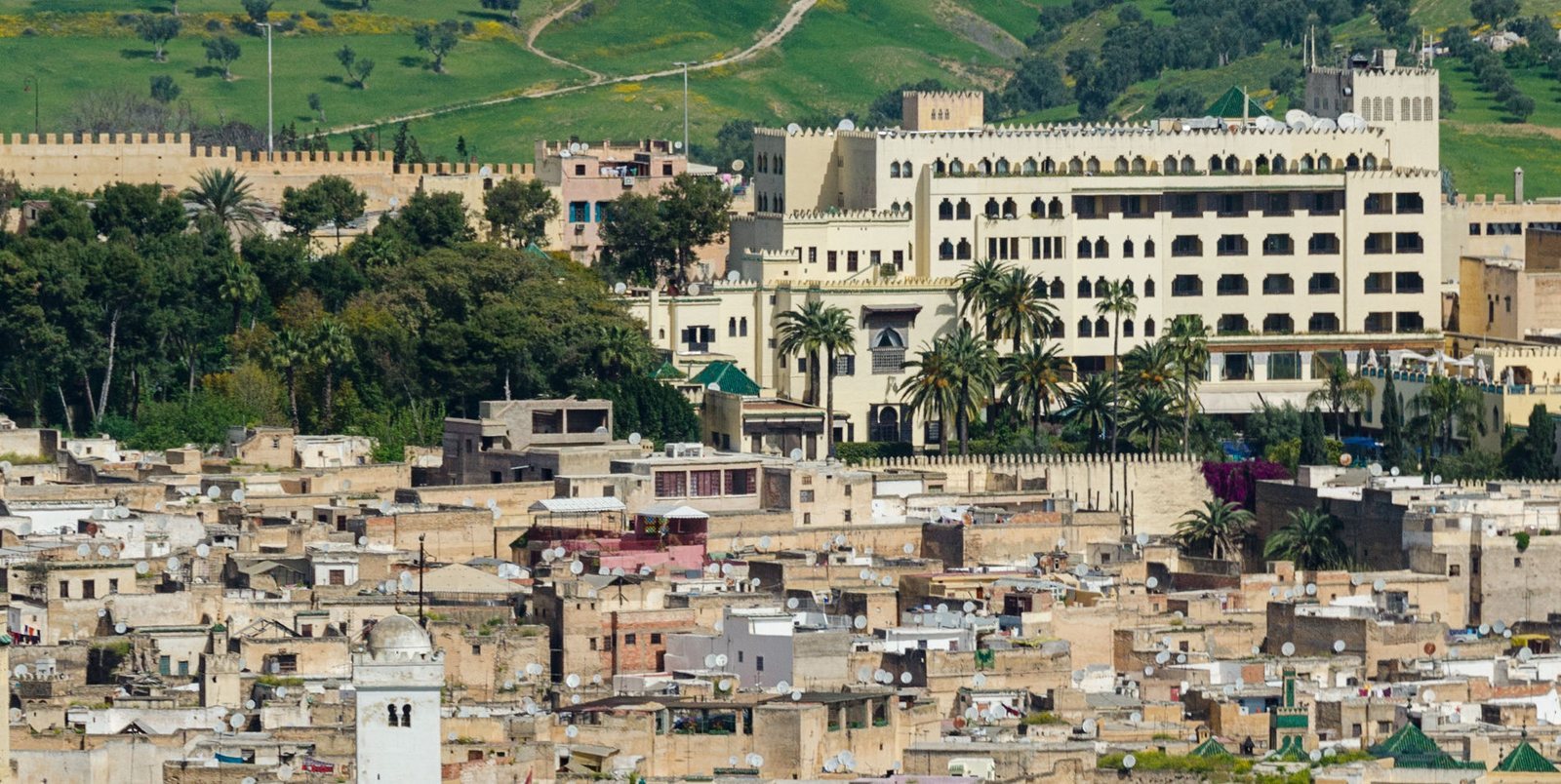
The palace stands on a hill near Bab Guissa, the northern gate of Fes el-Bali, and overlooks much of the city. Its grounds combine the original pavilion with later hotel construction. Carved stucco and zellij, decorative mosaic tilework, ornament the older building, which includes a courtyard, a salon, rooms, and a principal building. A modern, five-storey hotel wing was added in the early 1970s. Later expansions changed the grounds while continuing to evoke the original architectural style.
Gardens and fountains
Extensive gardens, partly surrounding the palace, follow Moroccan traditions and the riad plan, an arrangement organized around an interior courtyard. Traditional fountains decorated with zellij form part of the gardens, including an especially ornate wall fountain.