Ospedale Bonifacio: A Florentine Hospital and Charity Institution
Site at a Glance
- Popularity
- Medium
- Country
- Italy
- Primary era
- Early Modern
- Eras represented
- Early Modern, Modern
- Civilizations
- Grand Duchy of Tuscany, Italian
- Site type
- Civic
- Remains
- Hospital
On this page12 sections
History
Foundation and growth
Ospedale Bonifacio was a hospital in Florence, Italy, founded in 1377 by the Florentine military commander Bonifacio Lupi to care for sick people and provide for the spiritual welfare of his family. Permission to build was granted on 23 December, and work began in a house provided by Lupi’s friend Francesco di Cino Rinuccini. Rinuccini had bought the property for 300 florins from Franceschino di Tano del Bene. Lupi invested 26,000 florins, obtained exemption from local duties, and endowed the hospital with an annual income of 700 florins. After Lupi’s death, his wife, Caterina Franzesi, left all her property to the institution.
Dedicated to Saint John the Baptist, the hospital was in operation by 1388. In 1386 Pope Urban VI granted a religious privilege to people who prayed in its church on the saint’s feast day, 24 June, and gave alms toward completing the charitable building. As the institution expanded, it absorbed the Camaldolese convent of Santa Maria a Querceto, the hospital of San Michele Arcangelo, and the Broccardi hospital, founded in 1329 by Michele di Croce Broccardi. Bonifacio became one of Florence’s four leading hospitals, alongside Santa Maria Nuova, Lemmo, and San Giovanni di Dio.
Hospital care in the seventeenth and eighteenth centuries
At first, separate wards for men and women provided 34 beds in total. Between 1623 and 1650, superintendent Giovanbattista Bonaiuti arranged for a new women’s ward to be built. The hospital took in people suffering from plague during the epidemics of 1630 and 1633; the young prince Ferdinando was among those who attended to them. In 1649, when financially troubled Santa Maria Nuova sought to merge the two institutions, Bonaiuti resisted the proposal because Bonifacio was then prosperous.
By 1734, annual revenue of about 13,000 scudi, a historical currency, supported 92 beds. Women occupied 51 beds and received care from 40 oblates, people formally dedicated to religious service. The men’s wards had five attendants and four clerks. The staff also included two chaplains, four physicians, two surgeons, an apothecary with two assistants, a treasurer, and a superintendent.
In 1736 Grand Duke Gian Gastone de’ Medici changed the hospital into an institution for poor and infirm people who could not support themselves, with the aim of preparing them for a trade. He placed it under the Congregation of Saint John the Baptist, a religious body devoted to that saint. To maintain the hospital’s charitable purpose, its administrators had to support a set number of patients in two other Florentine hospitals. Twenty-four poor women were admitted initially; men could later enter if they had been born in Florence or had lived there for at least six years. Until 1776, twelve deputies managed the institution with 24 oblates. By 1782, a female oblate order was also among its staff.
Medical care, mental health, and later use
Grand Duke Pietro Leopoldo of Lorraine restored the hospital’s medical role in 1785. People with mental illnesses were transferred from Santa Dorotea and other institutions, while disabled patients came from San Paolo. Bonifacio operated under the administration of Santa Maria Nuova and reopened in 1787 as the Hospital of Charity for People with Mental Illnesses. The reorganization also brought the former Broccardi hospice and revenues from several dissolved convents under Santa Maria Nuova. It provided for separate care of people with incurable illnesses, mental illnesses, scabies, and ringworm.
In the late eighteenth century, physician Vincenzo Chiarugi promoted treating mental illness as a medical condition rather than a misfortune. A commemorative inscription dates to 19 May 1788 the establishment at Bonifacio of what it calls the first civil organization for public assistance to people with mental illnesses. Chiarugi continued to work at the hospital in the early nineteenth century. Professor Francesco Bini directed it from 1843 to 1885, a period of major expansion. Until the end of the nineteenth century, Florentines used “going to Bonifazio” as a euphemism for becoming mentally ill. Later, “going to the red roofs,” referring to the new asylum at San Salvi, took its place. “Going to Bini” also became a saying, referring to the hospital’s director.
At the end of the nineteenth century, patients with mental illnesses moved to San Salvi, and Bonifacio began serving people with chronic illnesses. New avenues laid out while Florence was Italy’s capital, followed by later road schemes including Via Zara, progressively reduced the hospital grounds. In 1924, the remaining residents went to the new hospital at Careggi or, if disabled, to the Pia Casa di Lavoro, a charitable workhouse at Montedomini. Most of the remaining property was sold and divided into separate parcels, apart from the part of the building that included the portico.
In 1901, the building entered Italy’s national list of monumental buildings considered part of the country’s artistic heritage. The Province of Florence bought it in 1928 for the Tuscan education authority. After extensive restructuring in 1930, it became the city’s police headquarters in December 1938. Restoration followed in 1981–83, and in 1996 the interior staircase was restored and the main façade maintained.
Remains
Plan and surviving architecture
Hospital grounds
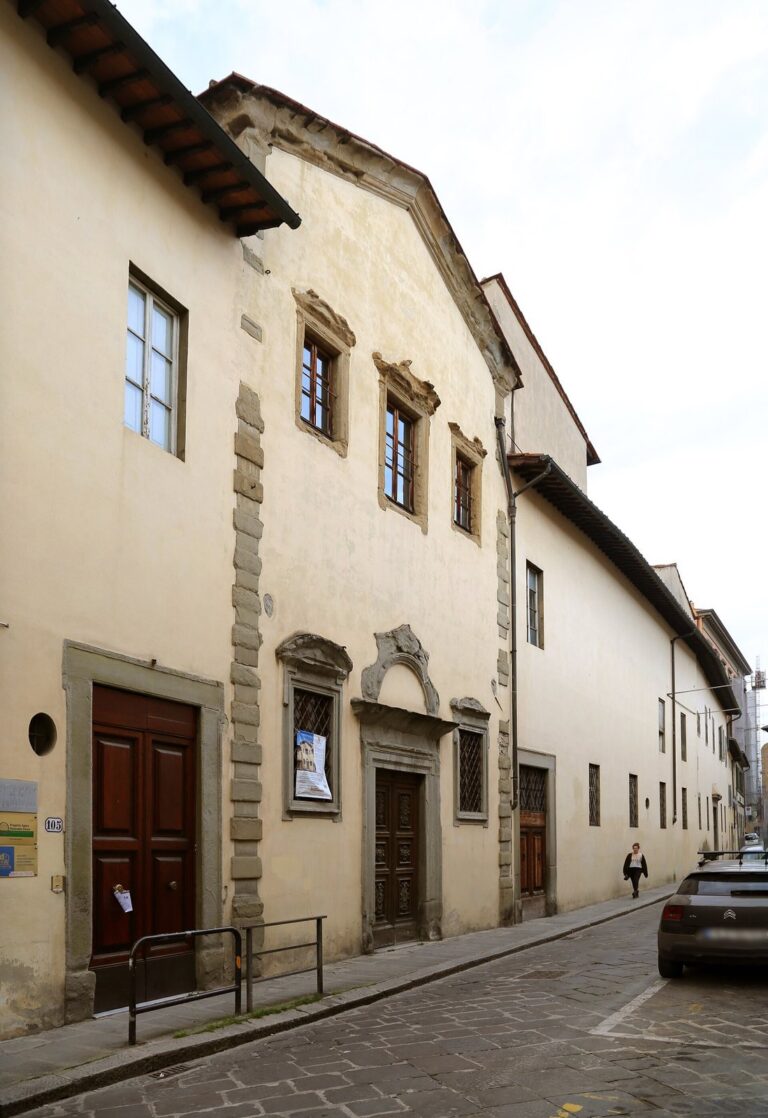
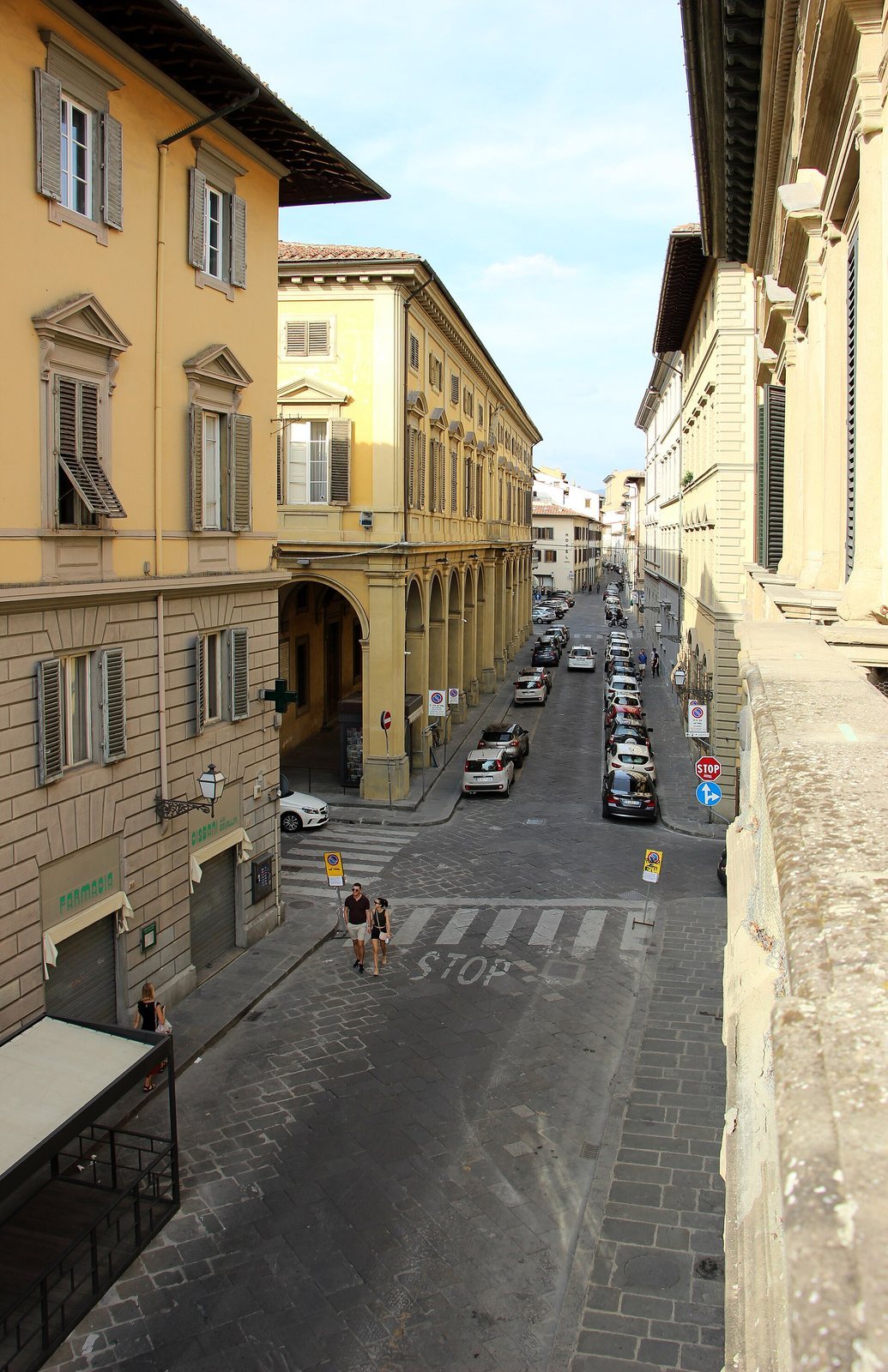
The hospital complex once occupied a whole city block, and at its greatest extent ran for a continuous stretch along Via San Gallo on both sides of the portico. It was more than twice the size of the present complex. Gardens and cultivated land extended toward Via Santa Caterina d’Alessandria, where the mortuary chapel of San Giuseppino stood, and toward the present Viale Spartaco Lavagnini. The grounds also included the church and cloister of Santa Luca, the Ceppo monastery, and the hospital of the Incurables, also known as the Santissima Trinità. Parts of the area now occupied by Via Bonifazio Lupi, Via Zara, and Via Duca d’Aosta had belonged to the hospital.
Portico and main façade
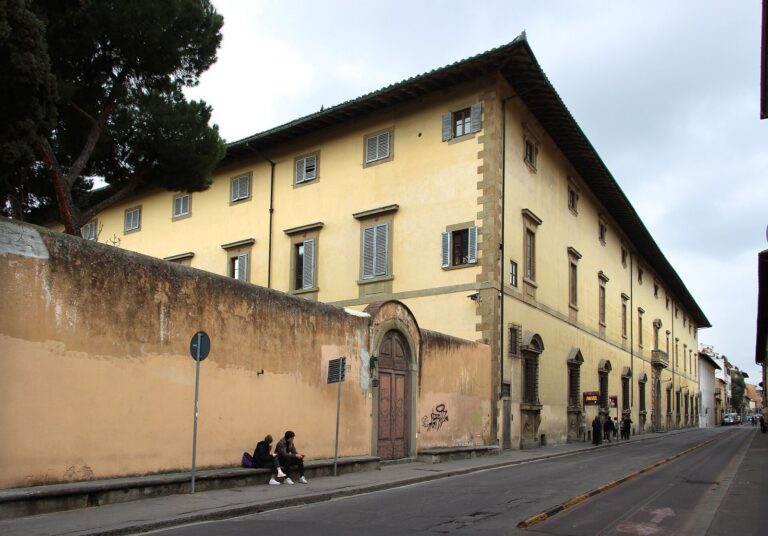
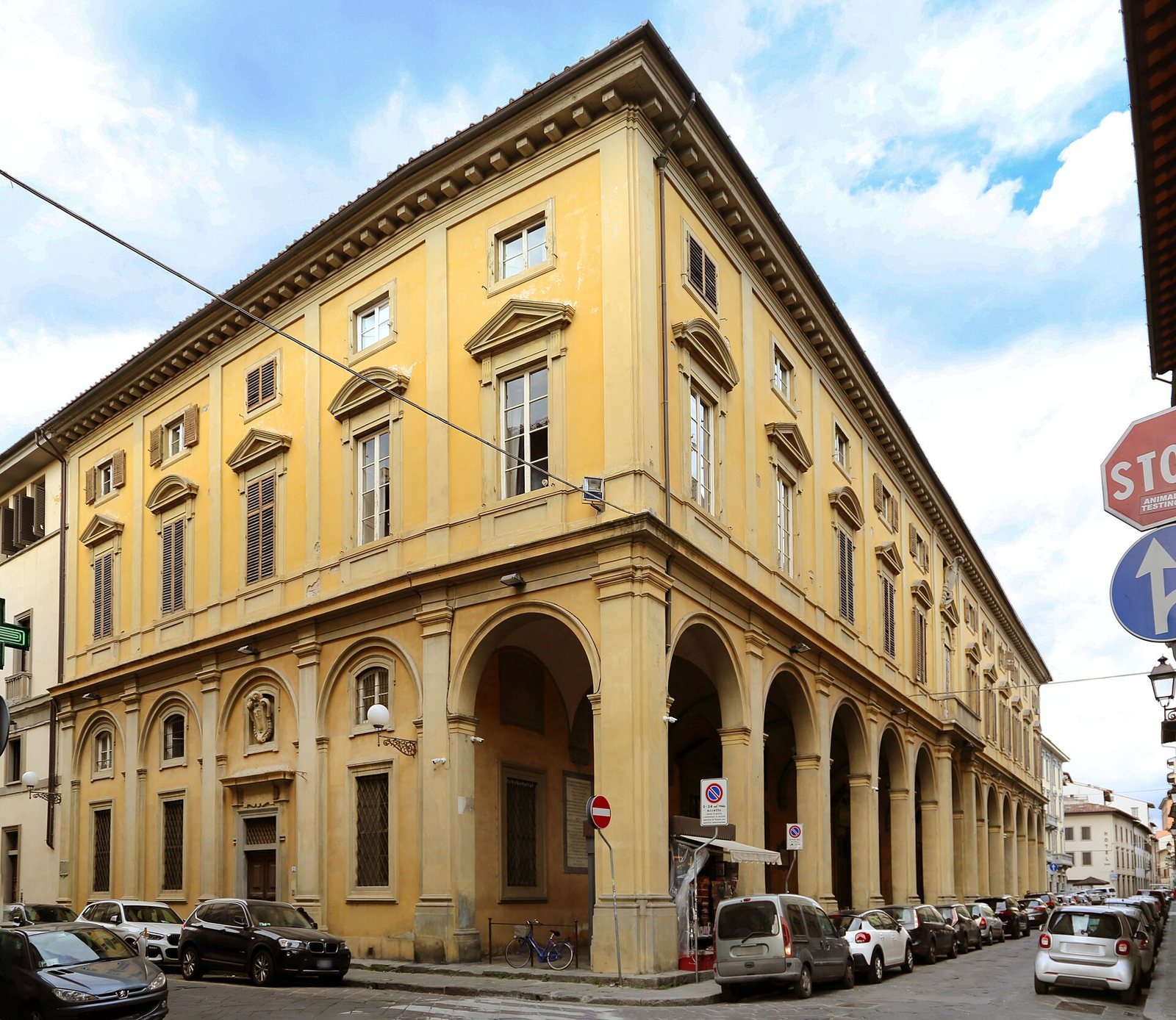
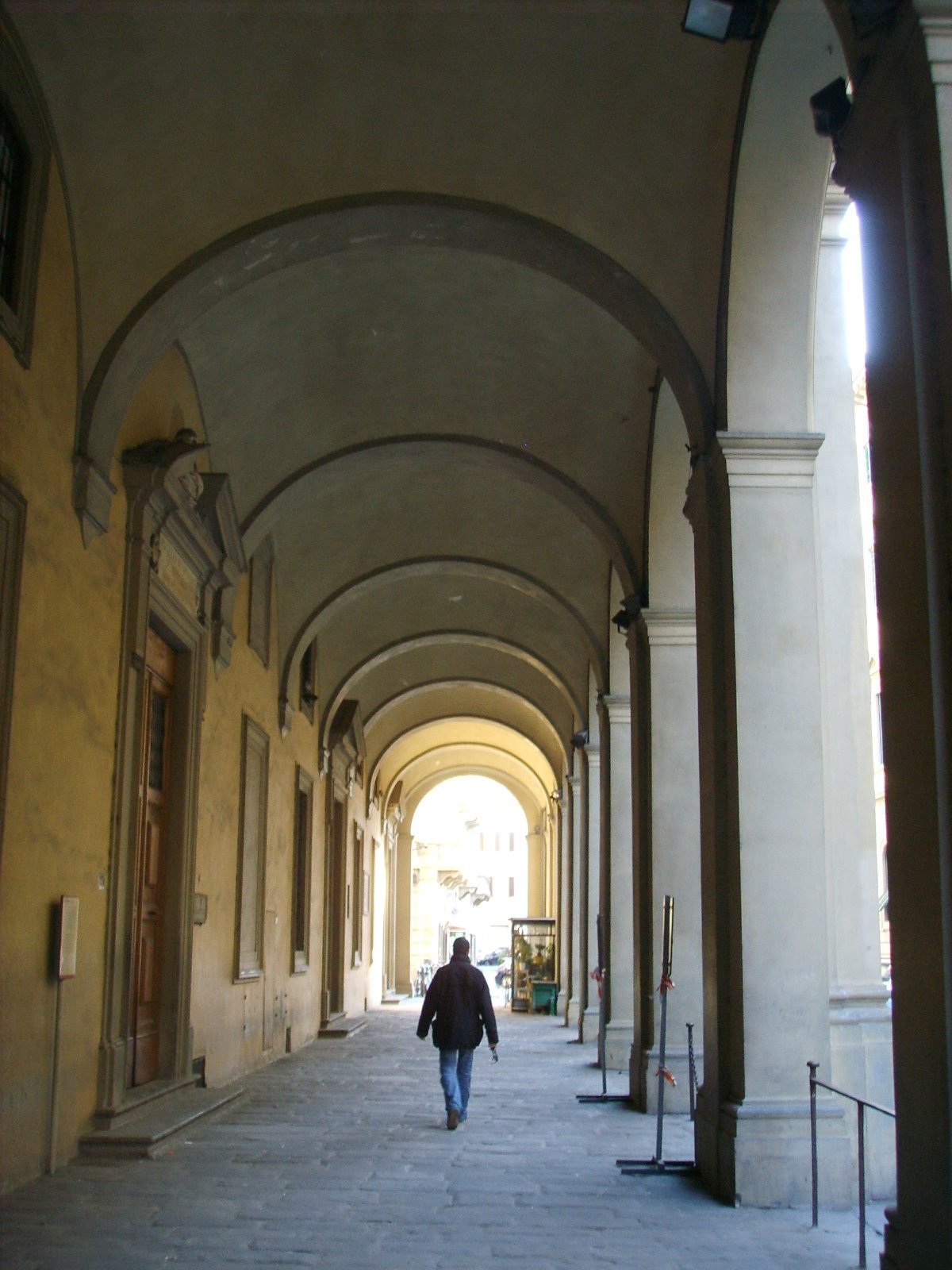
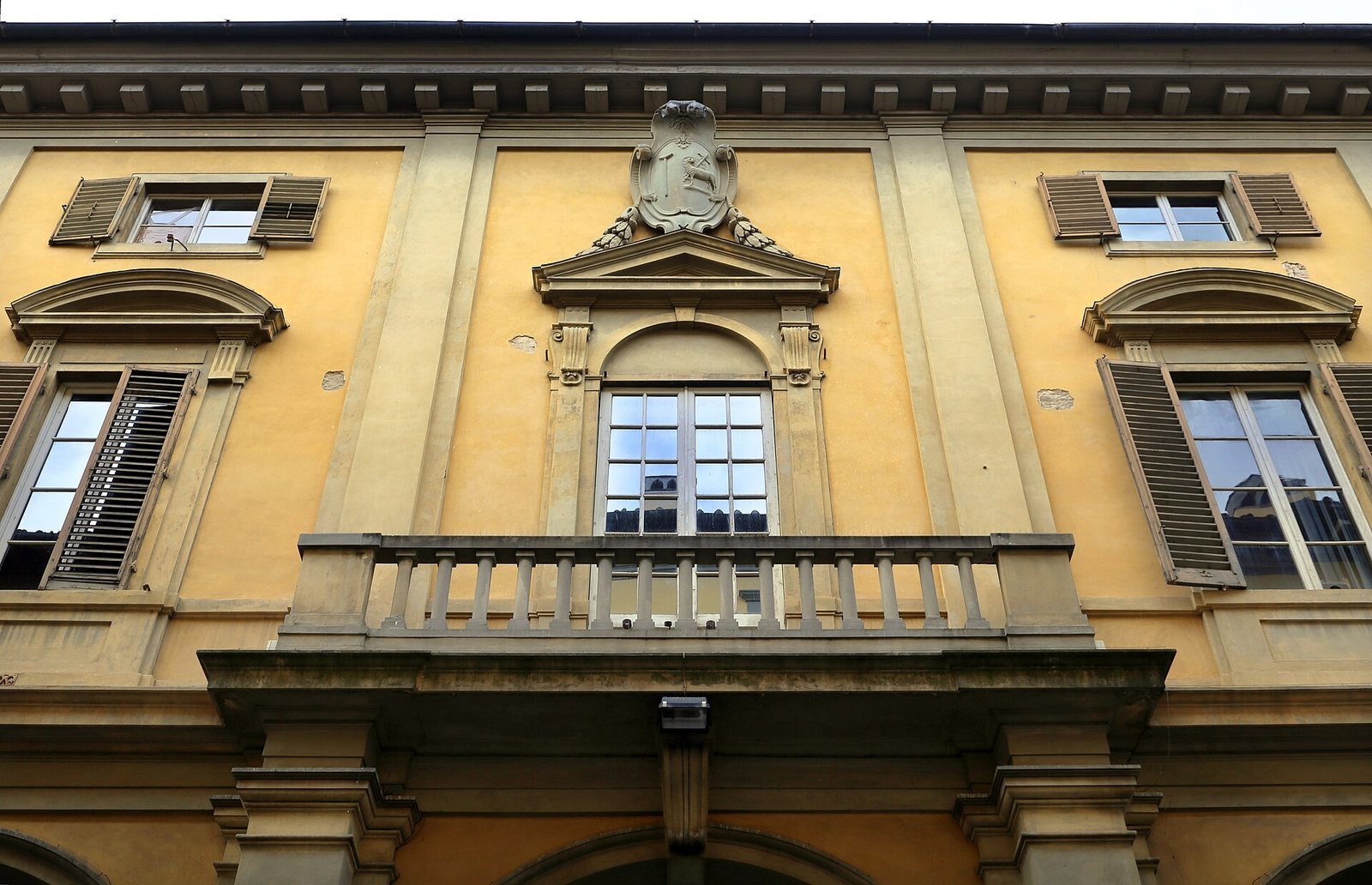
The main façade faces Via San Gallo, between Via Duca d’Aosta and Via Bonifazio Lupi. Its late eighteenth-century design is centered on a portico, a covered entrance walkway supported by piers. Pilasters, shallow projections from the wall, separate the arches and continue above a horizontal band across the façade, framing a long row of windows. Thicker pilasters mark the central arch; a bracket emphasizes its keystone, the central stone at the top of the arch. A projecting balcony and French door reinforce the central line of the façade. The hospital’s emblem featured the Lamb of God bearing a golden cross on a red field. A divided coat of arms representing two hospitals was also placed on the façade.
Former refectory
The former refectory contained a fresco of the Last Supper painted in 1619 by Fabrizio Boschi for prior Leonardo Conti. The work included portraits of Conti and his nephew.
Chapel of Sant’Anna
The hospital’s attached chapel of Sant’Anna was renovated in 1787 by architect Giovan Battista Pieratti. It contained Giovanni Antonio Sogliani’s painting of the Conception of the Virgin, depicting Mary’s conception. The painting was later transferred to the gallery of Santa Maria Nuova.
Inscriptions and commemorative features
Exterior inscriptions
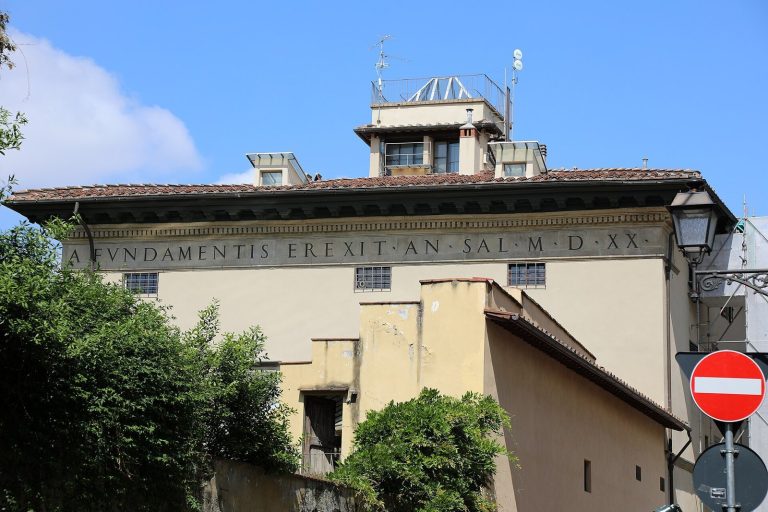
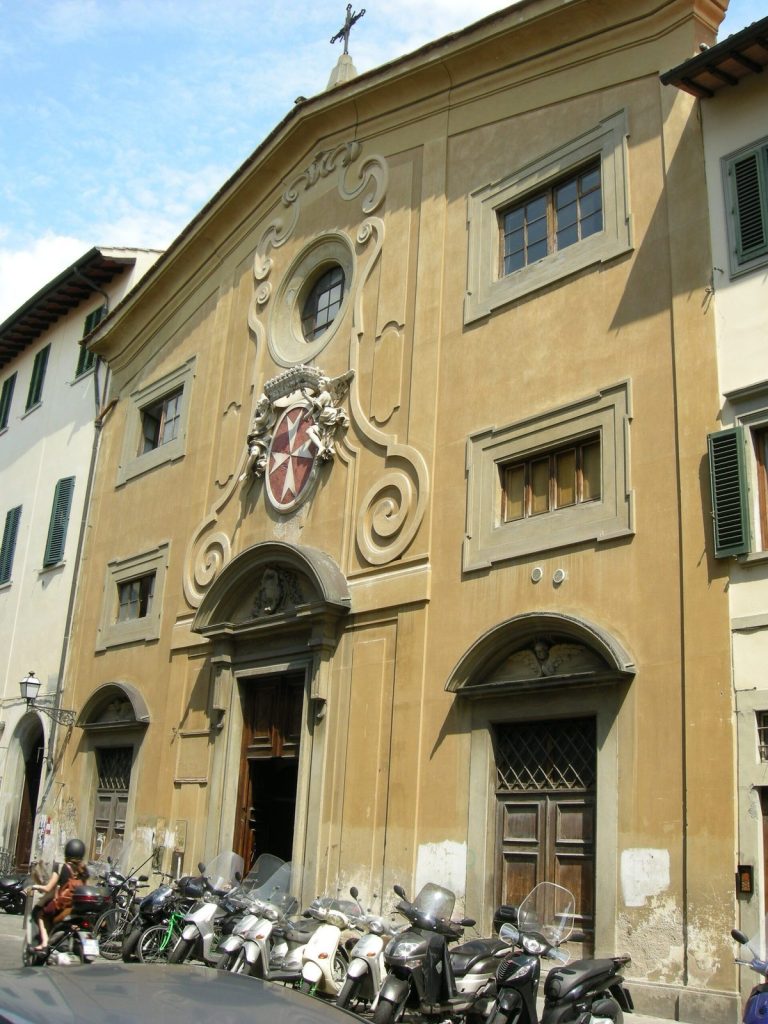
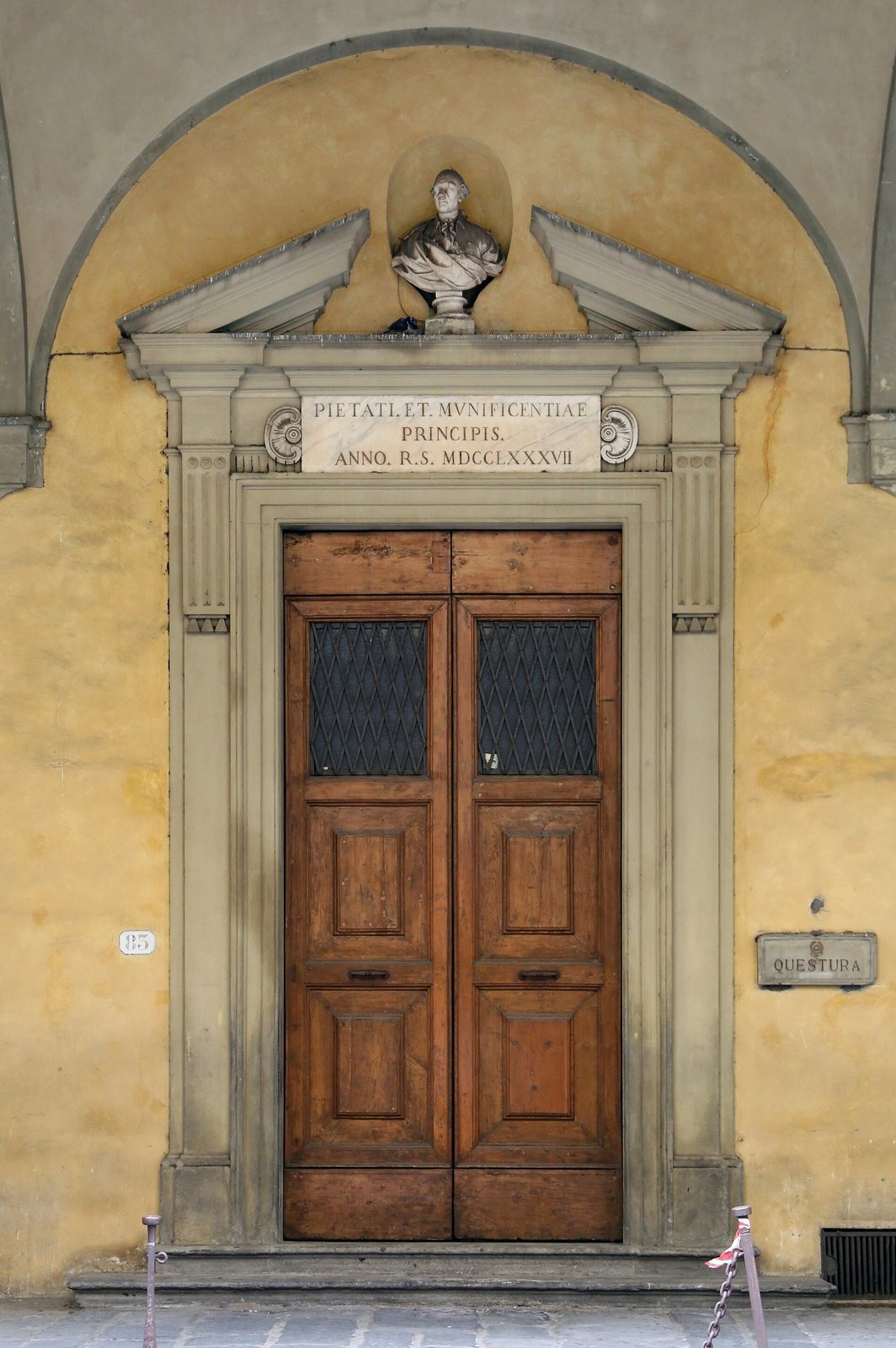
Numerous inscriptions remain on the former hospital’s outer walls. On Via Bonifazio Lupi, one recalls the 1557 flood, which forced the nuns of San Miniato to leave the hospital of Saints Philip and James of the Ceppo for the adjacent Ceppo monastery. It says that they rebuilt a church there in 1558 in honor of the Virgin Mary and Saint Miniato, an early Christian martyr venerated in Florence. Beneath the portico, a plaque dated 1787 and a bust commemorate Pietro Leopoldo. A separate tablet from that year concerns the incorporation of the old Broccardi hospice and arrangements for care at the hospital. Other plaques mark the building’s purchase in 1928 and its later use for public offices, as well as Chiarugi’s association with public assistance for people with mental illnesses.
The part of the former hospital retained within the present police headquarters is the building with the portico. The wider complex was substantially altered, and its façades were redesigned as new streets were laid out.