Casino Mediceo di San Marco: A Medici Urban Villa in Florence
Site at a Glance
- Popularity
- Medium
- Country
- Italy
- Primary era
- Early Modern
- Eras represented
- Early Modern, Modern
- Civilizations
- Grand Duchy of Tuscany, Italian
- Site type
- Domestic
- Remains
- Palace
On this page14 sections
History
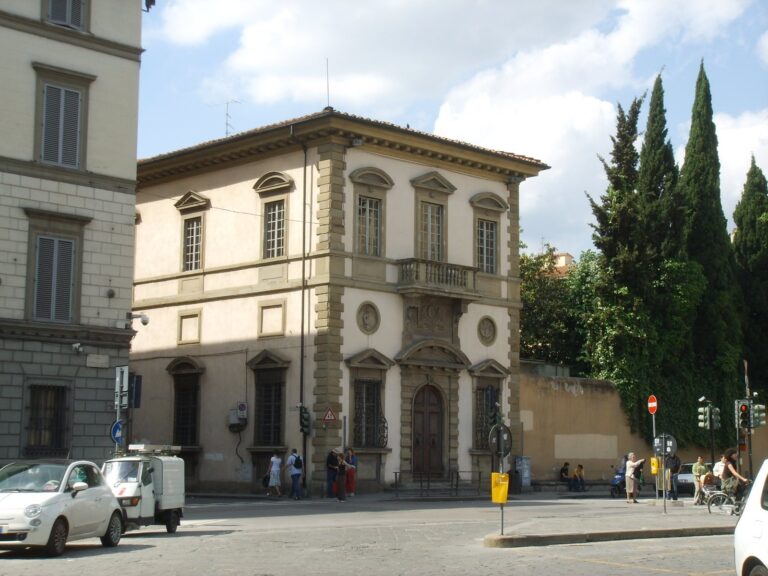
The Casino Mediceo di San Marco is a Mannerist urban villa in Florence, Italy, rebuilt for Francesco I de’ Medici between 1570 and 1574 by architect Bernardo Buontalenti. Planned for both scientific inquiry and leisure, it reflects the Medici family’s patronage of art and learning as well as their interest in experimentation.
Academy and earlier palace
An art school known as the Academy of the Medici Gardens had earlier occupied the site. Founded by Lorenzo de’ Medici, it attracted artists and thinkers including Pico della Mirandola, Lorenzo di Credi, Francesco Granacci, and Michelangelo Buonarroti. In 1494, after Piero de’ Medici was driven from Florence, a villa on the property was plundered.
The first palace was a house with a courtyard and loggia beside the San Marco garden, once owned by Lorenzo. It belonged to Ottaviano de’ Medici, who had obtained the property from the Company of Cloth Weavers. Burdened by heavy debts to the state treasury, Ottaviano sold the palace, which then entered the holdings of Duke Cosimo I.
Francesco I’s urban villa
Francesco I commissioned Buontalenti to rebuild the palace, with work starting in 1570 and finishing in 1574. Its design followed the fashion for the casino, an urban villa with its principal floor at ground level and extensive gardens. Francesco intended the building as both a place for scientific study and experiments and a retreat for leisure.
Buontalenti developed Medici porcelain at the villa, an early European imitation of Chinese porcelain made using a soft-paste composition. The building was also intended to accommodate the Medici foundries.
Don Antonio and the Fonderia
After Francesco’s death in 1587, the property passed to Ferdinando I. The Opificio delle Pietre Dure, a Florentine institution associated with artistic work in hardstone, occupied it briefly in 1588. Ferdinando later granted the palace to Don Antonio de’ Medici in return for his renunciation of dynastic claims. Don Antonio, the son of Francesco and Bianca Cappello, had disputed legitimacy and a possible claim to the grand-ducal throne. He moved into the palace in 1597 and ordered improvements to its interiors and garden. These changes also helped assert his standing as head of the family after the death of his brother Cosimo II created a power vacuum.
Don Antonio established a research cabinet known as the Fonderia, which drew scholars interested in experimental and occult sciences. Its substantial library on these subjects later became part of the National Central Library of Florence. He also maintained the garden, adding statues, fountains, and grottoes, and arranged a small private theatre.
Cardinal Carlo’s residence
After Don Antonio’s death, the palace passed to Cardinal Carlo de’ Medici in 1623. Carlo sponsored building work designed by Gherardo Silvani and a decorative fresco cycle begun in autumn 1621 and completed in July 1623. The painters included Anastasio Fontebuoni, Michelangelo Cinganelli, Fabrizio Boschi, Matteo Rosselli, and Ottavio Vannini.
Carlo kept a large library and more than 300 paintings in the palace. The collection included works by Titian and Andrea del Sarto, as well as paintings acquired between 1621 and 1624 by artists such as Giovanni Lanfranco, Guido Reni, and Francesco Curradi.
From warehouse to public institutions
After Cardinal Carlo’s death, Cosimo III removed the palace’s furnishings and used the deteriorating building as a warehouse. During the Lorraine period it was restored, first for use as a barracks for the Noble Guard, until 1846, and later for customs offices. Alterations followed in 1804 under Giuseppe Del Rosso and in 1815 under Luigi de Cambray Digny.
When Florence served as Italy’s capital from 1865 to 1871, the palace was adapted for the Ministry of Finance. Later work prepared it for the General Directorate of State Property and Taxes. Dividing its former large rooms into smaller spaces changed the interior arrangement, while much of the building’s structure remained intact. The complex appeared on Italy’s 1901 national list of monumental buildings considered part of the country’s artistic heritage.
Twentieth-century repairs included work on the ground-floor window stonework, portal, and terrace in 1906, followed by restoration of the façade in 1911 and further façade and stonework interventions between 1939 and 1942. A structural check of the frescoed ground-floor vaults took place in 1962, and roof work followed in 1970–1971. The building later housed the Court of Appeal and Florence’s Public Prosecutor’s Office. After the new courthouse opened in Novoli in 2012, it became the home of the Florence School of Transnational Governance, part of the European University Institute, and continues in that institutional use.
Remains
Layout and exterior
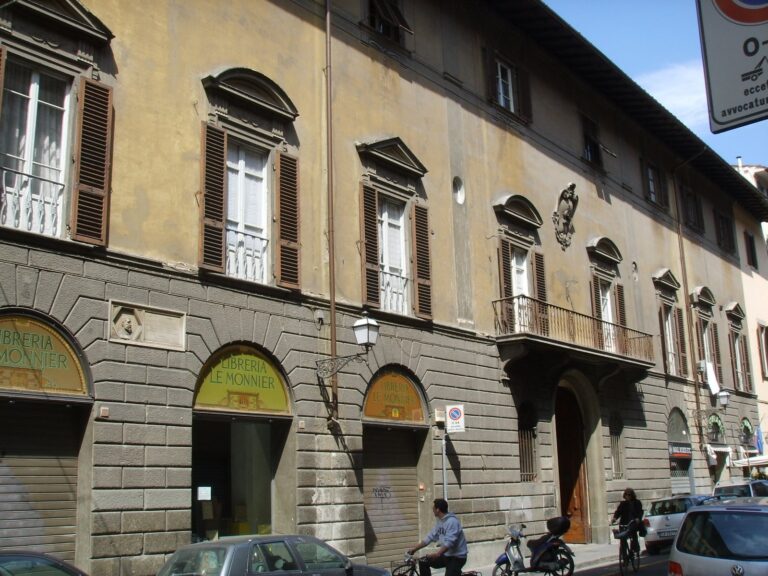
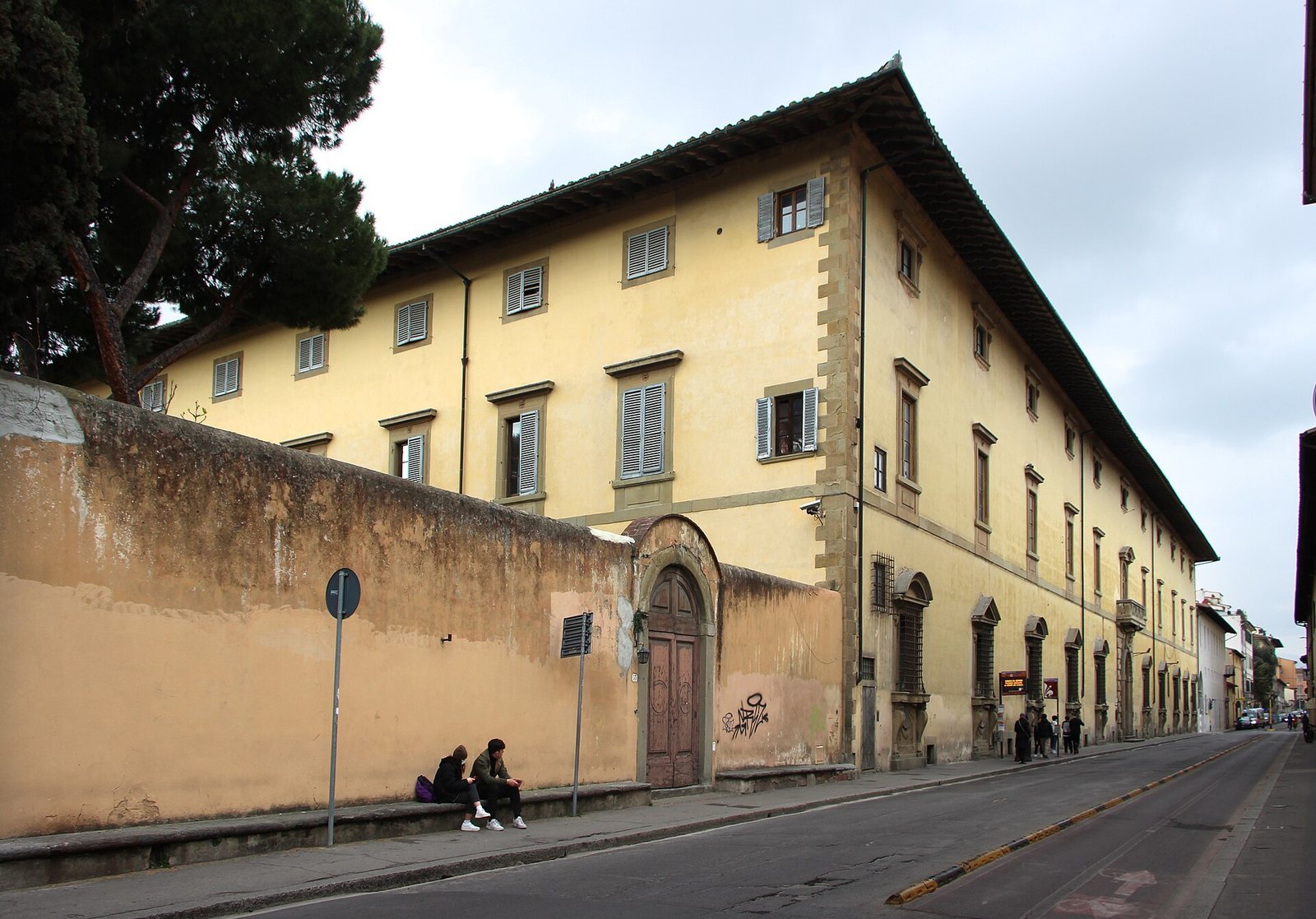
The three-storey palace was designed as an urban villa, with its principal floor at ground level. Its Mannerist design uses a rustic style associated with country villas. The exterior combines a restrained, plastered façade with elaborate sculptural details.
Façade
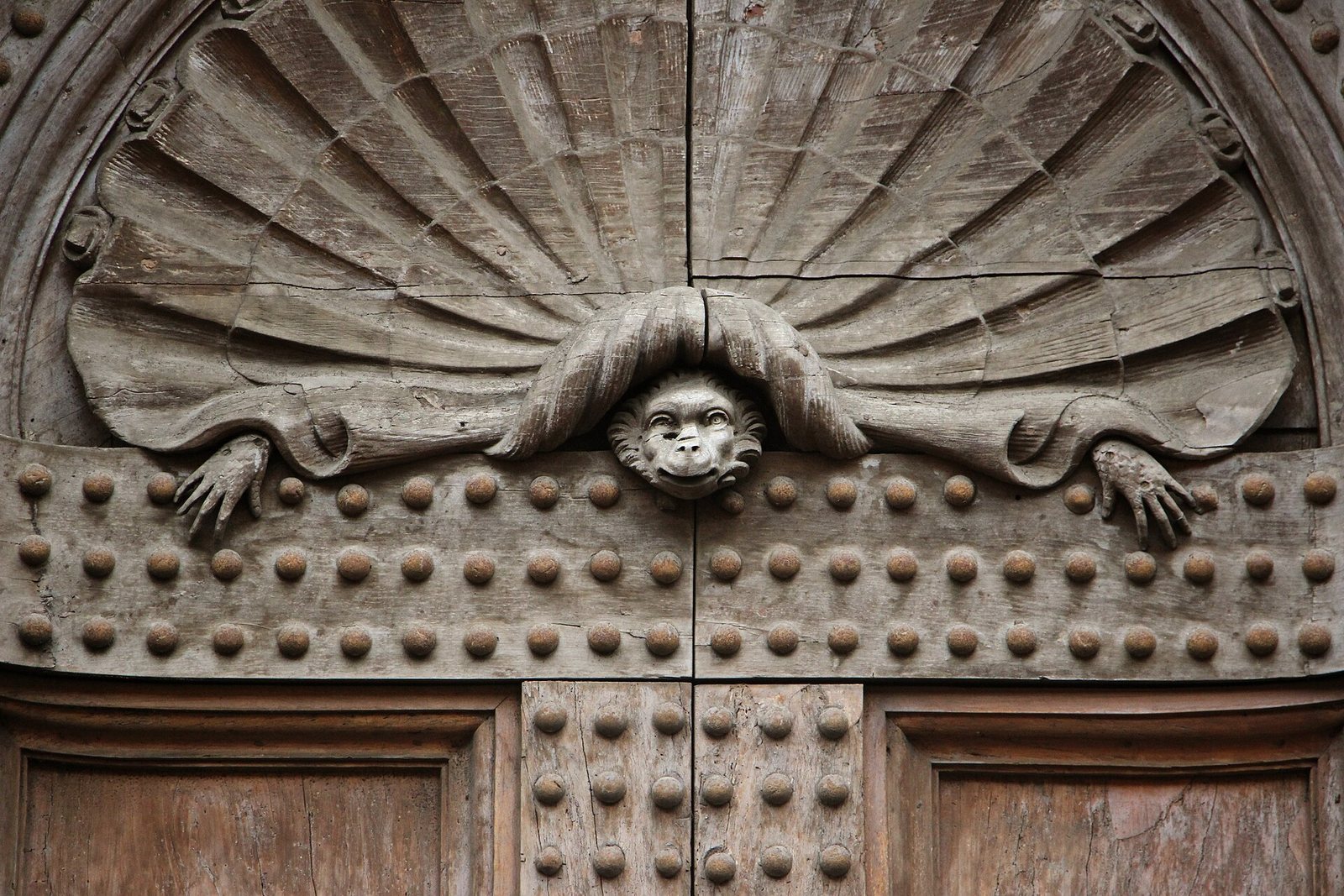
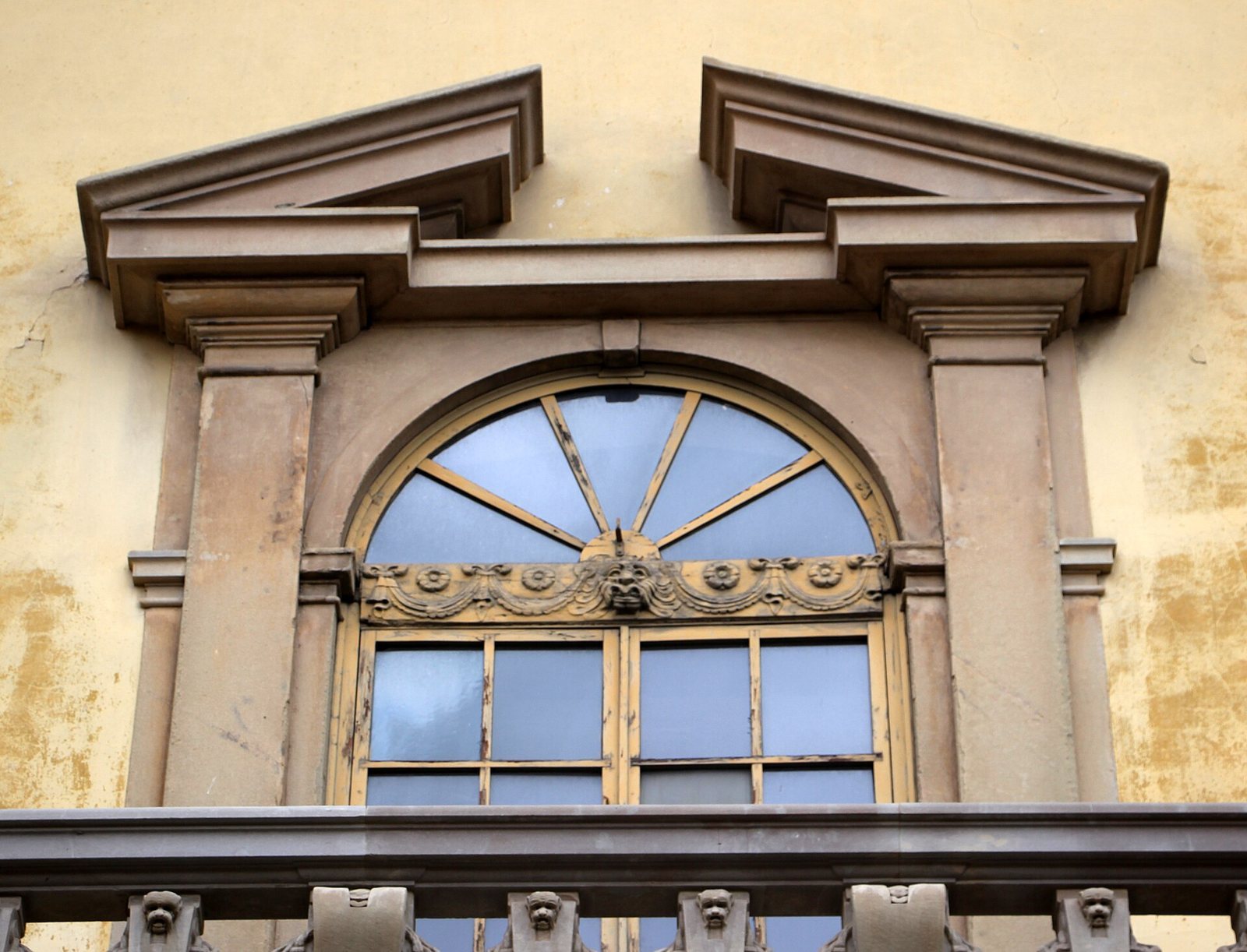
The façade has relatively widely spaced openings and a central entrance portal with a terrace facing Via Cavour. Buontalenti integrated masks and animal forms into the architectural decoration. The portal has curling forms compared to cartilage, while projecting wall supports, or corbels, carry animal heads and paws. Stone shells and garlands appear beneath the balustrades, and ram muzzles finish the vertical window surrounds. A monkey emerging below a wooden shell represents a transition from the inanimate to the animate.
Courtyard
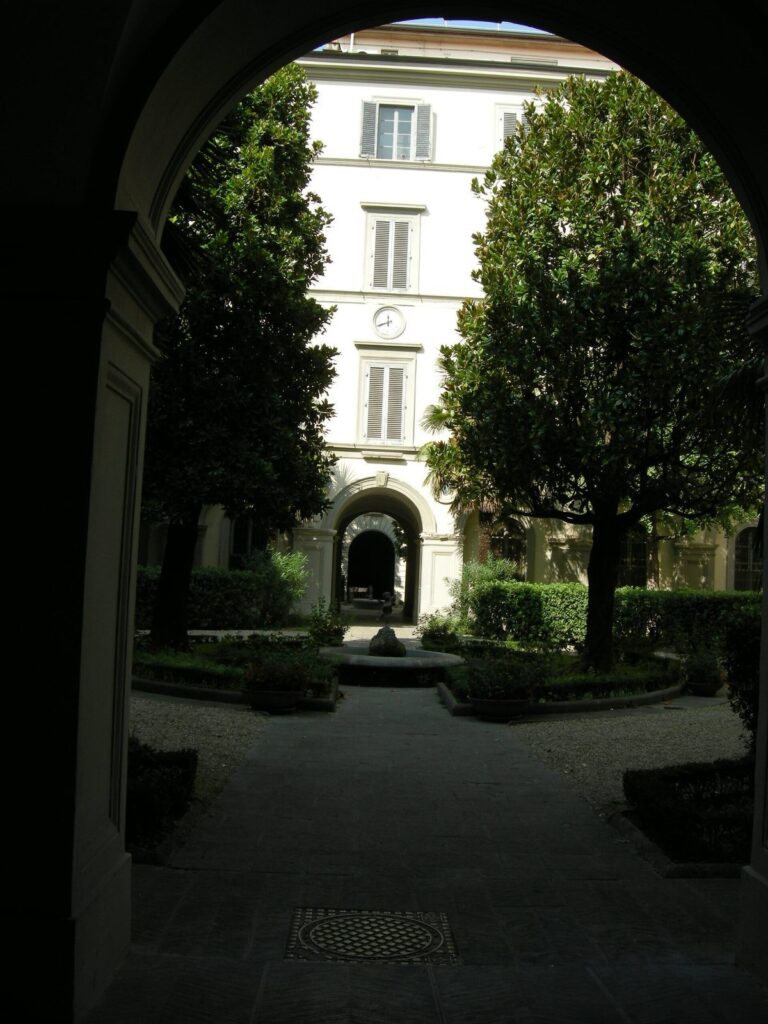
A fountain with a sculptural group stands in the courtyard.
Interior features and associated works
Chapel
The chapel’s painted decoration depicts episodes from the life of Saint Joseph. Filippo Tarchiani decorated it in 1623, and the paintings were restored in 1967.
Entrance vestibule
A First World War memorial plaque in the entrance vestibule commemorates Florentine lawyers who died in the war.
Dispersed garden and painting collections
Statues by Giambologna, commissioned for Don Antonio’s garden, are now held in different museums. Two paintings by Sandro Botticelli once associated with the palace, The Discovery of the Body of Holofernes and The Return of Judith to Bethulia, are now in the Uffizi Gallery.