Schloss Loburg: A Moated Castle and Catholic Boarding School
Site at a Glance
- Popularity
- High
- Country
- Germany
- Primary era
- Early Modern
- Eras represented
- Early Modern, Modern
- Civilizations
- German, Holy Roman Empire
- Site type
- Domestic
- Remains
- Castle
On this page10 sections
History
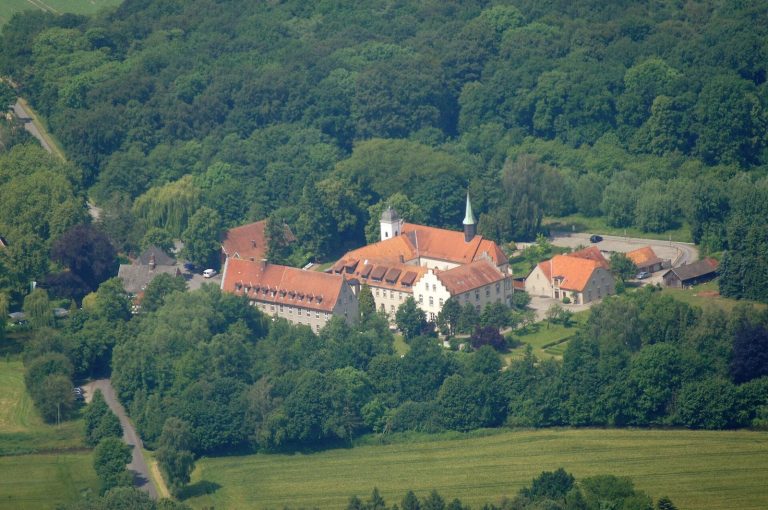
Schloss Loburg is a moated castle near Ostbevern in the Münsterland region of Germany, whose present Neo-Baroque palace was rebuilt in 1900–1901 and later became a Catholic boarding school. The estate is known from a charter of 1294, while a castle is first mentioned in 1412.
The medieval estate and castle
The 1294 charter names Lohaus, held by the Schulzen of Lohove. A Schulze was a local official associated with a village or estate. Gerlach von Bevern and his son Hermann endowed a vicarage they had founded, providing rents to support the church post.
Around 1400, the heiress Kunigunde von Bevern brought the estate to her husband, Dietrich Stael. The first reference to a castle dates to 1412, and its establishment around 1400 is inferred from that record. During the fifteenth century, the castle was enlarged and partly fortified.
Inheritance and the Baroque residence
In 1517, Anna Stael married Heinrich von Münster. They had no children, and after her death around 1559 the estate was divided. The Korff siblings received half the farms and 3,500 thalers, while the Droste family of Senden took the other half and Loburg. When Joachim Droste zur Loburg and Elisabeth von Chalon had no son, their daughter Elisabeth Anna inherited the estate. She brought it into her marriage to Adolf von Nagel on 14 April 1649.
Adolf von Nagel zu Ittlingen was named as owner in 1651, beginning 134 years of von Nagel ownership. After Johann Caspar von Nagel died in 1732, his younger brother Heidenreich Adolf inherited Loburg; the family’s elder branch ended in 1748. In 1742, Josef Marsil Wilhelm Xaver von Nagel zur Loburg secured for his family the right to use Keuschenburg and benefit from it without owning it. He and his wife Maria began planning a new residence because the old castle was in poor condition, despite the family’s strained finances.
The old castle was demolished in 1760, and a Baroque palace was built in 1766 to plans by Johann Conrad Schlaun, a prominent Westphalian architect. Financial difficulties later forced Clemens August Theodor Josef von Nagel zur Loburg to put the estate up for auction. On 7 June 1785, Friedrich Clemens von Elverfeldt zu Dahlhausen and Steinhausen bought Loburg, together with about 500 Morgen, a regional measure of land area, as the Elverfeldt family’s ancestral seat. Also known as Beverförde-Werries, the family received recognition of its double title from Emperor Joseph II in 1789, after which the title remained part of its name. The Nagels had moved to Keuschenburg, which they no longer owned but could still use under their retained rights.
The Elverfeldt estate and the 1899 fire
During the secularization of monastic property in the Ostbevern area, buildings belonging to Vinnenberg Abbey, except its church, were partly demolished from 1810 under Friedrich Clemens von Elverfeldt’s direction. A fireplace from the abbey was brought to Loburg.
On 22 July 1899, lightning struck the castle twice and caused a fire that destroyed it down to its foundations. The blaze also consumed an unpublished handwritten sonata by Ludwig van Beethoven, the German composer. Dedicated in summer 1791 to Maria Anna Wilhelmine von und zu Westerholt-Gysenberg, the work had been kept in a safe and had no surviving copy. She was the wife of Friedrich Clemens von Elverfeldt and had studied with Beethoven.
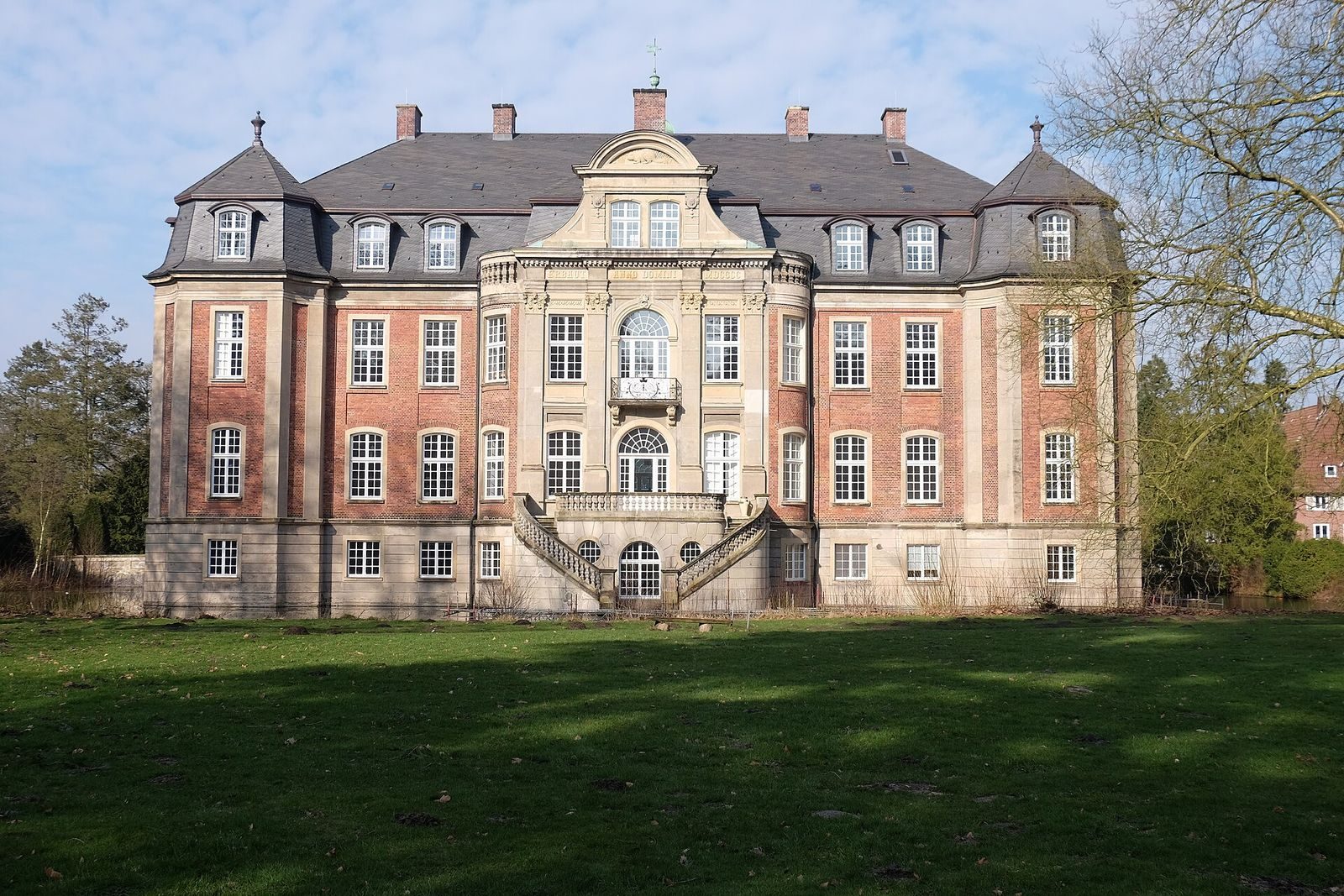
Architect Hermann Schaedtler rebuilt the castle in 1900–1901, making it nearly twice the size of its predecessor while retaining a similar Neo-Baroque appearance. The surrounding Loburg Park was laid out in 1903.
School at Loburg
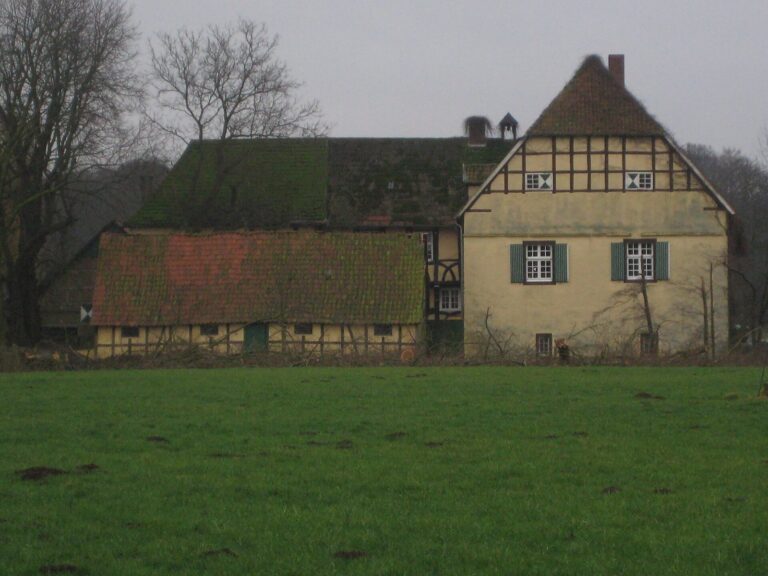
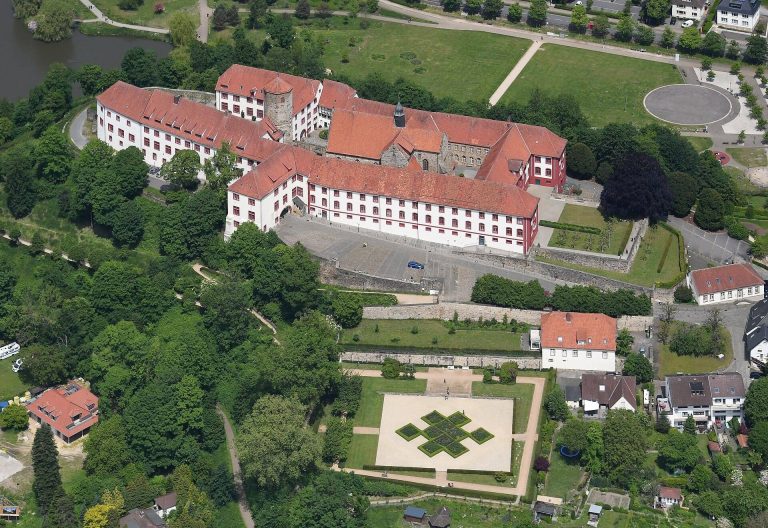
The castle survived the Second World War without damage and was then used to house refugees under compulsory billeting. The Christian Brothers, a Catholic teaching congregation, had re-established the Johanneum secondary school at Wadersloh in 1948. Seeking more space, the Diocese of Münster decided on 10 March 1951 to lease Loburg and transfer the school and its boarding institution there. The castle and associated buildings passed to the diocese, while the von Elverfeldt family moved to the former rent office at Lütke Loburg. Bishop Michael Keller founded the Collegium Johanneum, an independent Catholic boarding secondary school that has been based at Loburg since 1953. The Johannes Church was dedicated in 1967. Girls joined the school as day pupils in the 1994–95 school year and began boarding there in 2001–02.
Remains
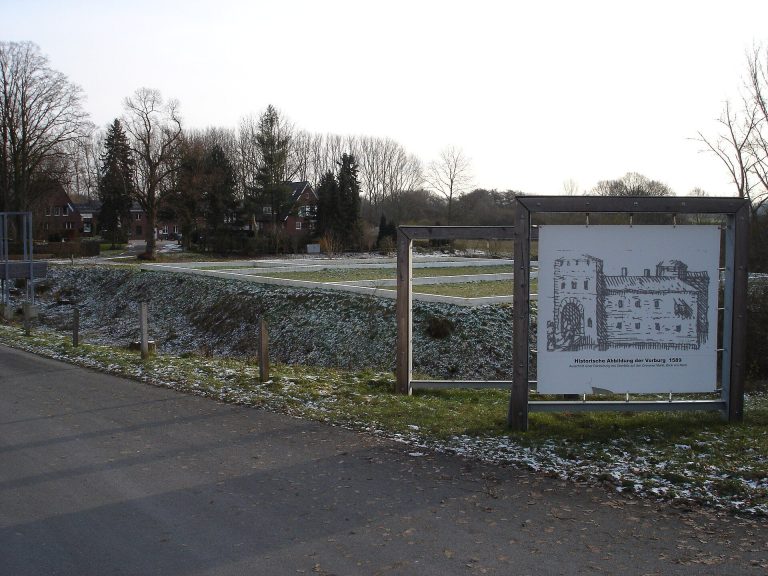
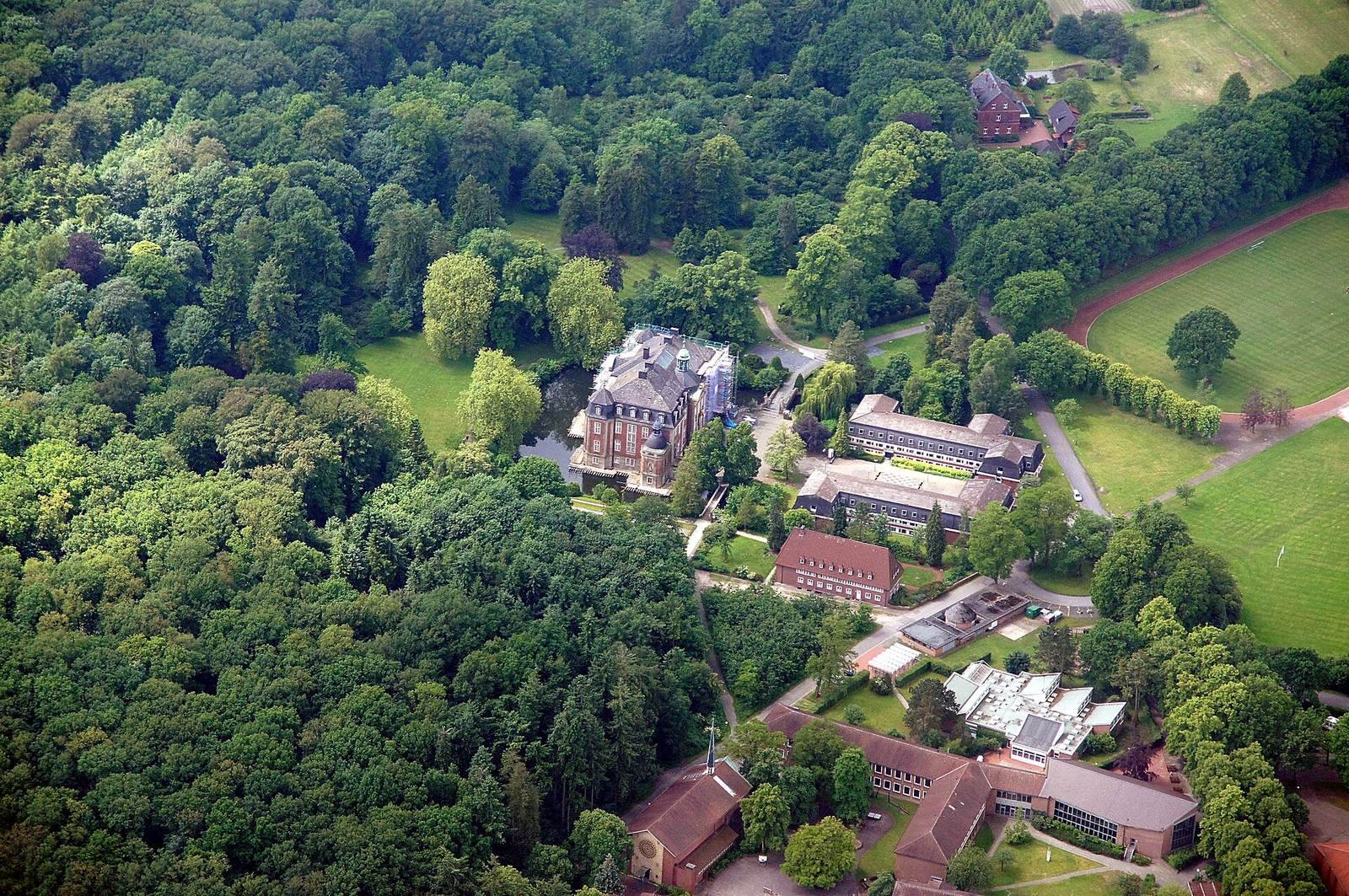
The present complex combines the rebuilt palace with later school buildings and landscaped grounds. A historical description places the castle away from a river, with large trees screening it from view until approached. It describes three ditches along the front and one behind; the moats were still present in 1828.
The Baroque palace and moats
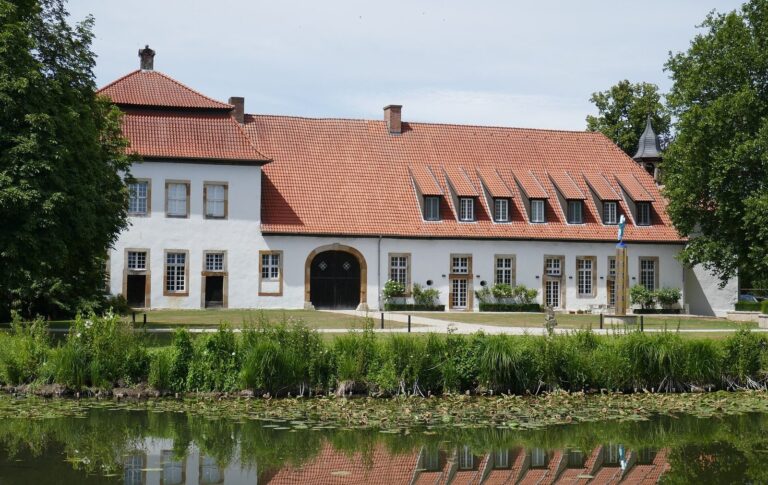
The 1766 palace had an oval courtyard and broad moats crossed by three drawbridges. The two-storey building carried a mansard roof, with a steep lower slope on each side. A double-flight staircase stood before the central facade, whose projecting central section extended along three sides. These features describe the predecessor to the present palace.
The rebuilt palace and Hubertus Chapel
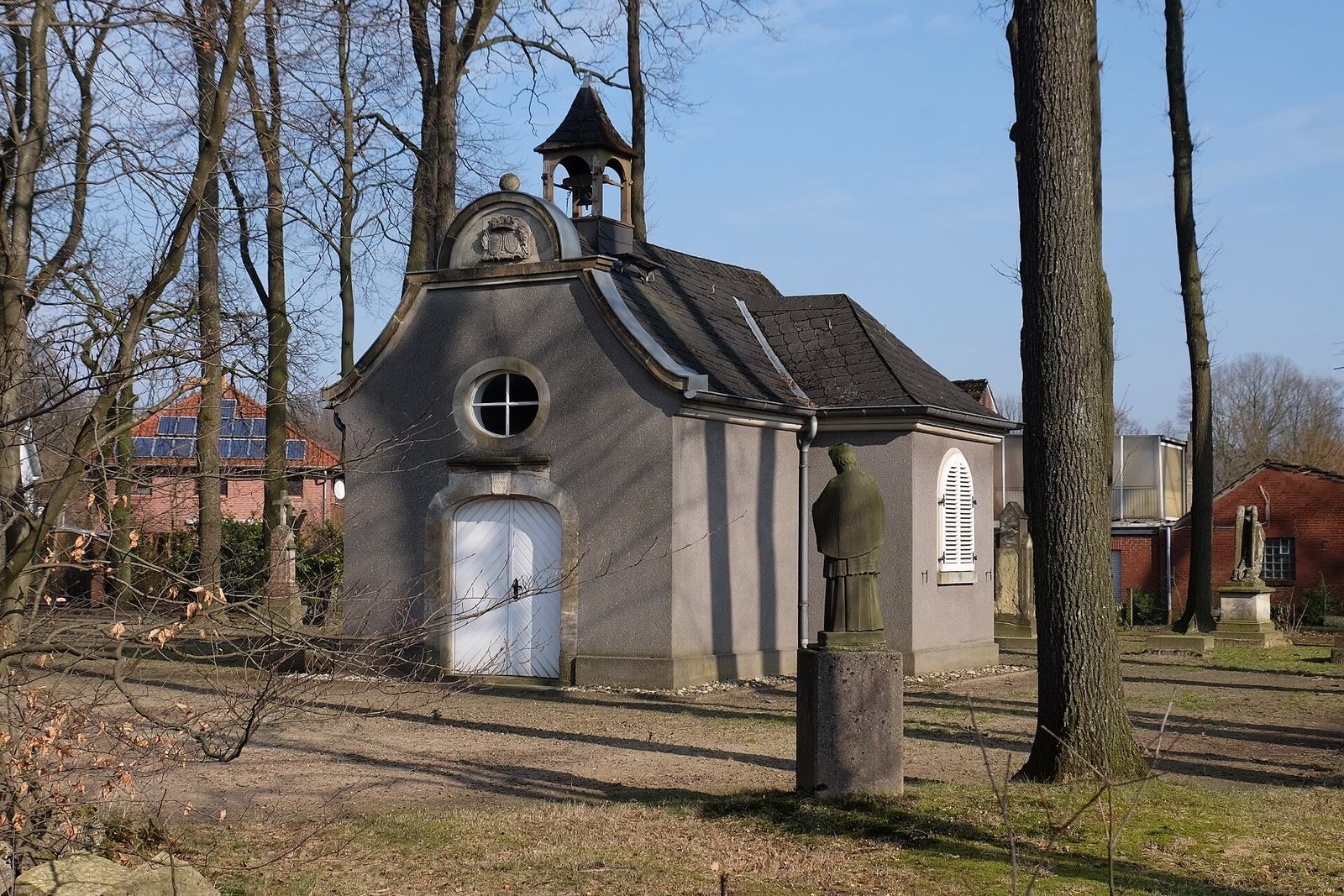
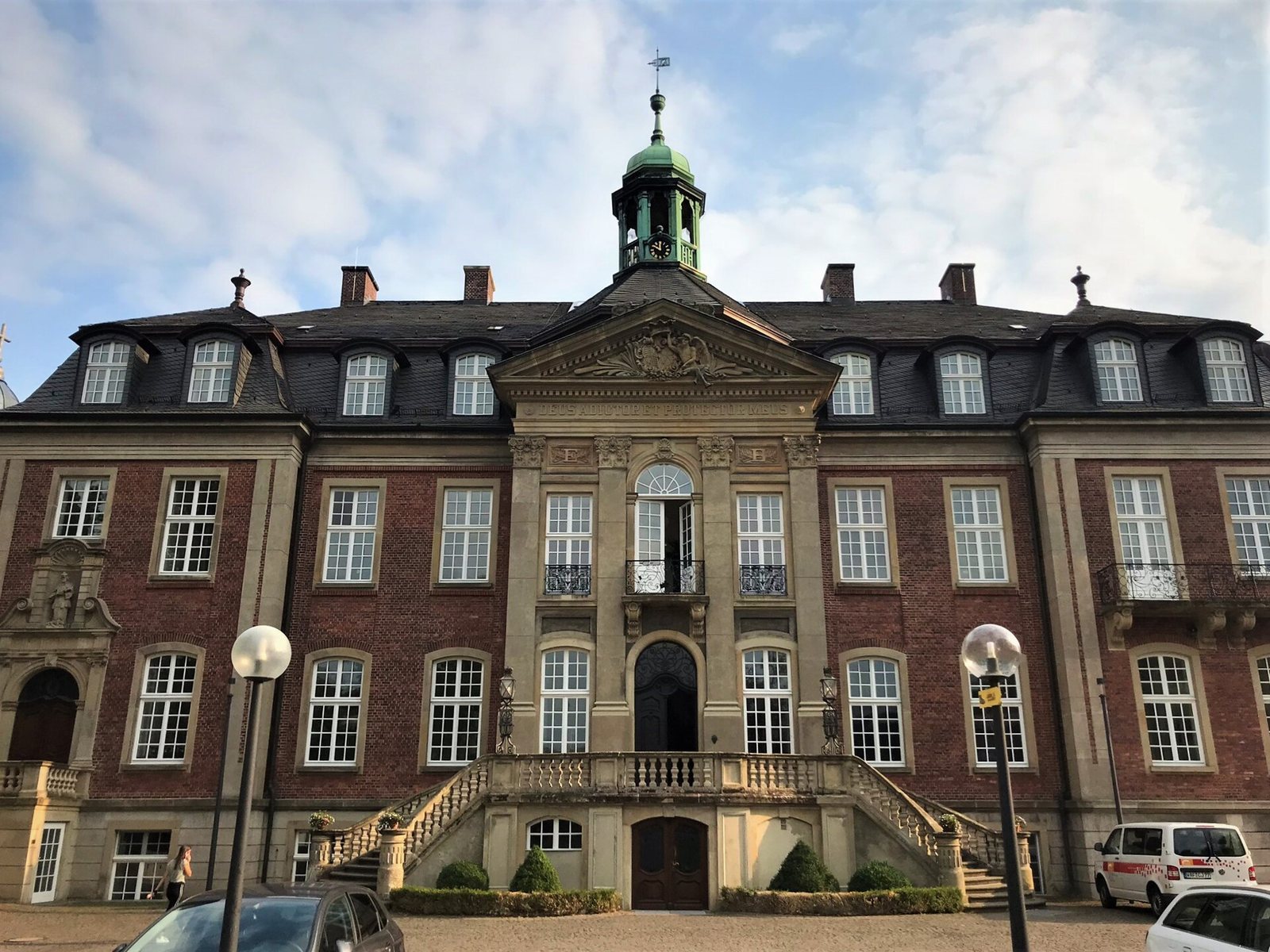
The 1900–1901 reconstruction retained the earlier building’s general appearance on a much larger scale. Its central gable projection bears the family alliance coat of arms and the motto DEUS ADIUTOR ET PROTECTOR MEUS, meaning “God my helper and protector.” Windows in the Hubertus Chapel depict Charles Borromeo and Empress Adelaide, the namesake patrons of the castle’s founders.
Park, school buildings, and church
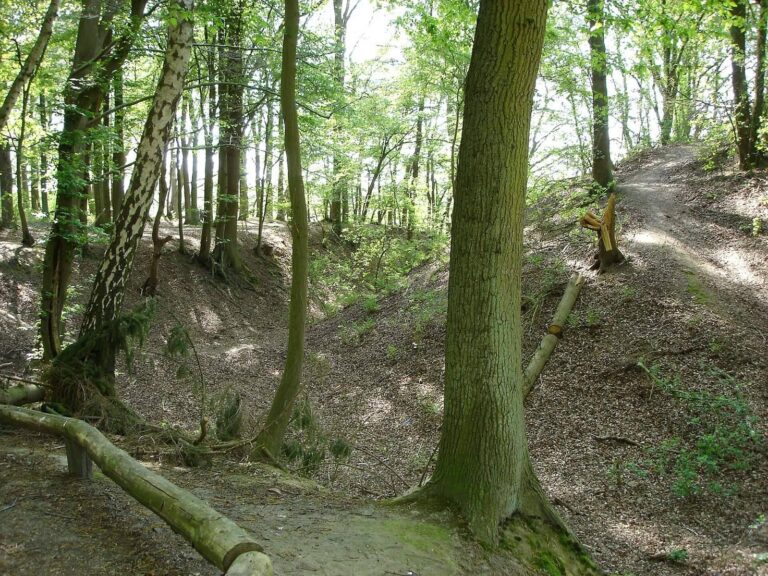
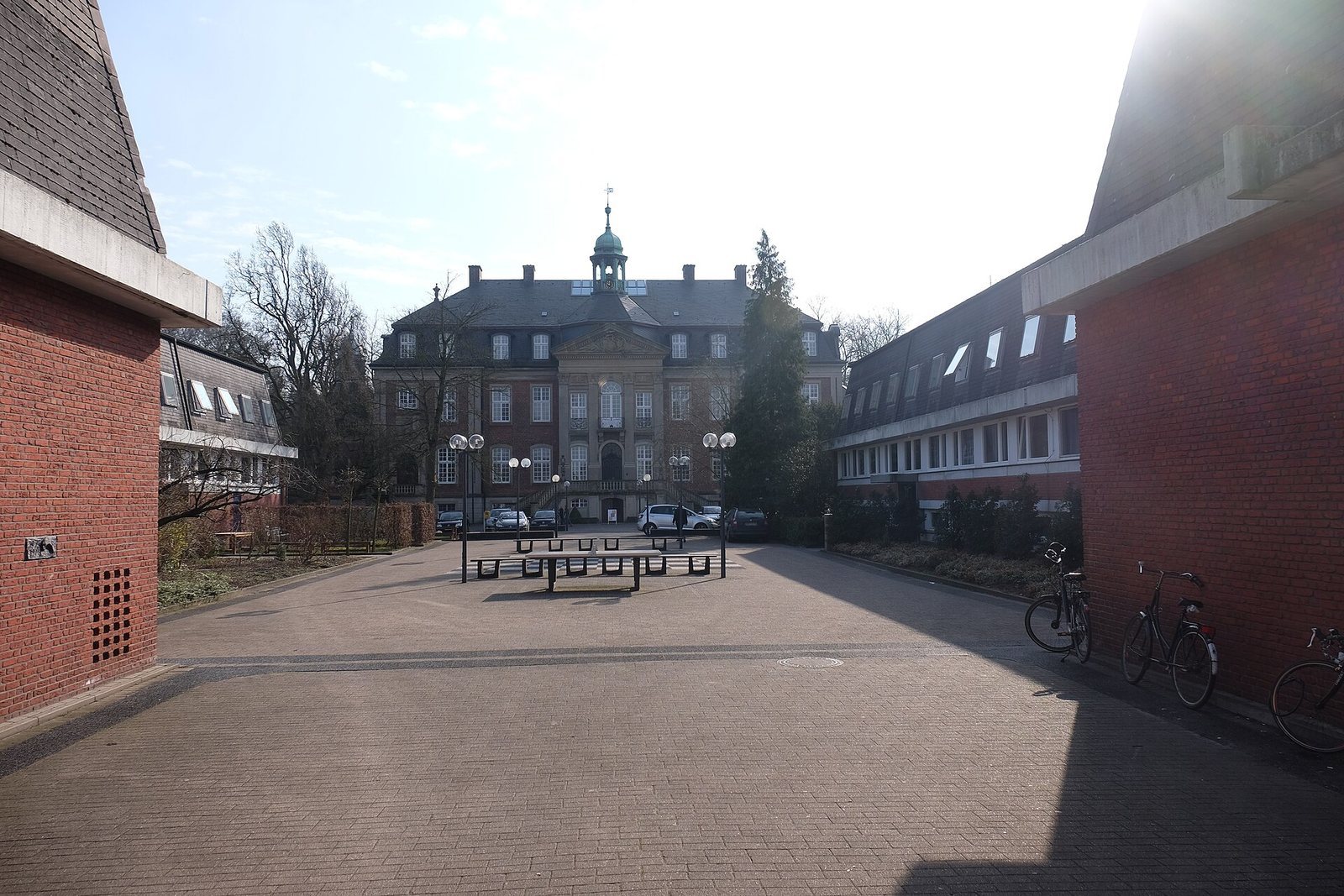
Loburg Park surrounds the castle and includes a rhododendron garden. The Loburg Way of the Cross runs through the adjoining forest; this devotional route recalls episodes of Jesus’ Passion. In 1973, the front buildings were replaced by student residences whose form recalls the former servants’ houses and preserves the courtyard character. The site also includes the Johannes Church, dedicated in 1967.
Vinnenberg Abbey fireplace
A fireplace from Vinnenberg Abbey is displayed in the castle. Its richly decorated mantel is made of Baumberg sandstone and bears a Latin inscription dated 1724.