Vinnenberg Convent: A Monastic House and Marian Pilgrimage Site in Germany
Site at a Glance
- Popularity
- Medium
- Country
- Germany
- Primary era
- Modern
- Eras represented
- Medieval, Early Modern, Modern
- Civilizations
- German, Holy Roman Empire, Kingdom of Prussia
- Site type
- Religious
- Remains
- Monastery
On this page17 sections
History
Foundation and Marian pilgrimage
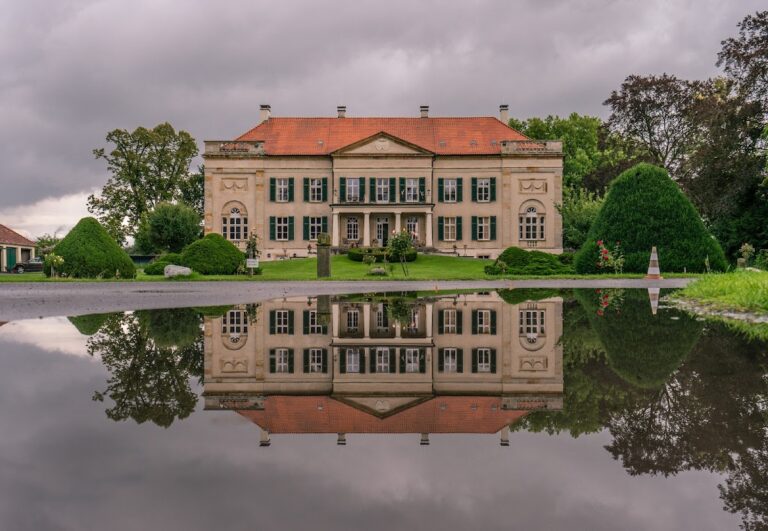
Vinnenberg Convent, founded around 1252 by Cistercian nuns from St Aegidii in Münster, is a former monastery on an island in the Bever near Milte, in Warendorf, Germany. It became a Marian pilgrimage destination and remains one of the oldest pilgrimage sites in the Diocese of Münster. The community was first called Mount of Mary; the name Vinnenberg, taken from the nearby estate, became established later.
The nuns bought the estate from Bernhard of Vinnenberg, a ministerial, or service noble attached to a lord. The bishop of Münster transferred the estate’s rights to the convent. In 1256, Bishop Otto II granted the nuns the patronage of Milte’s parish church, giving them the right to appoint its priest. The convent also took responsibility for supporting the parish and its clergy.
Vinnenberg’s establishment may have been encouraged by conflict at the nearby Cistercian house of Rengering. In 1252, Hermann and Albero, relatives of Rengering’s founder, attacked and burned the young foundation. They reconciled with it the following year after paying five marks of silver. Pope Alexander IV urged the Cistercian General Chapter in 1257 to admit Rengering formally to the order. Although Vinnenberg was once thought possibly to have been intended as a replacement, both convents continued until their suppression in 1810. Their activity was connected along the Bever, with Rengering developing westward and Vinnenberg directing its interests toward Füchtorf and Milte.
A foundation legend tells that Bernhard of Rengering and Johannes of Vinnenberg saw Mary and the Apostle John surveying their estate. When the vision disappeared, they found a red silk thread on a log and took it as a sign to support the convent. The story says that four sacred figures, three of Mary and one of Saint Anne, were carved from the wood. The smallest, called Our Lady of the Heavenly Kingdom, became Vinnenberg’s devotional image and helped draw pilgrims to the convent.
The bishops of Münster, Osnabrück, and Paderborn encouraged pilgrimage by granting indulgences, understood in Catholic teaching as remission of temporal punishment associated with sin. In 1257, Otto II of Münster and Bruno of Osnabrück each offered pilgrims a 40-day indulgence, a medieval measure expressed in penitential time rather than a literal extension of life. The Münster grant was renewed in 1290 by Everhard of Diest, and Otto of Rietberg of Paderborn granted the same measure in 1291. In 1296, Pope Boniface VIII confirmed indulgences for numerous feast days, including Christmas, Easter, feasts of Mary and saints, and the parish’s patronal feast and church dedication.
From Cistercian nunnery to Benedictine abbey
The convent expanded its holdings through purchases and gifts. It acquired a farm in the parish of Telgte in 1267 and land and houses in Warendorf in 1297. The estate also supported farming families over whom the convent held rights. The first abbess named in its chronicle is Angela, who died in 1301; the chronicle lists 28 abbesses in succession.
Until the mid-fifteenth century, Vinnenberg was a Cistercian nunnery under the authority of Marienfeld Abbey. During the fifteenth century, discipline weakened and some nuns held private property. In 1465, at the initiative of the Bishop of Münster and Heinrich of Kleve, abbot of Liesborn, Abbess Ursula Swaneken reformed the community and changed it into a Benedictine abbey. From 1468, it belonged to the Bursfeld Congregation, a Benedictine reform association promoting shared observance, and came under Liesborn’s authority.
Vinnenberg operated as a substantial agricultural establishment, with a mill, oil mill, brewery, wool house, and livestock. Hired workers carried out much of the farm labor. The convent began systematically recording its property around 1465. Its surviving records include a register covering 1465 to 1610, income accounts from 1503, and a land register from 1567.
Fires destroyed the convent buildings and church on Palm Sunday in 1550 and again in 1568. The second blaze left the church’s enclosing walls standing, and the buildings were rebuilt after both fires. Vinnenberg’s Benedictine ties to Liesborn helped it pass through the Reformation without major damage from iconoclasm. During the Thirty Years’ War, troop plundering and severe financial strain threatened the community. Anna Maria Plönies, elected abbess in 1639, promoted the pilgrimage to help avert its ruin.
Suppression and return
In 1803, amid the Napoleonic-era secularization of church lands, the Prince-Bishopric of Münster passed to Prussia. A royal order initially protected the convent’s continuation. After the area became part of the French-administered Grand Duchy of Berg in 1808, however, the new authorities began dissolving the institution. They sealed its archive and account books, inventoried its property, dismissed staff, sold standing rye, and leased fields, meadows, and pastures. In 1809, valuables from the church were sent to Düsseldorf to be melted down.
The convent was formally suppressed on 30 January 1810. Its community then comprised Abbess Adolphine Elisabeth von Haase, nine choir nuns, two novices, six lay sisters, and two candidates. Officials announced the suppression to the nuns on 24 February, and an auction of furnishings began two days later. Residents could stay in the convent by paying rent. On 4 August, the devotional image was transferred to Füchtorf by order of the Episcopal Vicariate General.
Prussia regained the area in 1815 but did not restore the convent. Offers to sell the church and grounds in 1824 and the remaining property in 1835 found no buyers. In 1827, the Prussian king gave the standing convent church to Milte. The village chose to renovate its own church nave instead of demolishing it; the renewed nave was inaugurated in 1829. Bishop Kaspar Maximilian Droste zu Vischering arranged for the devotional image to return to Vinnenberg in 1831, with the condition that it go back to Füchtorf if worship at Vinnenberg ceased.
The remaining buildings were extensively renewed in 1865, when a home for retired priests was established. In 1879, after chaplain Bernhard Billmann donated back pay from the Kulturkampf, the late nineteenth-century conflict between the Prussian state and the Catholic Church, the devotional image received its first restoration and the church choir was redesigned. Renovation was completed in 1894, and the government made the buildings available for renewed monastic life.
Renewed monastic life and Nazi persecution
On 13 April 1898, Benedictine nuns of the Most Blessed Sacrament from Hamicolt took over Vinnenberg at the request of Bishop Hermann Jakob Dingelstad. The prioress, Mother Maria Hermann Joseph, and the first sisters arrived on 18 June. They restored the convent’s agricultural work and supported the community through altar-bread baking and embroidery of liturgical vestments. In 1902, Pope Leo XIII extended a plenary indulgence, understood in Catholic teaching as a complete remission of temporal punishment, from the feast of Mary’s Nativity and its octave to the months of August and September.
Otto Böcker, rector of the convent and pilgrimage church from 1931, ministered to about 60 sisters. In 1934, a special court convicted him after he criticized political authorities in sermons and private conversations. He received five months’ confinement in a fortress under the pulpit law, which restricted political statements by clergy from the pulpit, and ten months’ imprisonment under the Nazi Treachery Act, which criminalized certain criticism of the regime. He was released on 16 August after an amnesty following President Paul von Hindenburg’s death.
On 15 July 1941, the Gestapo, Nazi Germany’s political secret police, expelled about 60 Benedictine nuns and seized the convent as part of a broader campaign against religious houses. The sisters were ordered to leave within two hours. Prioress Mother Hermanna was held overnight and questioned about Clemens August Graf von Galen, the Bishop of Münster and a prominent critic of Nazi policies. Some sisters found shelter in Glandorf, others were taken to Osnabrück, and 25 eventually formed a community at Dinklage Castle. Chaplain Bernhard Heele carried the devotional image, the Blessed Sacrament, and liturgical objects to Milte’s parish church.
The authorities claimed they would use the premises to house people made homeless by bombing. The convent was briefly used as a Nazi people’s home and, from 1942, the Air District Command VI Westphalia used the buildings for several purposes, including storage in the church. Von Galen protested the eviction in a sermon at Münster’s Überwasserkirche on 20 July 1941. The devotional image was later taken from Milte to the Bishop’s Palace in Münster, where it was lost when a bombing raid on 10 October 1943 severely damaged and burned the building.
The sisters returned on 2 May 1945. Before their return, the U.S. Army had briefly used the convent as a military hospital, and Russian and Polish forced laborers had temporarily occupied rooms there. Sculptor Josef Picker created a new devotional image, using earlier models while making his own interpretation. Postwar rebuilding enlarged the convent and restored its agricultural work; altar-bread production and vestment embroidery again supported the community.
Vinnenberg also helped establish a German federation of the Benedictine nuns of the Most Blessed Sacrament. German prioresses met there in 1952 to discuss a congregation and shared constitutions. The federation was founded at Vinnenberg in 1957, with Mother Hermanna as its first president. That year, following a petition from Bishop Michael Keller on the pilgrimage site’s 700th anniversary, the Vatican officially recognized Picker’s devotional image.
Reform, decline, and new use
Changes following the Second Vatican Council, held from 1962 to 1965, altered the nuns’ daily religious practice. The enclosure was extended to the church choir, sisters could leave the gallery to worship in the church, grilles in the visiting room were removed, and distinctions among choir, lay, and gate sisters ended. The community numbered about 60 in the 1950s, but later declined. Night prayer services ended after staffing difficulties arose in the 1970s, and Vinnenberg formed a partnership with the Benedictine abbey at Dinklage in the mid-1980s. During the 1990s the convent was reduced in size; in 1994, its detached priest’s house was made available to the Christian community Bread of Life, which continued the altar-bread bakery.
In 2004, the remaining eight sisters said they could no longer run the convent themselves and wished to move. They were farewelled in the church on 19 June 2005. Two moved to a care home in Münster and six to a home in Osnabrück, where they continued to live as a Benedictine community. Their departure ended monastic life at Vinnenberg. After a final church service on 4 October 2009, the premises underwent major conversion work through 2010. The former convent now serves as a diocesan seminar and retreat center, while the church continues as a Marian pilgrimage destination.
Remains
Island site and convent plan
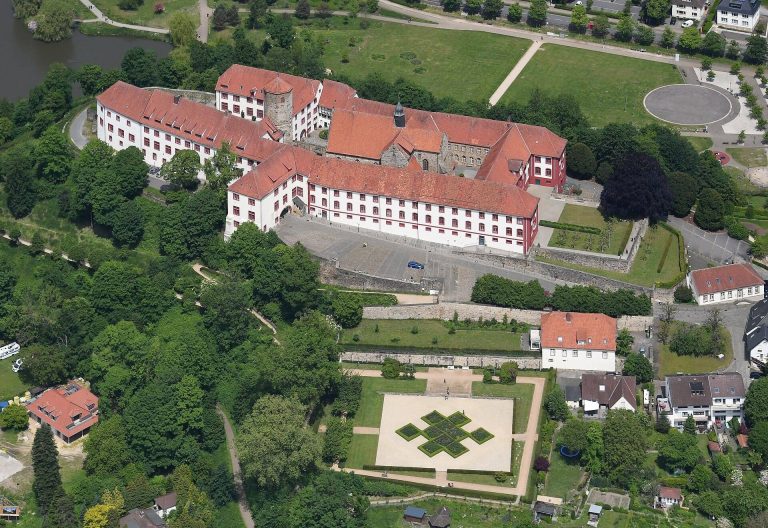
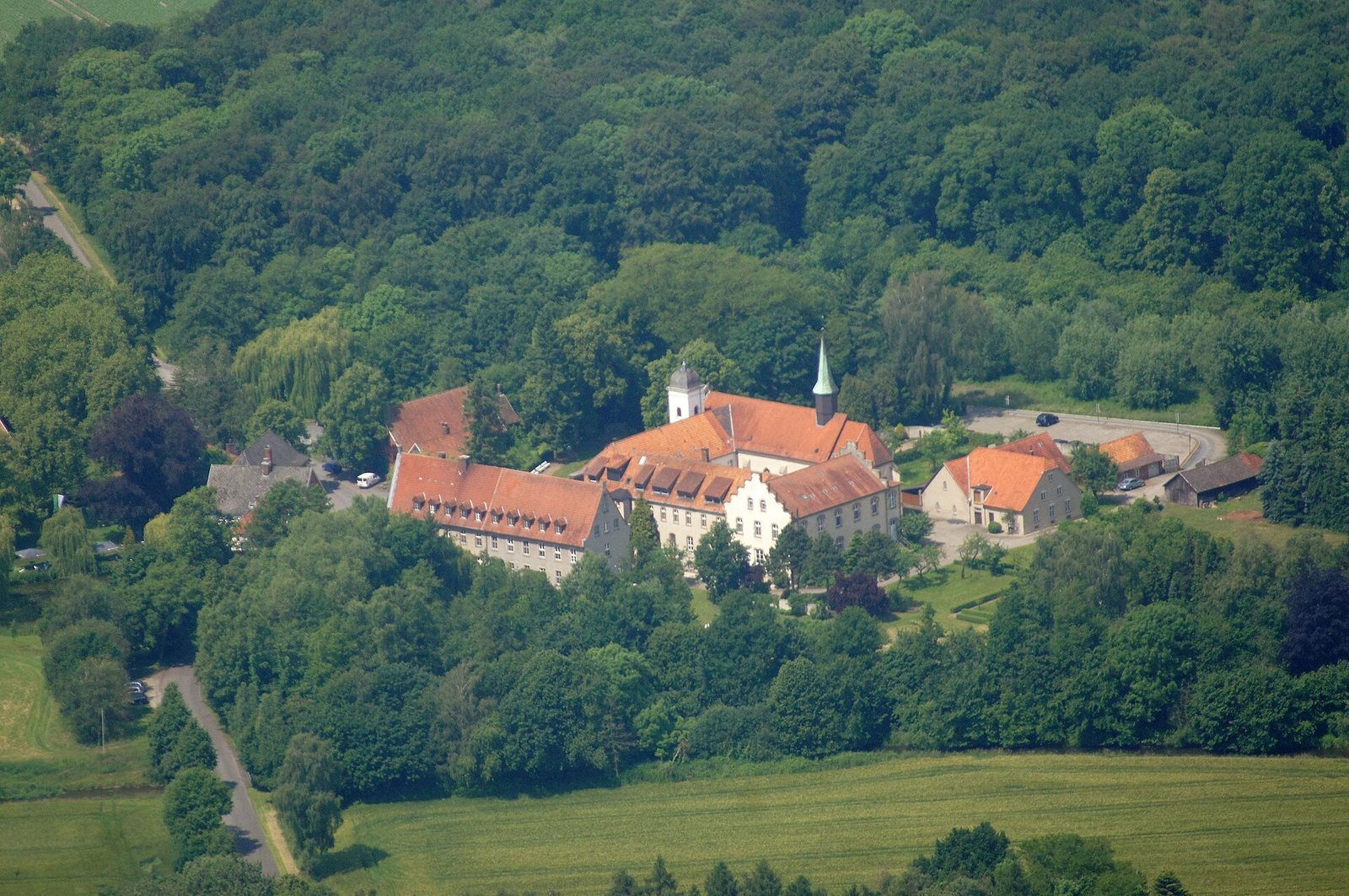
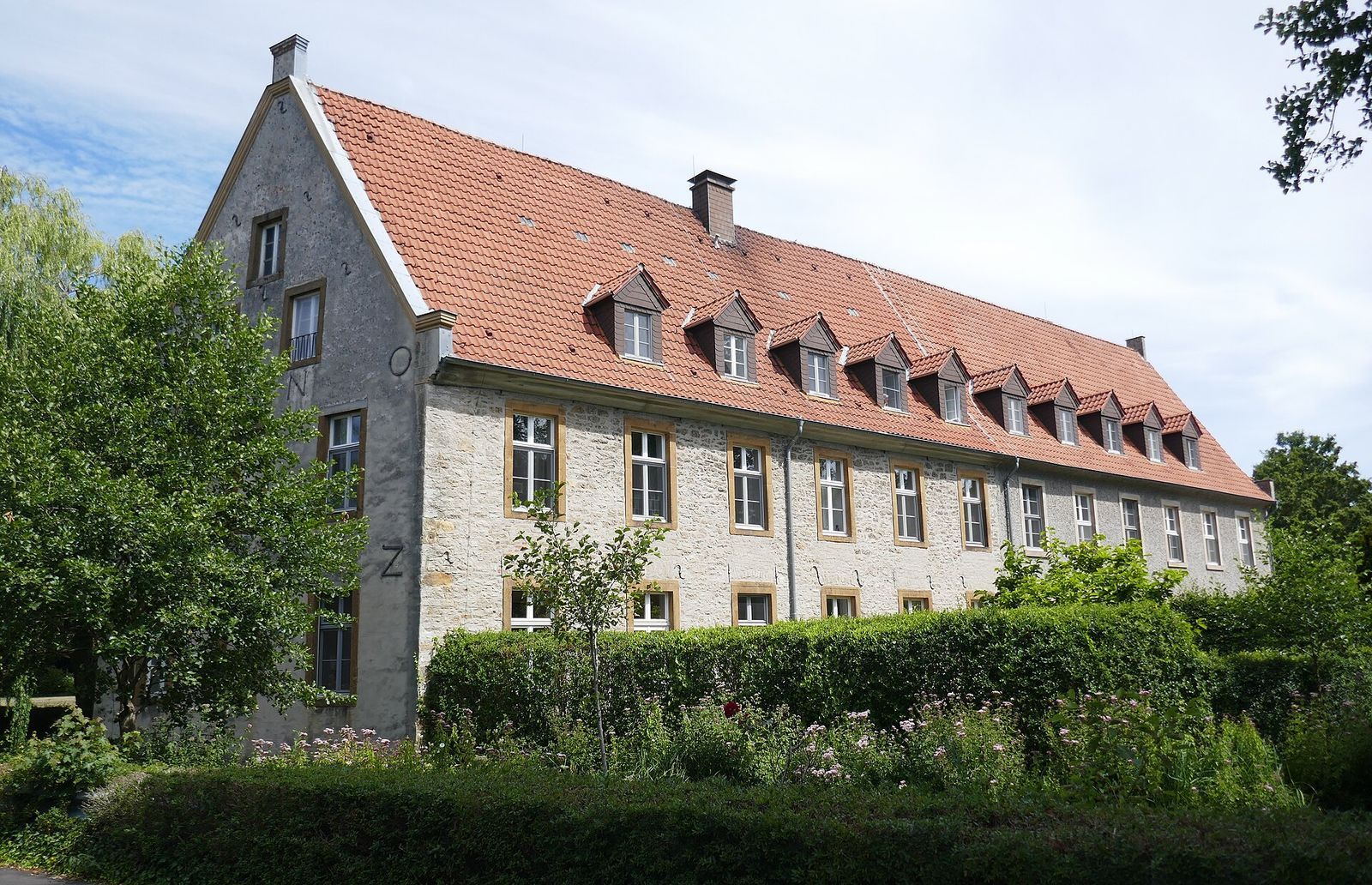
The complex stands on an island in the Bever, close to the river and north of Warendorf. The convent and nearby Rengering were connected by the Bever corridor. In the original plan, the convent buildings stood along the south side of the church and enclosed a square courtyard. A priest’s house extended from the southwest corner, while successive rebuilding altered the group over the centuries.
Priest’s house
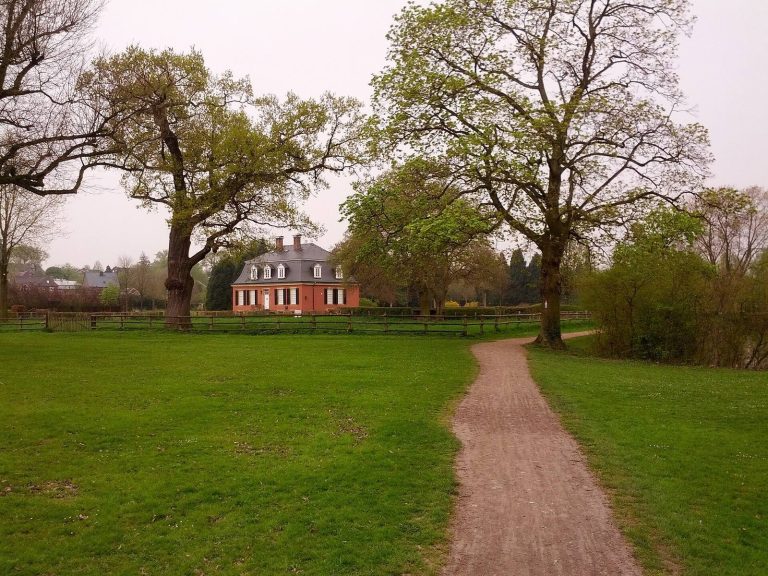
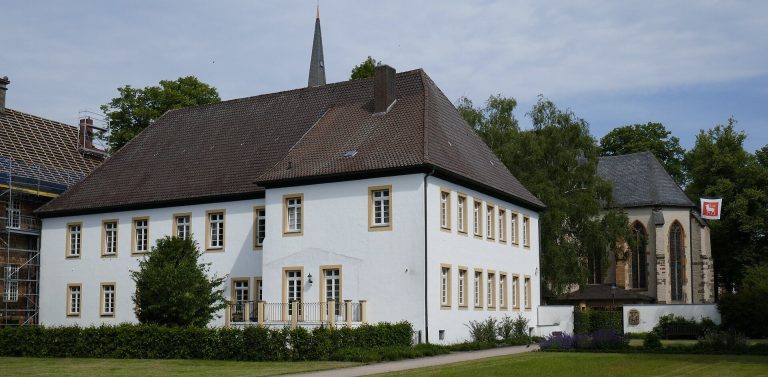
Built in 1722, the priest’s house projected from the southwest corner of the former southern range as its western extension. It is also known as the old rectory. The building remains part of the current complex and was made available to the Bread of Life community in 1994.
Later convent buildings and grounds
A home for retired priests was erected in 1865 on the site of the former eastern range. A neo-Baroque church tower, meaning a later revival of Baroque design, was added beside the west front in 1898. Between the world wars, the convent garden was redesigned, a concrete wall enclosed expanded gardens and pasture areas, and religious figures were placed in the garden. A postwar extension to the sisters’ accommodation was inaugurated in 1955. The Bever mill is now used as an inn.
Convent church
Exterior and form
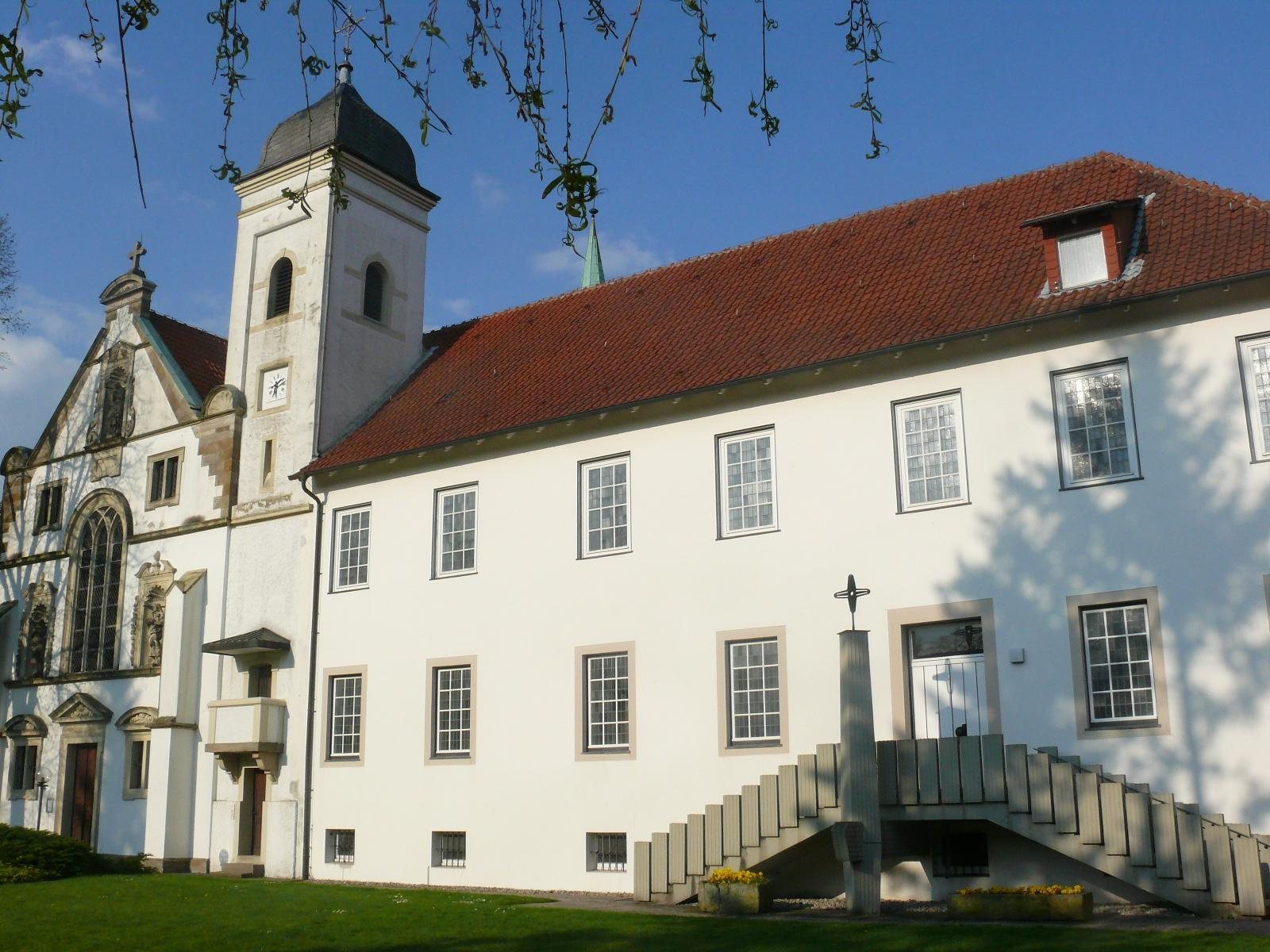
The original thirteenth-century church was a single-nave hall with five bays and a polygonal choir. The present church is a simple hall with Gothic tracery, stonework that divides windows into patterned sections. Its interior narrows toward the choir, the area around the altar. In the early eighteenth century, under Abbess Anna Maria von Brakel, the west gable received a Baroque design. The tower beside the west façade was added in 1898.
Nave and nuns’ gallery
A large gallery for the nuns occupies more than half of the nave, the main body of the church. It rests on a low-vaulted hall divided into three aisles. The church contains sculpture from the late Gothic period through modern times.
Choir and devotional image
The choir was redesigned in the 1960s. Artist Heinrich Lückenkötter made a block altar with a relief of the Lamb of God surrounded by symbols of the four Evangelists, a human figure, lion, bull, and eagle. Behind it stands his sacrament stele, decorated with bronze work by Carlo Dürselen in the 1970s. In the mid-1960s, Johannes Niemeier made a bronze stele displaying the devotional image within a radiating halo; a bronze reading stand stands opposite.
West-façade altar panels
Two large late-Gothic sandstone altar panels were once fixed to the church’s west façade. One, known as the John altar, depicts Mary and Elizabeth, the baptism of Jesus, and the beheading of John the Baptist. It was moved to the diocesan museum and, after the postwar rebuilding of Münster Cathedral, installed in the cathedral’s east transept. The other panel depicts the Mass of Saint Gregory and is conserved at the Westphalian State Museum.
Organ
The Stockmann brothers’ organ-building firm made the church organ in 1965. It has 15 stops, which select sets of pipes, two keyboards, and a pedal keyboard. The keys operate mechanically, while the stops and couplers, which link keyboards, operate electrically.
Conversion of the convent
Conversion work in 2009 and 2010 adapted the convent buildings as an education center, with part of the church included in the project. Sixty former convent cells were made into 30 guest rooms, and the complex gained meditation rooms, a library, and an apartment. The convent garden covers 30,000 square metres.