Peñalcázar: An Abandoned Settlement and Mining Site in Spain
Site at a Glance
- Popularity
- Medium
- Country
- Spain
- Primary era
- Medieval
- Eras represented
- Medieval, Early Modern
- Civilizations
- Crown of Castile, Spanish
- Site type
- Settlement
- Remains
- Village
On this page14 sections
History
Celtiberian and Roman settlement
Peñalcázar is an abandoned settlement near Quiñonería in Spain. In ancient times, a Celtiberian settlement here was called Centóbriga and may have been founded by either the Lusones or the Arevaci, peoples of the Iberian Peninsula. The settlement later came under Roman rule and continued to bear the same name.
Medieval accounts and conquest
The medieval epic Cantar de mio Cid, a poem about the Castilian military figure Rodrigo Díaz de Vivar, relates that Peñalcázar, Ateca, and Terrer paid tribute after the hill of Salvasoria was fortified. The poem describes these three castles as leading strongholds in the area. Its association with the poem is the reason Peñalcázar is included on the Camino del Cid, a cultural route connected with the story and its hero.
In 974, García Fernández, the second Count of Castile, led the Christian conquest of Al-qasr.
Municipal life and abandonment
After the Ancien Régime, the political and social order that preceded Spain’s constitutional system, came to an end, Peñalcázar became a constitutional municipality in Old Castile’s Soria district. The 1842 census counted 65 households and 266 residents. By the middle of the nineteenth century, the settlement had 70 houses. Festivals were formerly held in honor of its patron, Saint Michael, an archangel in Christian tradition.
Peñalcázar was abandoned during the 1960s. Its foot-only access, lack of water, and unfavorable location contributed to rural migration to other parts of Spain. The municipality was incorporated into Quiñonería in 1979, and its population was recorded as zero in 2012.
Mining
Mining may have taken place in Roman times or in the sixteenth century, but registered exploitation began in 1845, when the Nuestra Señora de la Peña mine was established. The Buen Deseo 1ª company of Almazán worked the mine until 1876 and extracted about 8,000 tonnes of ore. During the mining boom, a settlement was built for roughly 100 workers, along with the La Cruz smelter. The smelter belonged to Banco Industrial y Mercantil, founded by the Spanish publisher and journalist Francisco de Paula Mellado, who was also its principal shareholder.
Mining ceased in 1877, and the smelter closed because ore was lacking. Later efforts did not lead to substantial mining. In 2007, SIEMCALSA, a company dependent on the regional government of Castile and León, applied for a mineral-exploration permit. Its investigation did not determine whether exploitable mineral resources were present.
Remains
Setting and ancient remains
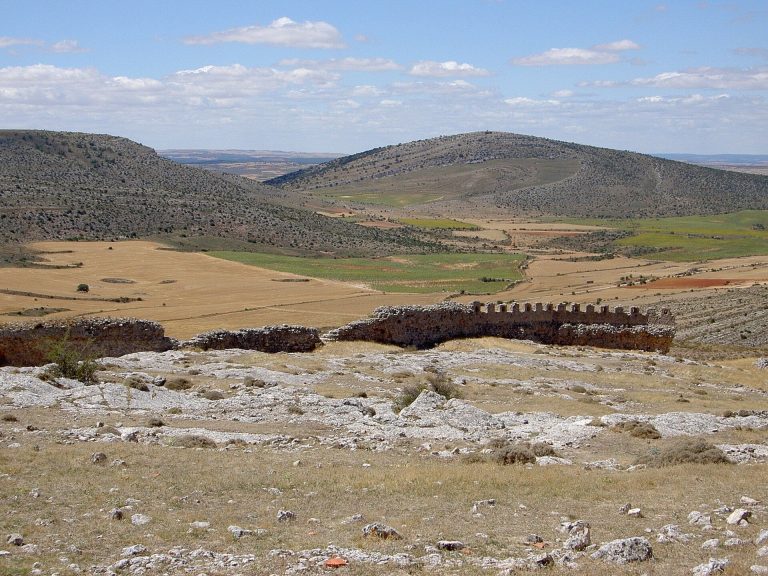
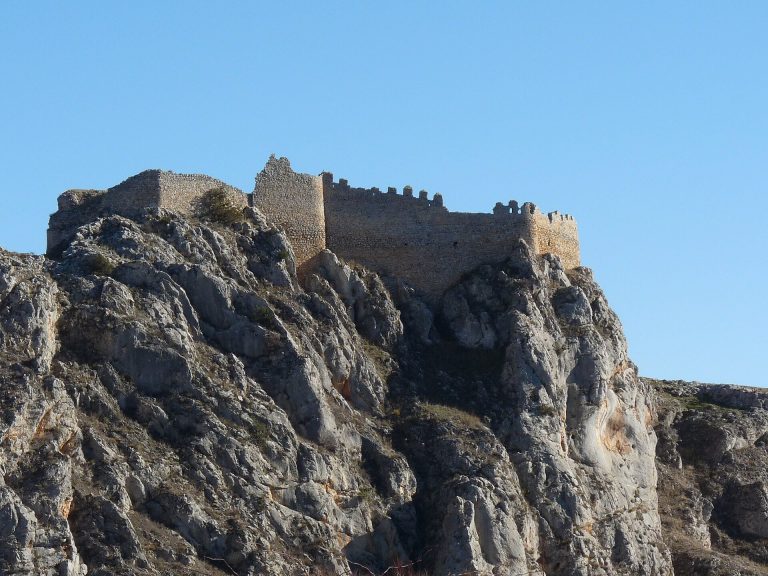
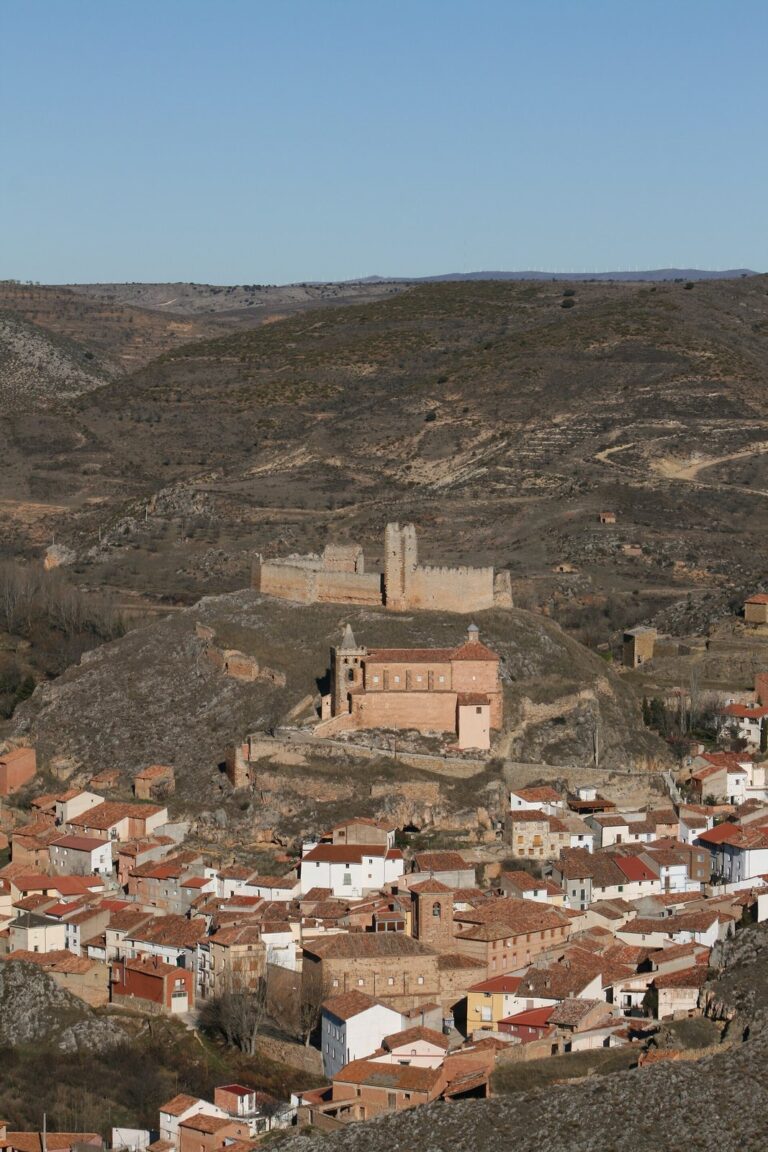
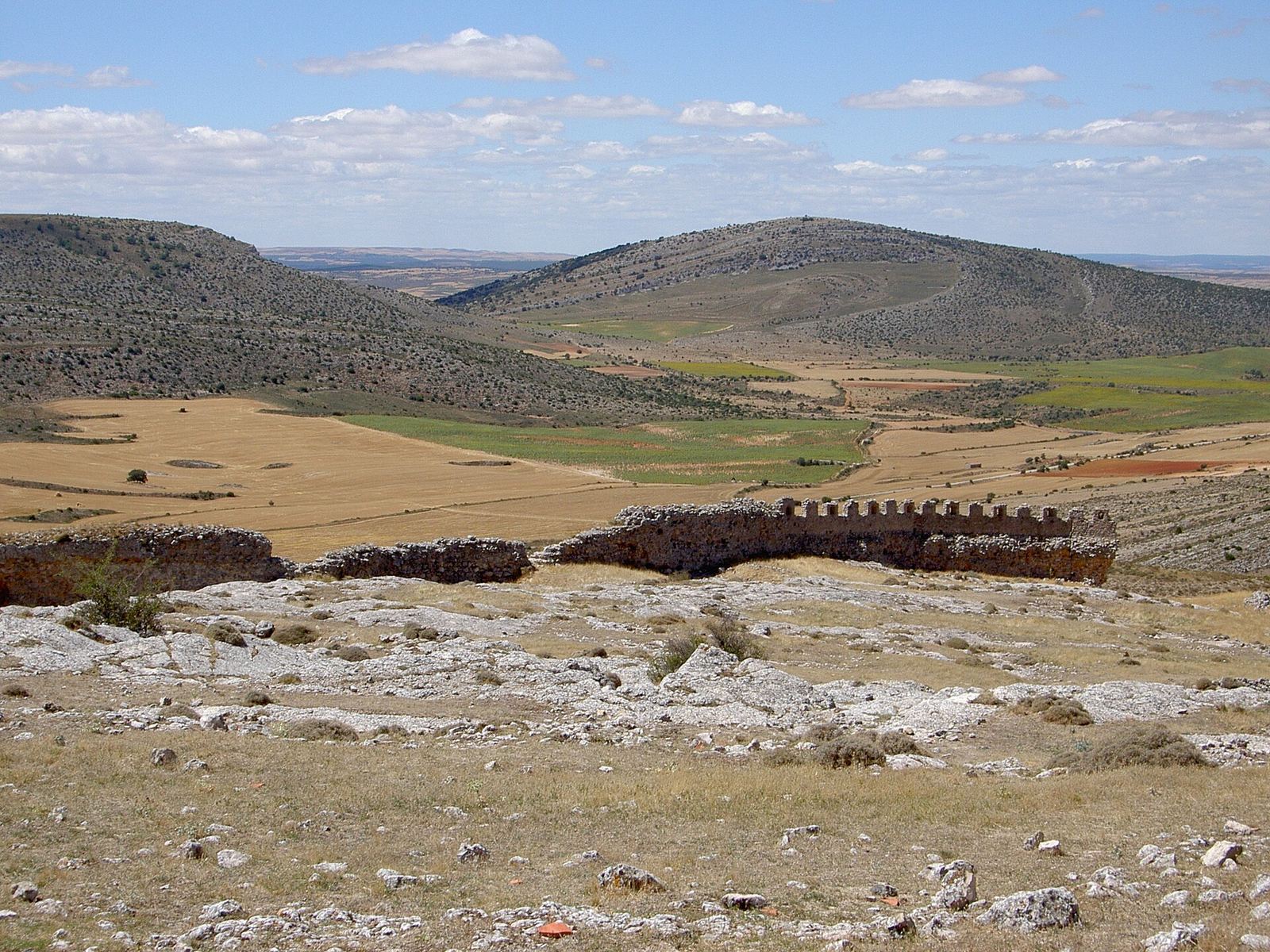
Peñalcázar occupies an isolated rocky plateau on a limestone mountain, 1,212 metres above sea level, near Quiñonería, with the Moncayo in the background. The rocky ground forms a natural barrier, and the exposed area has little vegetation and strong winds. The Peñalcázar River rises nearby and belongs to the Ebro drainage basin. Caves in the area have yielded remains of ancient human settlement.
Defences and religious buildings
Walled stronghold
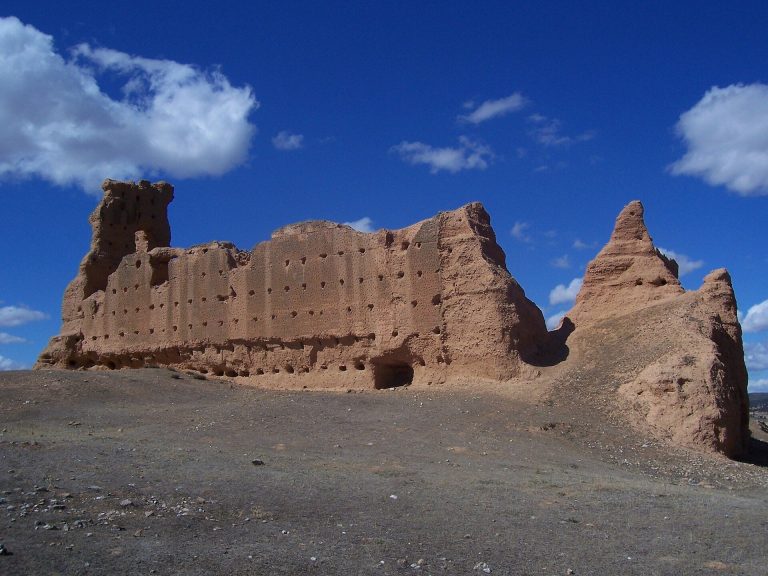
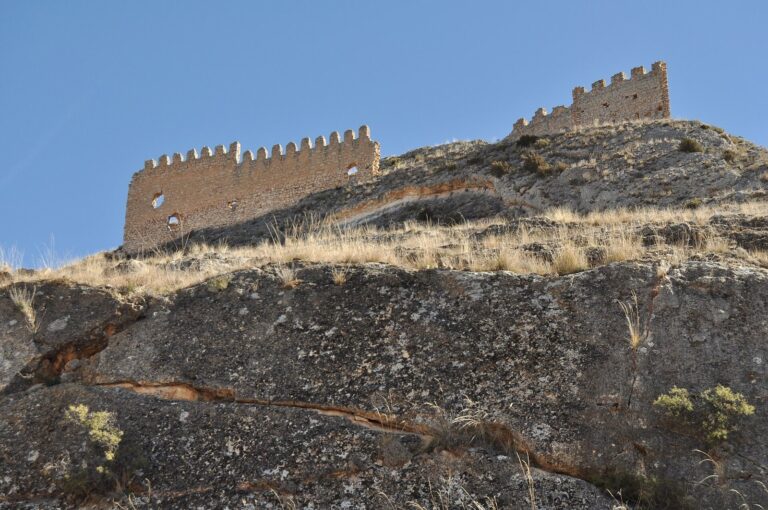
Peñalcázar was once a walled stronghold. Portions of its defensive walls survive.
Church of Saint Michael
The fifteenth-century parish church combines Gothic and Renaissance features. Its roof has almost entirely collapsed, though parts of the ceiling with Gothic ribs remain. The tower still stands, but its bells were stolen.
Hermitage
Ruins of an eighteenth-century hermitage also survive at Peñalcázar.
Mining remains
Mine workings
The abandoned mines lie about three kilometres south of the settlement, in the areas of El Estrepal and Monte de las Minas. Their ore includes silver-bearing galena, a lead mineral containing silver, as well as smaller amounts of sphalerite, chalcopyrite, and bournonite.
Worker settlement and smelter
The former settlement built for mine workers and the La Cruz smelter are associated with Peñalcázar’s nineteenth-century mining enterprise.