Colegio de San Bartolomé y Santiago: A University College in Granada
Site at a Glance
- Popularity
- Medium
- Country
- Spain
- Primary era
- Early Modern
- Eras represented
- Early Modern
- Civilizations
- Crown of Castile, Spanish
- Site type
- Civic
- Remains
- University
On this page9 sections
History
The Colegio de San Bartolomé y Santiago is a university-affiliated residential college in Granada, Spain, brought together as one institution in 1702 from two separate foundations. Its origins lie in the bequests of Diego de Ribera and Bartolomé Veneroso, prominent Granada figures who held the civic office of caballero de veinticuatro, a member of the city’s governing council.
Separate foundations and the Colegio de Santiago
Veneroso’s will of 21 March 1608 provided for a college for poor students under the direction of the Society of Jesus, a Catholic religious order. Ribera’s 1614 will instructed the rector of the order to establish a college dedicated to the Apostle James, known in Spanish as Santiago, and to use the bequest to support 16 students.
The Colegio de Santiago approved its constitutions on 12 May 1644 and opened on 20 November 1649. Juan de Leyva was its first resident student, and Tomás Crespo Moya its first rector. The Santiago college is Spain’s oldest continuously operating Colegio Mayor, a university-affiliated residential and educational institution. The separate Colegio de San Bartolomé was established later, nearly 87 years after Veneroso’s death.
Merger and move to the Veneroso palace
The colleges became a single, indivisible institution in 1702. Their first premises were a house on Calle San Jerónimo owned by Ribera. Following the merger, the combined college moved to the Palacio de los Veneroso on the same street. Juan de Arana had previously owned the palace, which Veneroso bought in 1582.
Royal protection and later governance
On 20 December 1774, after the Jesuits were expelled from Spain, King Carlos III took the college under his protection and granted it the title “Royal.” It then came under direct government management. Patronage later passed to the Provincial Council of Granada, the Chancery, and the University of Granada.
The Colegio now functions as a male university college within the University of Granada, serving mainly its students. Its motto is “To make good men for the Church and useful for public affairs.”
Remains
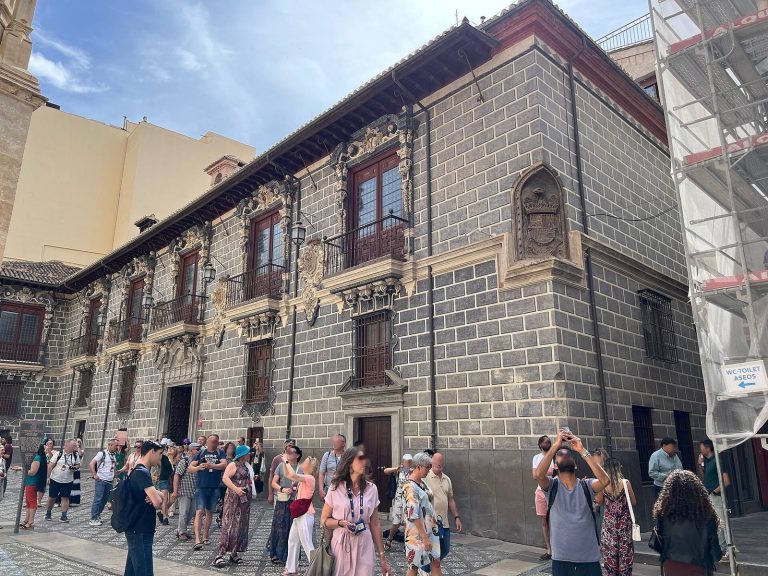
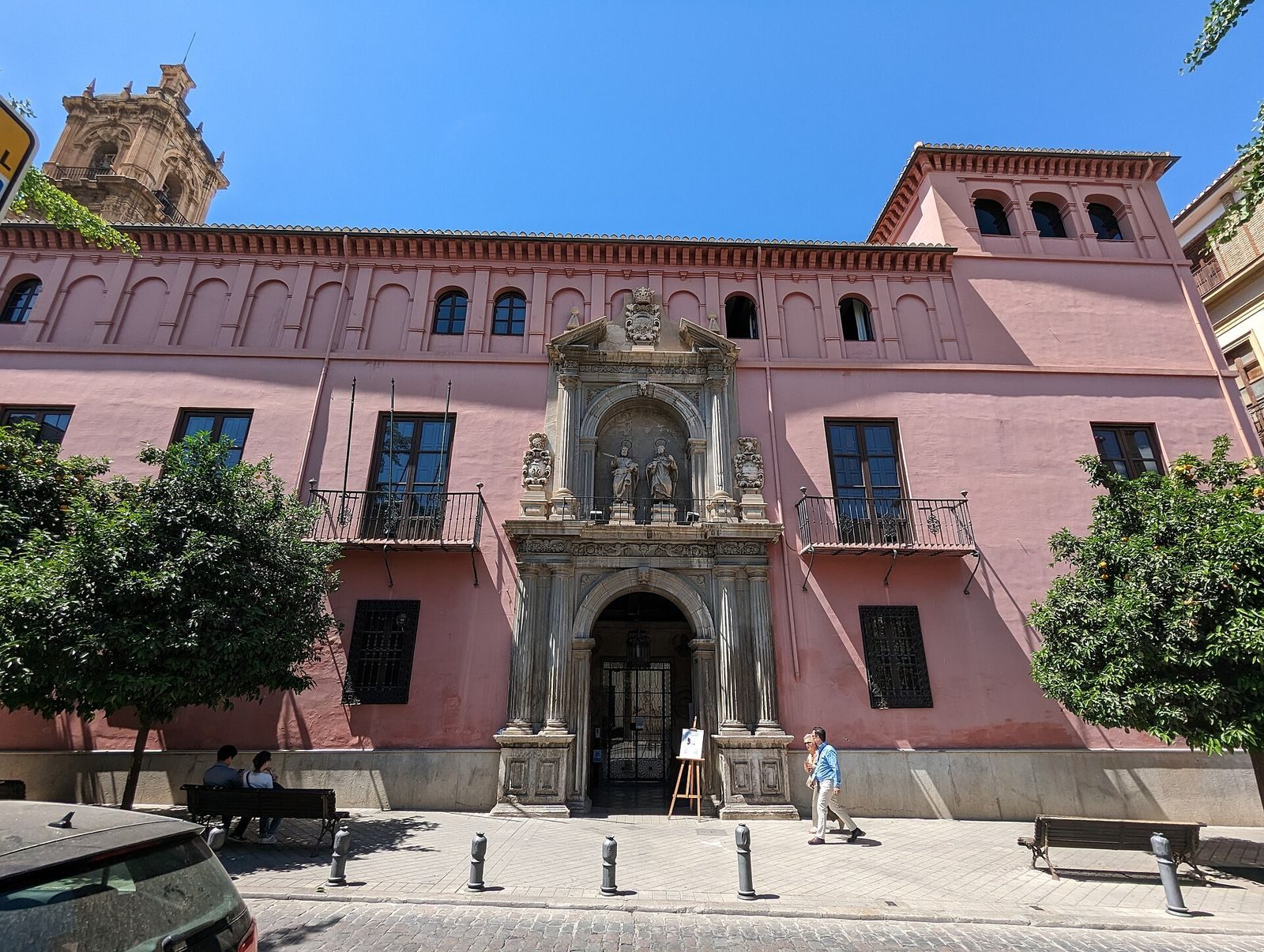
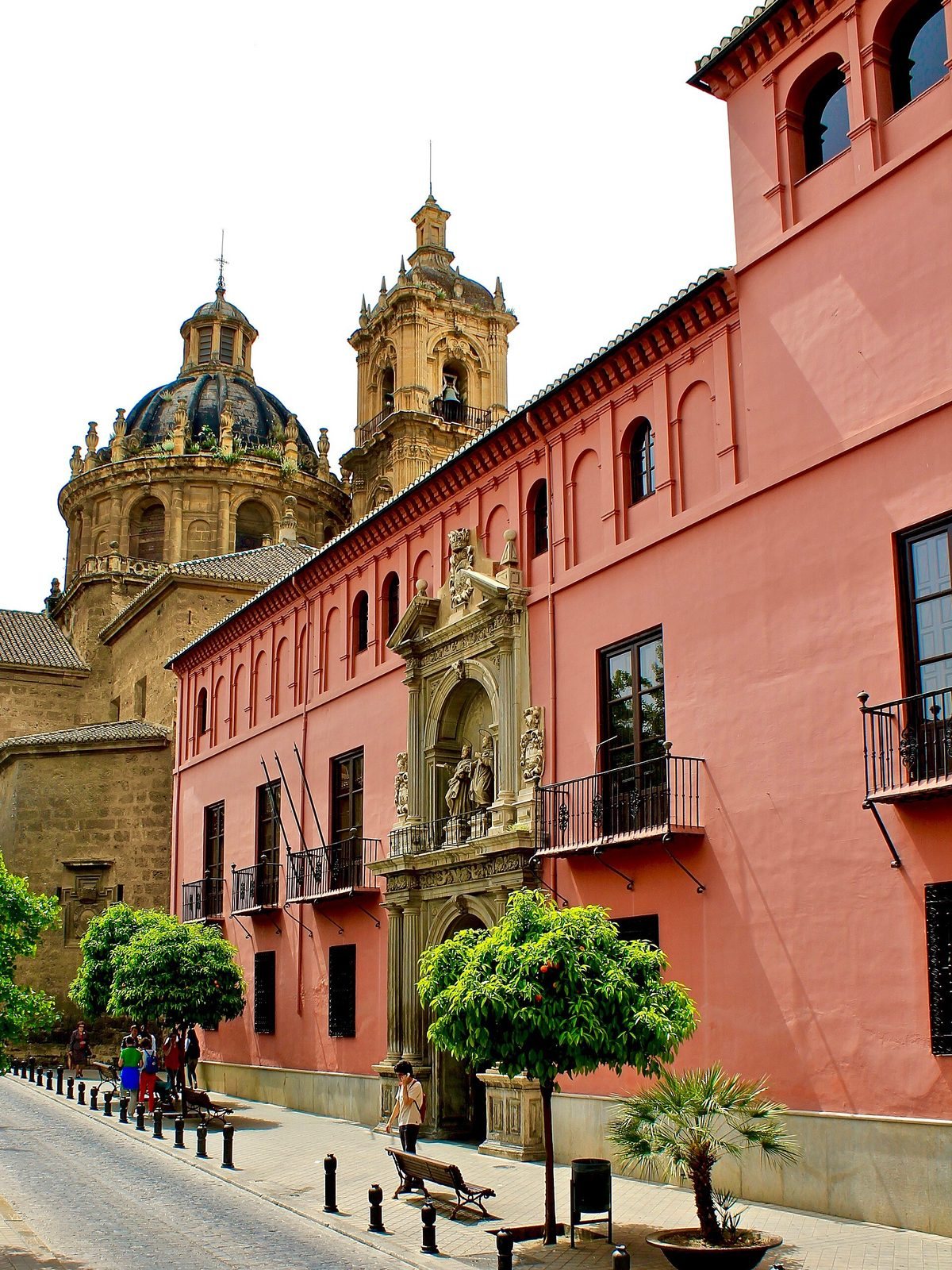
The college occupies the Palacio de los Veneroso, probably built in the first half of the sixteenth century. The building includes a main courtyard and a second courtyard with a garden, while its façade bears architectural and heraldic features associated with the colleges and their royal protection.
The palace and its features
Entrance portal
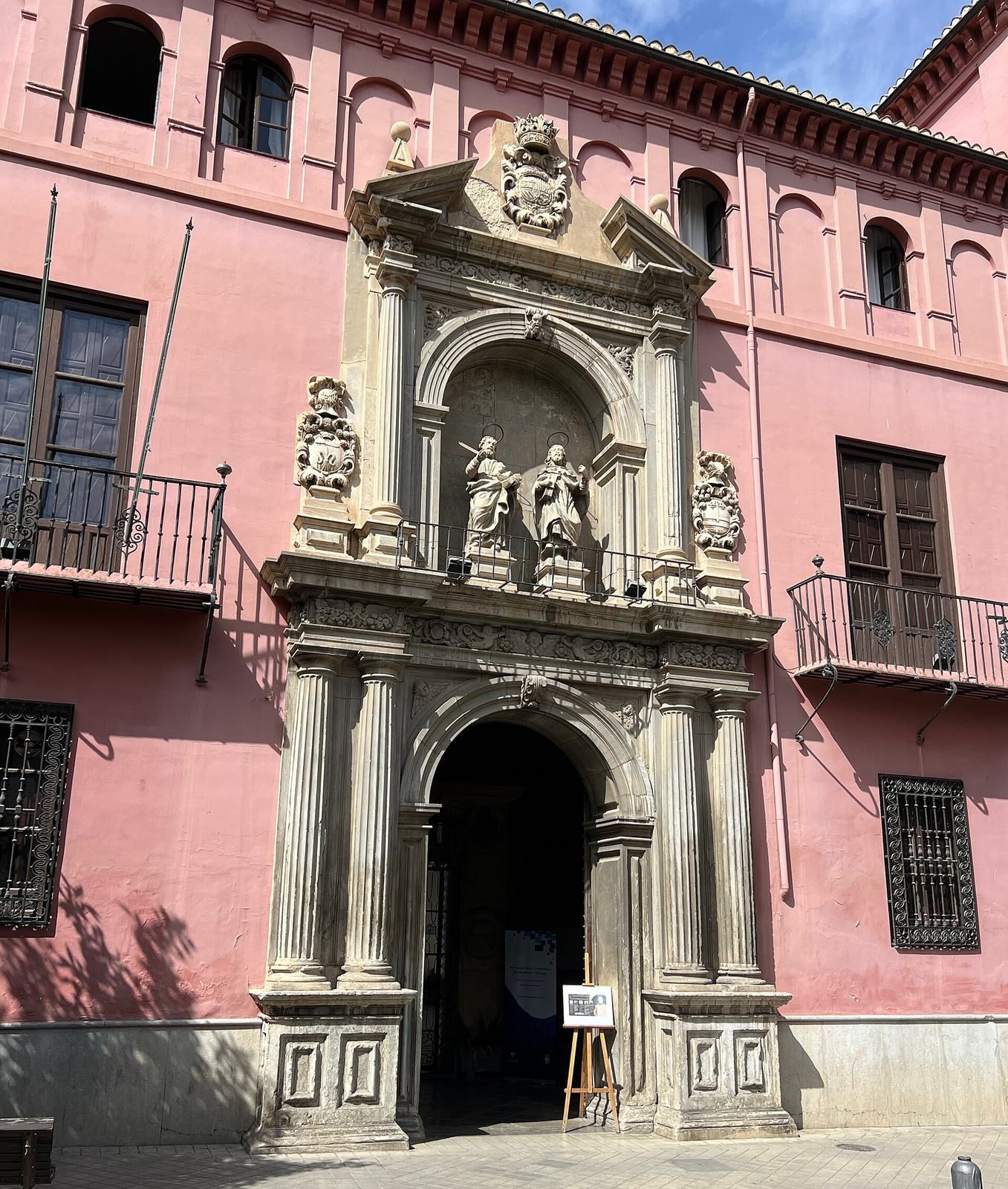
The façade’s portal has two Doric tiers, using a classical column style known for its relatively plain, sturdy forms. The lower tier has four columns dating to the early seventeenth century; the upper tier has two columns added in the eighteenth century. Images of the apostles Bartholomew and James, along with the coats of arms of the two colleges, also appear on the façade. A royal coat of arms of Carlos III was placed above the portal when the college came under the Crown.
The combined college arms bring together symbols associated with both founders. On the left are a knife linked to Saint Bartholomew’s martyrdom and a fleur-de-lis, the Veneroso emblem. On the right, the Cross of Santiago sits above green and white bars from the Ribera arms.
Courtyards and shared rooms
The main courtyard, also called the noble cloister, is the oldest part of the building. A second courtyard contains a garden. The palace also houses a library, chapel, dining hall, and the Carlos III auditorium, as well as a cafeteria, music room, study rooms, conference rooms, and a cinema.
Paintings and furniture
The Colegio’s collections include paintings and historic furniture. Portraits of former students are particularly noted.