The Istana: Singapore’s Presidential Residence and Government Estate
Site at a Glance
- Popularity
- Very High
- Country
- Singapore
- Primary era
- Modern
- Eras represented
- Modern
- Civilizations
- British
- Site type
- Civic
- Remains
- Palace
On this page16 sections
History
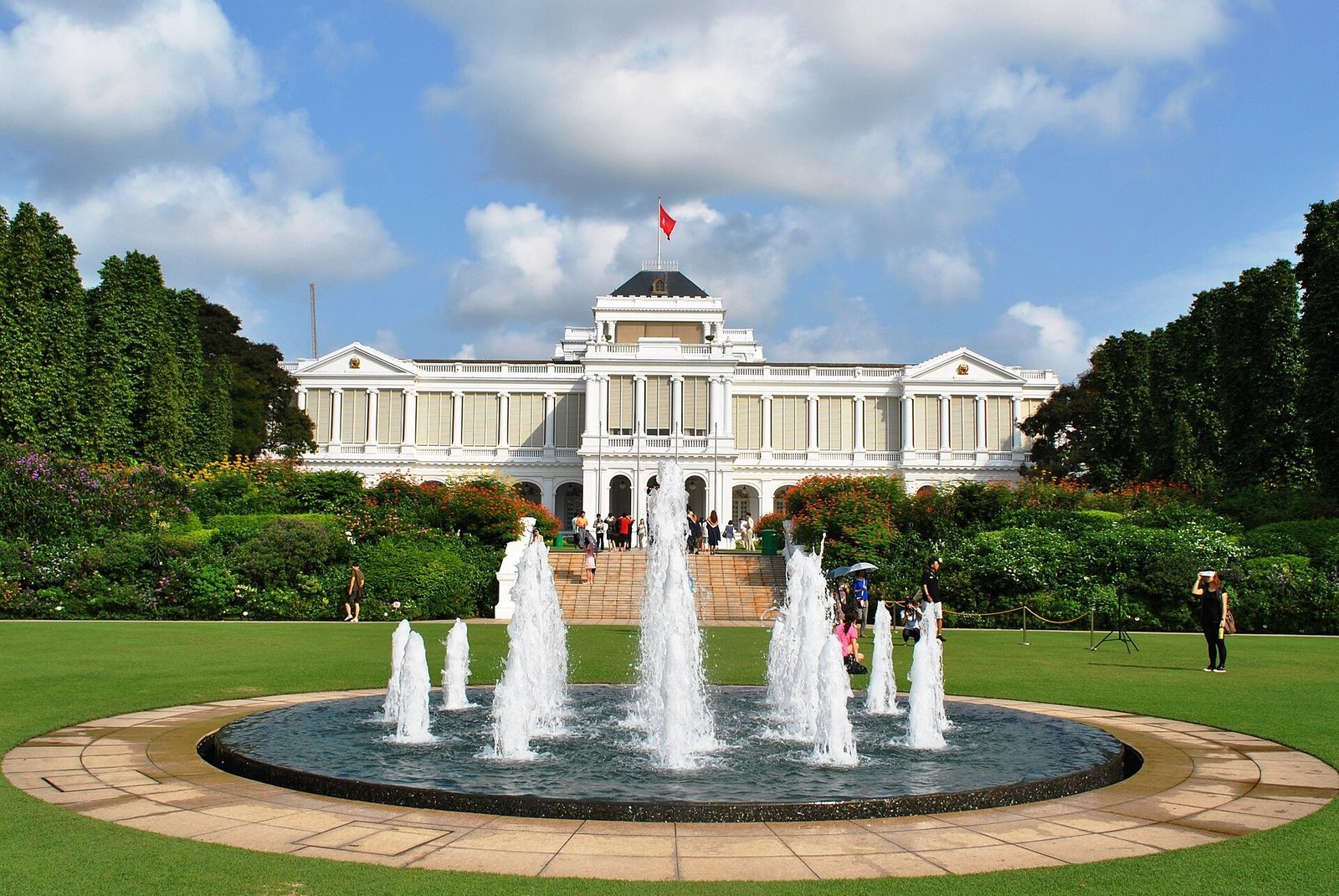
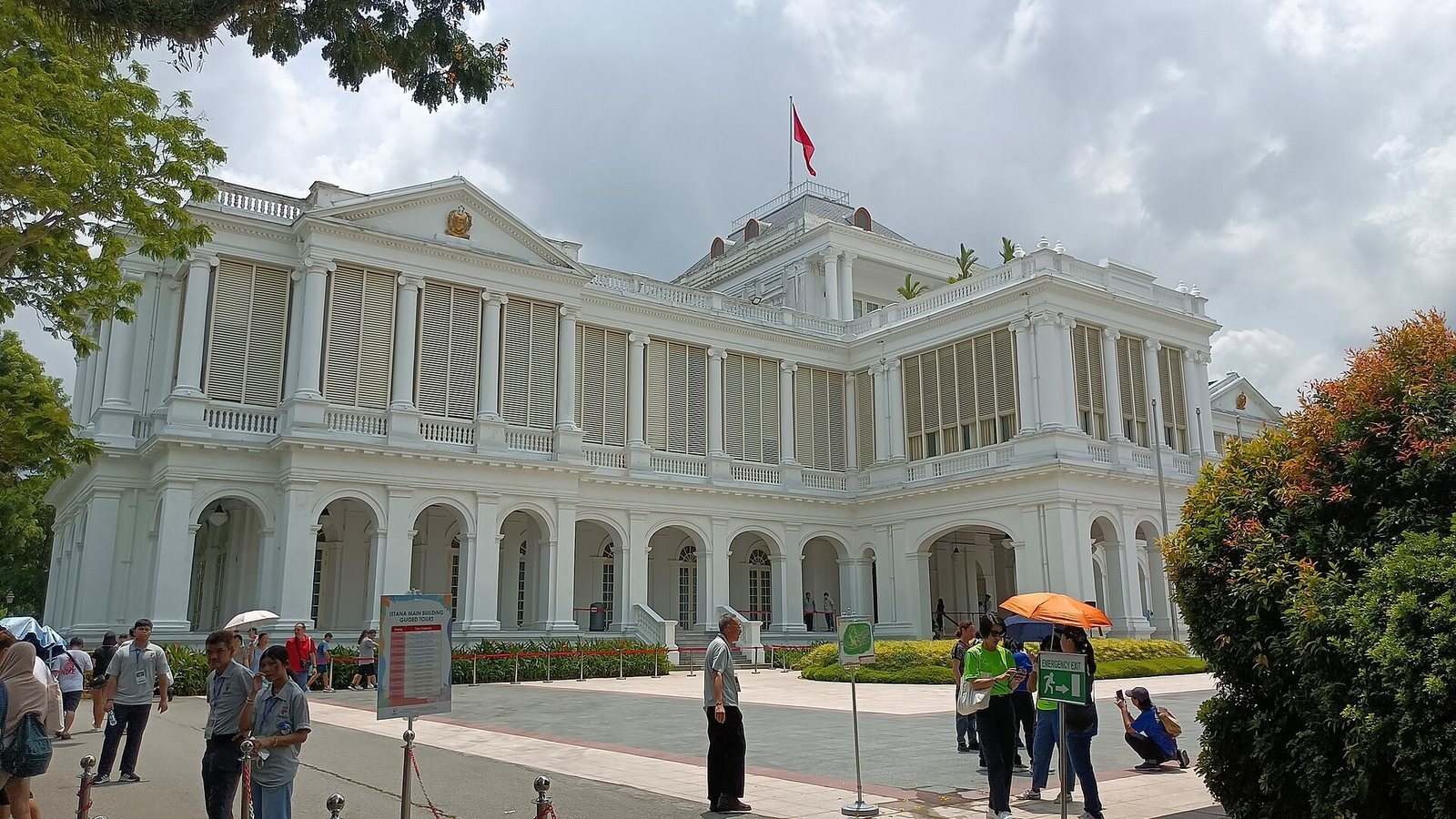
The Istana, whose name means “palace” in Malay, stands on elevated ground in Singapore and serves as the official residence and office of the president. Its three-storey mansion was built from 1867 to 1869 in the neo-Palladian style, which adapts classical forms associated with Andrea Palladio. Governor Sir Harry Ord commissioned the building, and engineer John Frederick Adolphus McNair designed it.
From plantation to Government House
The estate was once part of a large nutmeg plantation on Mount Sophia, owned by merchant Charles Robert Prinsep. After Singapore’s nutmeg trade collapsed, the British colonial government acquired the land in 1867 for a governor’s residence. McNair supervised construction, which relied extensively on Indian convict labour. Ord faced objections to the proposed building’s scale and cost but kept the plan unchanged. The mansion was completed shortly before Prince Alfred, Duke of Edinburgh, visited Singapore.
Sir Harry Ord first occupied the residence in 1869, when it was known as Government House. It became the official home of the Governor of the Straits Settlements, British colonial territories in Southeast Asia, and the estate developed into a centre for administration and ceremony. A separate building, Sri Temasek, was also constructed in 1869 for the Colonial Secretary, a senior official in the Straits Settlements administration.
Japanese occupation and return to British rule
During the Japanese invasion of Singapore in 1942, shelling damaged the complex. Governor Sir Shenton Thomas and his wife remained at Government House until their evacuation, taking the British flag with them and safeguarding it during the occupation. The Japanese military administration then used the Istana as a residence and administrative headquarters. Field Marshal Hisaichi Terauchi occupied the building.
Following Japan’s surrender in September 1945, the estate returned to British control and again housed the governors of the Crown Colony of Singapore. In 1959, when Singapore gained self-government, the building passed to the Singapore government and was renamed Istana Negara Singapura. Sir William Goode became Singapore’s first Yang di-Pertuan Negara, the title of the head of state before the presidency, and took office there from 3 June to 3 December 1959. Yusof Ishak succeeded him.
Presidential residence and government estate
When Singapore became independent in 1965, the building took the name The Istana, and Yusof Ishak’s title changed from Yang di-Pertuan Negara to President of Singapore. The estate became the president’s official residence and office, and a setting for state receptions, ceremonies, and the presentation of credentials by foreign missions. Across its periods of use, it has hosted 21 terms of governorship, two under the Yang di-Pertuan Negara, and nine presidential terms. These figures exclude the Japanese occupation from 1942 to 1945.
The estate also accommodates government offices. The Istana Annex has housed offices for the prime minister, Senior Minister, and Minister Mentor, a senior advisory cabinet position. Sri Temasek has served as the prime minister’s official residence since independence, although no prime minister has lived there. Villas intended for foreign heads of state are used infrequently. After Devan Nair’s presidency, neither presidents nor cabinet ministers lived at the Istana.
The Istana was designated a national monument on 14 February 1992. Major renovations and upgrades from 1996 to 1998 added space and modern facilities while retaining historic architectural elements. The work expanded areas used for functions and upgraded mechanical and electrical systems. Conservation is guided by Singapore’s National Heritage Board and Urban Redevelopment Authority, public bodies involved in heritage protection and planning; the grounds and gardens are also periodically restored and replanted.
Remains
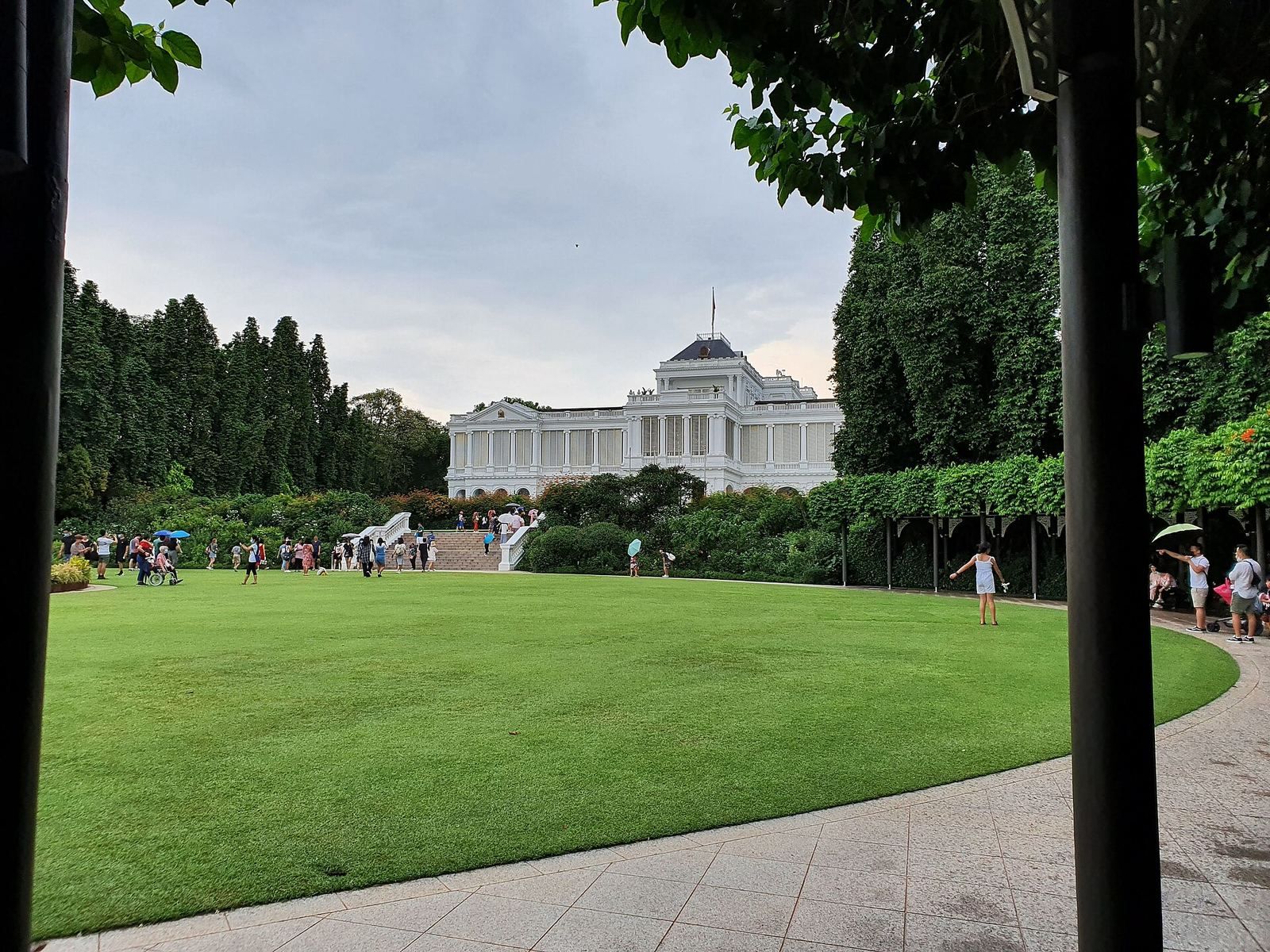
The 106-acre estate, also called the Domain, occupies elevated ground. Its mansion stands above landscaped grounds, with a three-storey central block and two-storey side wings forming the principal building. Gardens, ponds, separate buildings, and other features occupy the surrounding estate.
The main mansion
Exterior and plan
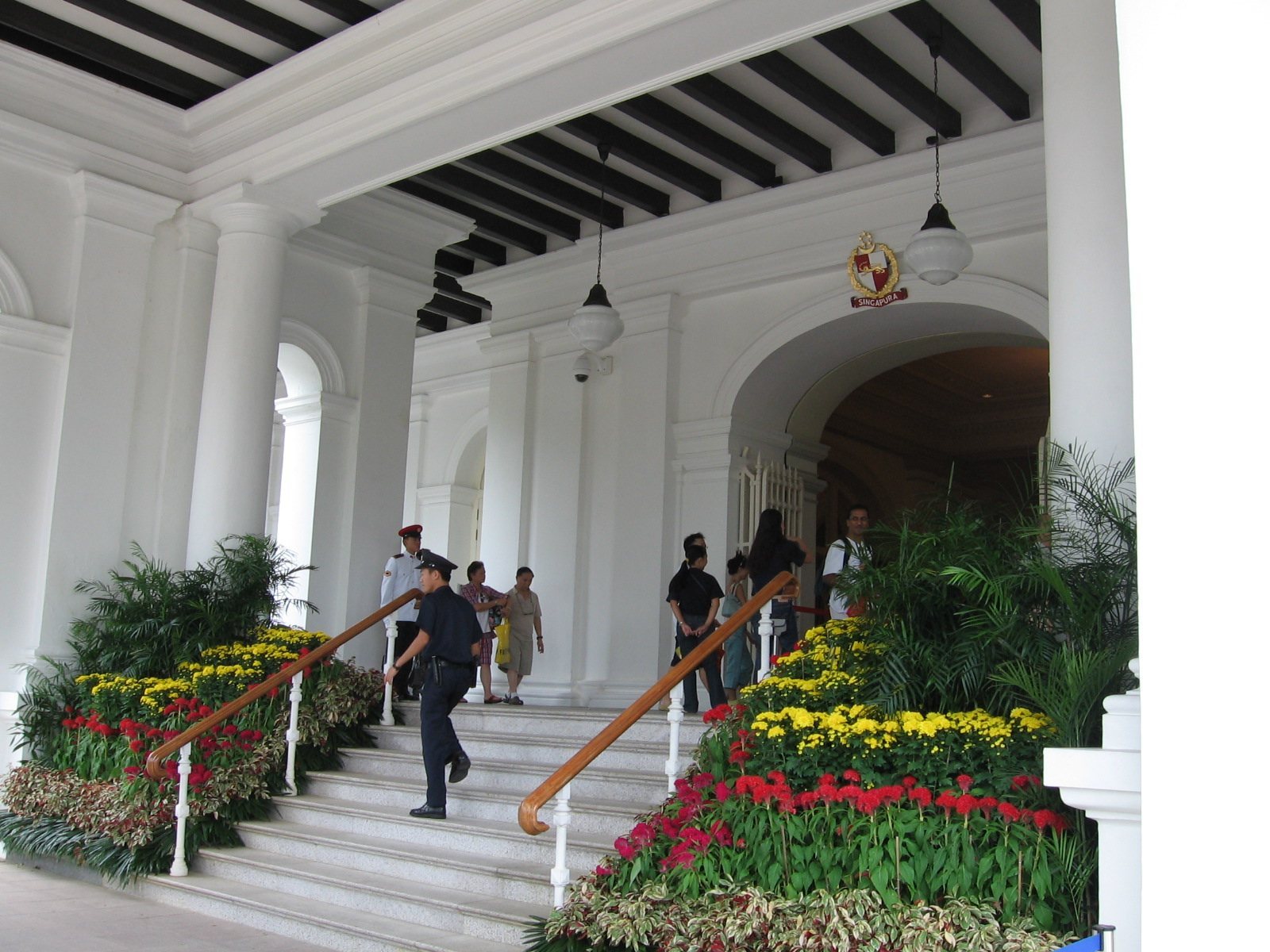
The central block rises 28 metres and is flanked by two-storey wings. Deep verandahs, louvred windows, panelled doors, and prominent columns suit the tropical setting and encourage cross-ventilation. The wings use Ionic, Doric, and Corinthian orders, three classical column styles. Ionic columns line the second storey and Doric columns the first. A rectangular cupola, a small roof structure, and a flagpole mark the highest point of the complex. The Presidential Standard flies there when the president is within the grounds.
First-floor rooms
The first floor contains six halls used for ceremonies and entertaining, as well as offices. The Reception Hall is used to receive dignitaries and foreign heads of state, and for tea receptions after state dinners. The Banquet Hall hosts presidential dinners and entertainment. A painting designed to create an illusion of depth, with an orchid backdrop, decorates one end of the hall. The room once included part of the kitchen and workshops and is also used to display state gifts.
The State Room serves as the president’s office and a venue for events such as swearing-in ceremonies and award presentations. It contains the Presidential Chair, State Flag, and Presidential Standard. The statue of Queen Victoria that once stood in this room is now beside Victoria Pond.
Second-floor rooms
A small Reception Room leads to the East and West Sitting Rooms, which are used for discussions with foreign dignitaries. The East Sitting Room displays state gifts, including a French-made chinaware set presented to President Benjamin Sheares, protected in a bulletproof-glass case. The West Sitting Room has timber flooring dating from the 1930s and has been used for interviews with heads of state and Members of Parliament. Replicas of Arab tapestries presented by the Sultan of Oman to President Ong Teng Cheong in the 1990s hang on its walls.
The Sheares Room is a private dining room for the president and the president’s family, and is sometimes used by Cabinet members. Its furnishings include a boat-shaped table and seven painted panels showing Singapore’s presidents and their Cabinet members. Gold-coated name cards made by Risis mark diners’ positions. The Yusof Room, named after Yusof Ishak, contains his bust and a large Chinese-style panel painted with phoenixes and peonies.
Grand Staircase and third floor
The U-shaped Grand Staircase connects the second and third floors. On its first landing stands the Guardian of the House, a 35-centimetre figure made from wood, ivory, and mother-of-pearl by Indian labourers involved in the building’s construction. It was presented to Sir Shenton Thomas when he took up residence. During the Second World War, the figure was stored away; it was found in 1995 beside the British coat of arms that had once hung at the main entrance.
On the third floor, the President’s Lounge serves as the main balcony, overlooking the ceremonial square and the lawn on the ground floor. Its design was based on the Blue Room, a formal reception room in the White House. The president’s office is opposite the lounge.
Other estate buildings
Annexe and villas
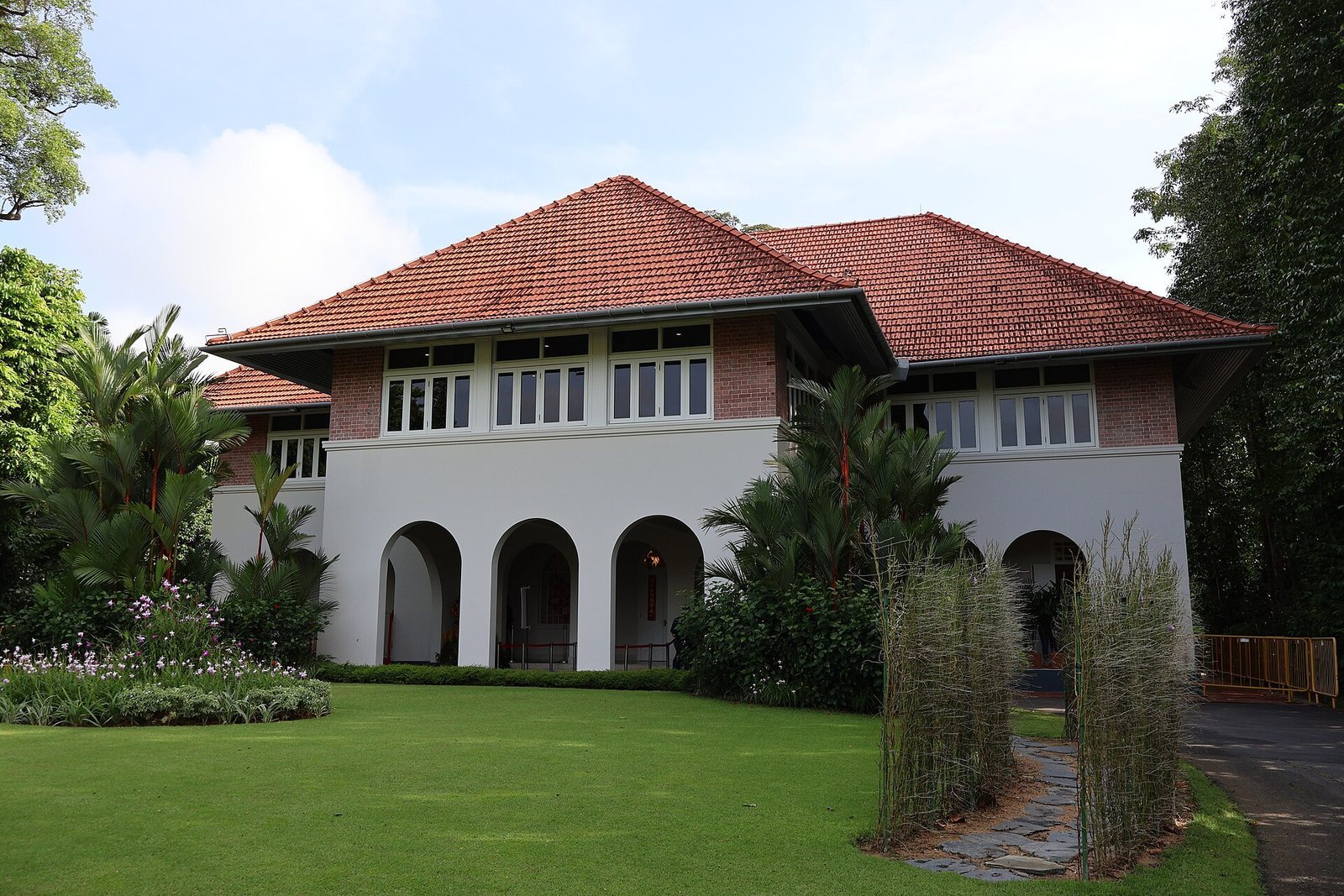
Named buildings within the grounds include the Annexe, Istana Villa, built in 1938, and The Lodge, built in 1974. The villas were intended for foreign heads of state and are used infrequently.
Sri Temasek
Sri Temasek is a separate building within the estate. It has served as the prime minister’s official residence since independence, although no prime minister has lived there.
Grounds, gardens, and other features
Gardens and water features
The landscaped grounds contain gardens, ponds, and mature trees accumulated through more than a century of development. They include heritage trees and rare plant species, and more than 100 native and migratory bird species are found there. Marsh Garden dates from 1970, and the estate also includes a nine-hole golf course. Victoria Pond lies south of the Istana grounds. A statue of Queen Victoria, formerly in the State Room, stands at the end of the pond.
Burial place and artillery gun
On the southern slopes, near the Orchard Road entrance, is a burial place for Muslims from Bencoolen, the historical name for Bengkulu on Sumatra, who came to Singapore between 1825 and 1828. The grounds also hold a Japanese Type 92 10-centimetre field-artillery gun. It was presented to Lord Louis Mountbatten after Japan’s official surrender to the British in 1945.