Fort Pasir Panjang: A British Coastal Artillery Fort in Singapore
Site at a Glance
- Rating
- 4.2
- Popularity
- Low
- Country
- Singapore
- Primary era
- Modern
- External website
- Open
- Eras represented
- Modern
- Civilizations
- British
- Site type
- Military
- Remains
- Fort
On this page9 sections
History
Fort Pasir Panjang, also known as Labrador Battery, is a British coastal artillery fort at Labrador Park on Singapore’s southern tip. Built in the nineteenth century as part of the defences against piracy and foreign naval forces, it protected the western approach to Keppel Harbour.
Planning the harbour defences
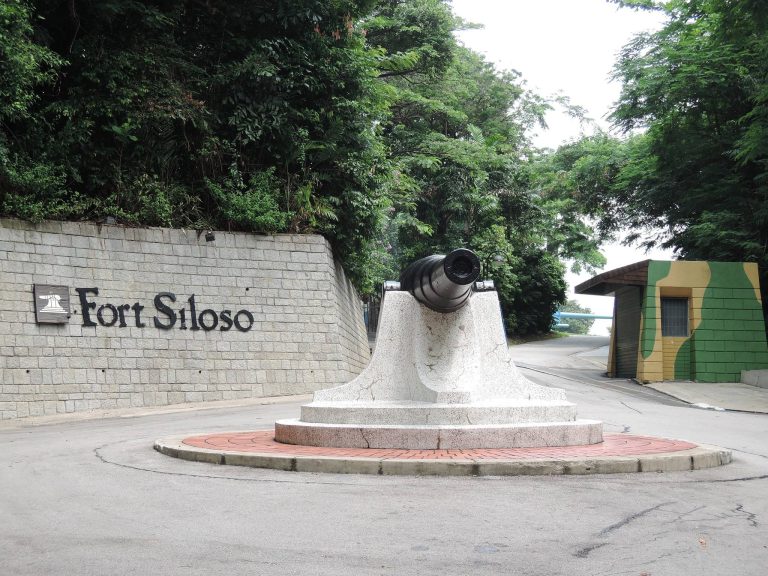
British plans to defend Singapore, established as a trading post by Sir Stamford Raffles in 1819, date to 1843. In 1878, the British decided to build forts on both sides of the entrance to New Harbour. Fort Pasir Panjang guarded one side, while Fort Siloso defended the other. The area takes its name from Labrador Bay.
Two granite outcrops called Long Ya Men, or “Dragon’s Teeth Gate,” once marked the harbour entrance and served as a navigation landmark. In August 1848, Straits Settlements surveyor John Thomson ordered the outcrops blown up to widen the entrance. Piracy remained a danger to Singapore’s trade into the 1850s, despite Admiral Henry Keppel’s successful campaigns against pirates in 1842. Keppel surveyed the harbour for an anchorage in the 1880s, and New Harbour was renamed Keppel Harbour in his honour in 1900.
By 1881, mines tethered to the seabed had been laid between the forts and the harbour’s eastern entrance. A safe passage about 240 metres wide was left for friendly ships. The mines formed another element of the harbour’s defences.
Armament and wartime role
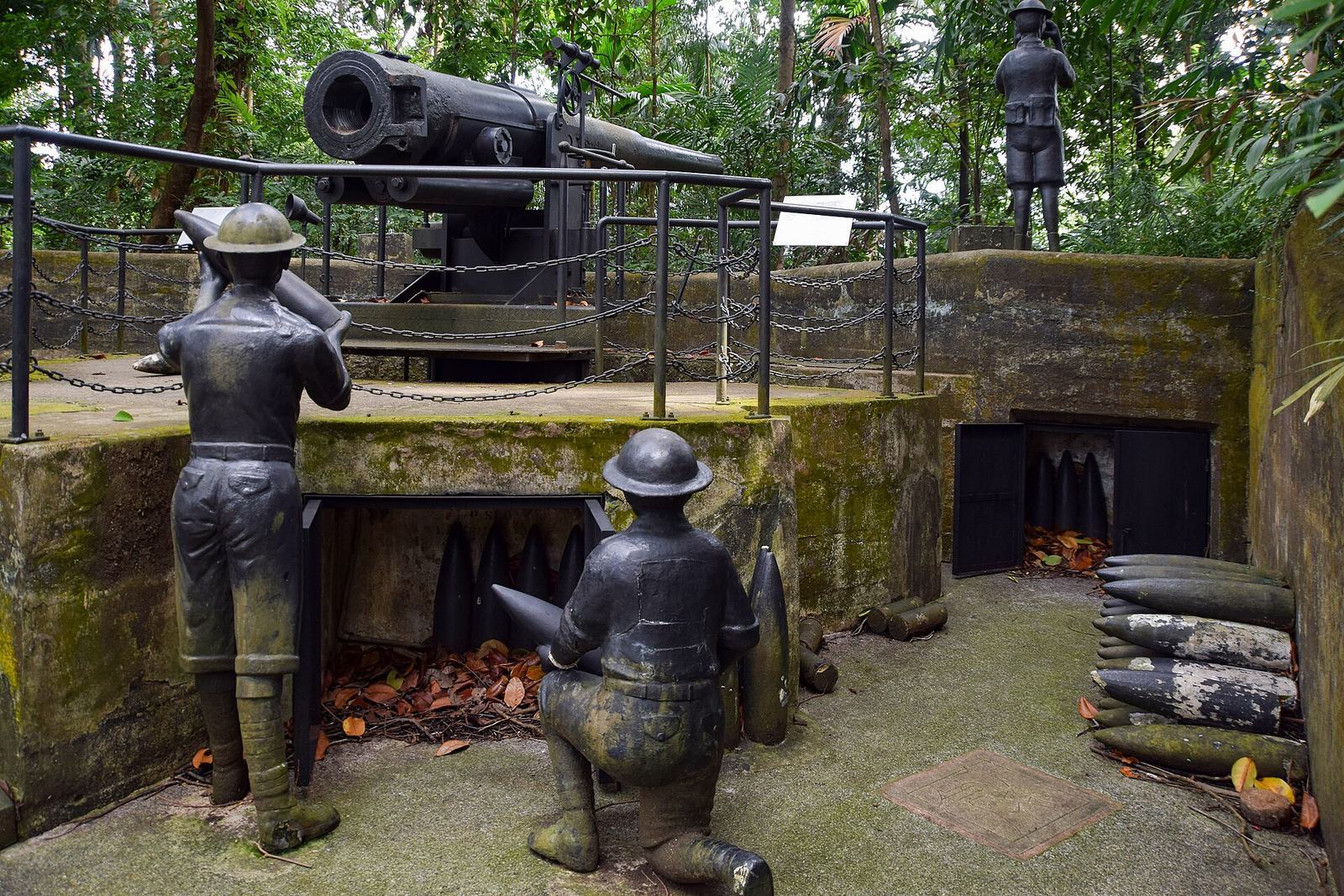
The 7th Coast Artillery Regiment operated the fort, taking orders from Faber Fire Command, the British command responsible for directing coastal artillery. Two 7-inch guns loaded from the muzzle were installed as temporary defences in 1878, then removed. A review in 1885 recommended their return alongside 9.2-inch guns loaded from the rear. The 7-inch guns were back in place by 1886, and the 9.2-inch guns arrived later. In 1896, a proposal called for the 7-inch weapons to be replaced by two 6-inch quick-firing guns, designed to fire more rapidly. The review judged the older guns inadequate in range, accuracy and rate of fire.
Before the Second World War, the fort was upgraded as Labrador Battery. Its surroundings were incorporated into Singapore’s coastal defences with tank obstacles, land mines and beach defences. On 13 February 1942, during the Battle of Pasir Panjang, the battery fired high-explosive shells in support of the Malay Regiment’s 48-hour fight against Japanese forces. The Japanese troops eventually surrounded and massacred the regiment. Although the guns could turn through 360 degrees and were fired inland at advancing troops, most of the battery’s ammunition was armour-piercing. It had little effect against infantry, and the guns saw limited action in the Battle of Singapore.
Before the British surrender on 15 February 1942, British forces destroyed the remaining coastal guns to prevent their use by the Japanese. After the war, advances in air defence made such forts obsolete, and British forts were decommissioned worldwide. In 1995, Singapore’s National Heritage Board designated the site as one of the country’s 11 Second World War sites.
Remains
The surviving fortifications occupy a steep, mangrove-fringed landscape overlooking Labrador Bay. Their layout includes coastal defence ruins, a casemate on the hilltop and ammunition spaces beneath gun positions. The bay’s waters are deep and calm.
Harbour edge and coastal remains
Ruins of the coastal fortifications remain visible at Labrador Battery. Near the former site of Long Ya Men, a white obelisk at Tanjong Berlayer Point marks the western limit of the original harbour. The point is also identified as the southernmost tip of the Asian continent.
Hilltop buildings and ammunition system
Casemate
The casemate, a fortified chamber used for storage and shelter, stands at the hill’s highest point and contains four rooms. It stored ammunition and sheltered gunners and infantry, and was associated with nearby 9.2-inch guns. One room contains an entrance to a tunnel leading to underground stores beneath the first gun position. Some sections of the casemate were built with bricks supplied in the late 1930s by Lim Bo Seng, a major supplier to the colonial government.
Underground stores and tunnels
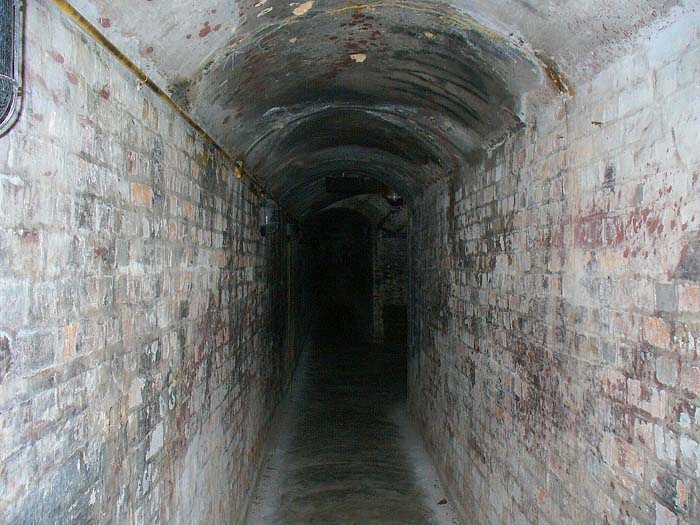
The tunnels served the gun positions above them. An enlarged chamber allowed people to pass in both directions before the passage divided into branches leading to cartridge and shell stores and their lifting areas. The tunnels serving Gun Emplacement III, a numbered artillery position, form the most extensive system identified at Labrador Park.
The underground stores included a lighting room, the only room where open flames were permitted, a cartridge room and cartridge-lifting area, and a filled-shell store with its own lifting area. Lifting mechanisms raised ammunition to the guns. The underground arrangement protected the stores from enemy fire, sheltered gunners and helped shield the guns and their crews from accidental explosions below.
Gun positions
A modified gun position held two 6-inch quick-firing guns. Each shell weighed 45 kilograms, and ammunition included common shells, shrapnel shells and case shot.