Isgård: A Manor House and Farm in Denmark
Site at a Glance
- Popularity
- Medium
- Country
- Denmark
- Primary era
- Modern
- Eras represented
- Early Modern, Modern
- Civilizations
- Danish
- Site type
- Domestic
- Remains
- Manor House
On this page8 sections
History
Isgård is a manor house and farm on the Tved peninsula in southern Djursland, Denmark. The date when construction began is uncertain. In the Middle Ages, the estate was known as Eg, meaning Oak, a name that survives in a nearby village. Isgård belonged to Bishop Skjalm Vognsen, a senior church official who was among the builders of Aarhus Cathedral during the 12th and 13th centuries.
Confiscation and changing ownership
Around 1536, Denmark shifted from Catholicism to Lutheran Protestantism during the Reformation. The Crown confiscated church property, and Isgård, then part of Aarhus Cathedral’s estate, passed into royal hands. In 1544, the king sold it to Anders Christiernsen Sandberg of Quelstrup, a neighboring landowner and High Court judge.
In the early 17th century, Isgård’s owner, Joachim Gersdorff, acquired three other estates around Aarhus Bay: Rolsøgård, Vosnæsgård, and Quelstrup. These combined holdings were divided again in the late 18th century. Isgård changed hands frequently during the 19th century.
Nineteenth-century building and later interpretation
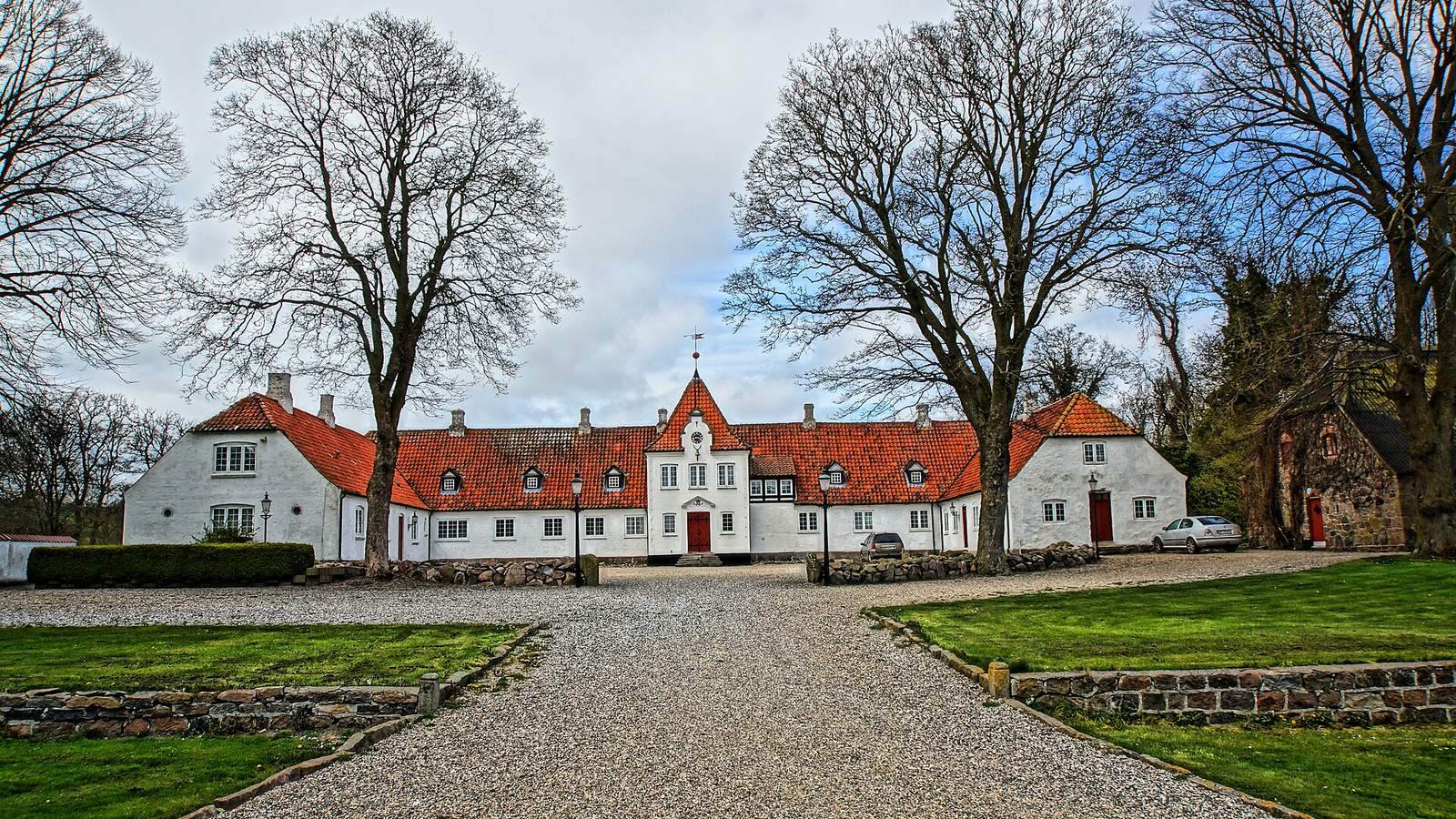
In 1890, Just Henrik Krieger and his wife, Baroness Ellen Gyldenstjerne, built Isgård’s present main building. In 2022, historian Casper Clemmensen proposed that the estate may have influenced the English author J. R. R. Tolkien’s development of Isengard, a fortress in Tolkien’s fictional world.
Remains
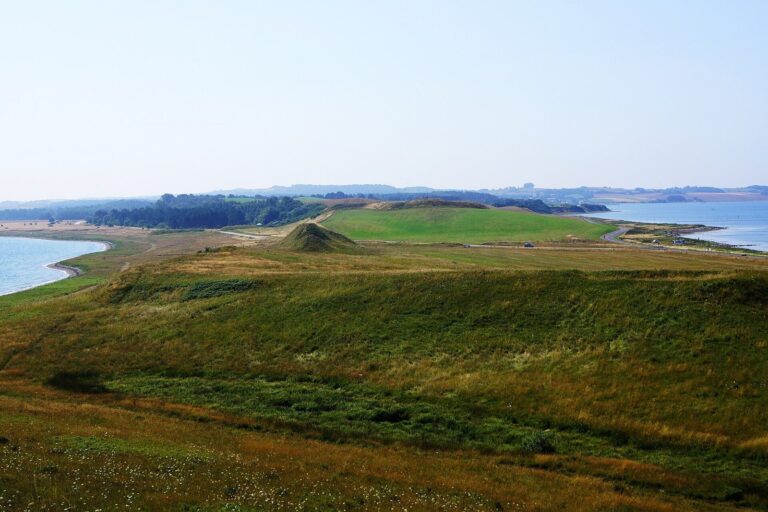
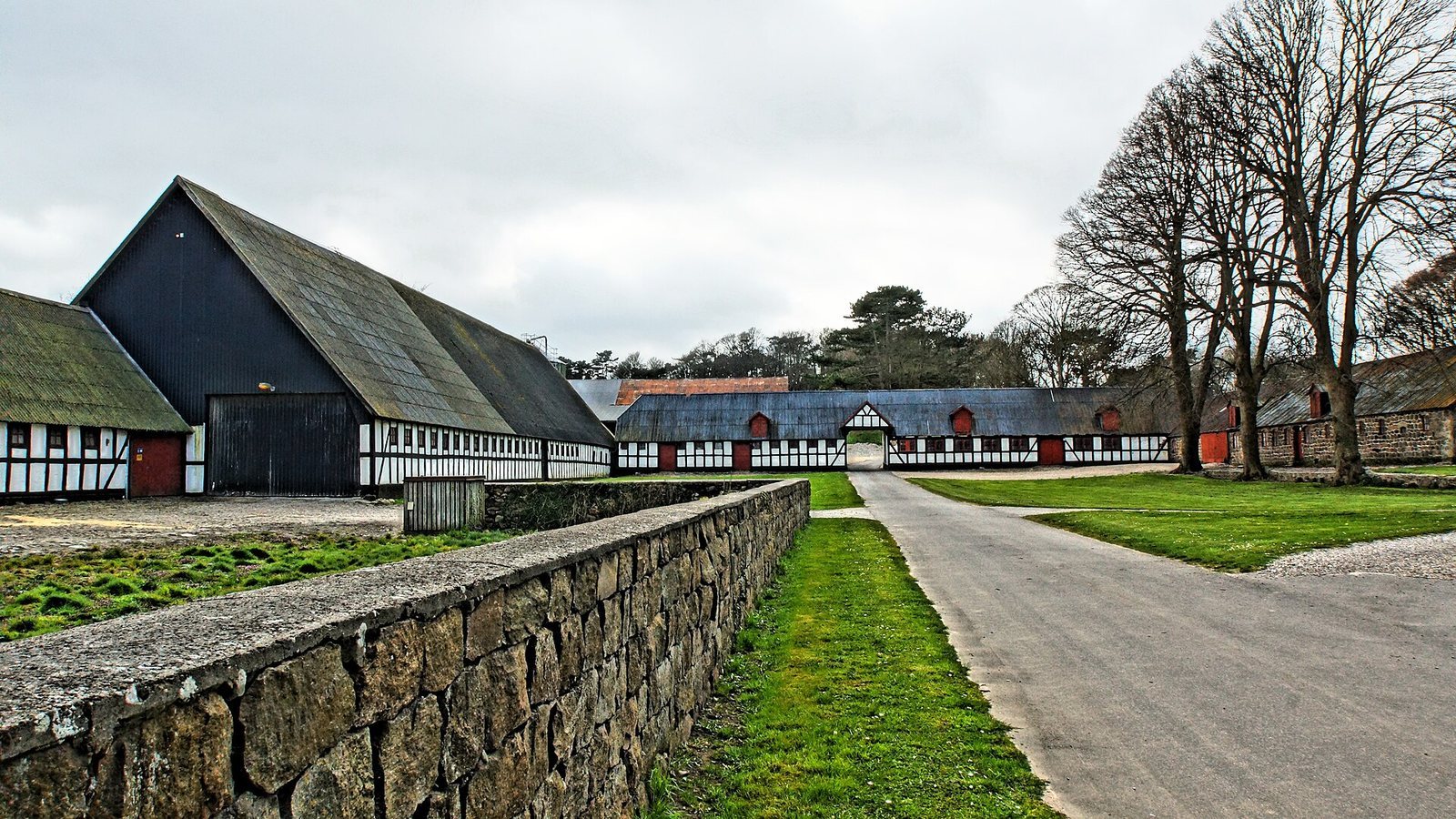
The manor and farm occupy land on the Tved peninsula between Aarhus Bay to the west and Begtrup Bay to the east. The estate covered 263 hectares in 2011, and its buildings include a main residence and farm structures around a main yard.
Buildings and farmyard
Main building
The main building serves as the manor residence within the wider farm estate.
Older farm buildings
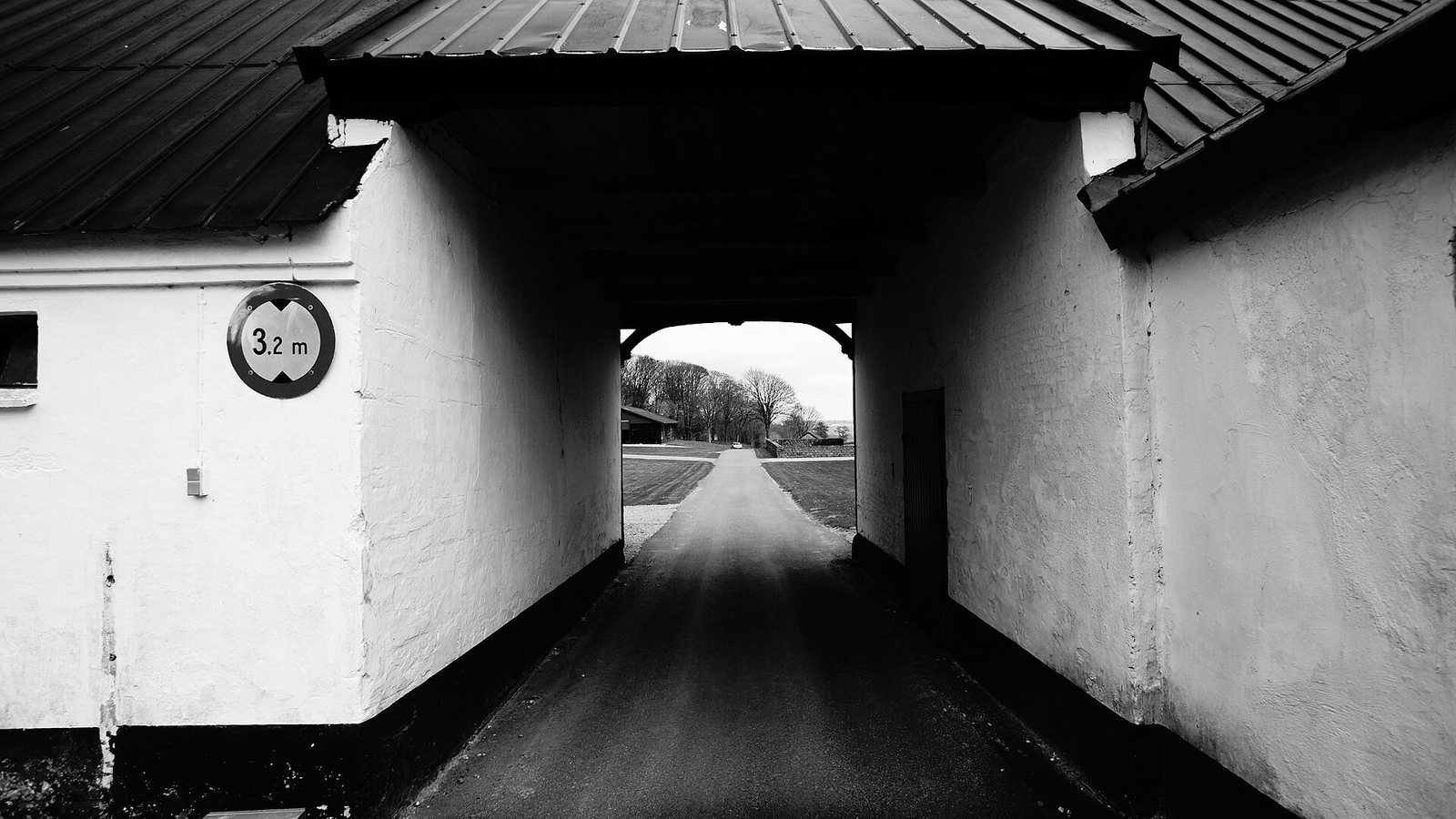
The oldest buildings date from the 18th century. A road crosses the main yard and passes beneath a narrow archway in one of the older farm buildings.
Coast and surrounding terrain
Steep slopes along the southern and eastern coastline often erode down to a beach that can be walked along. The tidal range is usually less than one foot. The surrounding hills consist mainly of moraine, material deposited by glaciers, with varied clays and patches of sand.