Gut Hohen Luckow: A Baroque Manor Estate in Germany
Site at a Glance
- Popularity
- High
- Country
- Germany
- Primary era
- Early Modern
- Eras represented
- Early Modern, Modern
- Civilizations
- Holy Roman Empire
- Site type
- Domestic
- Remains
- Manor House
On this page10 sections
History
Gut Hohen Luckow is a manor estate in Hohen Luckow, within the municipality of Satow in Mecklenburg-Western Pomerania, Germany. The von Bassewitz family held the estate from the late Middle Ages, and Christoph von Bassewitz built its present Baroque manor house in 1707.
Von Bassewitz ownership
After Christoph’s death, his third cousin Detlof Hans von Bassewitz inherited Hohen Luckow. He took on the estate’s debts and undertook to make payments to Christoph’s relatives.
The von Brocken family and estate economy
Ownership changed several times after 1810. In 1840, the estate passed to the von Brocken family, beginning with Georg Philipp von Brocken, a Mecklenburg official responsible for the ducal ruler’s estates. Georg Philipp was married to Sophie von Schmidt. Their daughter Louise married Arthur von Landsberg, an estate owner and hereditary cupbearer, at Hohen Luckow in 1853. Georg von Brocken (1828–1891) became the heir.
Hohen Luckow remained a fief, land held through a feudal relationship, until 1918. It belonged to the Ritterschaft, an organized body of landed nobility whose district office was at Bukow near Bad Doberan. The estate lay within the Grand Duchy of Mecklenburg-Schwerin, a German state ruled by grand dukes.
In 1888, the estate covered 1,072 hectares of agricultural land and included four peasant holdings under hereditary leases and a mill. The recorded area was confirmed in 1896. A 1928 property directory listed 1,000 hectares, including 56 hectares of woodland. Farming included intensive pig breeding and large-scale sheep raising, with 710 sheep kept in the estate’s stalls. The estate also ran a health-insurance fund for its agricultural workers.
Expropriation and return to private ownership
Christa Freifrau von Langen, née von Brocken, inherited Hohen Luckow in 1918. Until after 1941, her main home was the manor house at Pötenitz; following the land reform, she lived in Bavaria. In 1945, Hohen Luckow was expropriated and nationalized as a state-owned agricultural estate under East Germany’s socialist system. The manor house became its administrative building. The operation employed 265 people and managed 2,400 hectares of usable land, with substantial herds of cows, cattle for fattening, pigs, sheep and horses.
After East Germany’s political transition, the estate returned to private ownership in 1994, when entrepreneur Adolf Merckle acquired it. The manor had been protected as a historic monument during the East German period and extensively restored with state support; restoration continued after the transfer. Karin Holland and her husband, Joachim Walther, have leased the estate from the Merckle family since 1994 and run its agricultural business. The estate owns about 800 hectares of arable land and cultivates additional land through leases, with dairy production and arable farming as its main activities. Merckle, his wife Ruth and his niece Karin Holland also jointly assumed patronage of Hohen Luckow church.
On 6 June 2007, the manor’s Great Hall hosted an informal dinner connected with the G8 summit at Heiligendamm. The G8 was a forum of eight major industrialized countries, with the European Union also participating. Guests included German chancellor Angela Merkel, French president Nicolas Sarkozy, Italian prime minister Romano Prodi, Japanese prime minister Shinzō Abe, Canadian prime minister Stephen Harper, Russian president Vladimir Putin, U.S. president George W. Bush, U.K. prime minister Tony Blair and European Commission president José Manuel Barroso.
Remains
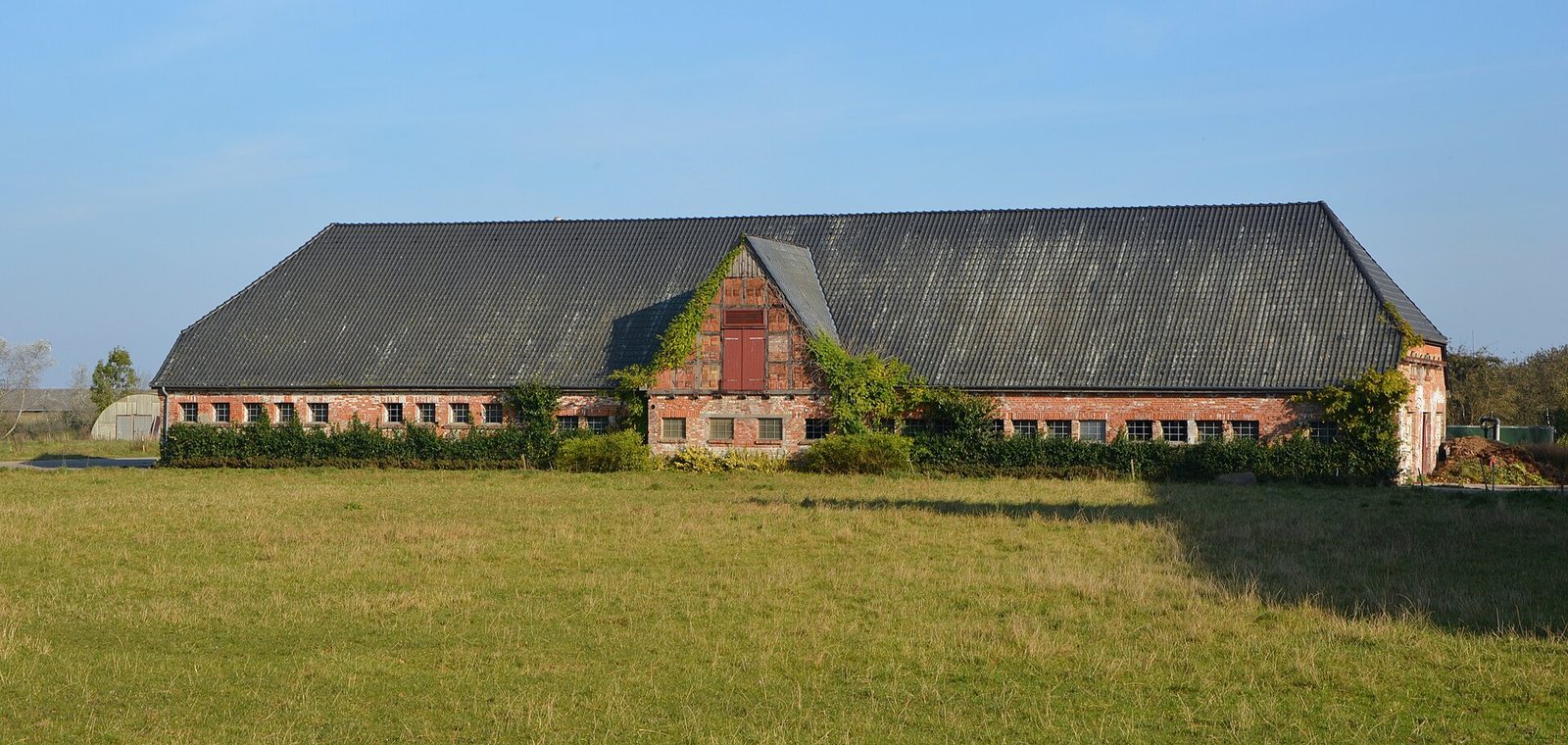
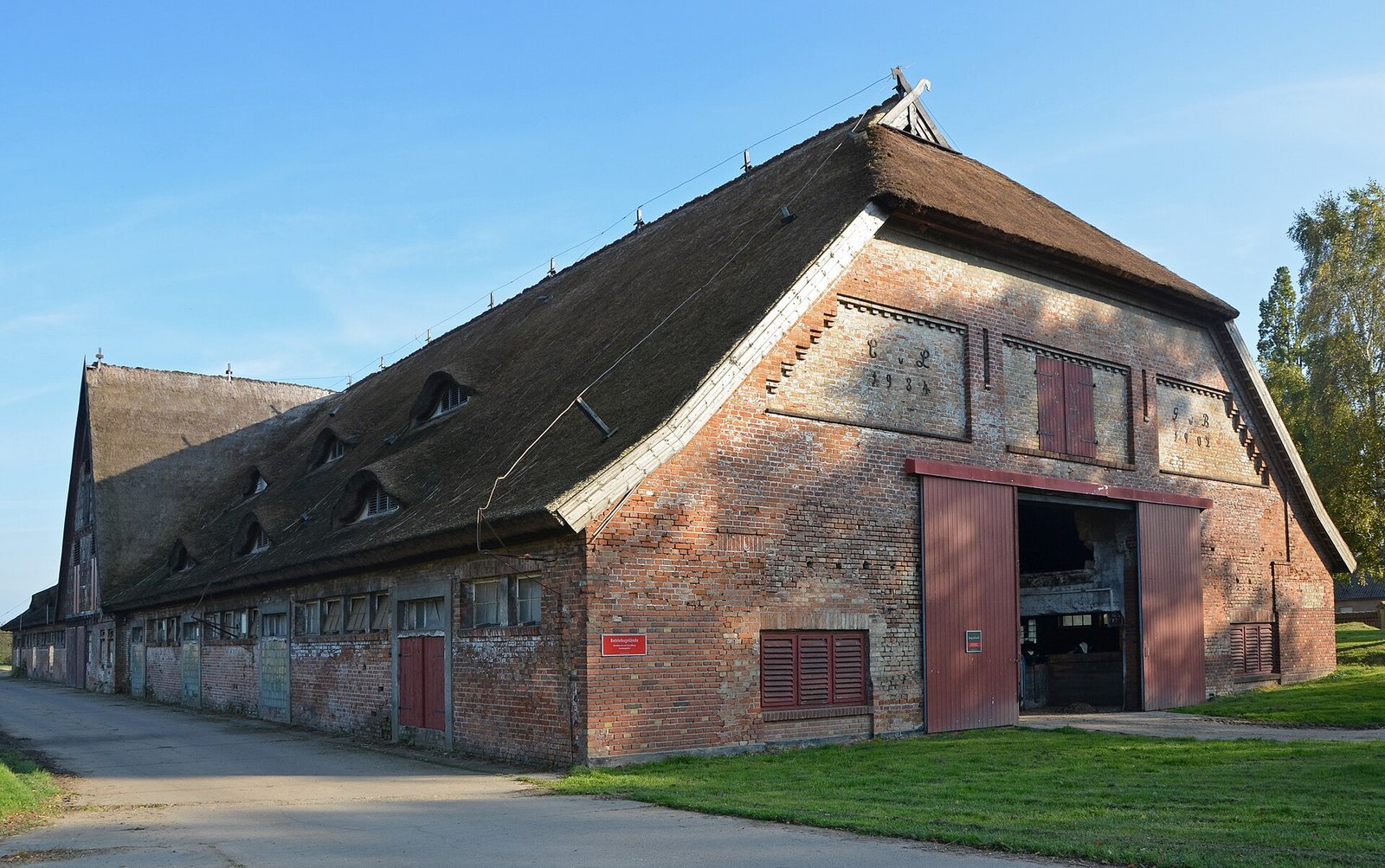
The estate complex includes the manor house, agricultural buildings, a landscape park and surrounding estate land. Its architecture and grounds bring together a Baroque house and a park that was later redesigned in the English landscape style.
Manor house and Great Hall
Manor house
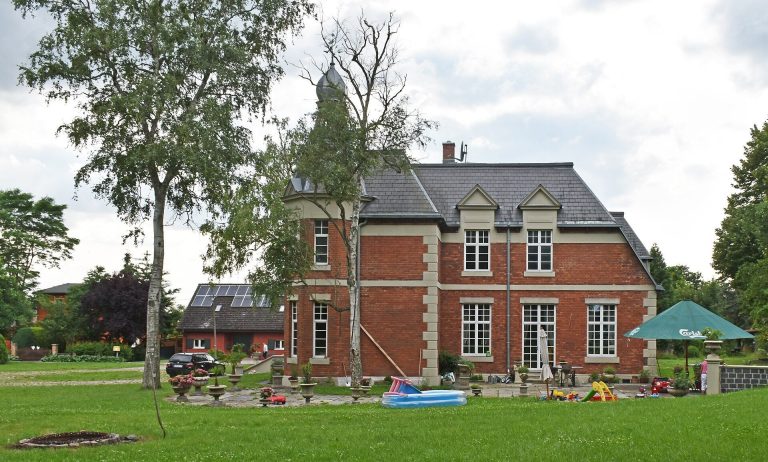
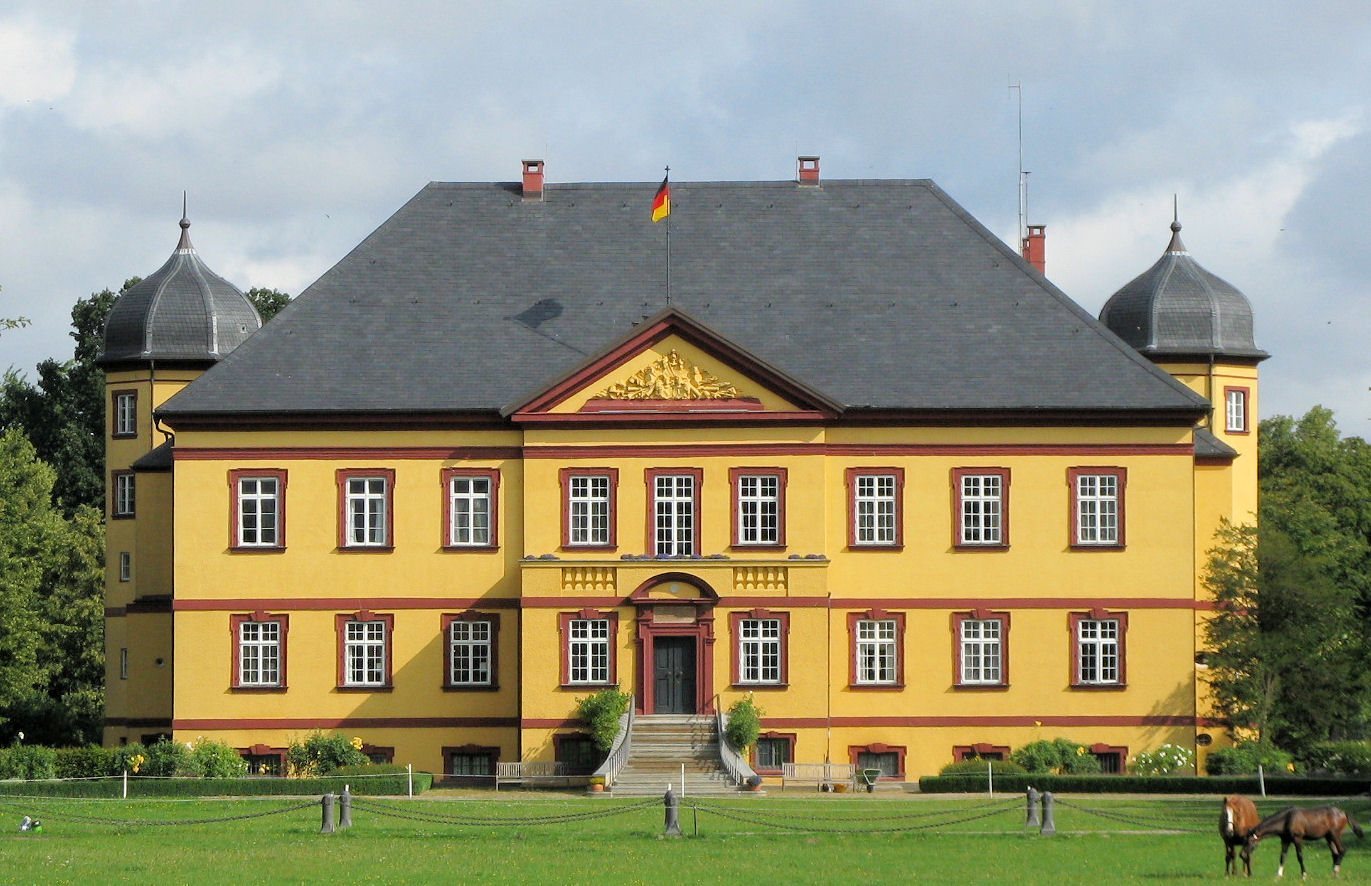
The two-storey manor house is ochre-colored and Baroque in style. Two corner towers were added in the nineteenth century.
Great Hall
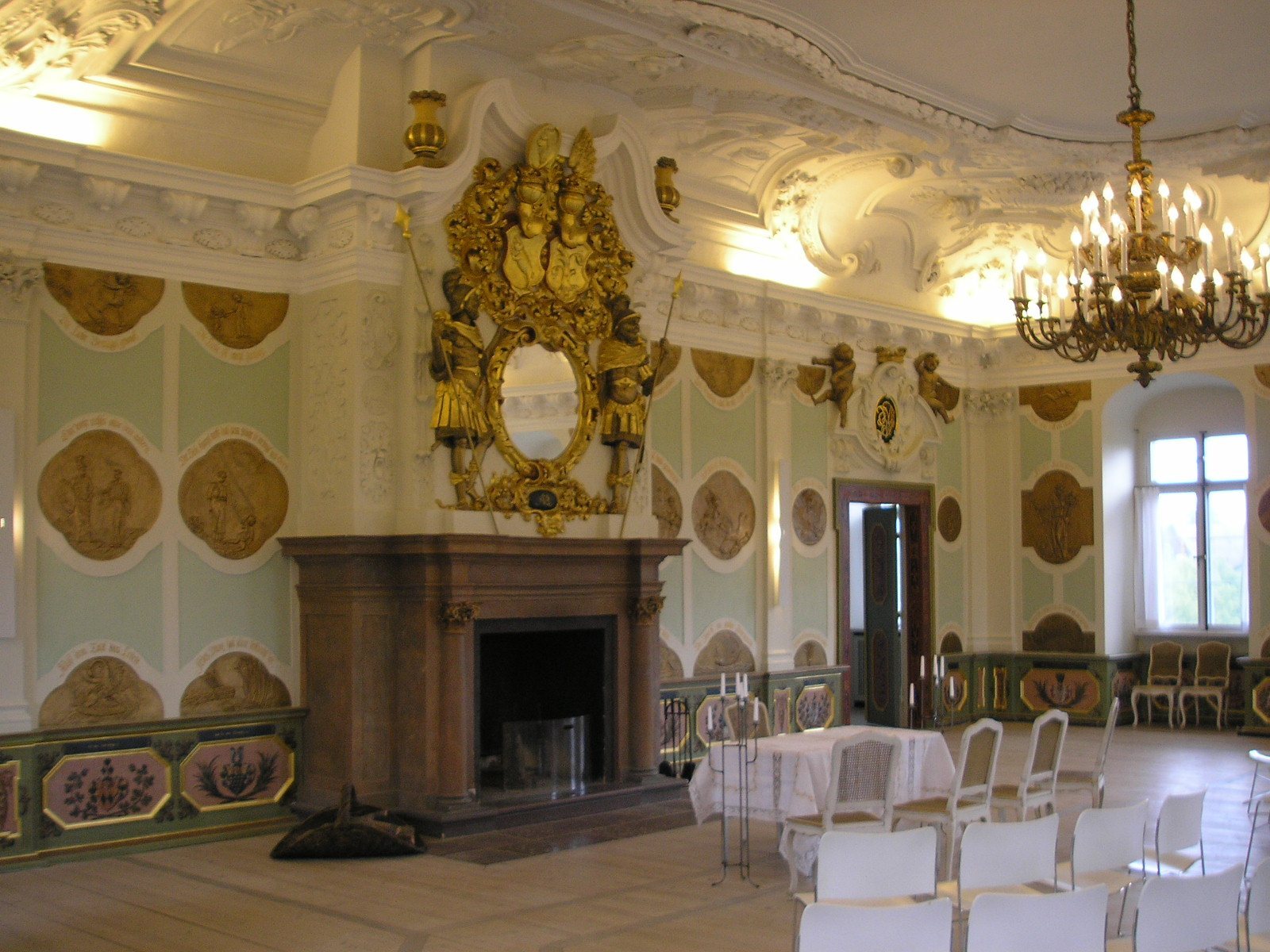
The Great Hall, the manor’s principal reception room, occupies the second floor. Its ceiling is richly ornamented with plasterwork installed by Clerici to designs by Karl Maria Pozzi. A large gilded fireplace dominates one side of the room. The wall paneling bears the builder’s family arms, while colored coats of arms represent Christoph von Bassewitz’s 32 great-great-great-grandparents. Plaster medallions contain allegorical images that guests once enjoyed interpreting as a social pastime.
Park
The extensive park was first laid out in the Baroque style and later converted into an English landscape park.
Hohen Luckow church
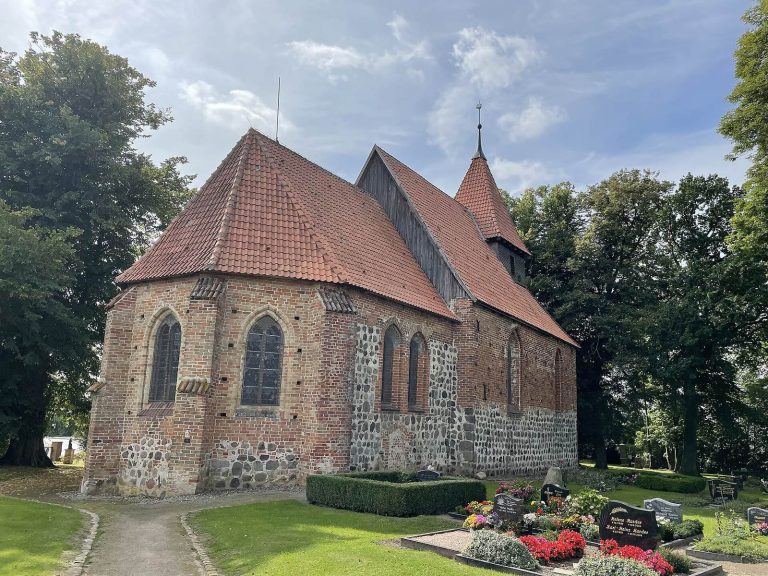
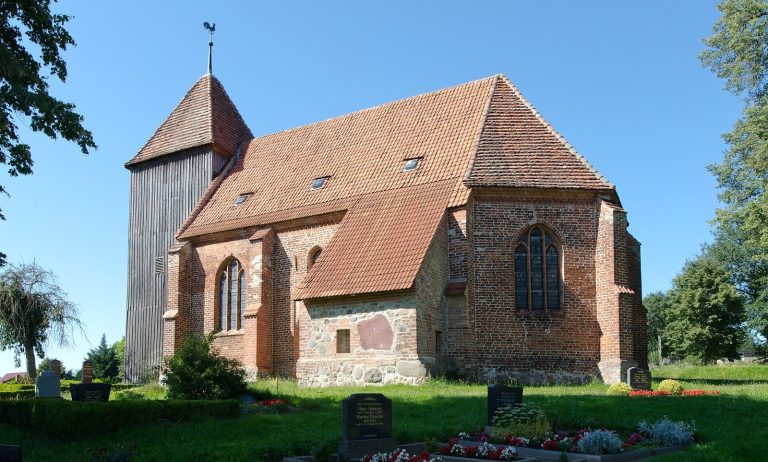
The associated church is a late Gothic brick building. Its Baroque pulpit altar, which combines a preaching stand with an altar, dates to 1712; the baptismal angel is from the same period. After the church was treated against damp and renovated, the altar and angel were restored in 1997–1998.