Château de Beauregard: Estate, Wartime Camp, and Housing Development in La Celle-Saint-Cloud
Site at a Glance
- Popularity
- Medium
- Country
- France
- Primary era
- Modern
- Eras represented
- Modern
- Civilizations
- French
- Site type
- Domestic
- Remains
- Castle
On this page8 sections
History
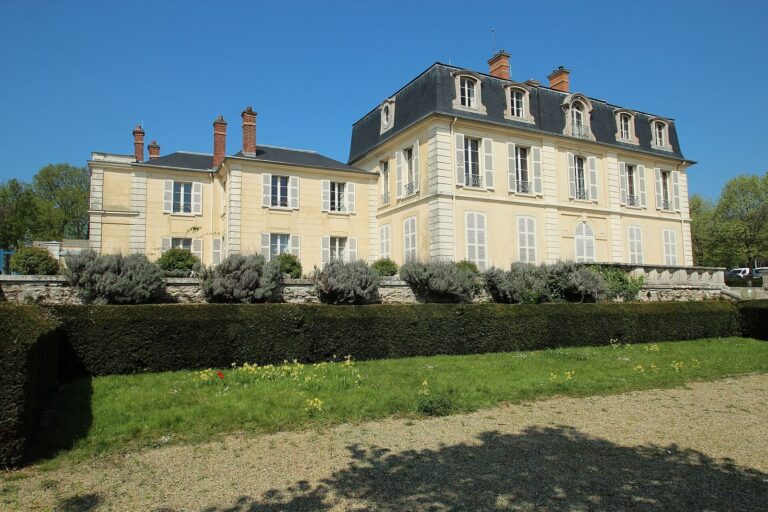
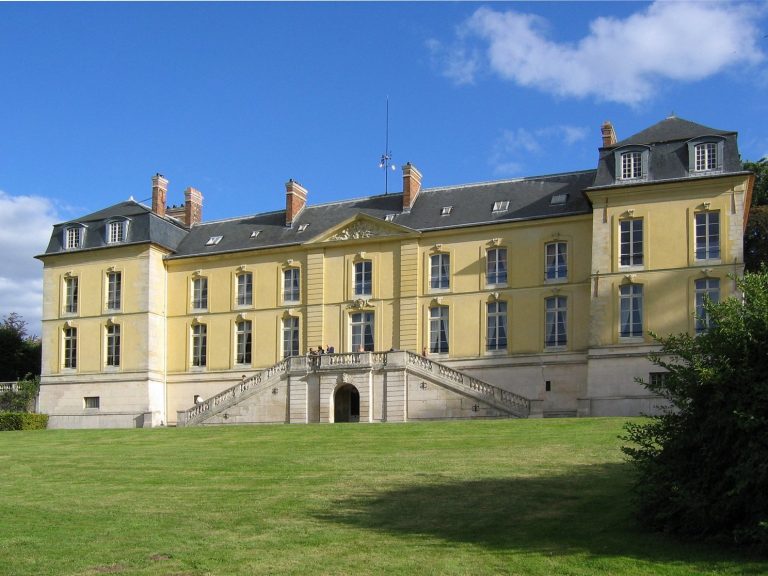
The Château de Beauregard was an estate in La Celle-Saint-Cloud, France, rebuilt in 1852 in a neoclassical style inspired by ancient Greek and Roman architecture. Its history spans centuries of changing ownership, wartime use, detention, and postwar redevelopment.
Medieval name and early owners
The name Beauregard appears to have originated in the Middle Ages, when Jeanne de Sansac was known as lady of the estate. Her tomb was in the village church. Its inscription states that she died on 6 July 1547 and identifies her as the wife of Louis de la Grange, a squire who managed ordinary military expenditure.
In the early seventeenth century, the du Val family owned the château. Pierre du Val served in the royal household under either Henri IV or Louis XIII, both kings of France. His daughter Nicole inherited the property and renovated it after marrying into the Paris family. Her son Pierre de Paris, a royal councillor at the Parlement of Paris, a high court of the monarchy, inherited in 1661. He was said to have welcomed the composer Jean-Baptiste Lully and the playwright and librettist Philippe Quinault. When Pierre died without children, he left Beauregard to his niece Marie-Angélique de la Chaise in 1722.
Revolution and nineteenth-century owners
After Marie-Angélique’s death, her sister Anne-Françoise inherited the estate. She was married to the count of Montaigu, whose family sometimes rented the château because of financial difficulties. Jacques-Jérémie Roussel stayed there before buying the nearby Château de la Celle from Madame de Pompadour, a prominent court favorite and patron under Louis XV. The count of Artois, later King Charles X, also leased Beauregard as a holiday residence for his sons, the dukes of Angoulême and Berry.
In 1792, during the French Revolution, authorities confiscated the château because the marquis of Montaigu was regarded as an émigré, an aristocrat who had left France during the upheaval. The family later regained the property. During the Consulate, First Empire, and Bourbon Restoration, successive regimes that followed the Revolution, Beauregard changed hands several times. Its owners included Benoist de Boigne, the general-prince Aldobrandini, and Anisson du Perron. De Boigne’s wife, Adèle d’Osmond, received the prominent salon hostess Madame Récamier at the estate.
Englishwoman Harriet Howard bought the château and park in 1852. She added Béchevet farm and the Bel-Ébat stud farm, creating an estate of more than 184 hectares, and rebuilt the château. Howard supported Louis-Napoleon Bonaparte, her lover and financial backer, politically and financially. After he became Emperor Napoleon III, he made her countess of Beauregard. She died in 1865, and her son Martin-Constantin Haryett inherited the estate before selling it in 1870 to the duchess of Bauffremont, born Laure Leroux.
During the Franco-Prussian War, the conflict between France and Prussia, Prussian forces based in La Celle-Saint-Cloud used Beauregard as their headquarters and fortified it. The duchess was financially ruined and could not repair the estate, which was seized. In 1872 it passed to Baron Maurice de Hirsch, a Jewish financier and philanthropist, who had the property fully restored. He and his family stayed there regularly. When Hirsch died in 1896, he left Beauregard to Maurice-Arnold de Forest, count of Bendern. De Forest seldom visited, and the château was left abandoned.
Military use and wartime camps
During the First World War, the military used the estate as a livestock depot for the Paris entrenched camp, the fortified military zone around the capital. Several hundred cattle were kept there to supply troops.
A plan to make the château an auxiliary hospital in 1939 was dropped because of its poor condition. The military used the estate as a depot instead, and the German air force bombed it in 1940. From July 1940 to March 1941, German forces operated Frontstalag 112 there, a prisoner-of-war camp in occupied territory that held mostly French prisoners. In April 1943, the German wartime engineering organization Todt began training nearly 2,500 volunteers at Beauregard and organizing armed security units.
From late 1944, Beauregard became a principal collection and repatriation camp for Soviet prisoners in France. The Soviet mission, which arrived that November and ran more than 130 collection camps, had over 400 prisoners living at Beauregard by the Liberation. Those sent there included former prisoners of war, among them men who had fought with the French resistance, forced laborers, former members of collaborationist formations, and former soldiers of Anders’ Army, the Polish force commanded by Władysław Anders. Some people returned to the Soviet Union voluntarily; others were compelled to go. On 29 June 1945, a French ambassador signed an agreement providing for the return of all Soviet nationals detained in France. The Soviet general directing prisoners to Beauregard placed the camp under the NKVD, the Soviet state security and internal-affairs agency.
The Soviet mission administered the estate until November 1947. France’s foreign minister, Georges Bidault, then ordered its transfer to French control, judging that it had become a center of Soviet activity and espionage during rising tensions between the Soviet Union and Western countries. The immediate trigger was a Russian émigré’s allegation that his wife had taken their children. French counterintelligence traced them to Beauregard, and Prime Minister Paul Ramadier ordered a search. On 14 November, French gendarmes and police entered with two tanks. They found the children, several machine guns and submachine guns held as trophies, and grenades. The camp closed, and its head, Colonel Filatov, and 24 members of the Union of Soviet Citizens were expelled from France.
The affair worsened relations between France and the Soviet Union and added to conflict between the French government and the French Communist Party. It unfolded during the 1947 strikes, the departure of Communist ministers from Ramadier’s government, and growing strain between the Soviet Union and Western states.
Detention and redevelopment
A separate detention center opened on the estate in 1946 under the administration of Fresnes prison. Named the Châtaigneraie center to avoid associating the Beauregard name with imprisonment, it could hold 1,400 people and included collaborators among its inmates. A specialist section opened in 1950 for about ten blind prisoners and other sick inmates; a second section for prisoners over 60 followed in 1951. When the center closed in April 1953, it held 776 people.
After the war, the château and park lay in ruins. The count of Bendern considered turning the estate into a public forest reserve but, unable to carry out the plan, gave it to the City of Paris in 1949. Plans called for decent housing for French workers, sports and camping facilities for young people, and public access to wooded areas as a natural forest park. The agreement favored garden-city housing, a planned community combining homes with green space, preferably individual houses with substantial gardens. It ruled out uses such as prisons, military training camps, and industrial or commercial enterprises, while allowing certain local services and facilities.
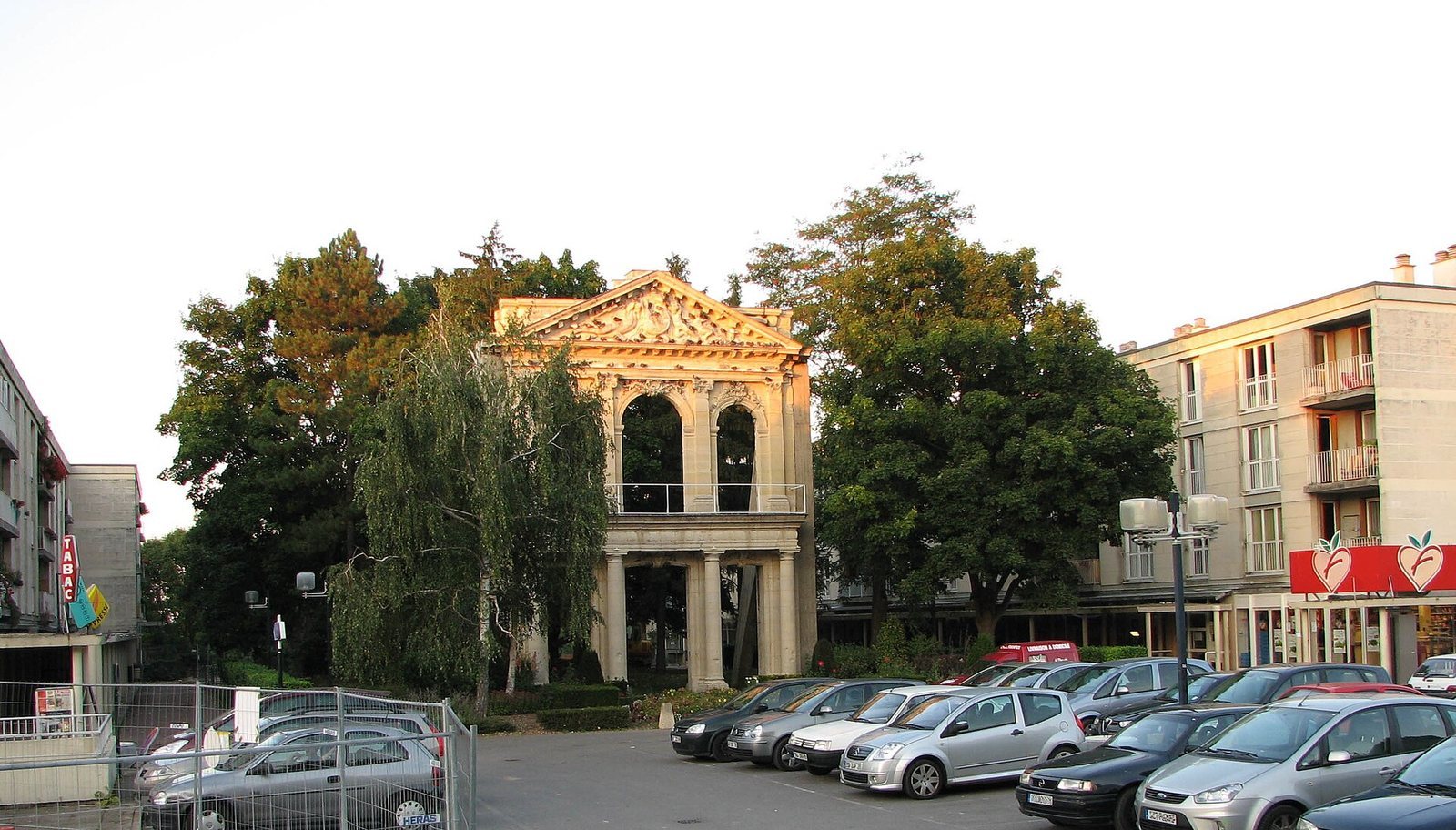
Paris created a property company for the estate in 1955. The château was demolished in 1956 because of its deteriorated condition, with its central entrance projection and pediment retained. Housing development proceeded in stages: Beauregard I was completed in 1959, followed by Beauregard II in 1966–68. The estate now contains about 2,500 social-housing units, many still owned by the City of Paris, as well as the Béchevet nature center for children from Paris.
Remains
Château and estate grounds
The estate occupied a hill more than 160 metres above sea level between La Celle-Saint-Cloud and Le Chesnay. A wall enclosed its grounds, which also included a greenhouse. The remaining central projection of the château contains its entrance and pediment. It stands about 300 metres north of the A13 motorway, surrounded by apartment blocks, and is badly deteriorated.
Wartime features and housing
Numerous barracks once stood in the park. The orangery, a building used to shelter citrus trees and other tender plants in winter, and the park served as part of the postwar Soviet repatriation site. Some barracks remained when urban development began and were temporarily used for shared facilities. The Beauregard I and Beauregard II housing developments now occupy the former estate.