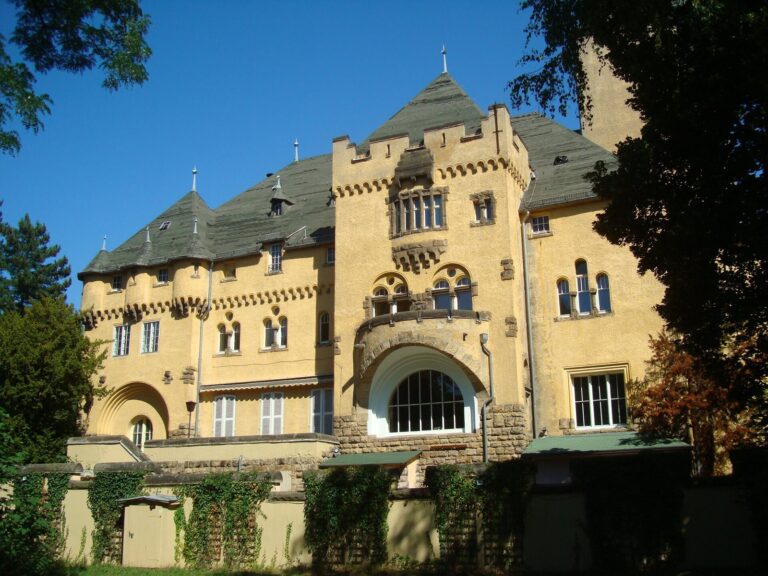
Gutshaus Carstenns Schlösschen Lichterfelde: A Neoclassical Manor House
Site at a Glance
- Popularity
- Medium
- Country
- Germany
- Primary era
- Early Modern
- Eras represented
- Early Modern
- Civilizations
- Brandenburg-Prussia, Holy Roman Empire
- Site type
- Domestic
- Remains
- Manor House
On this page6 sections
History
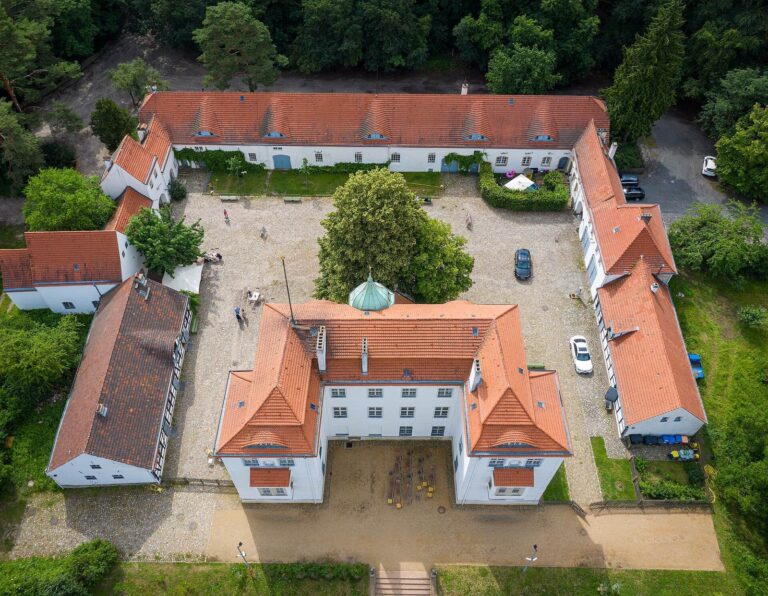
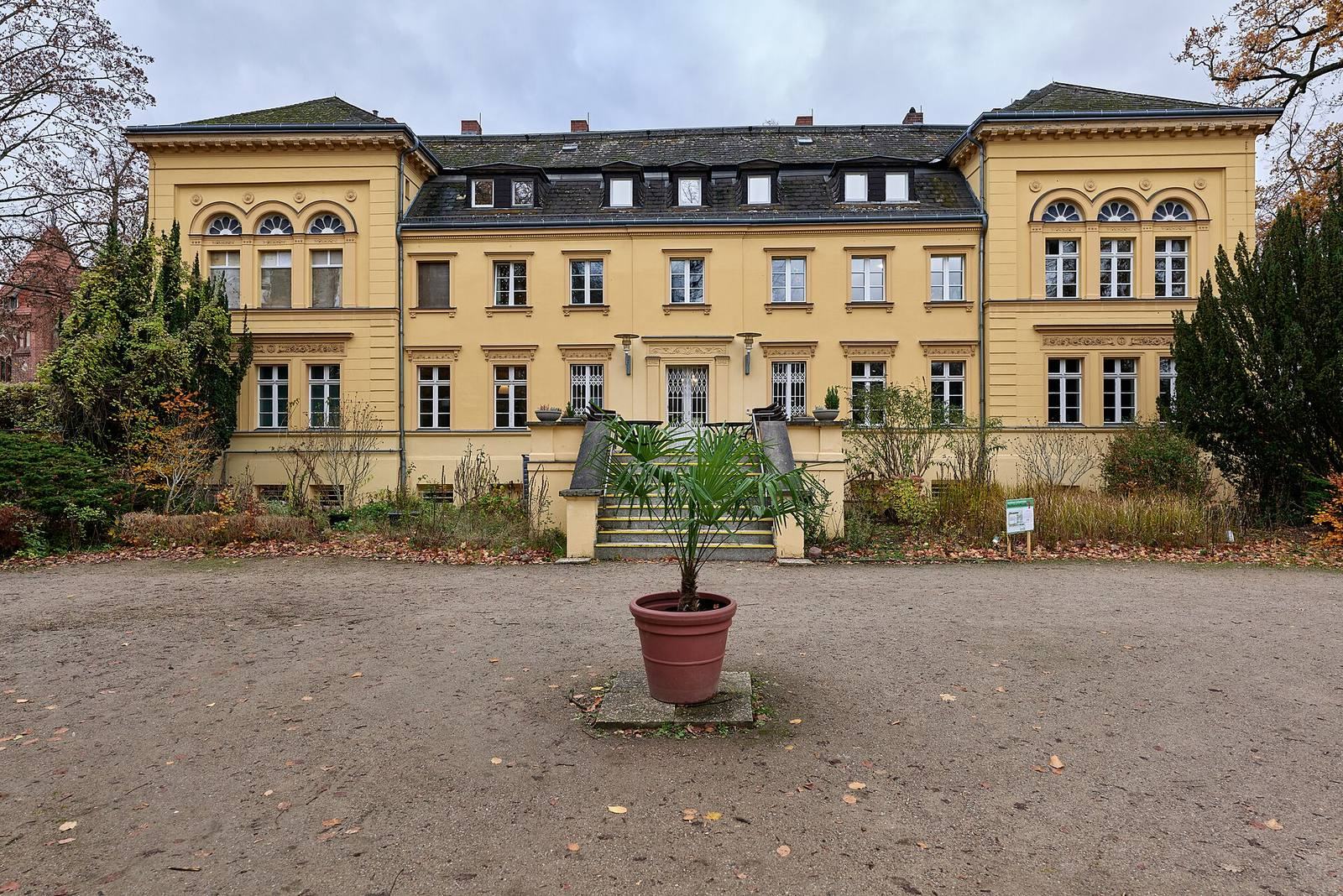
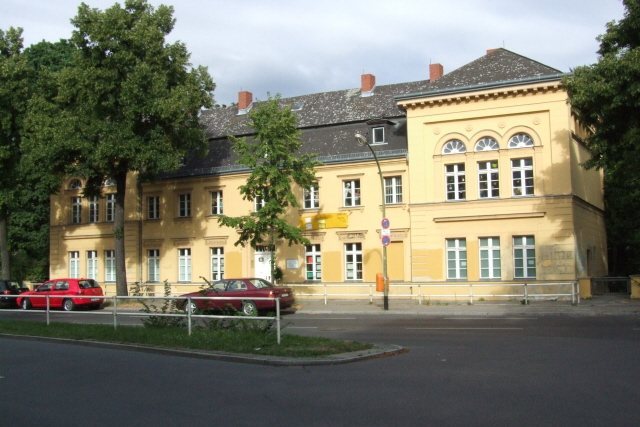
Gutshaus Carstenns Schlösschen Lichterfelde is a Neoclassical manor house in Lichterfelde, Germany. It probably took its present basic form around 1780, built over an earlier structure, and later became associated with the development of a planned villa district.
The estate and its owners
A document from 1289 names Arnoldus de Lichterfeld, and by 1316 Lichterfelde was identified as a village. Around 1375, the von Britzke family held rights over the estate, including the collection of dues and the exercise of jurisdiction. Their control ended in 1692. The manor then passed to Daniel Ludolf von Danckelman around 1700, to Prussian war commissioner Heinrich Cunow around 1725–1726, and later in the eighteenth century to the von Bülow family and Nikolaus von Béguelin.
The estate did not have a continuous entitlement to representation on the district council. A register published in 1857 contains one entry reflecting its status in 1839.
Carstenn and the villa district
The builder of the manor house’s present basic form is unknown. After alterations, landowner Johann Anton Wilhelm von Carstenn moved into the house. In 1865, he acquired the Lichterfelde estate, among other properties, to establish a planned residential district of villas. The house’s name, Carstenn-Schlösschen, commemorates his association with it.
The park and its later uses
Carstenn had the park laid out anew in 1867, and its grounds underwent a major redesign in 1950. The park’s nature-reserve area has been protected since 3 March 1923, with a formal ordinance dated 19 August 1986. It is identified as Berlin’s oldest nature reserve.
At the end of the Second World War in 1945, American soldiers took over the house, initially intending to establish a neighborhood center. In 1948, the newly formed Steglitz Neighborhood Center Association rented it for social purposes; from the early 1970s, the association used the entire building. Its activities were reorganized in 1982 to include a daycare and after-school center. After the association became insolvent in 1999, the Steglitz District Center Association took over the building. Its activities include social advice, cultural events, and courses.
Remains
House and park
The surviving site combines the Neoclassical country house with a public park developed from the former manor grounds. The house stands on Hindenburgdamm. Schlosspark Lichterfelde covers 5.7 hectares, excluding its nature reserve, and extends from Hindenburgdamm to the Teltow Canal. It borders the Benjamin Franklin Campus of Charité, Berlin’s university medical center, to the north, the canal to the east, and Krahmerstraße to the south. Some park trees are more than 150 years old.
A fenced, woodland-like section of 2.6 hectares forms the nature reserve. It preserves part of the Bäke Valley, the landscape around a local watercourse, and provides habitat for woodland insects and birds, including woodpeckers, nightingales, robins, and wrens.