Appleton Manor: A Medieval Manor House in England
Site at a Glance
- Popularity
- Medium
- Country
- United Kingdom
- Primary era
- Medieval
- Eras represented
- Medieval, Early Modern, Modern
- Civilizations
- British, English
- Site type
- Domestic
- Remains
- Manor House
On this page7 sections
History
Medieval origins
Appleton Manor is a medieval manor house in Appleton village, United Kingdom, with a present building dating to about 1190–1200. It is among England’s oldest inhabited manor houses. The manor’s earliest recorded owner is identified as Miles Crispin, who held it in 1086; the Domesday survey, William I’s record of English landholding, also names Richard fitz Reinfrid as a holder there that year. Construction of the present house is attributed either to Richard de Appleton, fitz Reinfrid’s grandson, or to his great-grandson Thomas.
Fettiplace and Lenthall ownership
The manor passed to the Fettiplace family in the sixteenth century. Elinor Fettiplace came from Gloucestershire when she married Richard Fettiplace in 1589. She lived at the manor and kept a household recipe book recording meals prepared there. William Lenthall acquired the estate in 1634. As Speaker, the officer who presides over the House of Commons, he held the office throughout the English Civil War, a seventeenth-century conflict in England.
Modern alterations and recognition
During the twentieth century, owner Katherine Timpson commissioned the house’s remodelling and renovation. In 1966, architectural historian Nikolaus Pevsner described the manor as a remarkable survival. The house is listed Grade II*, a category for particularly important buildings of more than special interest; its associated barn is listed Grade II, for buildings of special interest.
Remains
Manor house
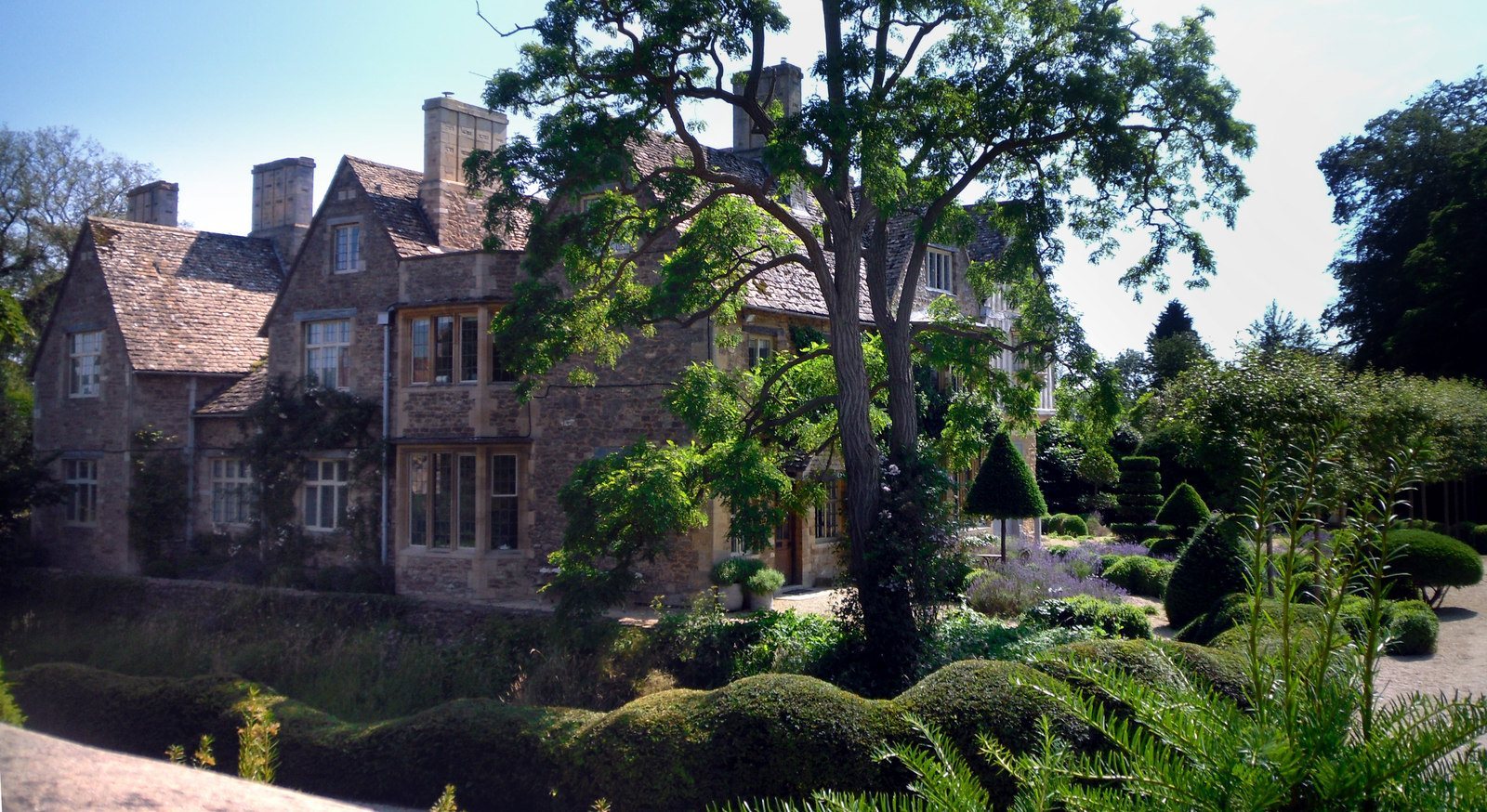
Set in the centre of Appleton village beside St Laurence parish church, the two-storey house has attics, limestone-rubble walls, ashlar dressings, and a slate roof. Its present plan is L-shaped, following the remodelling commissioned by Timpson. The building combines vernacular characteristics with Arts and Crafts influence, a design movement that valued craftsmanship and traditional techniques. Inside, it contains rare and important non-religious stone carvings from medieval and Tudor times; the Tudor period was an English era spanning 1485–1603.
Moat and grounds
A moat once enclosed the manor, and parts of it survive in dry condition. To the north-west stands the manor barn, with a gatehouse and attached walls. The redesigned gardens include a modernist pool house.