Abingdon Abbey: A Benedictine Monastery in Oxfordshire
Site at a Glance
- Rating
- 4.6
- Popularity
- Medium
- Country
- United Kingdom
- Primary era
- Medieval
- External website
- Open
- Eras represented
- Medieval
- Civilizations
- Anglo-Saxon
- Site type
- Religious
- Remains
- Monastery
On this page8 sections
History
Abingdon Abbey, formally the Abbey of Saint Mary, was a Benedictine monastery in the United Kingdom at Abingdon-on-Thames, near the River Thames. It was probably founded around 675 in Anglo-Saxon England for twelve Benedictine monks, members of a Western Christian order governed by the Rule of Saint Benedict, which emphasized communal prayer, disciplined work, and obedience to an abbot. The monastery was dedicated to the Virgin Mary and became a wealthy and influential institution through the support of successive West Saxon kings.
Foundation and early development
The abbey’s founders were either Cissa, viceroy of Centwine, king of the West Saxons, or Cissa’s nephew Hean. Cissa was later buried at the monastery. The institution may first have developed near Boars Hill, where the name Abingdon continued to be used until after the Norman period, before moving south into the Thames valley near the minster at a place then called Helenstowe.
During the reign of Alfred, the ninth-century king of Wessex who fought Danish armies and encouraged the consolidation of Anglo-Saxon rule, Danish forces destroyed the abbey. Alfred then seized its estates because the monks had not provided sufficient recompense for his defeat of their enemies. By the 950s, the monastery had fallen into decay, but its fortunes changed when King Eadred appointed Æthelwold as abbot around 954.
The Benedictine Reform and medieval power
Æthelwold later became bishop of Winchester and one of the leaders of the English Benedictine Reform, a tenth-century movement that sought to restore strict observance of the Benedictine rule and improve the organization of English monasteries. Under his leadership, Abingdon became the movement’s second centre after Glastonbury. The abbey’s influence is reflected in a surviving collection of 136 charters granted by Saxon kings. The Domesday Book, the survey of landholding and resources commissioned by William the Conqueror in 1086, also listed Abingdon Abbey as a wealthy and powerful landowner.
The abbey continued to play an important intellectual and administrative role after the Norman Conquest, the 1066 conquest of England by William, duke of Normandy, and the establishment of Norman rule. The Chronicle of the Monastery of Abingdon was written there in the twelfth century. Abbots included Faritius, a physician to Henry I who served from 1100 to 1117, and Richard of Hendred, whose appointment received royal consent in 1262. Richard attended the Council of Lyon in the 1270s. Around 1047 to 1051, the abbey was led by an Anglo-Saxon abbot known for artistic and goldsmithing skills who may have directed an abbey goldsmith workshop.
Estates and parish administration
Abingdon Abbey managed land and income beyond the monastery itself. At Sutton Courtenay, it established a monastic grange, an estate or farm used for agricultural management, administration, and revenue collection. Alwin the priest agreed with the abbot that he could retain Sutton, with the land passing first to his son and then to the abbey, provided that the Milton chapelry was transferred immediately.
By the late twelfth century, the abbey probably received two-thirds of Sutton Courtenay’s tithes, the payments traditionally made to support the church, while the rector received the remaining third. Following a dispute in 1258, the land was formally appropriated to the abbey and a vicarage was established. A vicarage was the office and income assigned to a vicar serving a parish. Because Sutton Courtenay was close to Abingdon, the monks probably administered it themselves rather than through a steward.
The arrangement led to further conflict with Hugh de Courtenay, Lord of the Manor of Sutton, who sued the abbey for the advowson in 1278. Advowson was the legal right to appoint or nominate a parish priest. In 1284, a jury presided over by Solomon of Rochester found in Courtenay’s favour, and Solomon became the first person presented by the Courtenays. The abbot later alleged that Solomon had seized the abbey’s goods at the rectory in 1290 and demanded 40 marks over claimed damage to the rectory house, but Solomon was not convicted.
Dissolution and remembered burials
The last abbot was Thomas Pentecost, also known as Rowland. He was among the first abbots to acknowledge the Royal Supremacy, the doctrine established under Henry VIII that made the English monarch the supreme authority over the Church in England. In 1538, during the Dissolution of the Monasteries, the Tudor government’s suppression and seizure of England’s monasteries, Pentecost signed the surrender of Abingdon Abbey with his community.
After the surrender, Pentecost received the manor of Cumnor for life, or until he obtained ecclesiastical preferment worth £223 a year. The abbey’s revenues were then valued at £1,876 10 shillings and 9 pence. The monastery had also served as a burial place for religious and secular figures. Ælfric of Abingdon was first buried there before his remains were translated to Canterbury Cathedral. Other burials included Sideman, bishop of Crediton; Margaret, Countess of Pembroke; Fulk FitzRoy; Robert D’Oyly and his wife Ealdgyth; Siward, an abbot of Abingdon; Ralph Basset and his father Thurston Ralph Basset; John Grey, 2nd Viscount Lisle; and Mary of Waltham.
Remains
Abbey site and surviving buildings
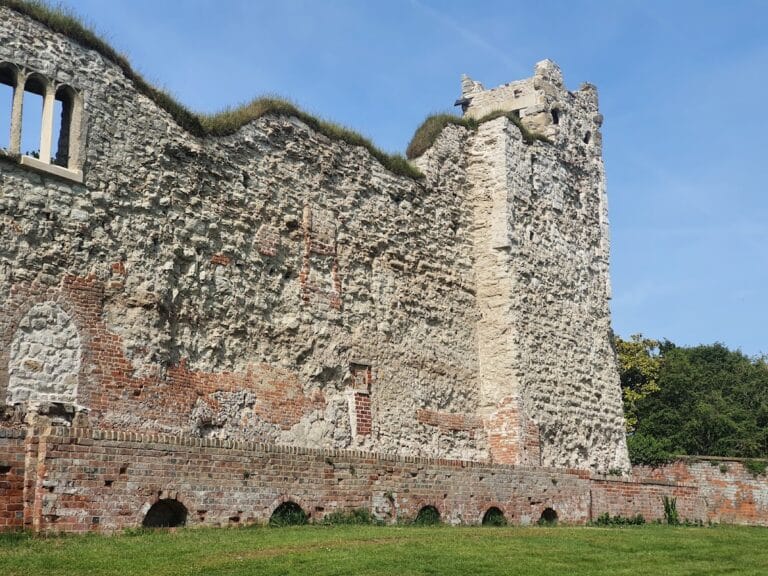
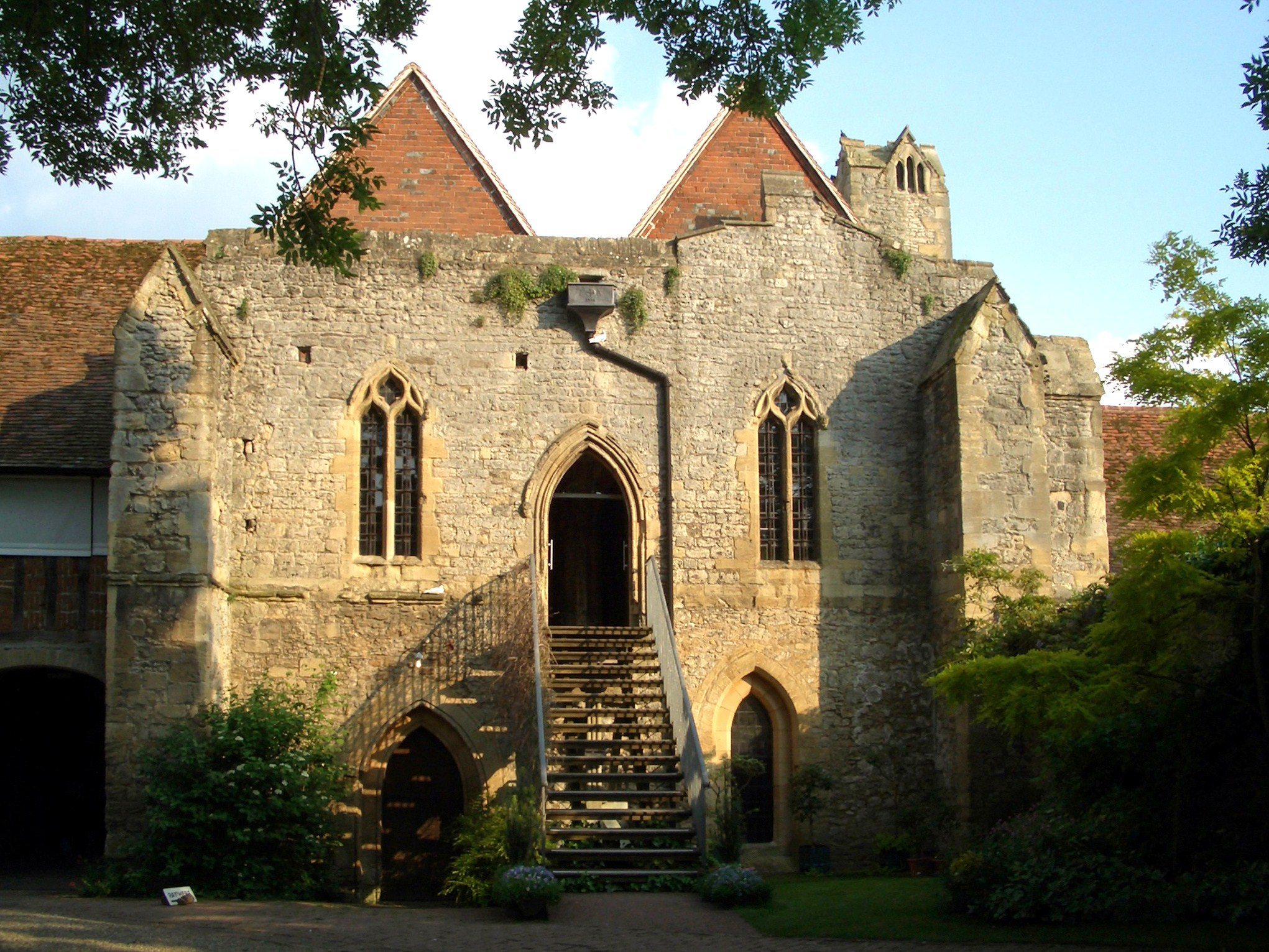
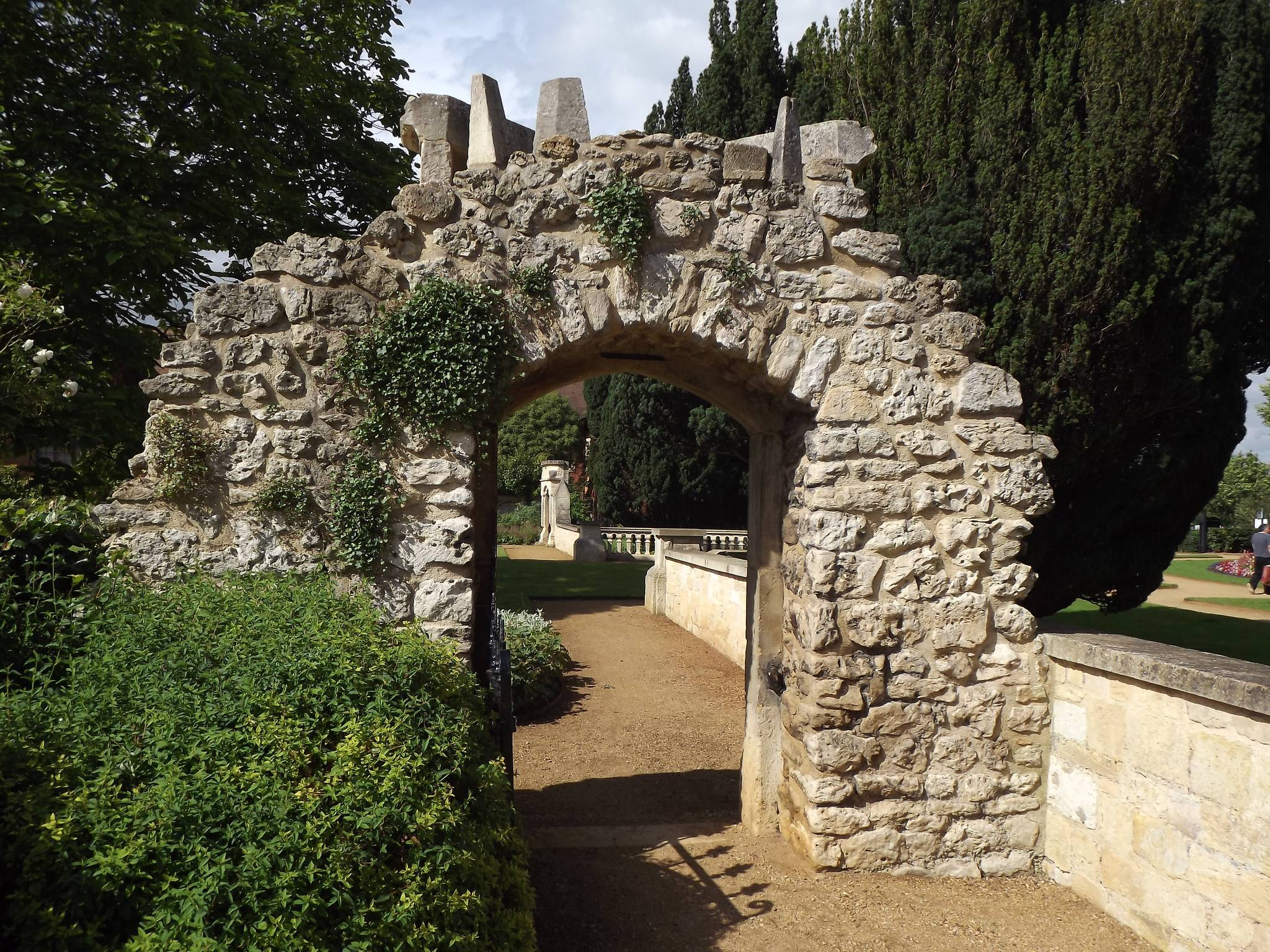
The abbey church originally occupied the area now associated with the Abbey Gardens. The apparent ruins in the gardens are Trendell’s Folly, a nineteenth-century construction, and some of its stones may have come from St Helen’s Church. The surviving remains of the wider monastic complex are represented by a group of buildings associated with administration, hospitality, craft, worship, and water management.
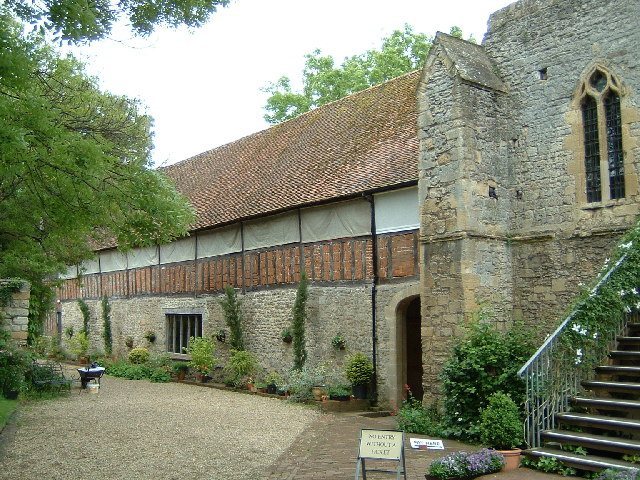
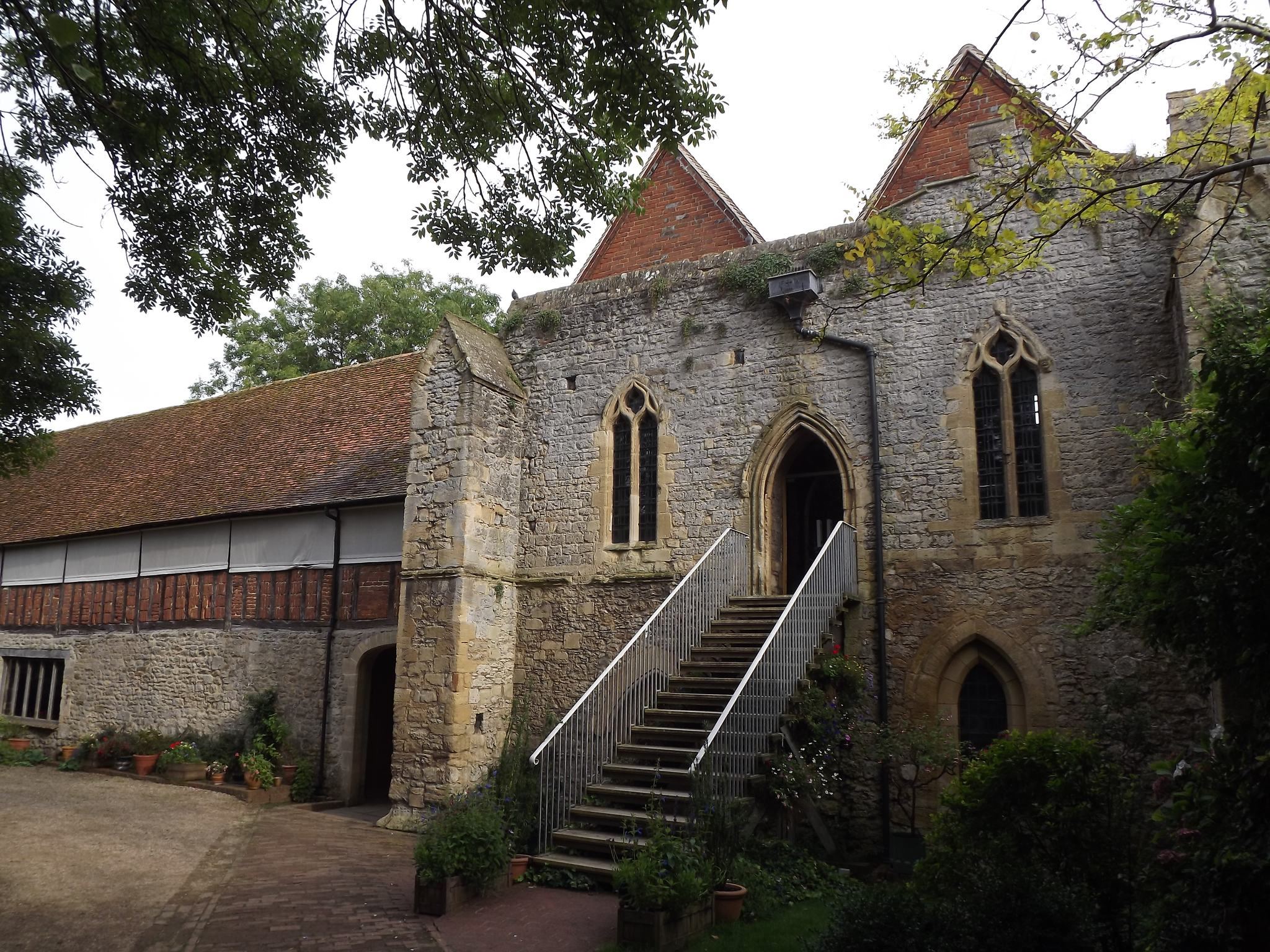
These buildings include the Abbey Exchequer, the timber-framed Long Gallery, the abbey bakehouse, the abbey gateway, St John’s hospitium, or pilgrims’ hostel, and the Church of St Nicolas. The complex also contains Checker Hall, now used by the Unicorn Theatre, together with the Checker, the Lower Hall, the Long Gallery, and buildings along Thames Street connected with the mill and mill stream. Part of the former abbey site is occupied by the Unicorn Theatre.
Water management and surviving fabric
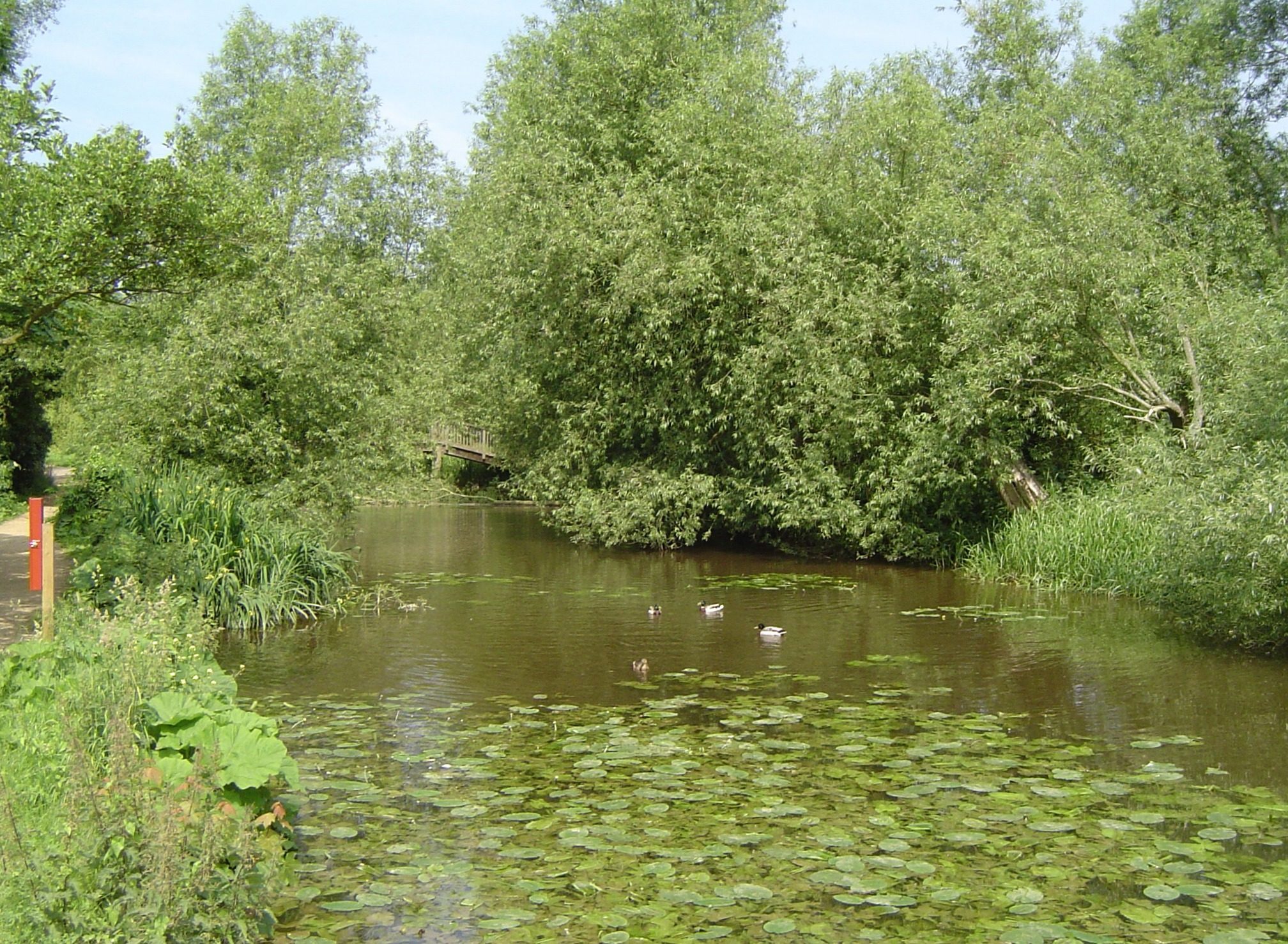
The monks cut a watercourse to the abbey between 955 and 963. It formed part of the monastery’s water-related infrastructure and remains visible from Abingdon Lock. The surviving watercourse provides a physical indication of the systems that supported the abbey’s buildings and activities.
One original abbey fireplace was removed from the site and remains intact at Lacies Court in Abingdon School. Together with the surviving halls, gateway, bakehouse, hostel, church, and mill-related buildings, it preserves elements of the monastery’s former built complex beyond the area associated with the abbey church.