Perrays Castle (Château des Perrays): A French Noble Estate and Former Boarding School
Site at a Glance
- Popularity
- Medium
- Country
- France
- Primary era
- Early Modern
- Eras represented
- Medieval, Early Modern, Modern
- Civilizations
- Unclassified
- Site type
- Domestic
- Remains
- Castle
On this page14 sections
History
Perrays Castle, also known as Château des Perrais, is an estate in France whose development began in the fifteenth century and continued through major building campaigns into the nineteenth. The property became a residence of the de Broc family, a French noble house, and later served as a wartime hospital, a military demining school, and a Catholic boarding school.
From the fifteenth to eighteenth centuries
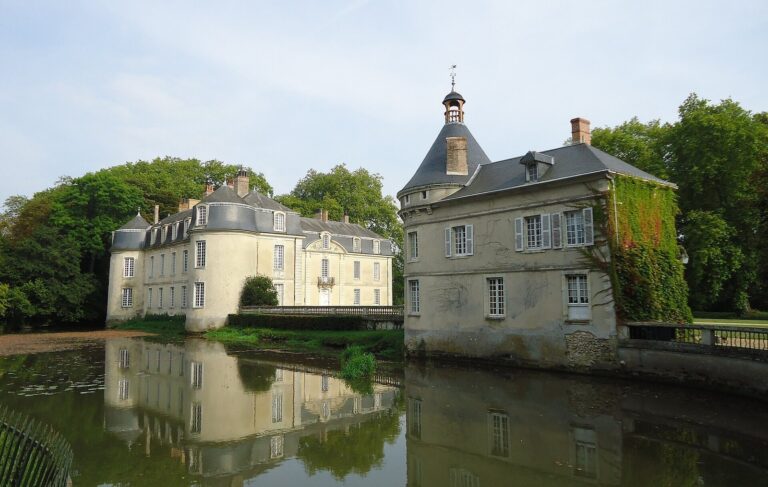
The estate entered the de Broc family’s possessions in 1450 through an alliance with the Saint-Benoît family. In the early seventeenth century, Sébastien de Broc made it his home and commissioned an east wing around 1630, adjoining a tower that dated from the fifteenth century.
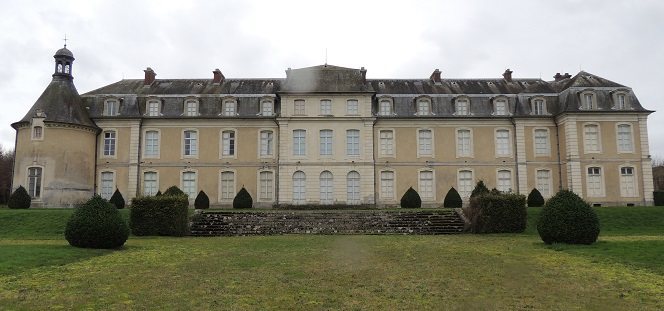
In the eighteenth century, Michel-Armand de Broc, the first marquis, commissioned the main residential block. Marquis was a rank in the French nobility.
Nineteenth-century expansion and wartime use
In the late nineteenth century, Thibaut de Broc, the last marquis, ordered major changes. His wife, Berthe Worms de Romilly, was a wealthy heiress. The work added a west pavilion and arcades around the courtyard, created terrace gardens and a formal park, and enlarged the outbuildings.
During the First World War, the marquise de Broc established a hospital in the outbuildings. In 1931, Alfonso XIII, king of Spain, sought to buy the château but soon dropped the plan because of the political situation in his kingdom. German forces occupied the estate briefly in 1940. American forces held it in 1944–45 and used it for a school that trained personnel in clearing mines.
Catholic school and later history
In 1946, the Vicomtesse de Lantivy, a French noblewoman, donated the estate to the local Catholic diocese. The diocese adapted it for the private Catholic Institution Saint-Michel des Perrais. Bishop Grente envisaged a modern boarding school away from cities, intended to educate France’s future elites.
Parts of the château were listed as a historic monument on 21 December 1984. The institution closed in July 2015.
Remains
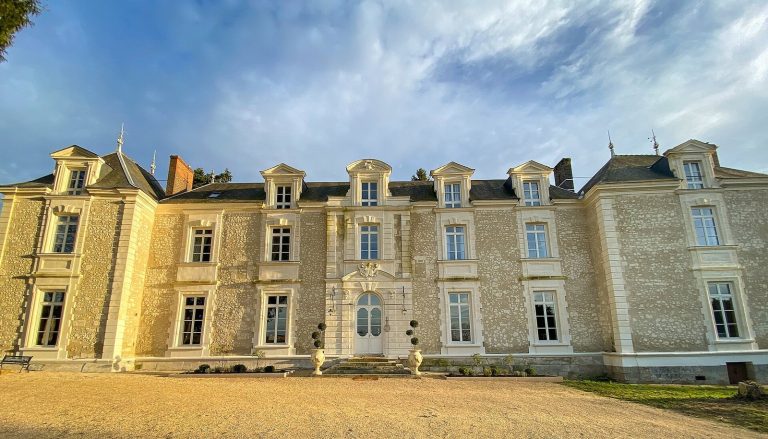
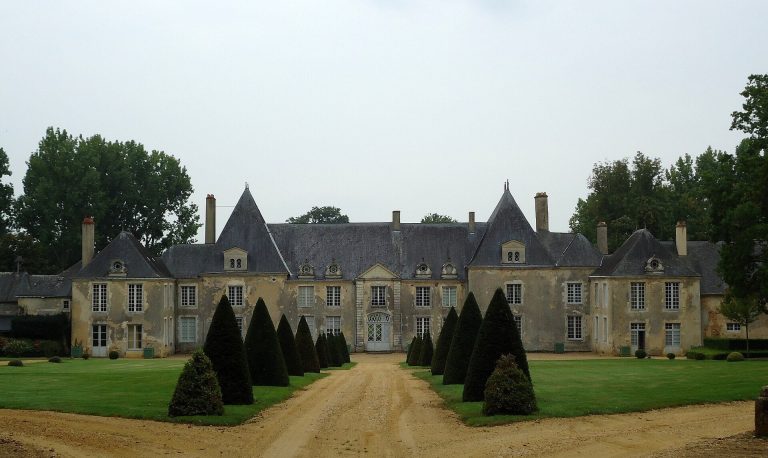
The complex is described as having three principal parts: the east wing, the main residential block, and the west pavilion with its courtyard arcades. The main block faces the courtyard, which the pavilion and arcades border. The residence also includes rear turrets, while the grounds contain terrace gardens, a formal park, and outbuilding wings.
Residential wings and courtyard
East wing and older tower
The east wing has the character of a gentleman’s country house. Its restrained façade measures 28 feet in length and 24 feet in width. A double-pitched roof covered in slate has the slates laid in straight rows. The windows have bars and small panes, while the gabled dormers have triangular fronts. The wing adjoins the older tower.
Main block and courtyard
The eighteenth-century main residential block presents its façade toward the main courtyard. The west pavilion and arcades, added in the nineteenth century, border this open space. The château’s outbuilding wings form part of the wider architectural complex.
Rear turrets and interiors
Turrets and chapel
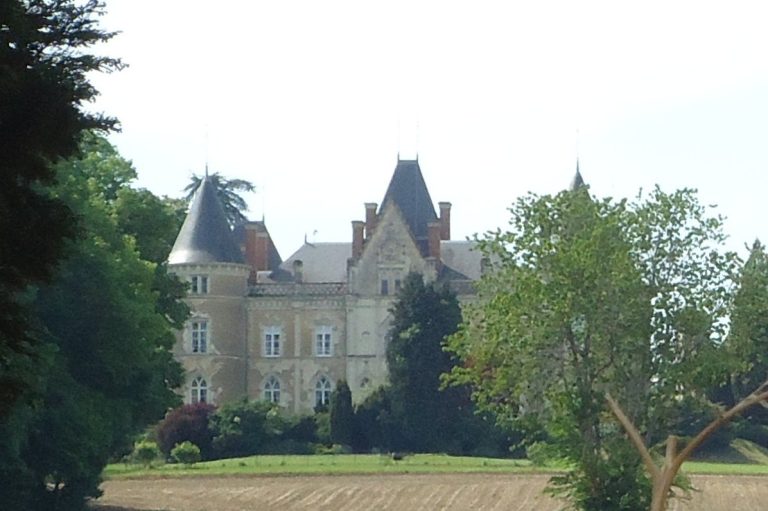
Three turrets stand at the rear of the residence, each capped by a conical slate roof. The oldest, the oratory tower, contains the chapel. The date 1633 appears beneath one of its windows.
Interior rooms
The interior features include a staircase and stairwell, along with a decorated ground-floor dining room, library, and grand salon.
Gardens and outbuildings
Terrace gardens and park
The terrace gardens include parterres, formal ornamental arrangements of patterned beds. Beyond them, the grounds include a formal French-style park.
Outbuilding wings
The outbuilding wings are part of the estate’s surviving architectural group. During the First World War, they also housed the hospital established by the marquise de Broc.