Château de la Roche-Mailly: A Troubadour-Style Residence in France
Site at a Glance
- Rating
- 5
- Popularity
- Very Low
- Country
- France
- Primary era
- Modern
- Eras represented
- Early Modern, Modern
- Civilizations
- French
- Site type
- Domestic
- Remains
- Castle
On this page8 sections
History
The Roche-de-Vaux Estate
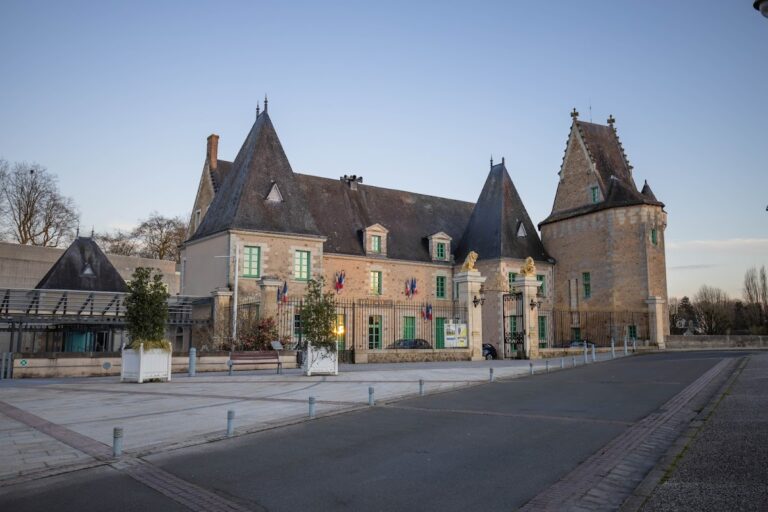
Château de la Roche-Mailly is a nineteenth-century residence in France, located at Requeil in the Sarthe department. Its present building was created in the Troubadour style between 1836 and 1842, a nineteenth-century revival that drew on medieval and Renaissance forms, including Gothic decoration and towers.
During the Middle Ages, the lordship of Roche-de-Vaux, a feudal estate governed by a lord, belonged to the La Chevrière family. It remained associated with the family until Marguerite de La Chevrière married Louis de Champlais, lord of Courcelles, in 1622. She later married Jean-Baptiste-Louis de Beaumanoir, Baron de Lavardin.
Transfer to the Mailly Family
Marguerite de La Chevrière sold Roche in 1668 to François de La Rivière, a nobleman who held the rank of esquire, a French noble title associated with status and service to a higher-ranking noble. He was lord of La Groirie and a counsellor at the Parliament of Metz, a high judicial court of the French monarchy.
His daughter, Louise-Madeleine-Josèphe-Marie de La Rivière, married Joseph de Mailly, Marquis of Haucourt, in 1701. Through this marriage, Roche-de-Vaux passed into the House of Mailly, a French noble family.
Nineteenth-Century Rebuilding
Formerly known as Roche-de-Vaux, the château was entirely rebuilt between 1836 and 1842 for Adrien, Count of Mailly-Nesle. This reconstruction gave the estate its present name, Château de la Roche-Mailly, and established the nineteenth-century character of the residence.
The château remains a private residence belonging to the House of Mailly. Its façades and roofs have held formal French historic-monument protection since 29 October 1976.
Remains
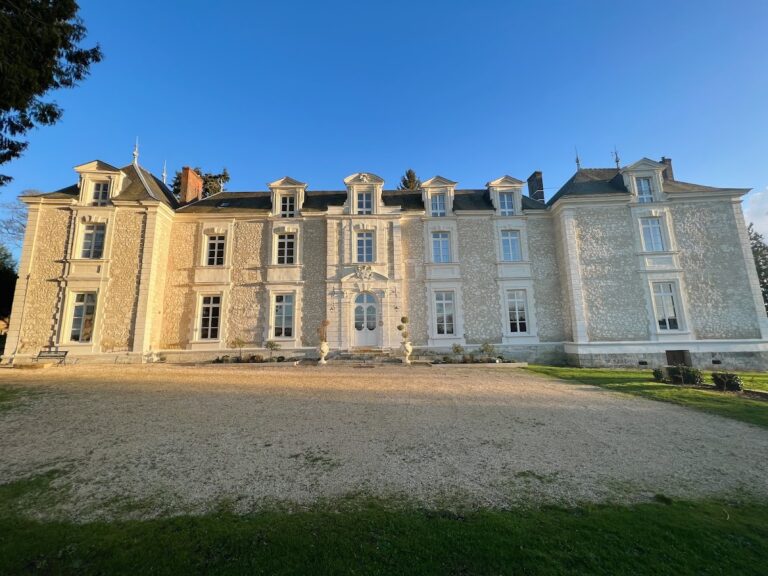
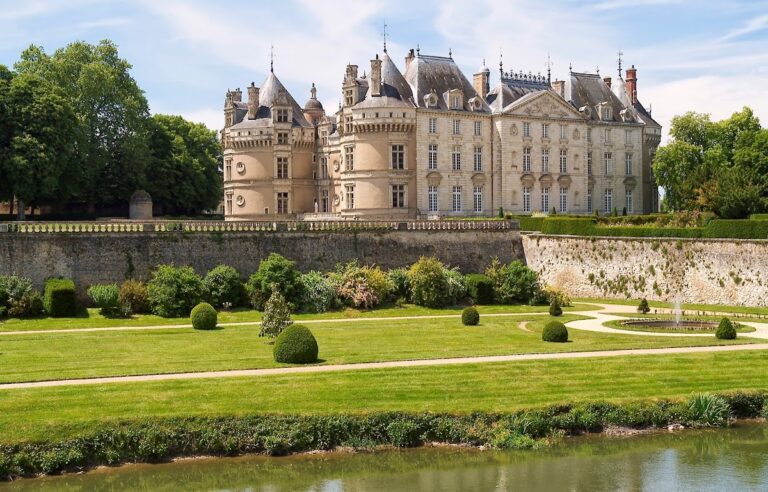
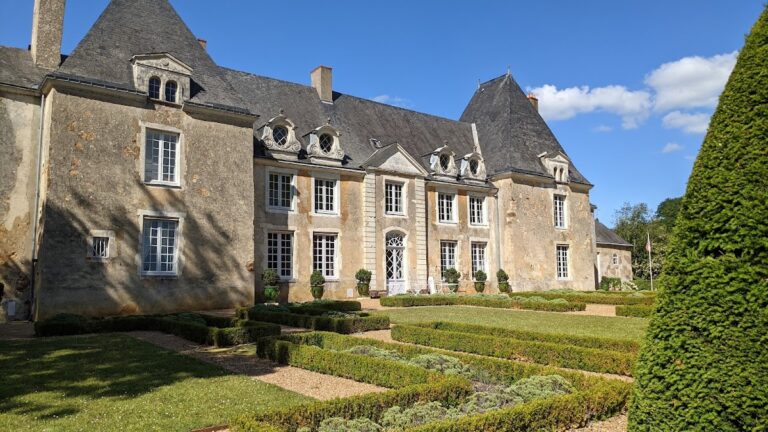
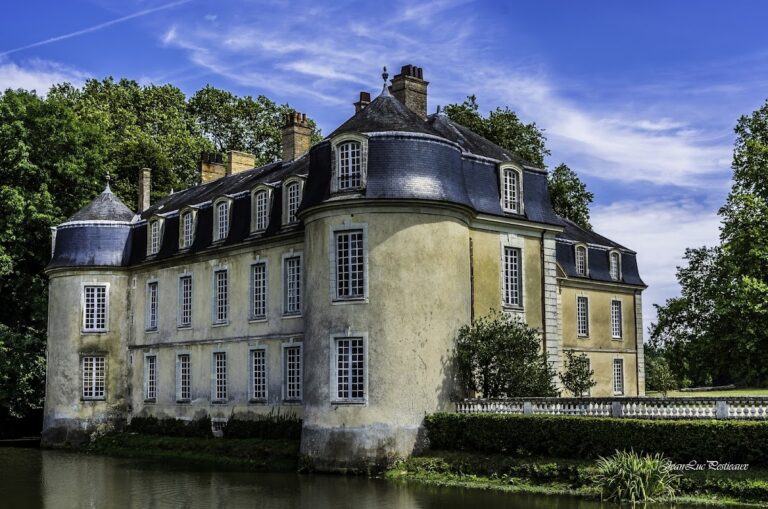
The surviving château is arranged around a principal residential building with wings extending at right angles. Cylindrical and quadrangular towers flank the composition, while Gothic-inspired decoration shapes the façades. Together, these elements express the picturesque medieval and Renaissance imagery associated with the Troubadour style.
Building and Garden
Residential Building and Towers
The main residence and its perpendicular wings form the core of the architectural ensemble. The towers, which vary between cylindrical and quadrangular forms, are integrated into the building rather than standing as separate structures. Gothic-inspired details appear across the façades, reinforcing the historicising design of the nineteenth-century rebuilding.
Ornamental Garden
The ornamental garden includes an orchard and paths dating from 1787 and 1840. These features connect the grounds to both the earlier Roche-de-Vaux estate and the nineteenth-century transformation that produced Château de la Roche-Mailly.
Nearby sites