Monastery in Pivoň: An Augustinian Monastery in Czechia
Site at a Glance
- Popularity
- Medium
- Country
- Czechia
- Primary era
- Medieval
- Eras represented
- Medieval, Early Modern
- Civilizations
- Habsburg, Habsburg Austria, Holy Roman Empire, Kingdom of Bohemia
- Site type
- Religious
- Remains
- Monastery
On this page8 sections
History
The Monastery in Pivoň is a former Catholic monastery in Czechia. Its church was built in the early Gothic style in the second half of the thirteenth century. The community became Bohemia’s first monastery of the Augustinian Hermits, a medieval Catholic order that followed the Rule of St Augustine, a set of religious principles attributed to the early Christian theologian Augustine of Hippo.
Origins and foundation
The monastery’s earliest history is uncertain. One possibility places its foundation by Bavarian hermits in 932. Another tradition connects the first church with the 1040 Battle of Biwanka, when Břetislav I, duke of Bohemia, defeated King Henry III of Germany, who later became Holy Roman Emperor. The story says either ruler rested from exhaustion on a tree stump at Stockau. After the victory, Břetislav supposedly built a church in gratitude. The tradition links the German name Stockau to the stump, which eighteenth-century belief placed beneath the church altar. Frind’s church history gives 1047 as the church’s consecration date.
A metal plaque reportedly found in the floor of the church at Valtířov was said to name Henry III as the monastery’s founder in 1041. A second plaque purportedly concerned the founding of Waltersgrün. Both are known only from photographs and are considered likely forgeries made after 1946.
A clearer phase of the monastery’s history began in 1149, when Bavarian Wilhelmites, a medieval Catholic hermit order, came from Schönthal and founded the community. Their arrival followed the Second Crusade, a major Latin Christian military expedition of 1147–1149. In 1256, Pope Alexander IV, who served as pope from 1254 to 1261, required the Wilhelmites to adopt the Rule of St Augustine. They exchanged their white clothing for black habits and black leather belts.
Regional activity and settlement
The community worked to Christianize the surrounding area, including Pšovka near Mělník, and was associated with the founding of numerous settlements. Traditions assign Waltersgrün to Frater Walther Grünes in 1120 and Frohnau to the monk Georgi Fronhauser in 1130, dates that precede the monastery’s foundation in 1149. Other settlements attributed to the monks include Glaserau, Heiligenkreuz, Münchsdorf, (Alt-)Gramatin (Starý Kramolín), Kleinsemlowitz, St. Georgen, Linz, Schiefernau, Tannawa, and Trasenau. St. Georgen, also known as Rokosin, Rokesin, Rakos, or Rokošín, disappeared; Rokošínský vrch, north of Poběžovice, preserves its name.
Monastic work combined farming and production. The monks cultivated medicinal plants and established a pharmacy, potash works producing potassium carbonate for uses such as glassmaking and soapmaking, grain and paper mills, and a weapons forge. Their crops included grain, tubers, vegetables, and hops; they also bred snails and trout.
Occupation, fire, and rebuilding
Hussites, followers of the Bohemian religious reformer Jan Hus, occupied the monastery temporarily in 1421. The brothers fled to the forests. A fire caused by carelessness destroyed the monastery in 1573, and it was rebuilt in 1595.
From 1615 to 1620, as political power shifted between Protestants and Catholics, the monastery passed temporarily several times into the possession of Peter III of Schwanberg, a Protestant Bohemian noble. He was captain of the Pilsen District and was elected director of the Kingdom of Bohemia in 1619. These years overlapped with the opening of the Thirty Years’ War, a series of conflicts in Central Europe from 1618 to 1648. In 1641, Swedish forces occupied, looted, and burned the monastery, and the brothers again fled to the forests.
Suppression and later use
In 1783 the community included 17 priests, 12 students, and five lay brothers, non-ordained members of the religious community. The students completed their studies at the University of Prague. In 1785, Joseph II ordered the monastery’s suppression as part of the Josephine reforms, measures that included closing religious houses. The monastery’s property was transferred to the state-administered Religious Fund, which managed assets from suppressed houses and supported religious purposes. Its assets were valued at 141,835 gulden, a historical currency, and the transfer price was 148,835 gulden. Joseph II also ordered monthly payments of 16 gulden for the brothers.
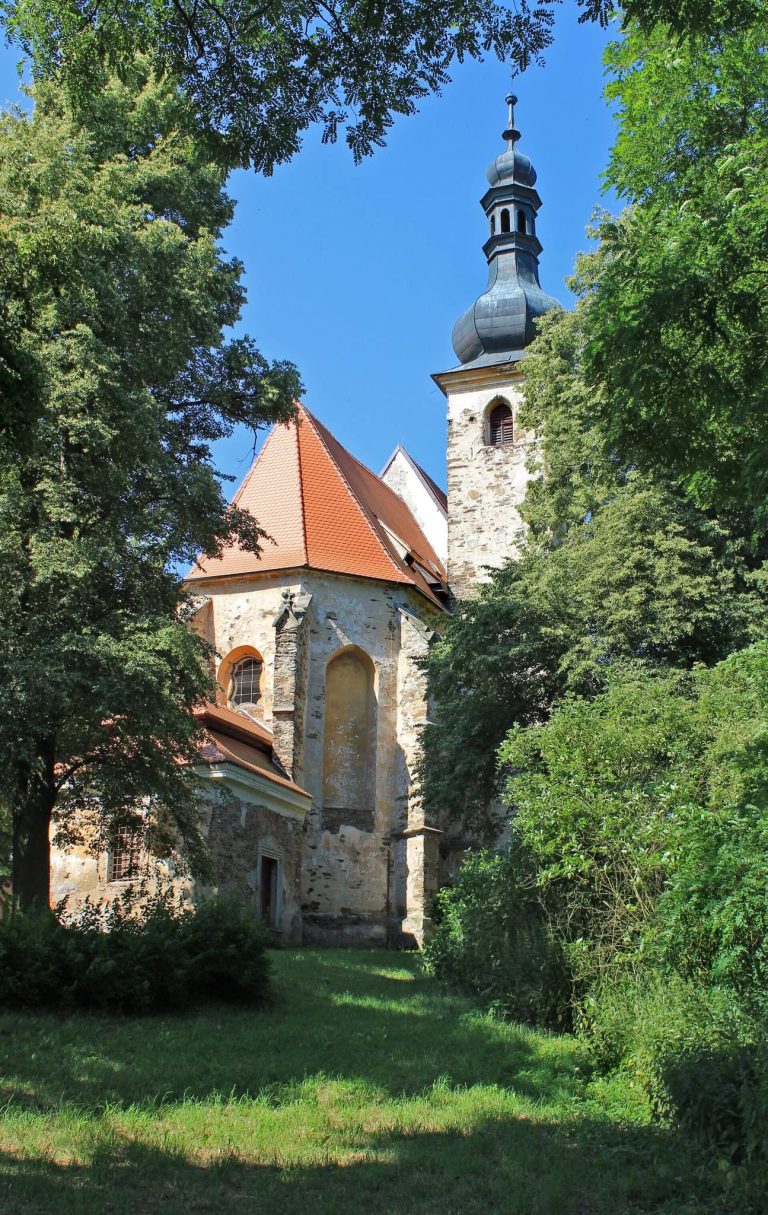
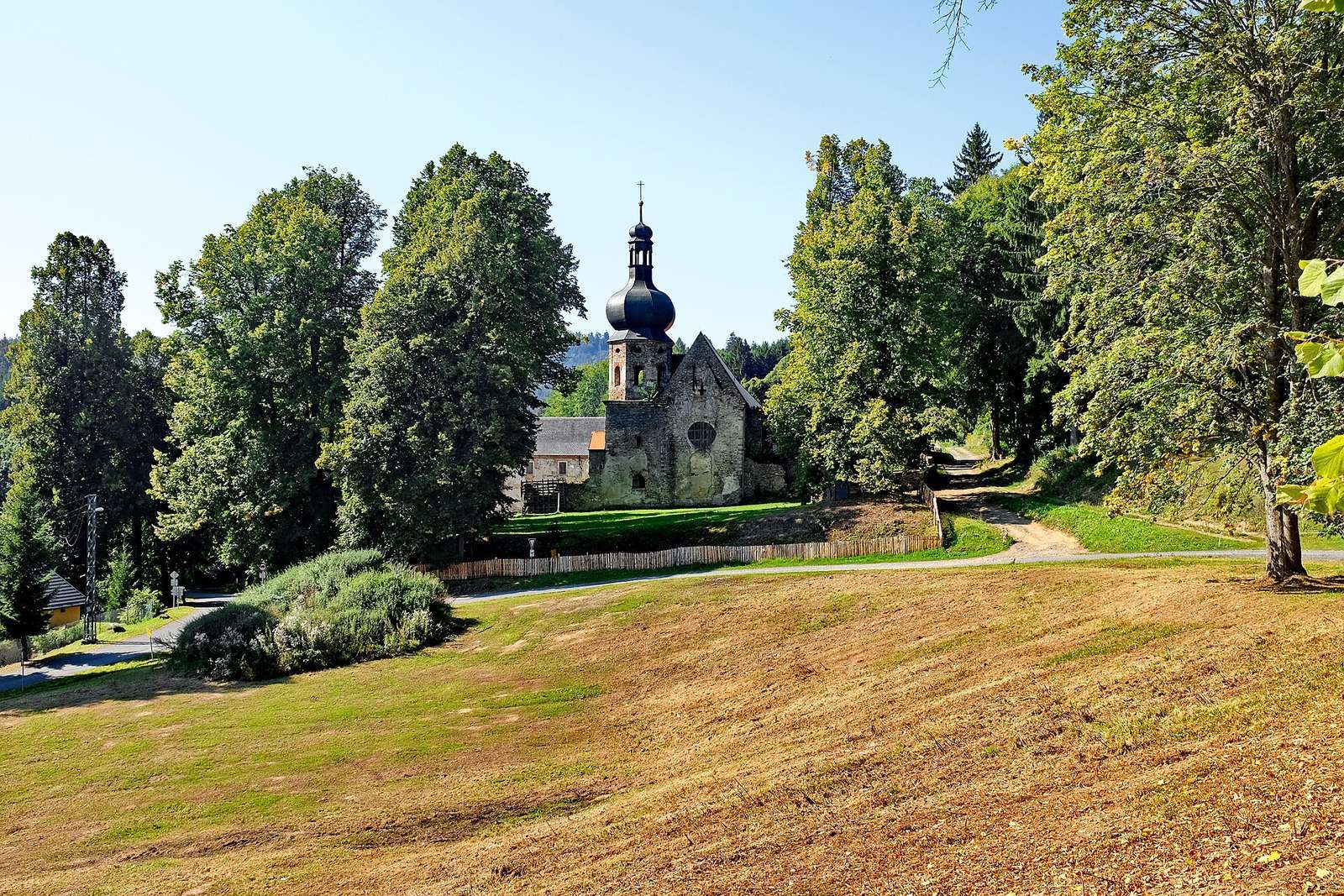
The monastery was sold in 1800 to regional lawyer Dr. Stöhr. His sons later sold it to Count Thun, who incorporated it into the Ronsperg estate. From 1864, the estate belonged to the Coudenhove-Kalergi family. The family used the monastic buildings as a castle, while the church served as Stockau’s village church. A fire left the church in ruins in 1953. By 2013, efforts were under way to rebuild and restore the church and former monastery.
Remains
Church
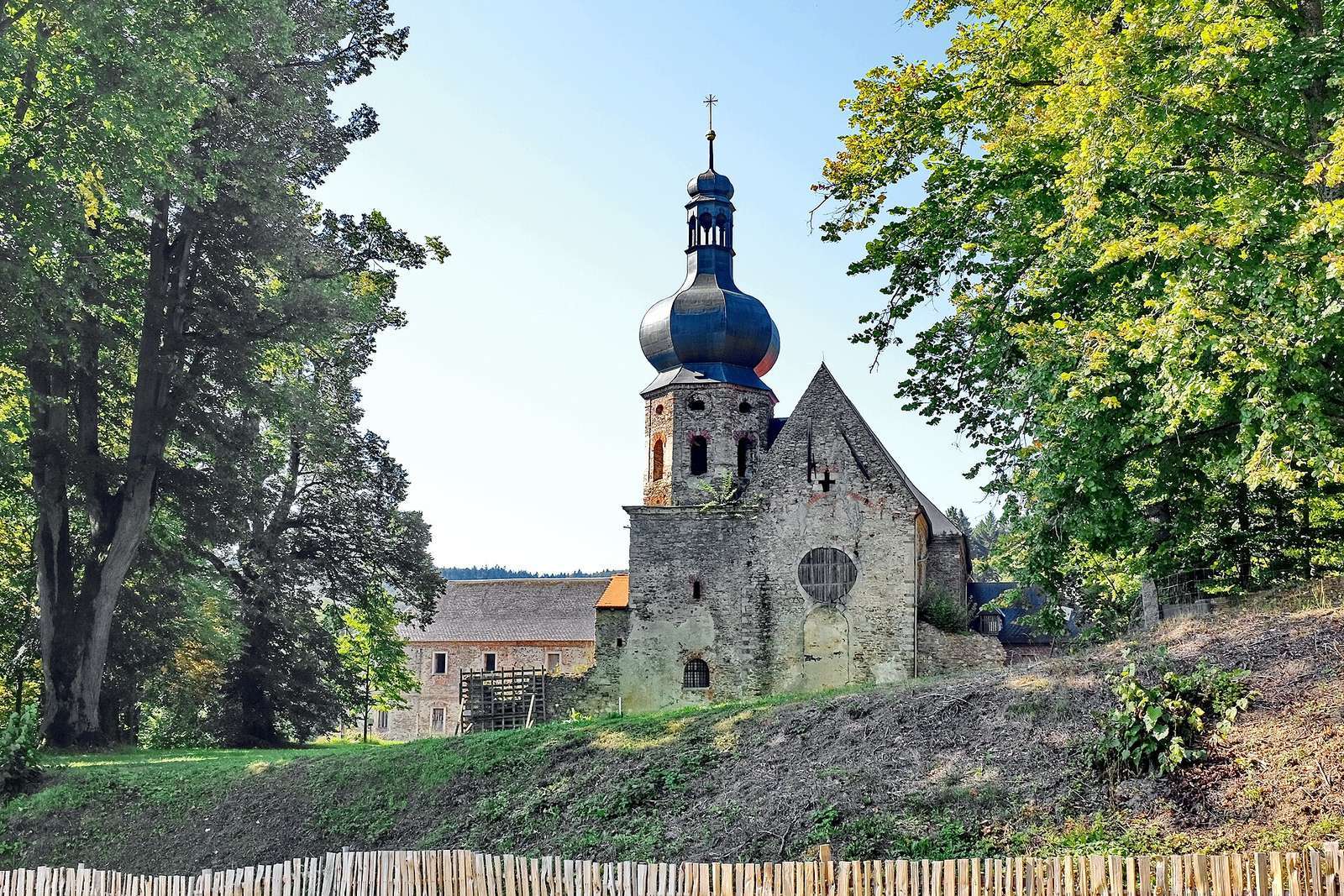
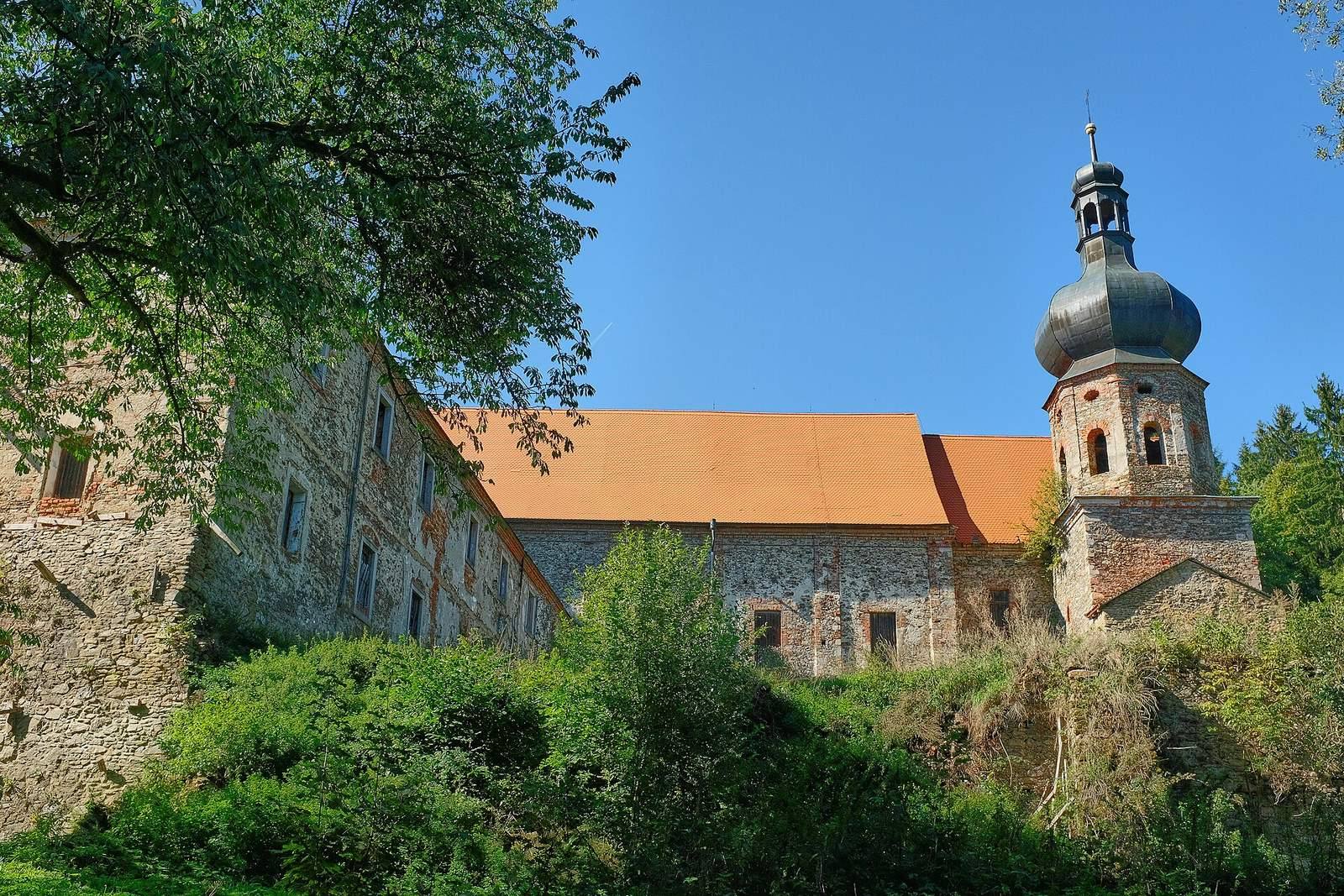
The monastery church was built in the early Gothic style in the second half of the thirteenth century. Its nave, the main body of the church, and the high altar are dated to 1696. The church survives in ruins.
Courtyards and monastic buildings
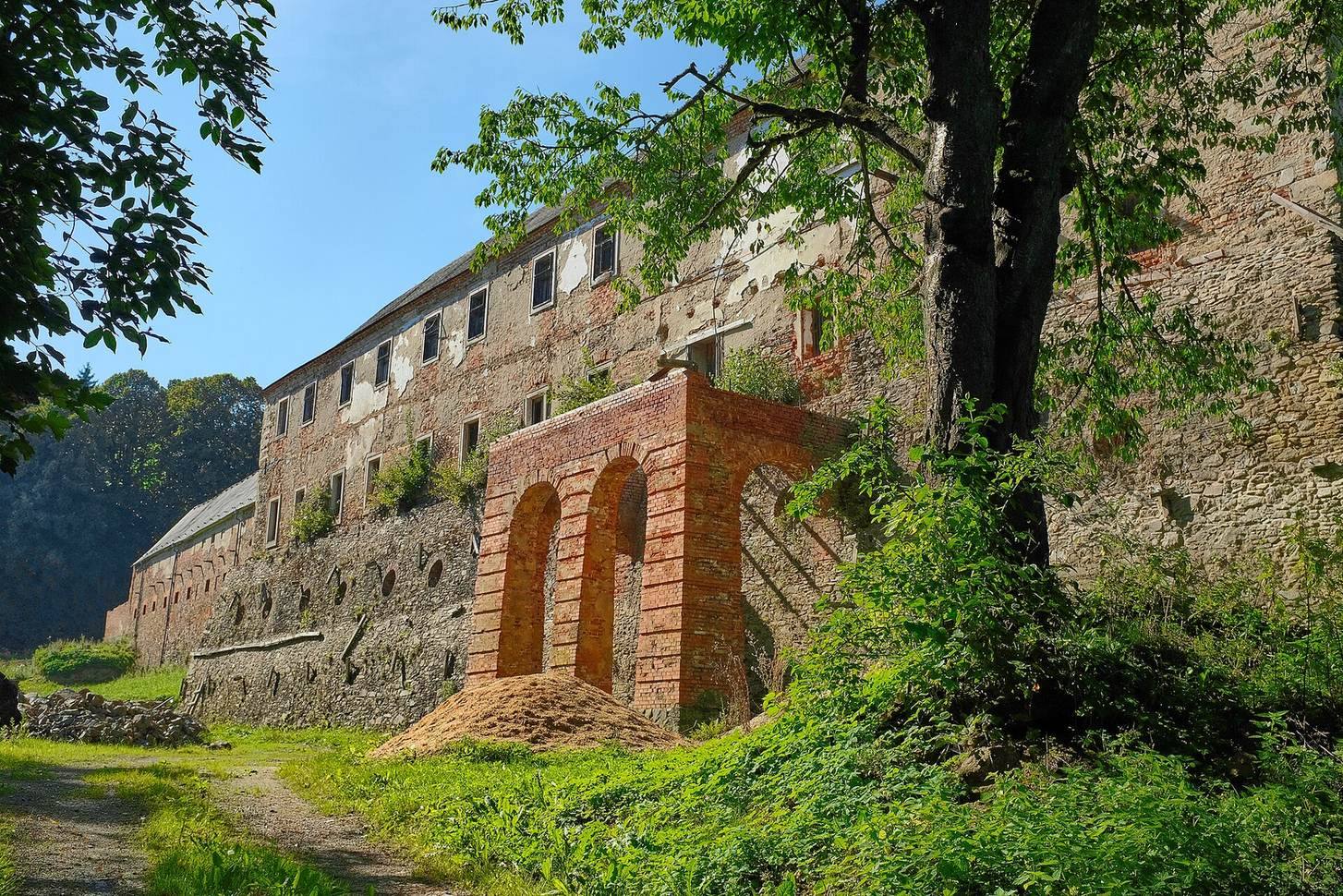
The monastery had three courtyards linked by gates. A granite fountain in the central courtyard supplied drinking water. The refectory, the community’s communal dining room, dates to 1661. New corridors, a sacristy, a room for liturgical objects and vestments, and the rear section of the monastery were built in 1733. The brewery dates to 1756.