Burg Oberhohenberg: Ruins of a Medieval Castle in Germany
Site at a Glance
- Popularity
- Medium
- Country
- Germany
- Primary era
- Medieval
- Eras represented
- Medieval
- Civilizations
- Holy Roman Empire
- Site type
- Military
- Remains
- Castle
On this page10 sections
History
Alamannic settlement and the castle
Burg Oberhohenberg is a ruined medieval castle near Schörzingen in Baden-Württemberg, Germany. The Counts of Hohenberg built it between 1050 and 1100, and it later served as the seat of the County of Hohenberg, named for the mountain. The Alamanni, a Germanic people associated with southwestern Germany in late antiquity and the early Middle Ages, inhabited the mountain before the castle was built. The Counts of Hohenberg belonged to a collateral branch of the House of Hohenzollern, a German dynastic family. The castle is mentioned in a record from 1179.
Austrian rule and destruction
The castle passed to Austria in 1381, after which a succession of feudal lords held it, some of doubtful standing. During a feud in 1449, soldiers from Rottweil besieged and captured the castle, destroying it completely. The complex was subsequently razed.
Investigation and presentation
In 1913, members of the Schörzingen branch of the Swabian Alb Association exposed and measured the castle foundations, then reburied them to protect them from further damage. More recent work has aimed to present the ruins in a museum-like setting.
Remains
Layout and setting
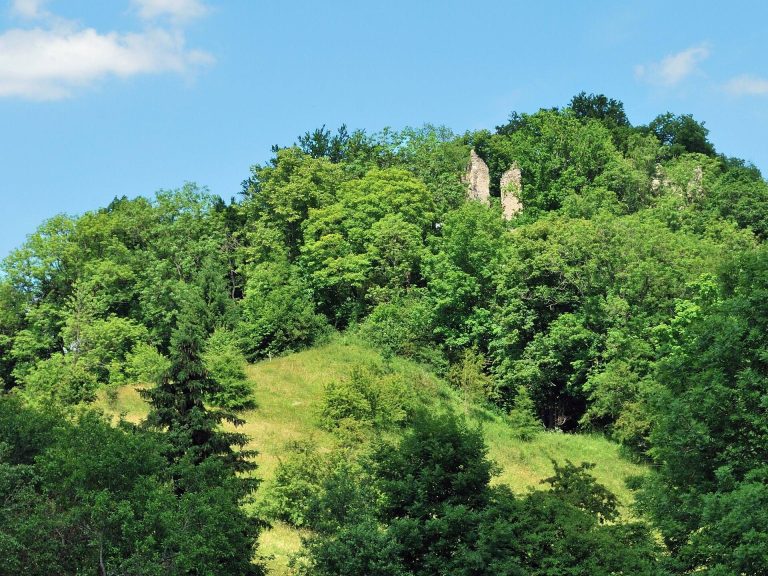
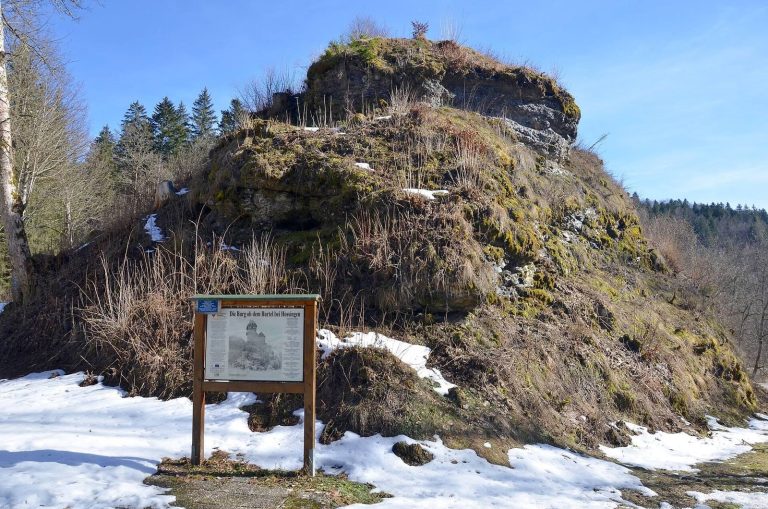
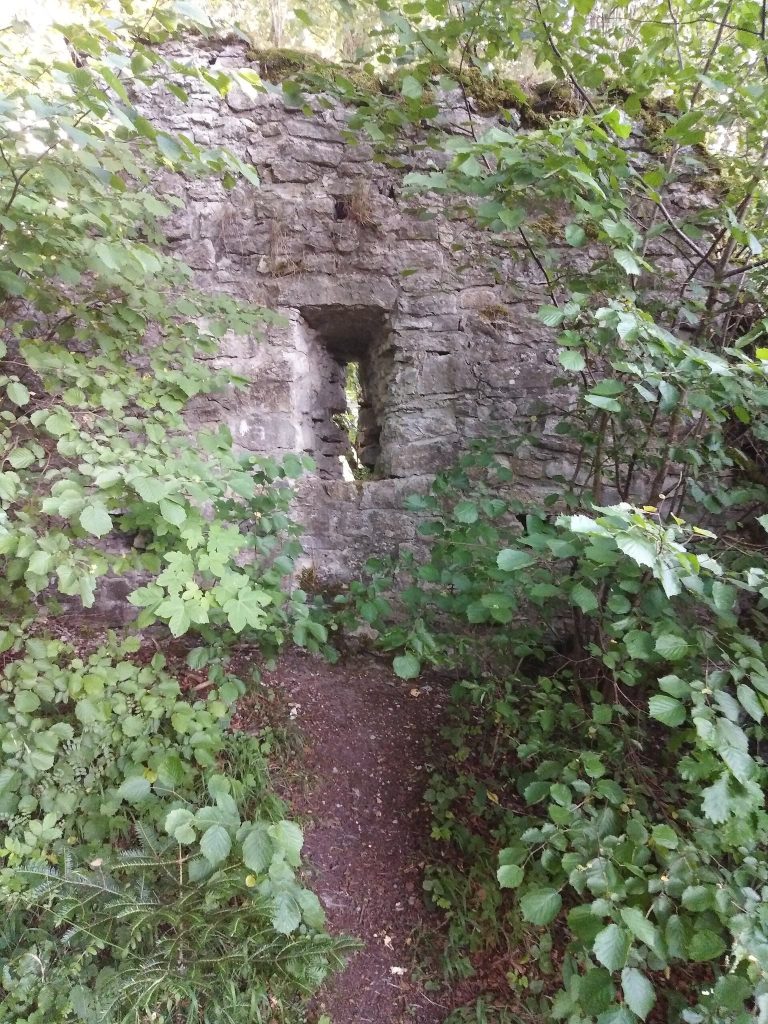
The castle occupies a projecting ridge on the cone-shaped summit of Oberhohenberg, about 1,010 metres above sea level. The mountain is the second-highest in the Swabian Alb and the highest in the Zollernalb district. It belongs to the regional group called the Ten Thousanders, a name for ten peaks above 1,000 metres. The castle enclosure measured about 77 metres long and 40 metres wide. Its walls used bossed ashlar masonry, made from dressed stones with raised, often roughly finished faces.
Surviving structures
Foundations and tower
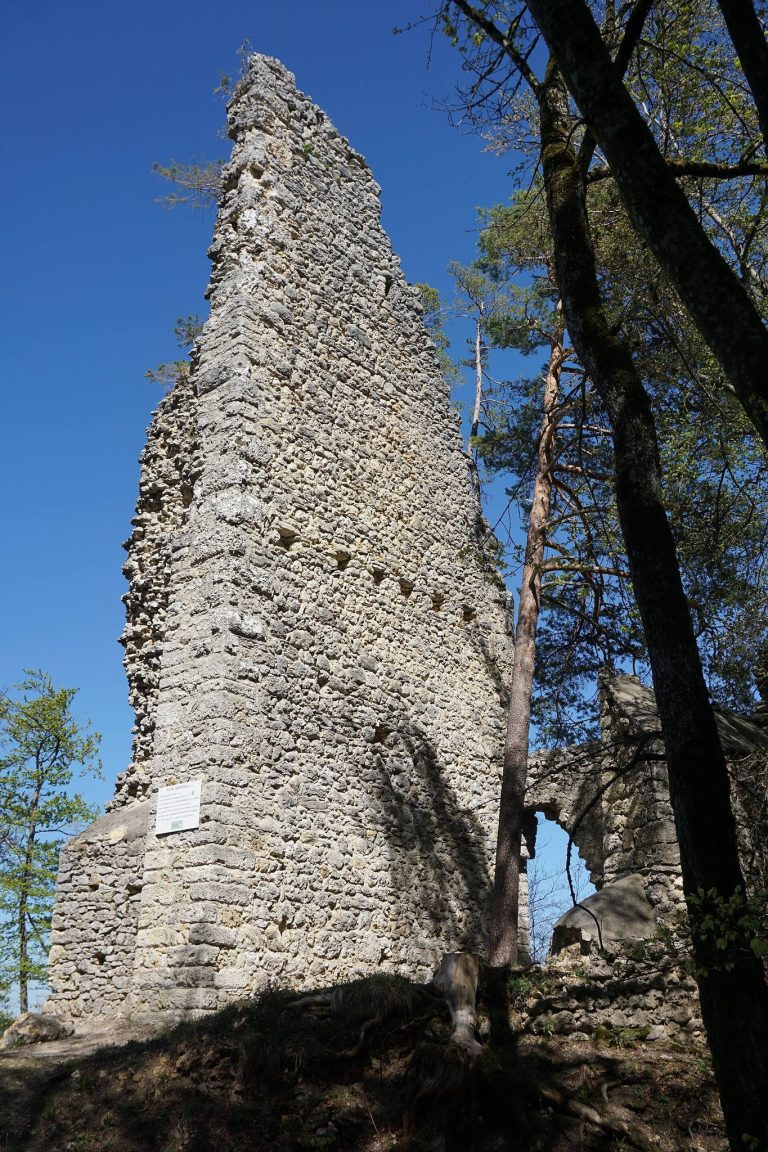
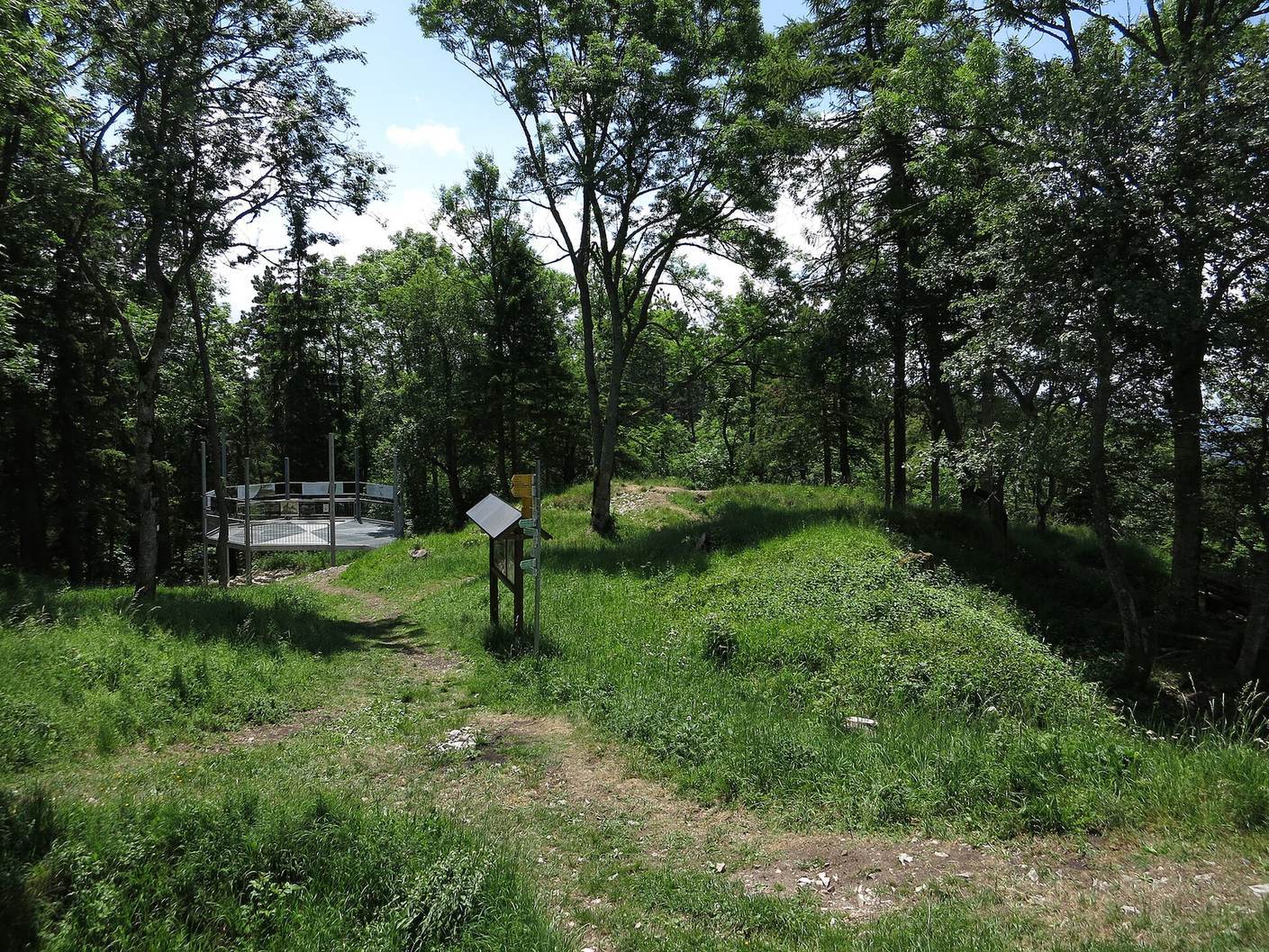
Parts of the castle foundations are exposed. The former octagonal tower has also been made visible again and rebuilt with a steel viewing platform. Limestone slabs protect the historic masonry from driving rain and weathering.
Moat crossing
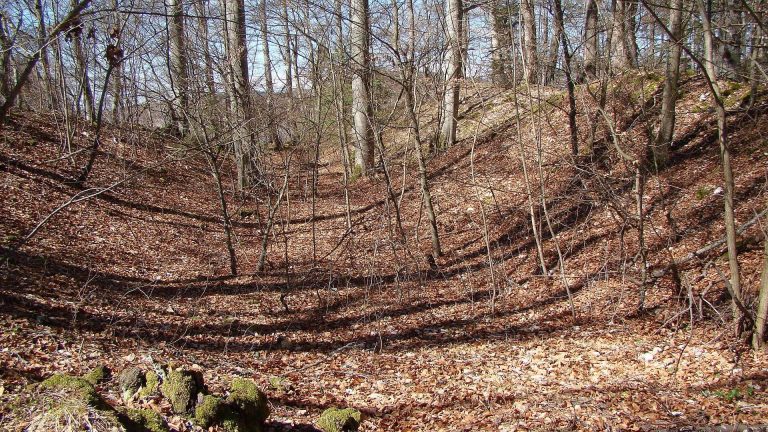
A suspension bridge now crosses the castle moat, taking the place of the former drawbridge.
Chapel of St Nicholas
The site includes the Chapel of St Nicholas, named for a Christian bishop venerated as a saint. The chapel was rebuilt in 2017.